Overview
Foundation and Punic Carthage
Carthage was founded by Phoenician settlers from Tyre around 814 BCE, according to the traditional date recorded by the Greek historian Timaeus, a century and a half after the fall of Troy. The name Qart-ḥadašt ('New City') reflects its role as a colonial foundation on a strategic promontory in the Gulf of Tunis. The earliest archaeological remains—8th-century BCE domestic structures and pottery—confirm a Tyrian presence. Over the following centuries, Carthage grew into a maritime empire, dominating trade routes and establishing colonies across the western Mediterranean. Its two artificial harbors, the circular military cothon and the rectangular commercial port, exemplify Punic engineering and were central to its naval power. The city's prosperity was built on agricultural exports, metallurgy, and long-distance commerce, while its religious heart was the Tophet, a precinct where thousands of infant burials and animal sacrifices have been found, sparking enduring debate about child sacrifice.
Conflict with Rome and Destruction
The rivalry between Carthage and Rome escalated into the three Punic Wars (264–146 BCE). Hannibal's daring crossing of the Alps in 218 BCE brought the threat to Rome's doorstep but ultimately ended in defeat. After the Third Punic War, Roman forces under Scipio Aemilianus laid siege to Carthage for three years before storming the city in 146 BCE. The destruction was systematic: buildings were razed, the site was reportedly cursed, and the land sown with salt—though this last detail is likely a later literary invention. Archaeological evidence confirms vast fire destruction layers and the abrupt cessation of Punic occupation. For over a century, the site remained largely abandoned, though some rural settlements persisted.

01996 Ruins of Antonine Baths at Carthage | Silar (CC BY-SA 4.0)
"Ceterum censeo Carthaginem esse delendam — moreover, I think Carthage must be destroyed."
— Cato the Elder, repeated at the close of every Senate speech (c. 150 BCE), recorded in Plutarch, Life of Cato Major 27
Roman Carthage Reborn
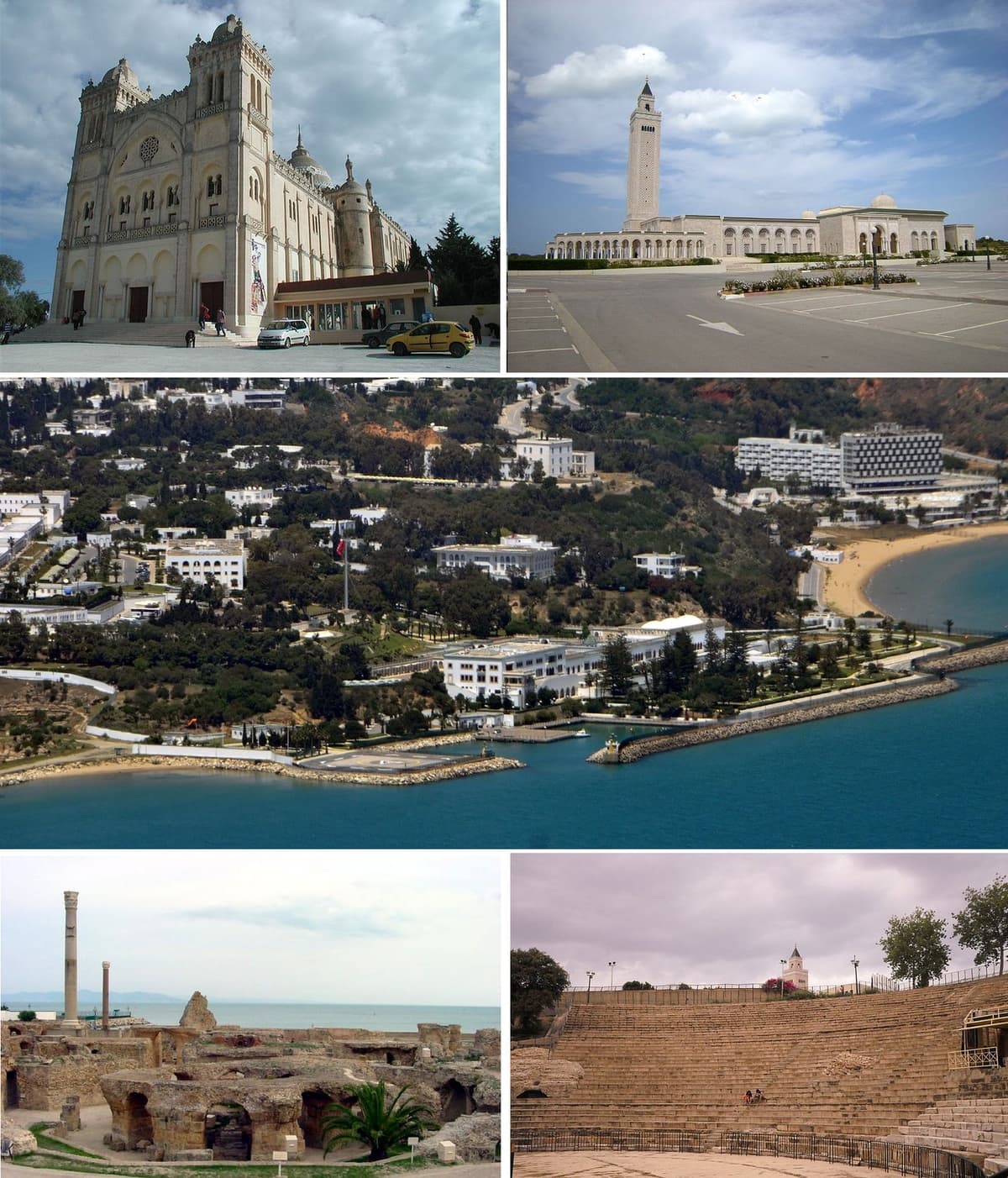
A Roman colony, Colonia Iulia Concordia Carthago, was founded on the ruins by Julius Caesar in 44 BCE and realized under Augustus around 29 BCE. The new city was built on a grand scale: a regular grid plan, aqueducts, theatres, an odeon, a circus, and vast bath complexes. The Antonine Baths, the largest outside Rome, could accommodate thousands of bathers. Carthage became the capital of the province of Africa Proconsularis and a major Christian center, hosting early councils and producing figures like Tertullian and Cyprian. By the 2nd century CE, its population may have reached 300,000, making it one of the empire's largest cities. The Roman period also saw the construction of the impressive Byrsa acropolis, where the governor's palace and a massive temple of Juno Caelestis (the Romanized Tanit) stood.

01996 01434 Ruins of Antonine Baths at Carthage | Silar (CC BY-SA 4.0)
Late Antiquity and End of Ancient Carthage
Carthage fell to the Vandals in 439 CE under Gaiseric, becoming the capital of their North African kingdom. The Byzantine general Belisarius recaptured it in 533 CE, and it remained under Eastern Roman rule until the Arab conquest. In 698 CE, after a brief reoccupation by the Byzantine navy, the Umayyad general Hassan ibn al-Nu'man captured and destroyed the city, shifting the regional center to Tunis. Carthage was largely abandoned thereafter, its ruins serving as a quarry for medieval builders. Archaeological evidence shows a gradual decline through the 7th century, with shrinking population and reoccupation of public buildings as dwellings.
Archaeological Rediscovery and Excavation
Unlike many ancient cities, Carthage was never completely lost. Its ruins were visible and mentioned by travelers from the Middle Ages onward. However, systematic excavation began only in the 19th century with French archaeologists under the colonial protectorate. Father Alfred Louis Delattre’s work on the Punic Tophet and Christian basilicas, along with the clearance of major Roman monuments, brought the site to international attention. The most transformative campaign was the UNESCO 'Save Carthage' project (1973–1983), which drew teams from over a dozen countries and managed to document large areas threatened by urban expansion. These excavations yielded a detailed stratigraphy, extensive ceramic sequences, and new insights into Punic urbanism, including evidence of earlier phases beneath the Roman grid.

Tophet Carthage.2 | Michel-georges bernard (CC BY-SA 3.0)
Architecture and Urban Fabric
The city’s layout reflects its multilayered history. On the Byrsa hill, Punic domestic buildings from the 2nd–3rd centuries BCE survive beneath Roman-era terracing. The Roman grid extended over 300 hectares, with cardo and decumanus streets, insulae, and a complex water system. The harbors, particularly the circular military port with its island admiralty, are a highlight of Punic engineering, allowing the city to maintain a standing fleet of over 200 ships. The Tophet, located near the southern shore, contained layer upon layer of urns with cremated infants and animals, often accompanied by stelae depicting the goddess Tanit and other symbols. Roman public architecture, from the vast cisterns of La Malga to the Odeon hill, demonstrates imperial investment on a grand scale. Ongoing underwater archaeology in the harbors continues to reveal ship sheds and trade connections.