
Atlas AnatoliaAtlas Anatolia
Machu Picchu — Peru

Machu Picchu

Machu Pikchu1450 CE – 1572 CE
33

Interest

Pre-ColumbianHigh MedievalEarly ModernIncaCusco Region

Built

c. 1450 CE

Civilization

Inca

Discovered

1911 by Hiram Bingham

Status

UNESCO World Heritage Site (1983)

Abandoned

c. 1572 CE

Elevation

2,430 m (7,970 ft)

Machu Picchu represents the zenith of Inca architectural and engineering prowess, offering a window into the political, religious, and social life of the Late Horizon period.”

Overview

History and Construction

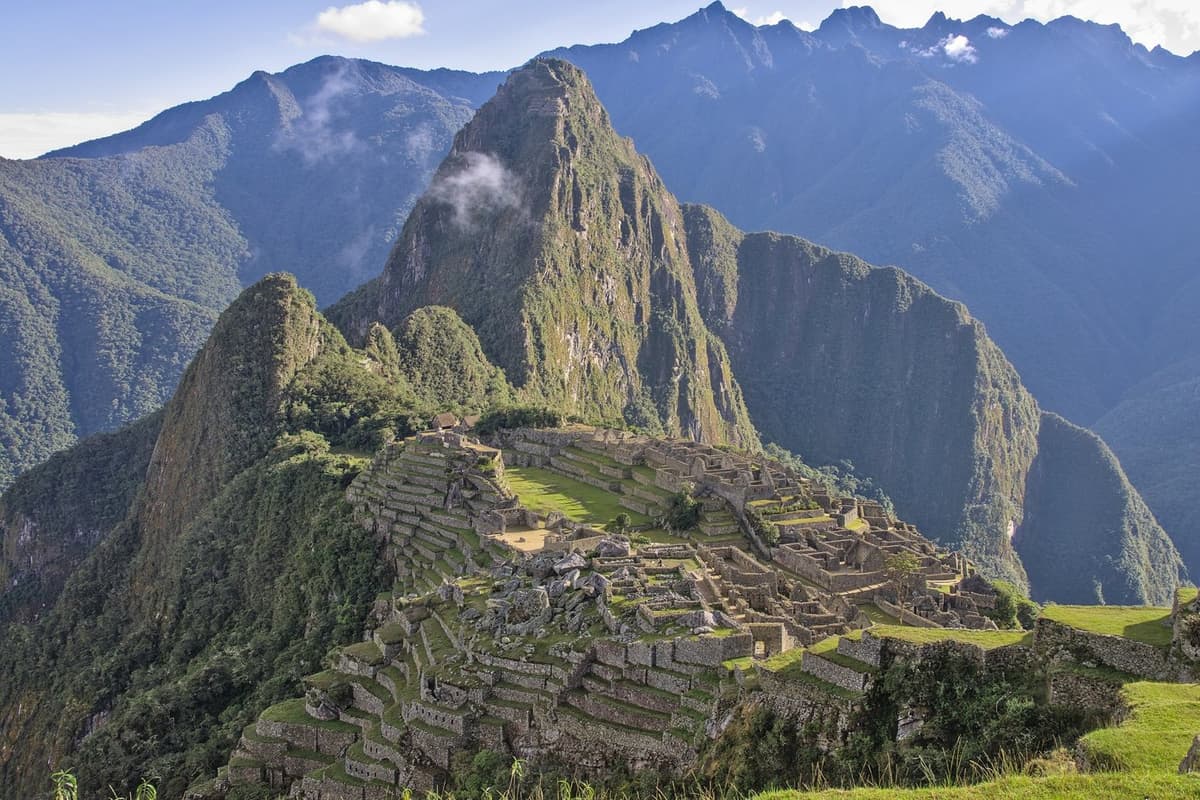
Machu Picchu was likely constructed around 1450 CE as a royal estate for the Inca emperor Pachacuti (1438–1471). Its remote location in the Urubamba River valley, at an elevation of 2,430 meters, combined with sophisticated terracing and water management systems, allowed for a self-sufficient settlement. The site was inhabited for about a century before being abandoned, probably as a result of the Spanish conquest and the collapse of the Inca Empire in the 1570s. The Spanish never discovered Machu Picchu, which contributed to its remarkable preservation.

Machu Picchu, Perú, 2015-07-30, DD 47

Machu Picchu, Perú, 2015-07-30, DD 47 | Diego Delso (CC BY-SA 4.0)

"Suddenly I found myself confronted with the walls of ruined houses built of the finest quality of Inca stonework. It seemed almost incredible that this city, only five days' journey from Cuzco, should have remained so long undescribed by tourists and unknown to scientists."
— Hiram Bingham, on rediscovering Machu Picchu, 24 July 1911

Architecture and Engineering

The citadel is renowned for its intricate dry-stone walls, constructed without mortar, using precisely cut granite blocks that fit together seamlessly. The site comprises over 200 structures, including temples, residences, and agricultural terraces, arranged around a central plaza. Notable features include the Temple of the Sun, the Room of the Three Windows, and the Intihuatana stone, a sculpted rock believed to have astronomical and religious significance. The Inca engineers designed an advanced drainage system to manage the region's heavy rainfall, preventing erosion and structural damage.

80 - Machu Picchu - Juin 2009 - edit

80 - Machu Picchu - Juin 2009 - edit | Martin St-Amant (S23678) (CC BY-SA 3.0)

Discovery and Excavation

Although local Quechua farmers knew of the ruins, the site gained international attention after American historian Hiram Bingham's expedition in 1911, guided by Melchor Arteaga. Bingham conducted initial clearing and excavation, removing thousands of artifacts to Yale University. Subsequent research, including the 1940–41 expedition by Paul Fejos and numerous Peruvian-led projects, has refined our understanding of the site. Artifacts are gradually being repatriated to Peru, and modern excavation continues under the Peruvian Ministry of Culture, often focusing on conservation and the surrounding landscape.

This Picture Gives a General View of About One-Half of the City of Machu Picchu

This Picture Gives a General View of About One-Half of the City of Machu Picchu | Hiram Bingham III (Public domain)

Significance and Controversies

Machu Picchu is a UNESCO World Heritage Site and a symbol of indigenous achievement. However, its role remains debated: while many scholars accept it as a royal estate, others argue for a ceremonial center or a fortress. The extent of the population and the precise function of certain structures are still studied. Tourism pressure and environmental threats pose ongoing challenges, necessitating careful management to preserve this icon of the Inca civilization.

Why It Matters

Machu Picchu represents the zenith of Inca architectural and engineering prowess, offering a window into the political, religious, and social life of the Late Horizon period. Its preservation amidst a dramatic landscape symbolizes the resilience of indigenous cultures, and its global recognition underscores the importance of safeguarding cultural heritage.

Stay curious

New stories and sites, once a month. No spam.

Evidence & Interpretation

Distinguishing what is well-established from what remains debated.

Well-Established Facts

4
  • Machu Picchu was constructed during the reign of the Inca emperor Pachacuti (1438–1471).
  • The site features precisely fitted dry-stone masonry without the use of mortar.
  • Hiram Bingham's 1911 expedition was guided by local farmer Melchor Arteaga.
  • Thousands of artifacts were removed to Yale University and are being repatriated.

Scholarly Inferences

2
  • Machu Picchu served primarily as a royal estate for Pachacuti and his retinue.
  • The resident population was likely a few hundred individuals, supported by agricultural terraces.

Debated Interpretations

2
  • The exact function of the site—whether a royal retreat, religious sanctuary, or fortress—remains a subject of scholarly debate.
  • The astronomical alignments of the Intihuatana stone are not fully understood, with competing interpretations.

Discovery & Excavation

Modern Conservation

Led by Peruvian Ministry of Culture

Ongoing restoration and management by the Peruvian government and UNESCO to mitigate tourism impacts and preserve the site.

1911–1911

Hiram Bingham's Discovery

Led by Hiram Bingham

Bingham's Yale Peruvian Expedition located Machu Picchu guided by locals, leading to its international recognition.

1912–1912

First Scientific Excavation

Led by Hiram Bingham

The 1912 expedition cleared vegetation and excavated tombs, recovering thousands of artifacts sent to Yale.

1915–1915

Bingham's Final Expedition

Led by Hiram Bingham

Further clearing and mapping focused on the Inca Trail and surrounding sectors.

1940–1941

Viking Fund Expedition

Led by Paul Fejos

An interdisciplinary study led by Paul Fejos, examining hydrology, agriculture, and architecture.

More Photos

Museum Artifacts

Community Photos

Share your experience

Have you visited this site? Upload your photos to help others discover it.

Location

Sources

  • Bingham, Hiram (1948), Lost City of the IncasHiram Bingham (1948)
  • Wright, Kenneth R. and Valencia Zegarra, Alfredo (2000), Machu Picchu: A Civil Engineering MarvelKenneth R. Wright and Alfredo Valencia Zegarra (2000)
  • Burger, Richard L. and Salazar, Lucy C. (2004), Machu Picchu: Unveiling the Mystery of the IncasRichard L. Burger and Lucy C. Salazar (2004)
  • Dearborn, David S. P. and White, Raymond E. (1983), The Torreón at Machu Picchu as an Observatory, Archaeoastronomy: The Journal of Astronomy in Culture, 5, S37-S49.Dearborn, David S. P. and White, Raymond E. (1983)
  • Historic Sanctuary of Machu PicchuLink

Research Papers

Stay in the loop

Get notified when we add new sites or major features. We send at most 1–2 emails per year. We never sell your email.

Atlas AnatoliaAtlas Anatolia

An interactive atlas of the ancient world. Explore archaeological sites, civilizations, monuments, and stories from every continent.

info@atlasanatolia.com

© 2026 Atlas Anatolia. Content is provided for educational purposes.

Map data © OpenStreetMap contributors