
Overview
The Birthplace of the Olympic Games
Olympia, situated in the western Peloponnese, was not a city but a Panhellenic sanctuary dedicated to Zeus. The Olympic Games, traditionally founded in 776 BCE, transformed the site into a major religious and athletic centre, drawing competitors and spectators from across the Greek world every four years. The sacred truce (ekecheiria) ensured safe passage, fostering a shared Hellenic identity.
Architectural Splendour
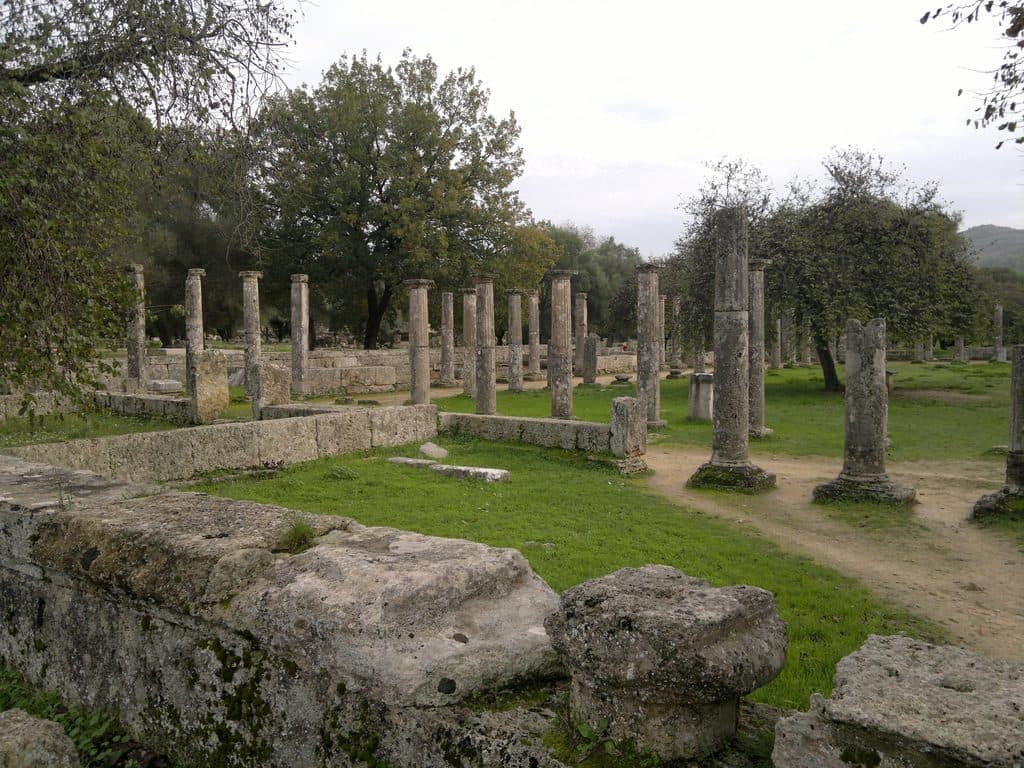
The sanctuary's focal point was the Temple of Zeus (c. 470–456 BCE), housing Pheidias’ colossal gold-and-ivory statue, one of the Seven Wonders. Adjacent stood the older Temple of Hera. The Altis, the sacred grove, contained treasuries, altars, and statues. The stadium, which held 45,000 spectators, and the gymnasium and palaestra for training, illustrate the centrality of athletics.

Archaeological Site of Ancient Olympia - 10 | Annatsach (CC BY-SA 4.0)
"Look not, in the bright daytime, for any other star warmer than the sun in the empty sky; nor let us sing of any games more illustrious than those at Olympia."
— Pindar, Olympian Ode 1, c. 476 BCE
Evolution and Roman Patronage
Under Roman rule, Olympia experienced a revival. Emperors like Nero and Hadrian added structures, including the Nymphaeum of Herodes Atticus. The games continued, but the site’s character gradually shifted from a purely religious festival to a more secular spectacle. By the 3rd century CE, declining attendance and economic pressures foreshadowed its end.

Archaeological Site of Ancient Olympia - 9 | Annatsach (CC BY-SA 4.0)
Decline and Abandonment
In 393 CE, Emperor Theodosius I banned pagan festivals, ending the Olympic Games after nearly 1,200 years. The sanctuary fell into disuse; earthquakes and river flooding buried it under alluvial silt. By the early medieval period, Olympia was largely forgotten, preserved only in historical accounts.
Rediscovery and Modern Excavations
Systematic excavations began in 1875 by the German Archaeological Institute under Ernst Curtius, unearthing many iconic works like the Hermes of Praxiteles and the Nike of Paionios. Continuous research has refined dating and contextualised the site’s development. Today, Olympia is a UNESCO World Heritage site and an enduring symbol of peace and human achievement.