Overview
Ariassos is one of the most atmospheric ancient cities in southwestern Turkey, a Pisidian settlement reached by a well-preserved ancient road that climbs through pine forests to a monumental gateway — one of the best-preserved city gates in the region. The experience of approaching the city along its original road offers visitors an unusually authentic encounter with an ancient urban landscape.
Located in the mountains northwest of Antalya, the city was one of the smaller members of the Pisidian settlement network that controlled the routes between the coastal lowlands and the Anatolian plateau. The site preserves a compact but impressive array of Roman-period buildings including baths, a small temple, rock-cut tombs, cisterns, and residential structures.
"Ariassos is a city of Pisidia, near the Taurus mountains, with a strong position."
— Strabo, Geographica (c. 20 CE)
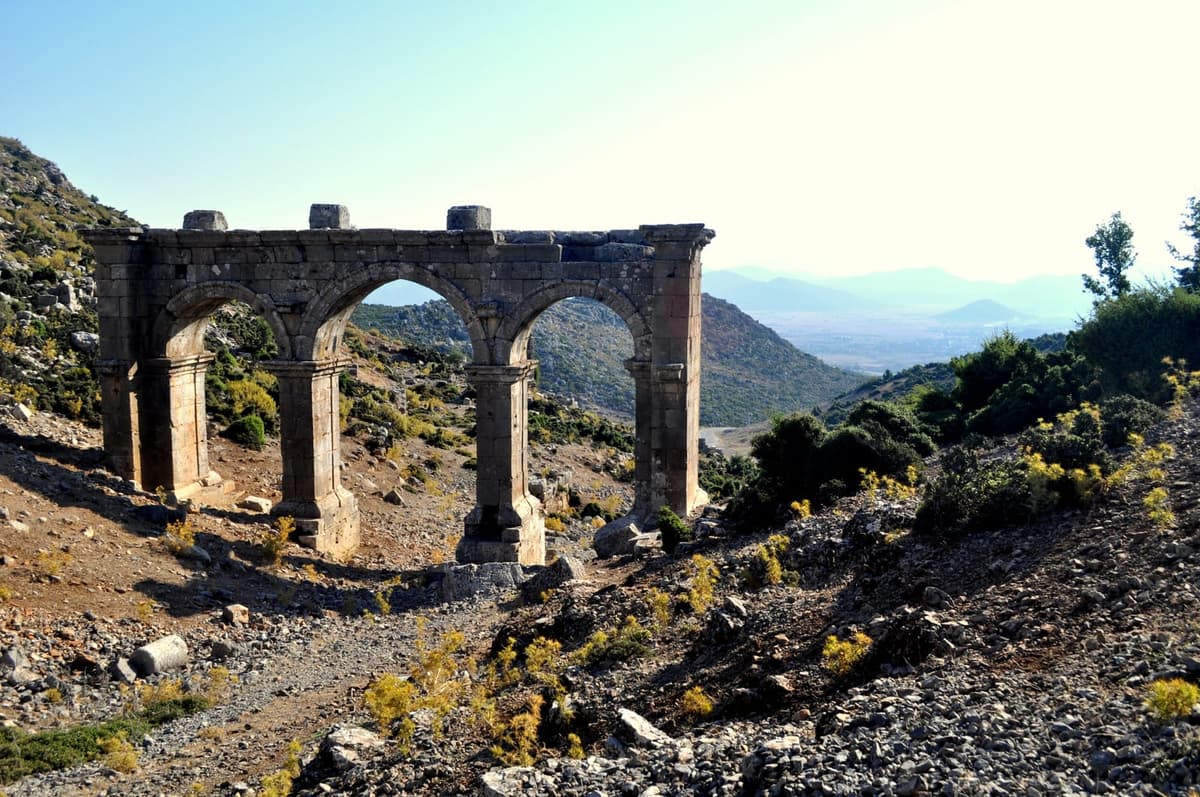
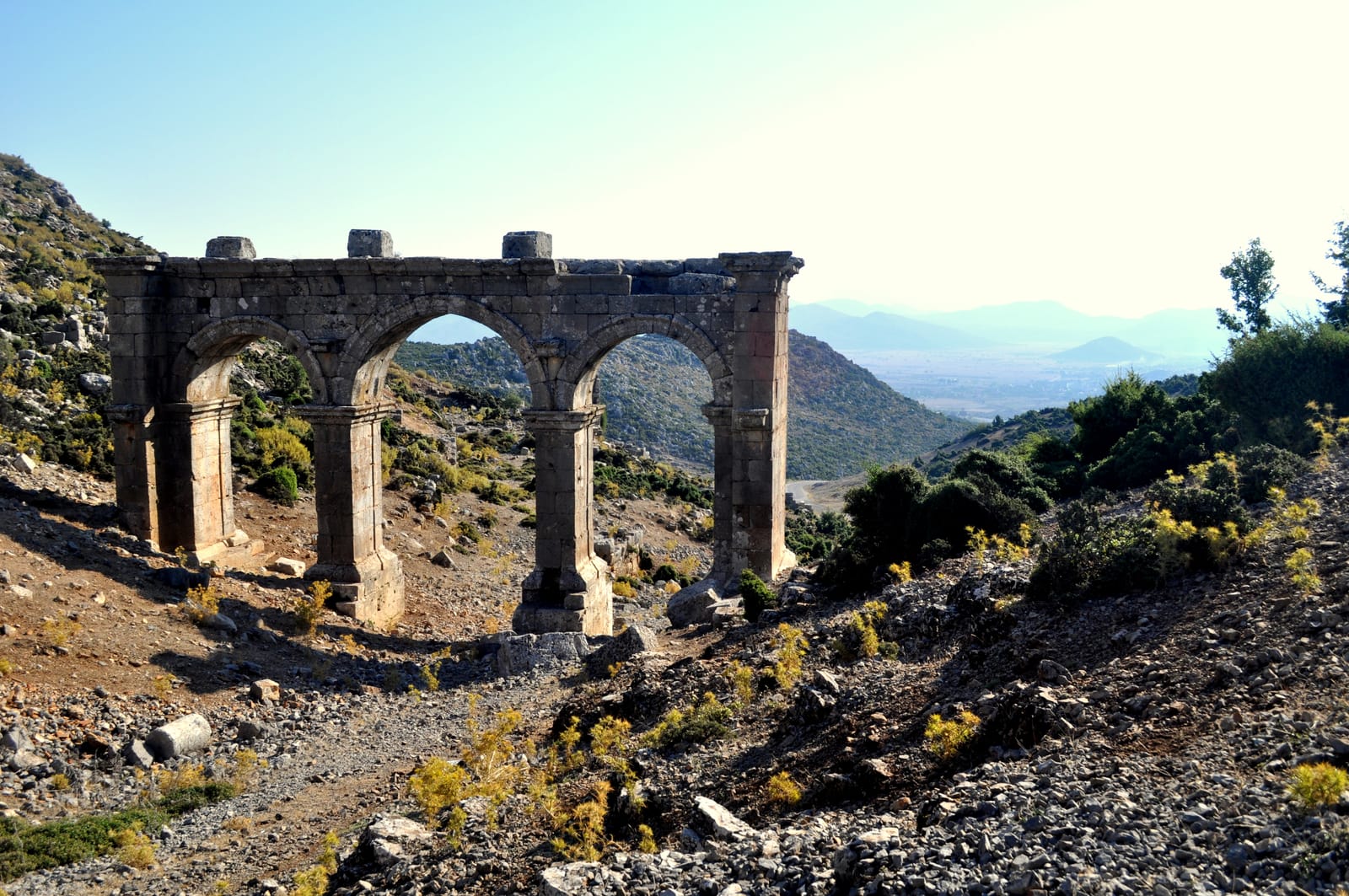
The city's monumental gateway, a freestanding arch with flanking towers, marks the transition from the approach road into the urban area. Inside the gate, the city occupies a natural bowl surrounded by rocky ridges, with buildings arranged along terraces following the natural topography. A well-preserved bath complex with intact vaulting demonstrates the Roman standards of urban amenity that even relatively small mountain cities aspired to.
Rock-cut sarcophagi and tombs scattered through the surrounding landscape attest to the city's prosperity during the Imperial period. The site's remote location in a forestry zone has protected it from modern development but also limits visitor access.

Ariassos 7 | Sarah Murray from Lincoln, NE, USA (Αρχικό) Wolfymoza (Ανέβασμα) (CC BY-SA 2.0)
Beyond the gate, the city's compact urban grid reveals a small agora, a nymphaeum (public fountain), and the substantial remains of a bath-gymnasium complex, its walls still standing several meters high. The necropolis, lining the approach road, features impressive rock-cut tomb facades with pediments and false doors, reflecting the adoption of Roman funerary architecture by local elites. Daily life in this highland community would have revolved around these public buildings and the surrounding terraced farmland. The city's decline appears gradual, with evidence of continued but diminished habitation into the early Byzantine period (6th-7th centuries CE), likely due to a combination of economic shifts, insecurity, and the growing importance of coastal settlements, before it was ultimately abandoned.