Atlas AnatoliaAtlas Anatolia

All Sites

24 ancient sites across Anatolia, spanning from the Pre-Pottery Neolithic to the medieval period.

Ruins of the medieval city of Ani
featured

Ani

500 CE – 1400 CE

A medieval Armenian capital on the Turkish-Armenian border, once home to over 100,000 people. Its ruins include magnificent churches, mosques, and fortifications spanning centuries of multicultural history.

MedievalByzantine
9
The Library of Celsus at Ephesus
featured

Ephesus

1000 BCE – 700 CE

One of the greatest cities of the ancient Mediterranean world. Home to the Temple of Artemis (one of the Seven Wonders), the Library of Celsus, and a theatre seating 25,000.

RomanClassicalHellenistic
8
T-shaped pillars at Göbekli Tepe archaeological site
featured

Göbekli Tepe

9600 BCE – 8000 BCE

The world's oldest known monumental sanctuary, predating Stonehenge by roughly 6,000 years. Massive carved T-shaped pillars arranged in circles suggest complex ritual activity among pre-agricultural communities.

NeolithicPrehistory
26
The Lion Gate at Hattusha, capital of the Hittite Empire
featured

Hattusha

1650 BCE – 1178 BCE

Capital of the Hittite Empire, one of the great powers of the Late Bronze Age. Features massive fortifications, monumental gates with lion and sphinx sculptures, and the Great Temple.

Bronze Age
2
Travertine terraces and ancient ruins at Hierapolis-Pamukkale
featured

Hierapolis

190 BCE – 1354 CE

A Greco-Roman spa city perched above the famous white travertine terraces of Pamukkale. One of the best-preserved ancient cities in Turkey, with a vast necropolis, theatre, and the Plutonium — a gate to the underworld.

HellenisticRomanByzantine
1
Carved pillars inside the underground chamber at Karahantepe
featured

Karahantepe

9500 BCE – 8000 BCE

A Pre-Pottery Neolithic site near Şanlıurfa, contemporary with Göbekli Tepe. Features T-shaped pillars, carved human heads, and a remarkable underground chamber with phallus-shaped pillars.

NeolithicPrehistory
3
Colossal stone heads at the East Terrace of Mount Nemrut
featured

Nemrut Dağ

69 BCE – 34 BCE

A remote mountaintop sanctuary at 2,134 meters elevation, featuring colossal stone heads of gods and King Antiochus I of Commagene. One of the most dramatic archaeological sites in the world.

Hellenistic
1
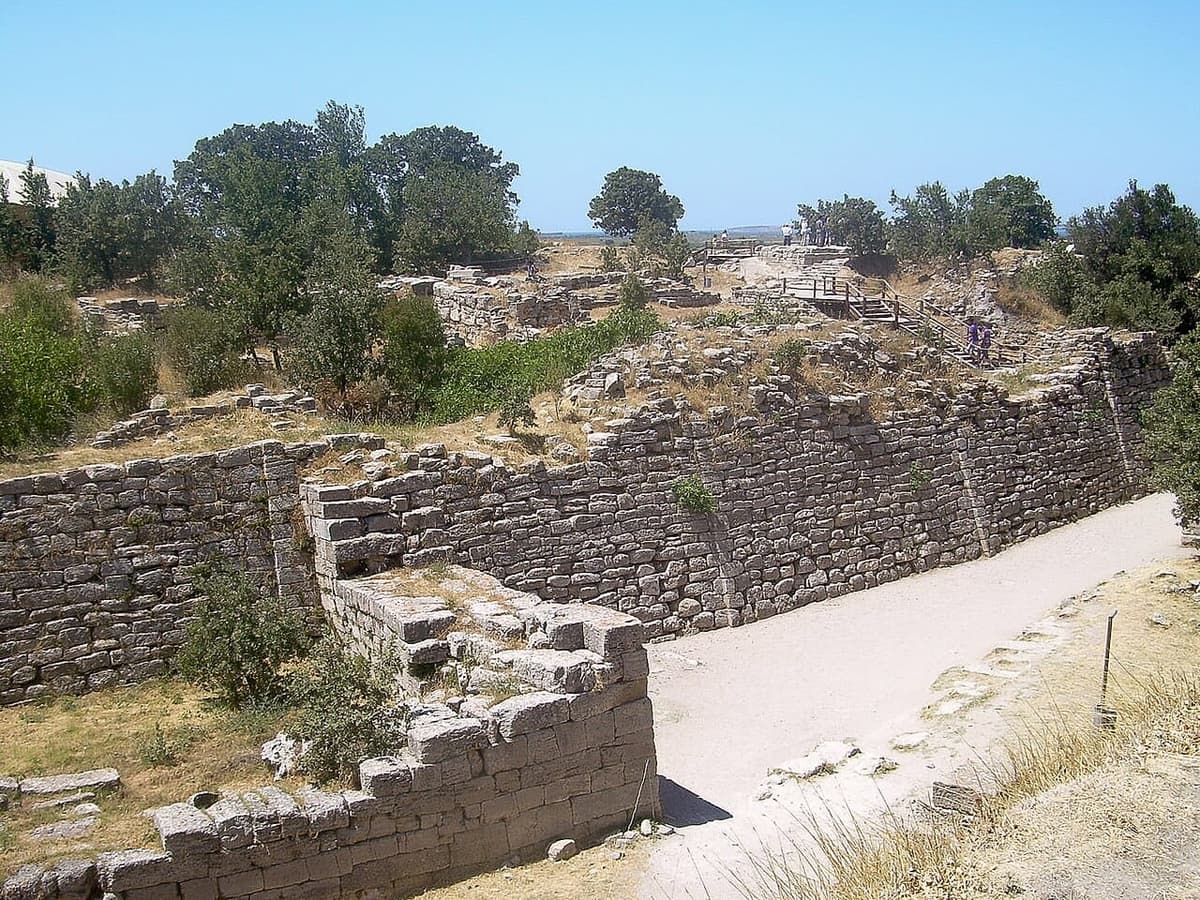
Fortification walls at Troy (Hisarlık)
featured

Troy

3000 BCE – 500 CE

The legendary city of Homer's Iliad, located at Hisarlık in northwestern Türkiye. Multiple settlement layers spanning over 4,000 years make it one of the most storied archaeological sites in the world.

Iron AgeClassicalRoman
18
Excavated mudbrick structures at Çatalhöyük
featured

Çatalhöyük

7400 BCE – 5600 BCE

One of the world's earliest known proto-urban settlements, occupied from roughly 7400 to 5600 BCE. Famous for its densely packed mudbrick houses, wall paintings, and evidence of a remarkably egalitarian Neolithic community.

Neolithic
5
Alacahöyük archaeological site

Alacahöyük

4000 BCE – 700 BCE

One of the most important pre-Hittite and Hittite sites in Anatolia. The royal tombs yielded spectacular gold and bronze artifacts from the Early Bronze Age Hattian civilization.

Bronze AgeIron Age
0
The Temple of Aphrodite at Aphrodisias

Aphrodisias

600 BCE – 1200 CE

A Greco-Roman city famed for its marble sculpture workshops, the Temple of Aphrodite, and a remarkably well-preserved stadium seating 30,000.

ByzantineHellenisticClassical
1
The perfectly preserved Roman theatre at Aspendos

Aspendos

1000 BCE – 1300 CE

Home to the best-preserved Roman theatre in the world, seating 15,000. The theatre's acoustics are so perfect that a coin dropped on stage can be heard from the top row.

ClassicalHellenisticRoman
0
Derinkuyu archaeological site

Derinkuyu

800 BCE – 1923 CE

The deepest known underground city in the world, extending 85 meters below the surface with 18 levels. It could shelter approximately 20,000 people along with livestock and food stores.

Iron AgeClassicalByzantine
5
Didyma archaeological site

Didyma

700 BCE – 400 CE

Site of one of the most important oracles of the ancient world and the colossal Temple of Apollo — one of the largest Greek temples ever attempted, though never completed.

ClassicalHellenisticRoman
1
The Early Phrygian East Gate at Gordion

Gordion

950 BCE – 200 BCE

Capital of ancient Phrygia, famous for the legend of the Gordian Knot and the monumental tumulus believed to be the tomb of King Midas. One of the most important Iron Age sites in Anatolia.

HellenisticClassicalIron Age
1
Kültepe archaeological site

Kültepe

3000 BCE – 1500 BCE

Ancient Kanesh — the site of the oldest known Assyrian trading colony (kārum) and the source of the earliest written records found in Anatolia, predating the Hittite Empire.

Bronze Age
1
Miletus archaeological site

Miletus

1500 BCE – 700 CE

Birthplace of Western philosophy — home to Thales, Anaximander, and Anaximenes. One of the greatest Ionian cities, with a massive theatre, baths, and the ancient world's first grid-planned city layout.

Bronze AgeClassicalHellenistic
2
Myra archaeological site

Myra

500 BCE – 1300 CE

An ancient Lycian city famous for its rock-cut tombs carved into cliff faces and the Church of St. Nicholas (Santa Claus). The Lycian rock tombs are among the most dramatic archaeological monuments in Turkey.

ClassicalHellenisticRoman
1
The Acropolis of Pergamon (Bergama)

Pergamon

800 BCE – 700 CE

A major Hellenistic capital perched on a dramatic acropolis, renowned for its Great Altar, its library rivaling Alexandria, and the Asclepion healing center.

RomanByzantineClassical
3
Perge archaeological site

Perge

1000 BCE – 700 CE

An ancient Greek city in Pamphylia with one of the finest colonnaded streets in the Roman world. Known for its monumental gates, agora, and stadium seating 12,000.

ClassicalHellenisticRoman
0
The Bath-Gymnasium complex at Sardis

Sardis

1200 BCE – 1402 CE

Capital of the Lydian Kingdom, where coinage was likely invented. Home to King Croesus and his legendary wealth, with a massive Temple of Artemis and an impressive synagogue.

ClassicalMedievalHellenistic
2
Sümela Monastery archaeological site

Sümela Monastery

386 CE – 1923 CE

A Byzantine Greek Orthodox monastery carved into a sheer cliff face at 1,200 meters altitude in the Pontic Alps. Founded in 386 CE, it contains remarkable frescoes spanning centuries.

ByzantineMedieval
0
Xanthos archaeological site

Xanthos

800 BCE – 700 CE

Capital of ancient Lycia, famous for its monumental pillar tombs and the Nereid Monument. The city was twice destroyed by its own inhabitants rather than surrendered to invaders.

Iron AgeClassicalHellenistic
0
Zeugma archaeological site

Zeugma

300 BCE – 700 CE

A Roman frontier city on the Euphrates, famous for its extraordinary mosaic floors — including the iconic "Gypsy Girl" — rescued before the Birecik Dam flooded much of the site.

HellenisticRomanByzantine
0

Stay in the loop

Get notified when we add new sites or major features. We send at most 1–2 emails per year. We never sell your email.

Atlas AnatoliaAtlas Anatolia

An interactive atlas of ancient Anatolian sites. Explore civilizations, monuments, and stories across millennia.

info@atlasanatolia.com

© 2026 Atlas Anatolia. Content is provided for educational purposes.

Map data © OpenStreetMap contributors