Overview
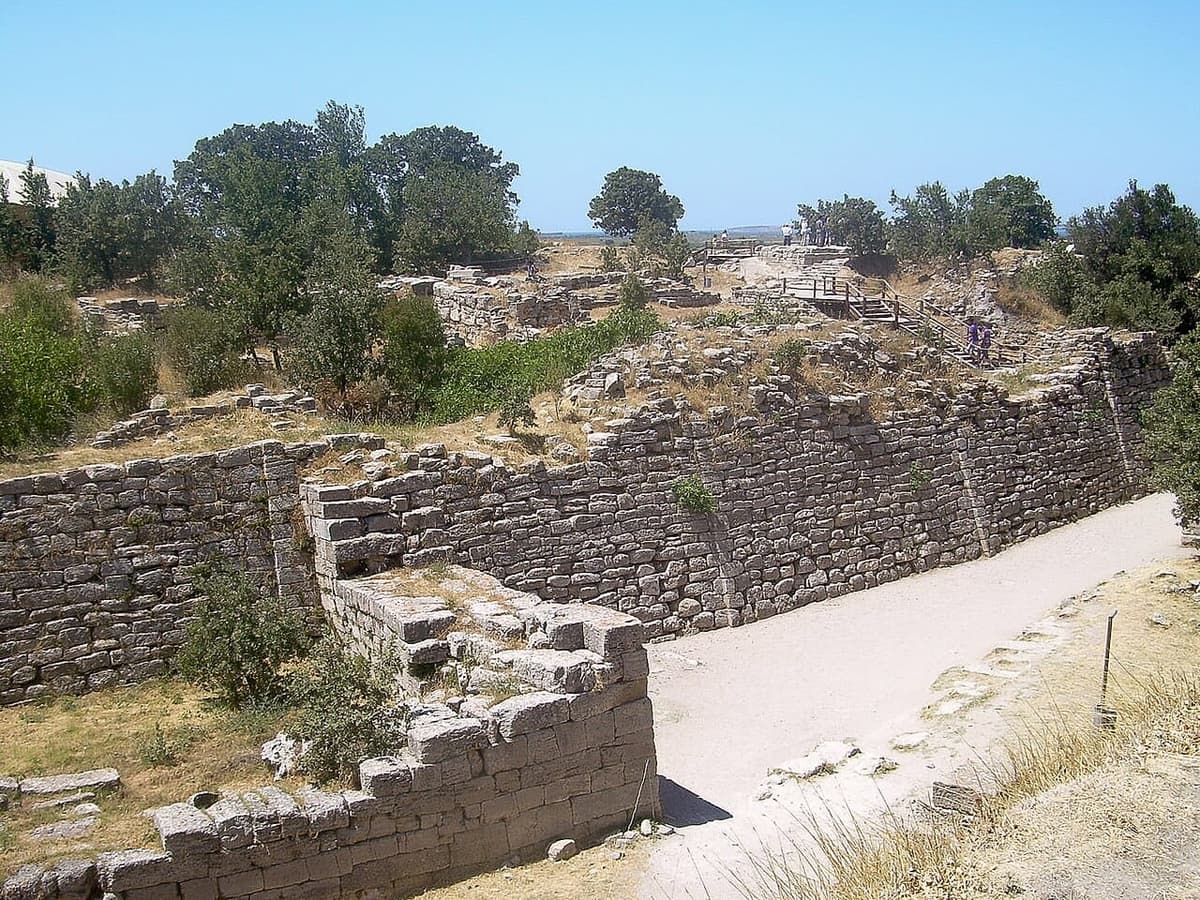
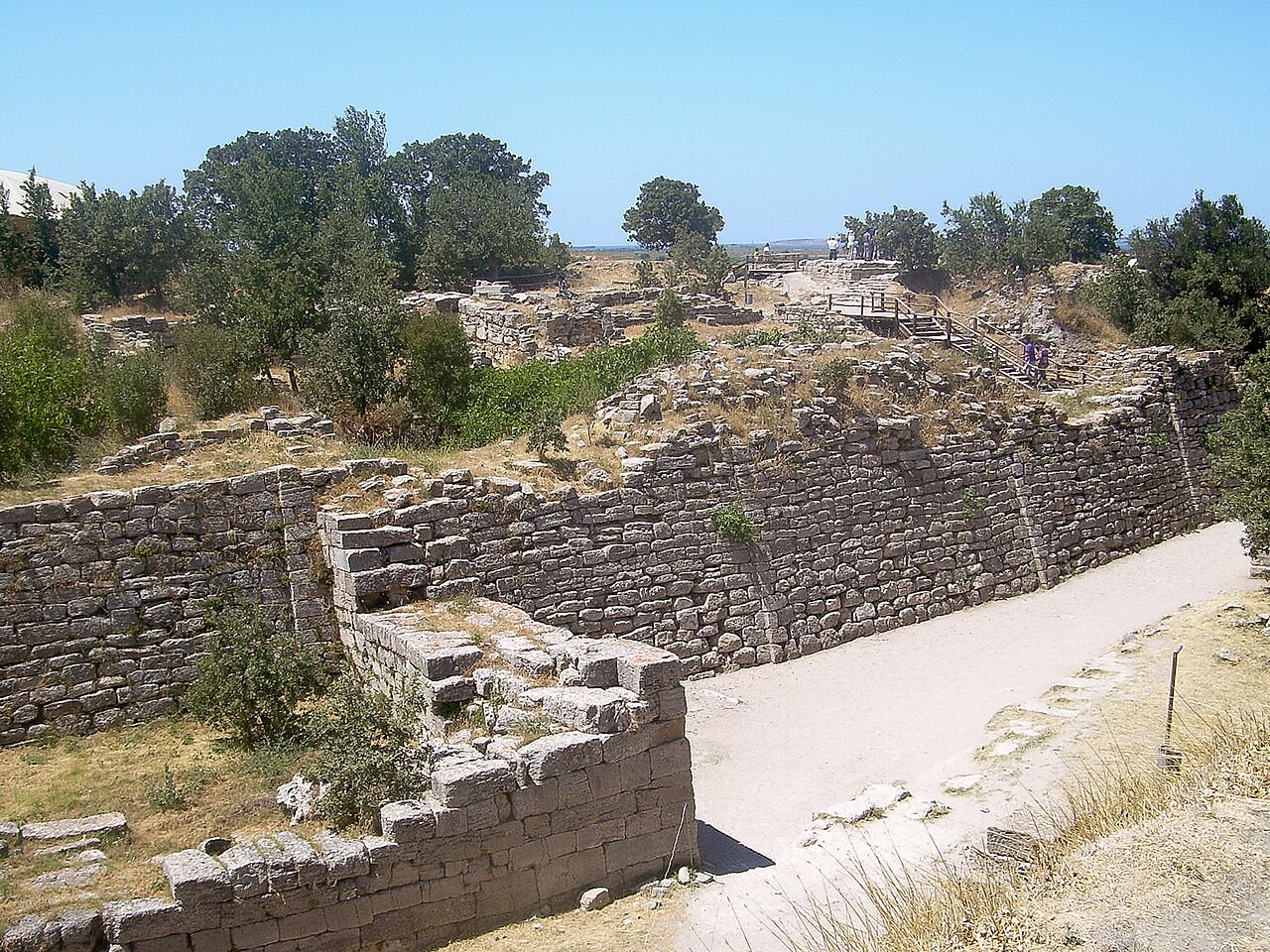
Troy (Hisarlık) is located near the western entrance to the Dardanelles in Çanakkale Province. The site contains at least nine major settlement layers (Troy I through Troy IX), spanning from approximately 3000 BCE to the Byzantine period.
The identification of Hisarlık with Homer's Troy was proposed by Frank Calvert and dramatically pursued by Heinrich Schliemann, who began excavations in 1870. Schliemann's aggressive digging methods damaged much of the site, but his discoveries — including "Priam's Treasure" (actually from Troy II, over a millennium earlier than the Homeric period) — captured worldwide attention.
"Sing, O goddess, the anger of Achilles son of Peleus, that brought countless ills upon the Achaeans."
— Homer, Iliad, Book I (c. 8th century BCE)
Troy VI/VIIa (c. 1700–1180 BCE) is the most likely candidate for the city described in Homer's Iliad. Troy VI was a prosperous citadel with impressive fortification walls, while Troy VIIa shows signs of destruction by fire around 1180 BCE, roughly corresponding to the traditional date of the Trojan War.
The site was designated a UNESCO World Heritage Site in 1998.

Troy-and-its-remains by Heinrich Schliemann | Heinrich Schliemann (Public domain)
The architecture of Troy evolved significantly. The citadel of Troy II (c. 2550-2300 BCE) featured a monumental megaron-style palace and impressive fortifications. In its later Bronze Age zenith during Troy VI, the city was a formidable regional power, its citadel walls featuring distinctive vertical offsets and towers. Daily life is evidenced by finds of spindle whorls, loom weights, and a wide array of local and imported pottery, including Mycenaean Greek wares, indicating active trade networks across the Aegean and Anatolia. The site's strategic location made it a key node in the exchange of metals, textiles, and luxury goods. Following the destruction of Troy VIIa, the site diminished in importance but remained inhabited through Hellenistic and Roman times (Troy VIII-IX), when it was revered as a tourist destination linked to the Homeric legends, before its final decline in the Byzantine era.