Overview
Ephesus (Efes) is located near the modern town of Selçuk in İzmir Province. Founded as a Greek colony around the 10th century BCE, it grew into one of the largest and wealthiest cities of the ancient Mediterranean, serving as the capital of Roman Asia.
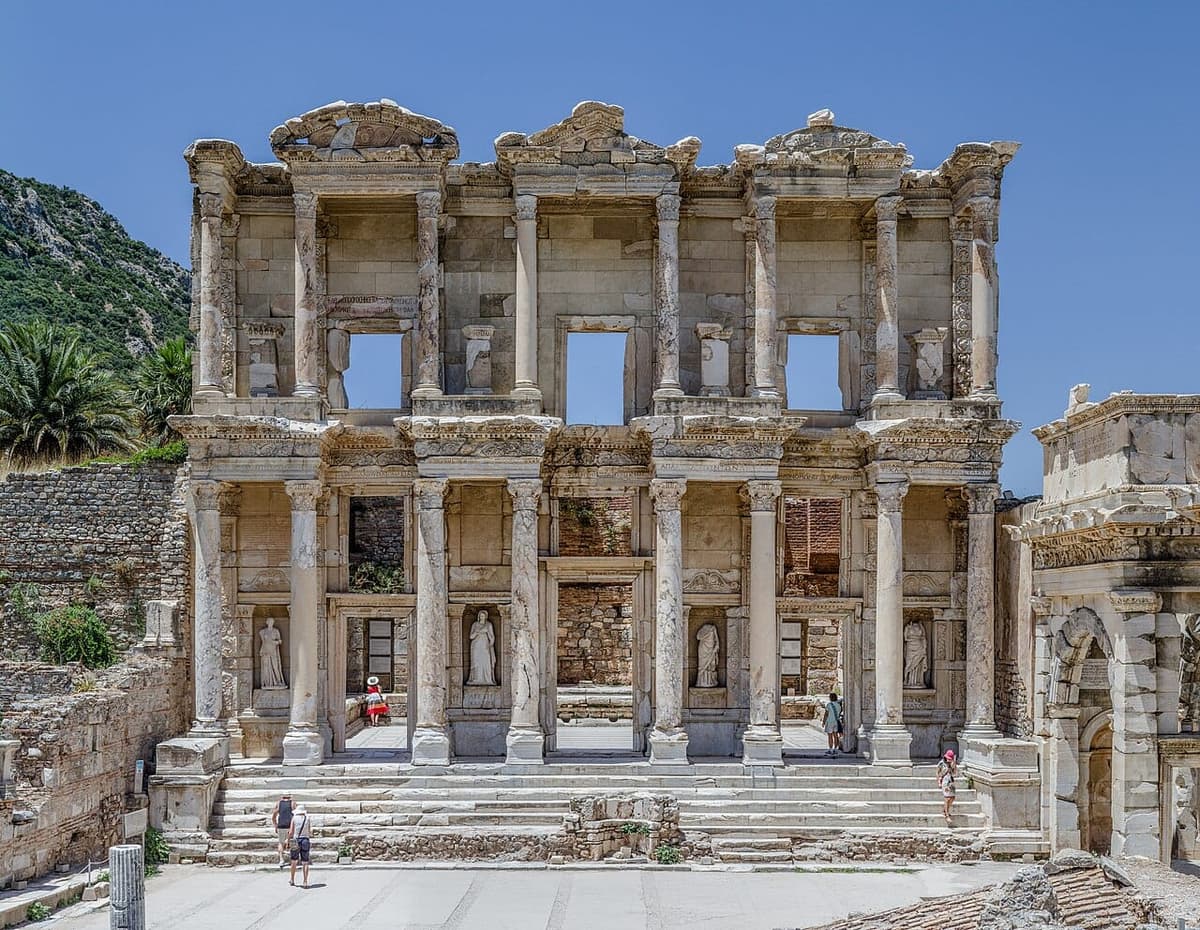
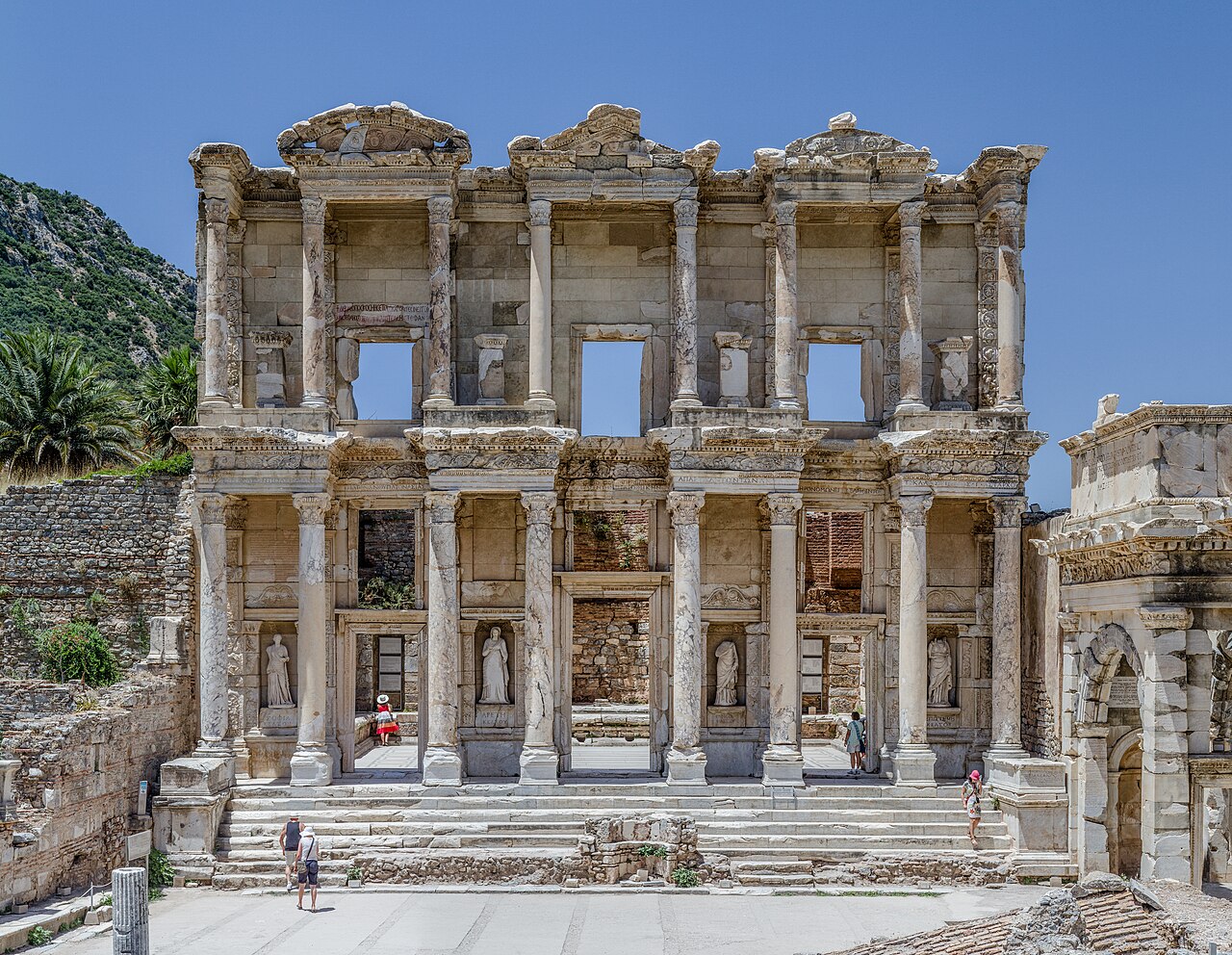
The city's most famous monument was the Temple of Artemis, one of the Seven Wonders of the Ancient World. Though little remains of the temple today, the city itself is remarkably well-preserved. The Library of Celsus, built in 117 CE as a monumental tomb, features one of the most photographed ancient facades in the world.
"Great is Artemis of the Ephesians!"
— Acts of the Apostles 19:28, describing the silversmiths' protest (c. 57 CE)
The Great Theatre, with a seating capacity of approximately 25,000, is the largest ancient theatre in Anatolia. Ephesus also has strong early Christian significance — the Apostle Paul preached here, and the city is associated with the Virgin Mary's later years. The Basilica of St. John and the House of the Virgin Mary (Meryemana) are nearby pilgrimage sites.
The city declined as its harbor silted up over centuries, eventually leaving it several kilometers from the sea.

Ephesus Celsus Library Façade | Benh LIEU SONG (CC BY-SA 3.0)
The city's urban fabric is defined by its monumental public buildings and sophisticated infrastructure. The Marble Street and Curetes Street, lined with shops and statues, connected major civic centers like the State Agora and the Commercial Agora. The city boasted multiple bath-gymnasium complexes, such as the Baths of Scholastikia and the vast Harbour Baths, which were central to daily social and hygienic life. Ephesus was a major commercial hub, its wealth derived from its strategic position on trade routes and its status as the custodian of the Temple of Artemis, which functioned as a significant banking and pilgrimage center. The city's decline was a protracted process. While the silting of its harbor was a primary cause, it was exacerbated by repeated Sassanid raids in the 3rd century CE, major earthquakes, and the eventual shift of trade routes. By the early Byzantine period, the city center had contracted towards the area around the Church of St. John, and the ancient harbor had become a malarial swamp, leading to the site's eventual abandonment.