Overview
Notion, also known as Notium, perches on a hilltop overlooking the Aegean coast near modern Ahmetbeyli in İzmir province. The city's elevated position commands sweeping views over the Gulf of Kuşadası and the surrounding agricultural landscape, a geography that made it both a defensible settlement and a waypoint for maritime traffic along the Ionian coast.
Founded as an Aeolian settlement, Notion later came under Ionian influence and was closely linked to the larger neighboring city of Colophon, of which it functioned as the port. When Colophon was destroyed by Lysimachus in the early 3rd century BCE, many of its inhabitants relocated to Notion, which experienced a period of significant growth and urban development. The city maintained close ties with the famous oracle of Apollo at Klaros, just a few kilometers inland, and served as the access point for pilgrims traveling to consult the oracle.
"Notium is a small town of the Colophonians, where is the temple of the Clarian Apollo."
— Strabo, c. 7 BCE - 23 CE
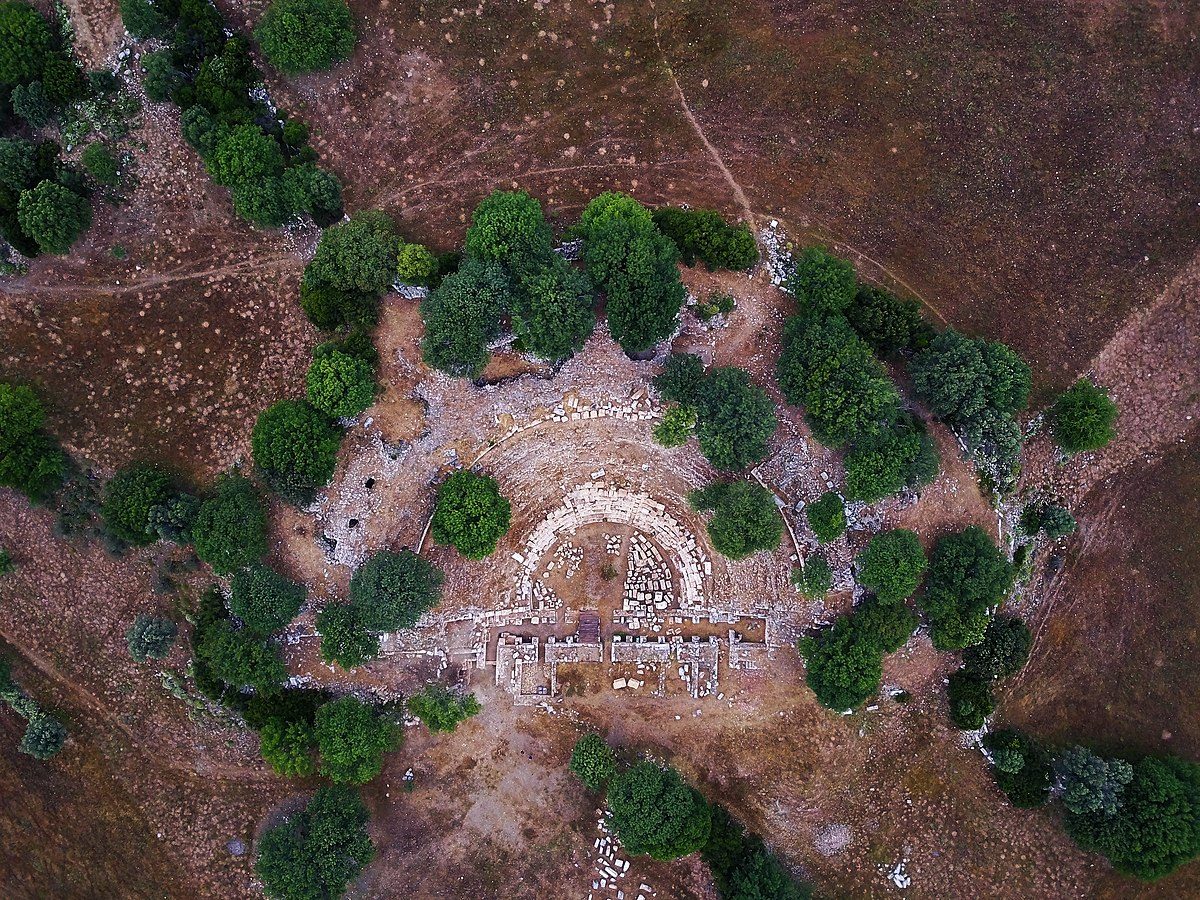
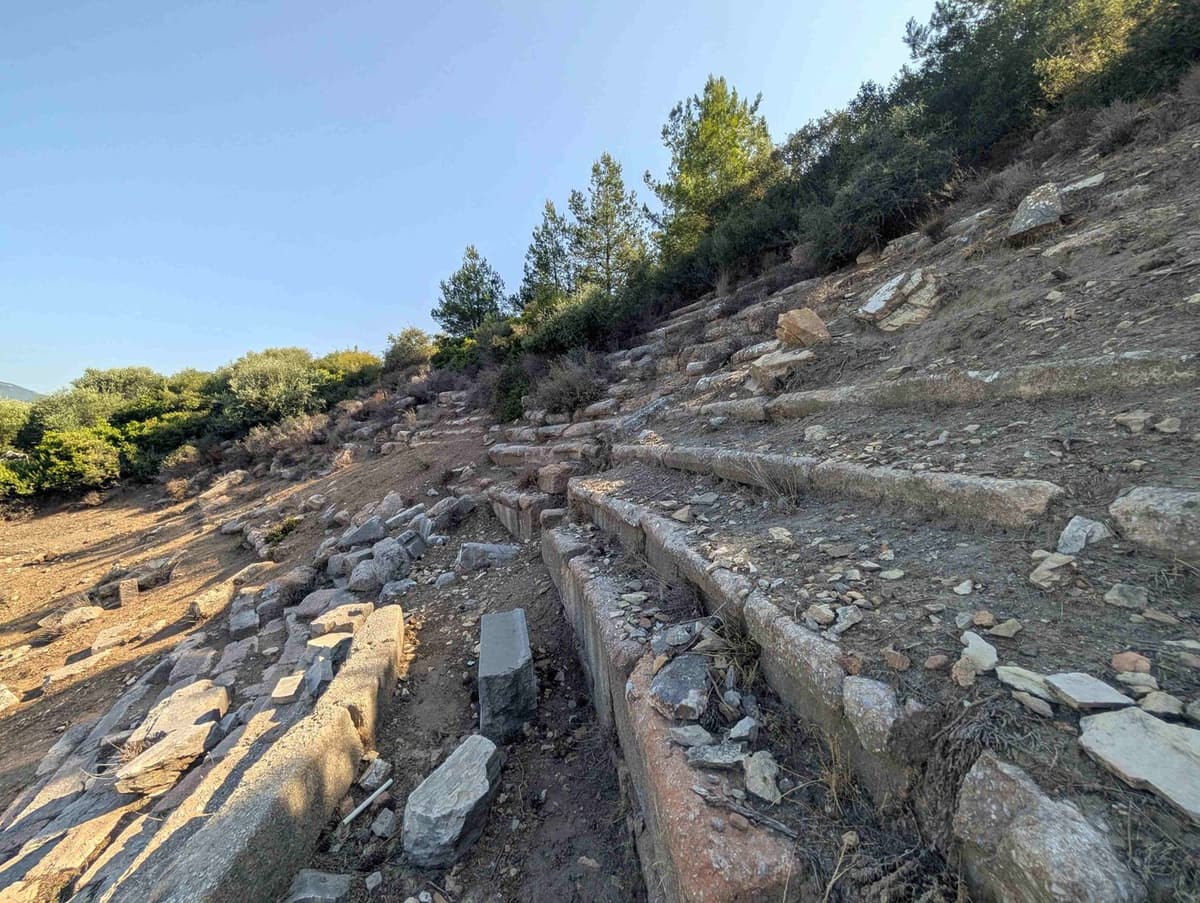
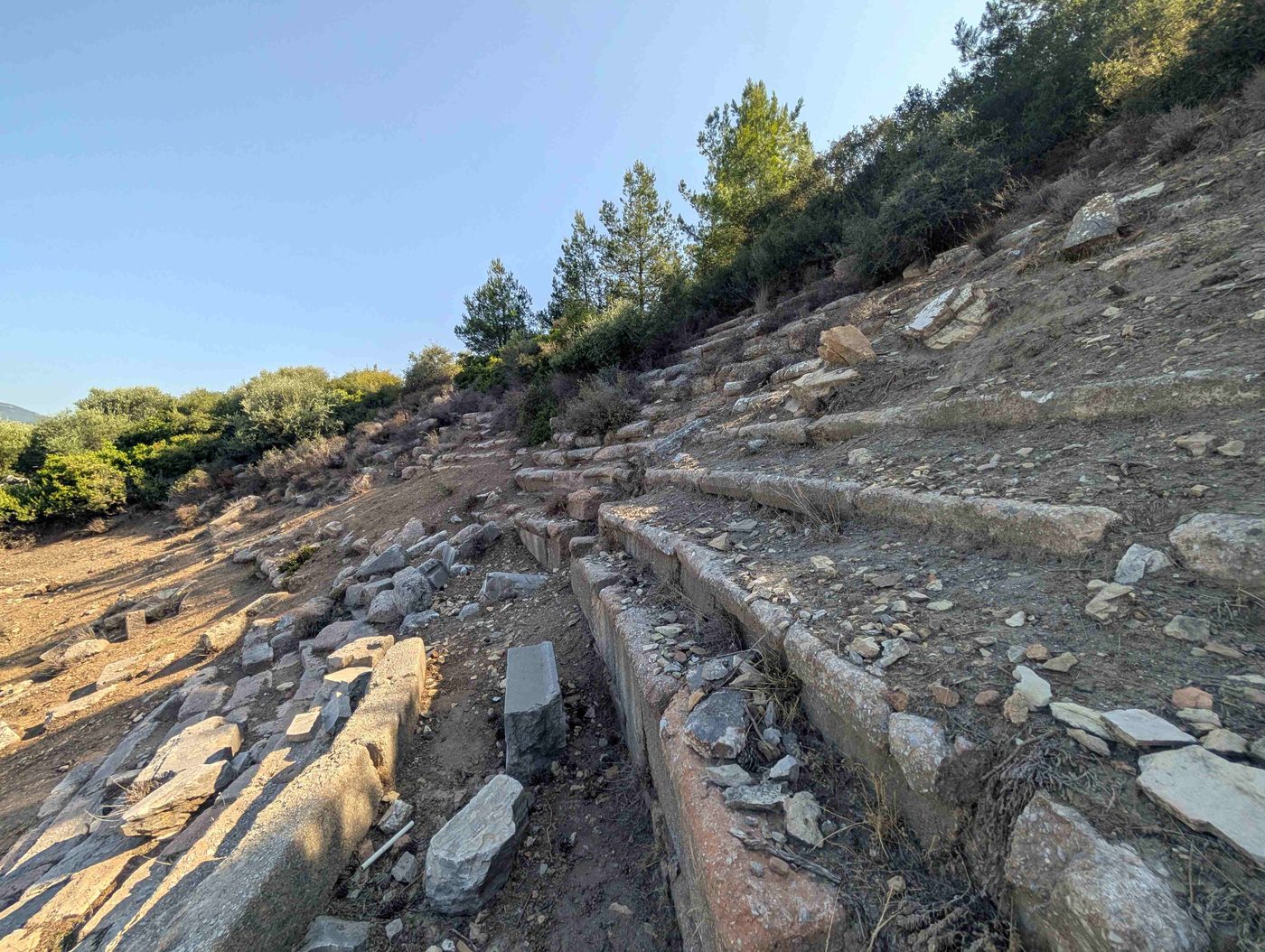
The most prominent surviving monument is the Hellenistic theater, which retains its cavea carved into the hillside and offers spectacular views over the Aegean. Nearby stands a temple of Athena on the city's acropolis, its foundations still visible alongside sections of the fortification walls that protected the hilltop settlement. The agora, temple foundations, and residential terraces descend the hillside toward the ancient harbor area.
Notion played a role in broader Hellenistic and Roman history. The Battle of Notium in 407 BCE saw the Spartan admiral Lysander defeat an Athenian fleet commanded by Antiochus (Alcibiades' lieutenant), a defeat that contributed to Alcibiades' political downfall and ultimately to Athens' loss of the Peloponnesian War. Later, under Roman rule, the city gradually declined as the harbor silted up and regional importance shifted to Ephesus.

Ahmetbeyli... - panoramio | Sinan Şahin (CC BY 3.0)
Though less famous than its Ionian neighbors, Notion's modest scale and good preservation make it an accessible example of a typical Hellenistic coastal polis, complete with the full range of public buildings and urban infrastructure.