Overview
Teos occupies a picturesque coastal peninsula south of modern Sığacık in İzmir province, overlooking a sheltered harbor that made it one of the preeminent maritime cities of ancient Ionia. As one of the twelve member cities of the Ionian League — the cultural and political confederation that helped define Greek civilization in Asia Minor — Teos played a role in Aegean history far outsized for its modest physical extent.
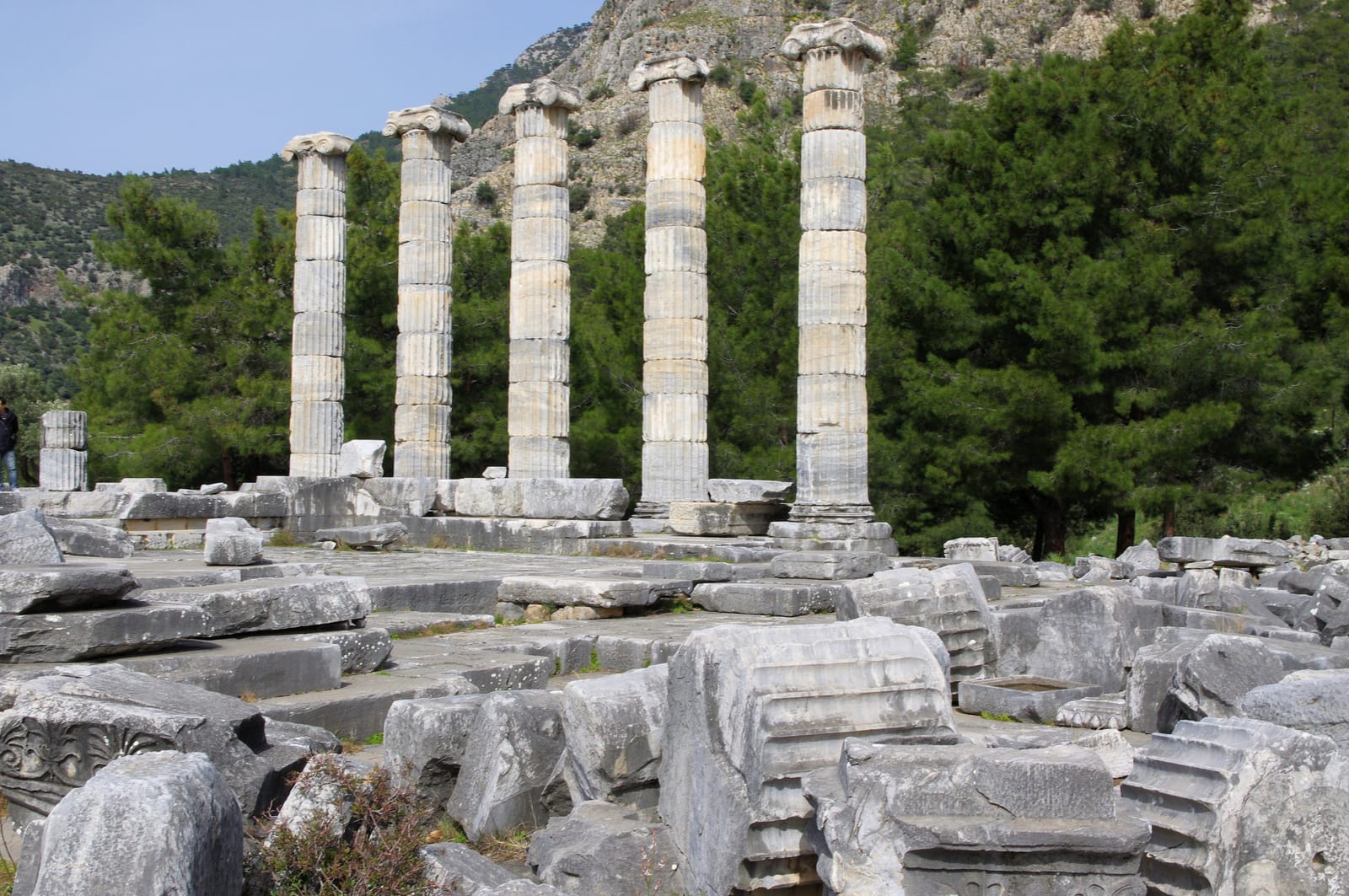
The city's greatest monument was the Temple of Dionysus, designed by the celebrated architect Hermogenes in the 2nd century BCE. This Ionic peripteral temple was considered the most important sanctuary of Dionysus in the ancient world, and Teos served as the headquarters of the Artists of Dionysus (Technitai), the guild of actors, musicians, and performers who organized theatrical festivals across the Greek-speaking world. This connection to the performing arts gave Teos an outsized cultural influence, as the Dionysiac artists carried the city's reputation throughout the Mediterranean.
"Teos is a city of the Ionians, with a harbor, and a temple of Dionysus."
— Strabo, Geography (c. 7 BCE - 23 CE)
Teos was also the birthplace of Anacreon (c. 582-485 BCE), one of the great lyric poets of ancient Greece, whose poems celebrating wine, love, and song earned him lasting fame. The tradition of Anacreontic poetry — lighter verses on pleasure and conviviality — influenced Western literature for millennia, and the French national anthem "La Marseillaise" drew on this literary tradition.
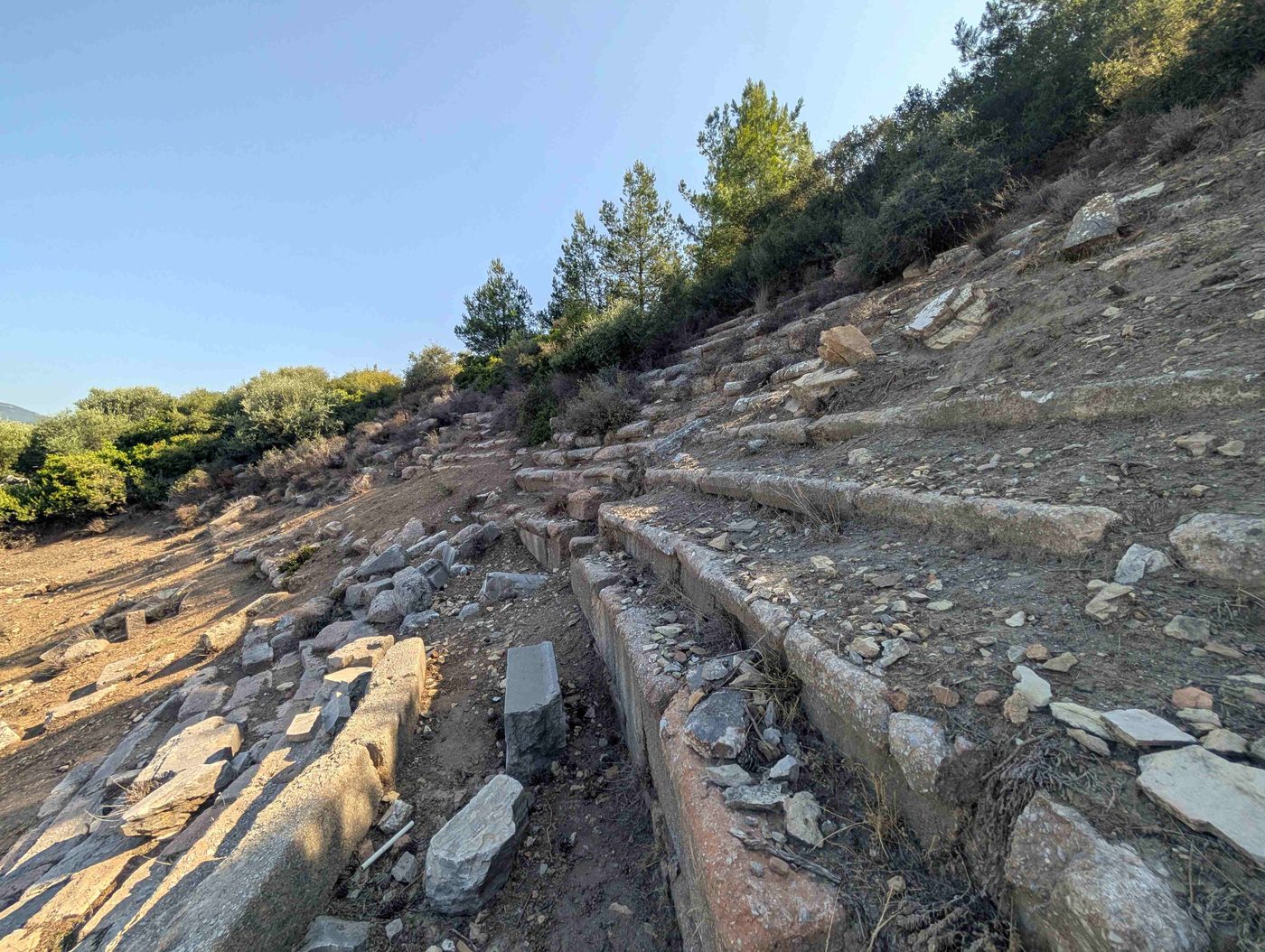
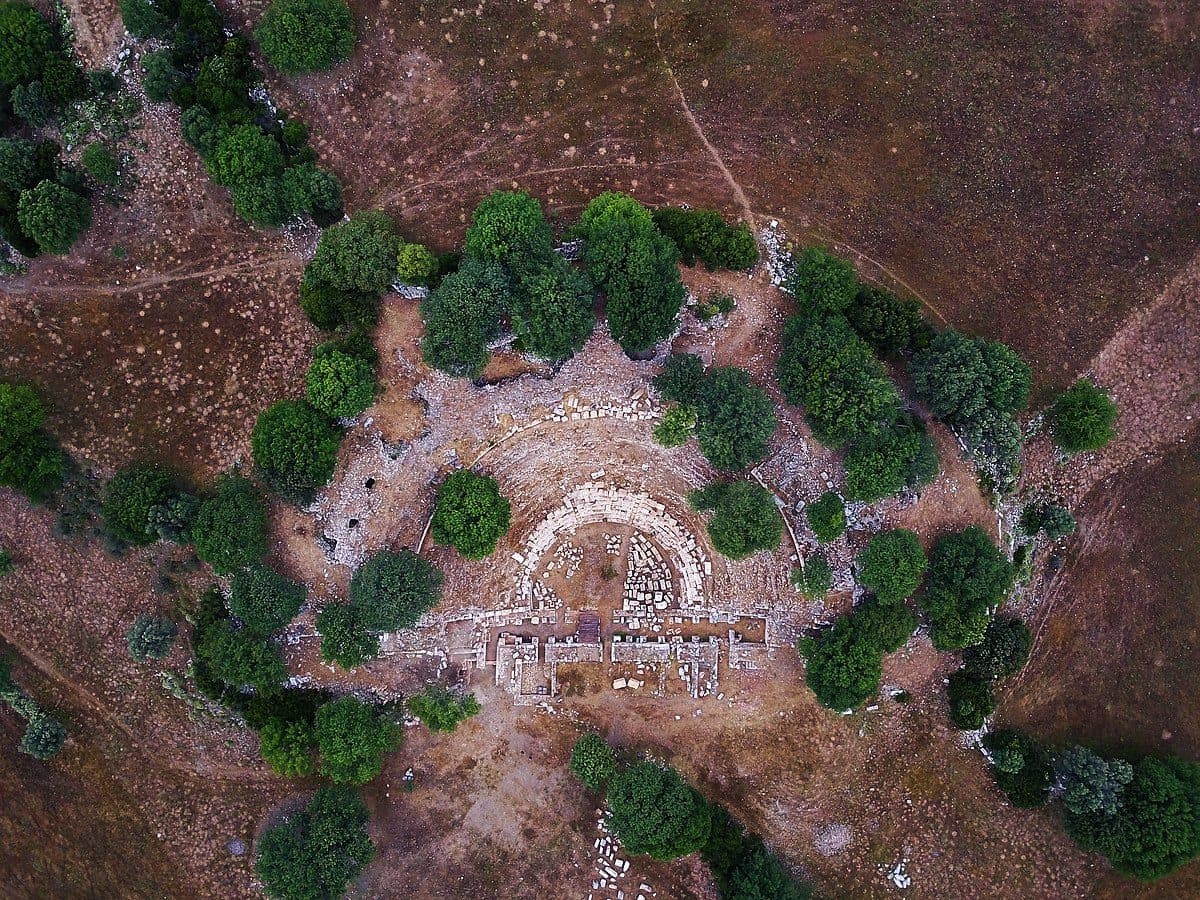
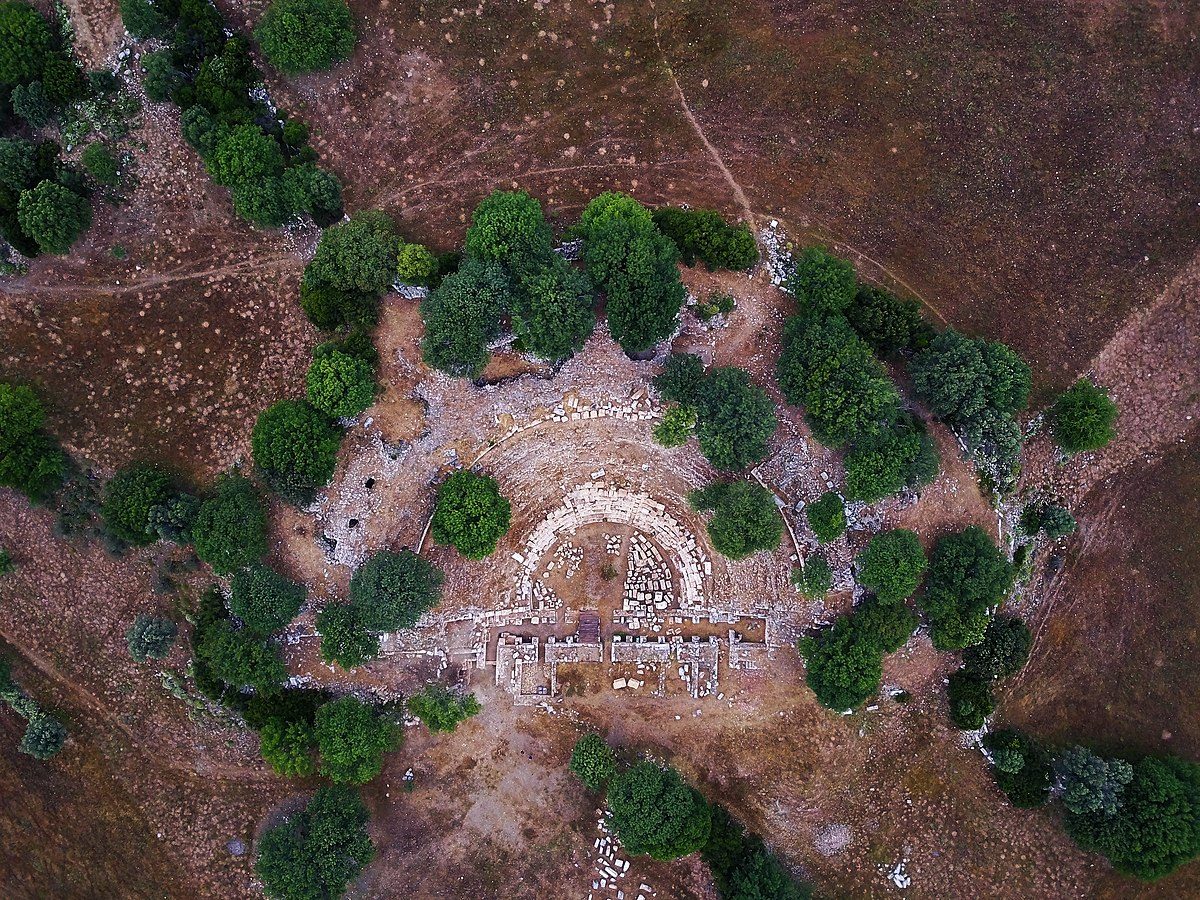
The ancient city preserves substantial remains. The Temple of Dionysus, though heavily ruined, retains its massive platform and scattered architectural elements. A well-preserved odeon, sections of the harbor fortifications, a gymnasium, and portions of the residential quarter have been documented through ongoing Turkish-German excavations. Recent work has uncovered remarkably preserved Hellenistic houses with painted walls and mosaic floors.

Theater teos | Philipp Pilhofer (CC BY-SA 3.0)
Teos also holds significance for the history of international law. In the 3rd century BCE, the city was declared asylia (inviolable) by multiple Hellenistic kingdoms, a status that protected it from military attack — one of the earliest examples of internationally recognized protected status for a city.