Overview
Termessos is ancient defiance made architectural. Perched at over 1,000 meters on the slopes of Gulluk Dagi (Mount Solymos) in the western Taurus Mountains, this Pisidian city was so formidably positioned that Alexander the Great — who conquered everything from Egypt to India — laid siege to it in 333 BCE and withdrew without taking it, comparing the city to an eagle's nest.
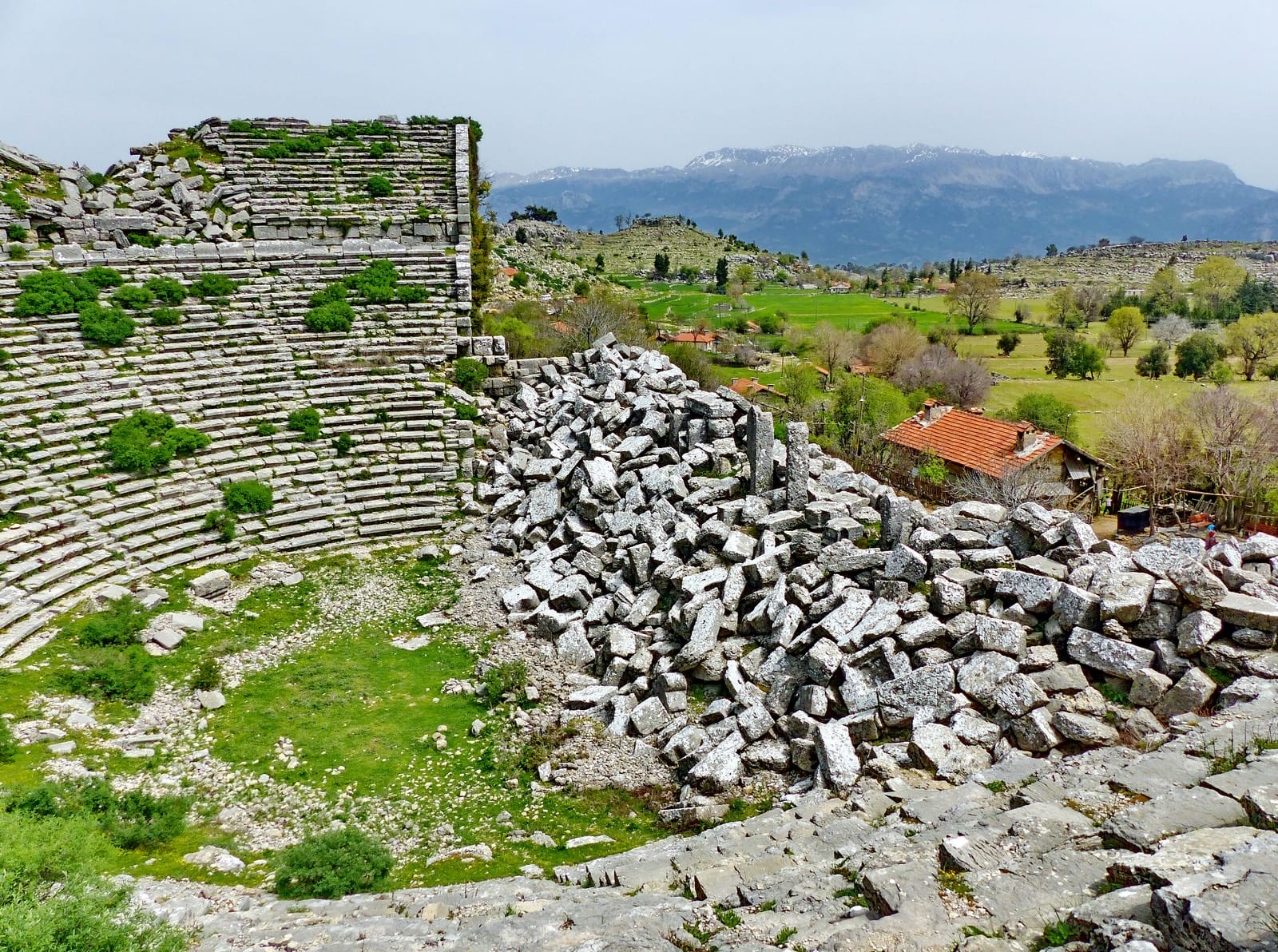
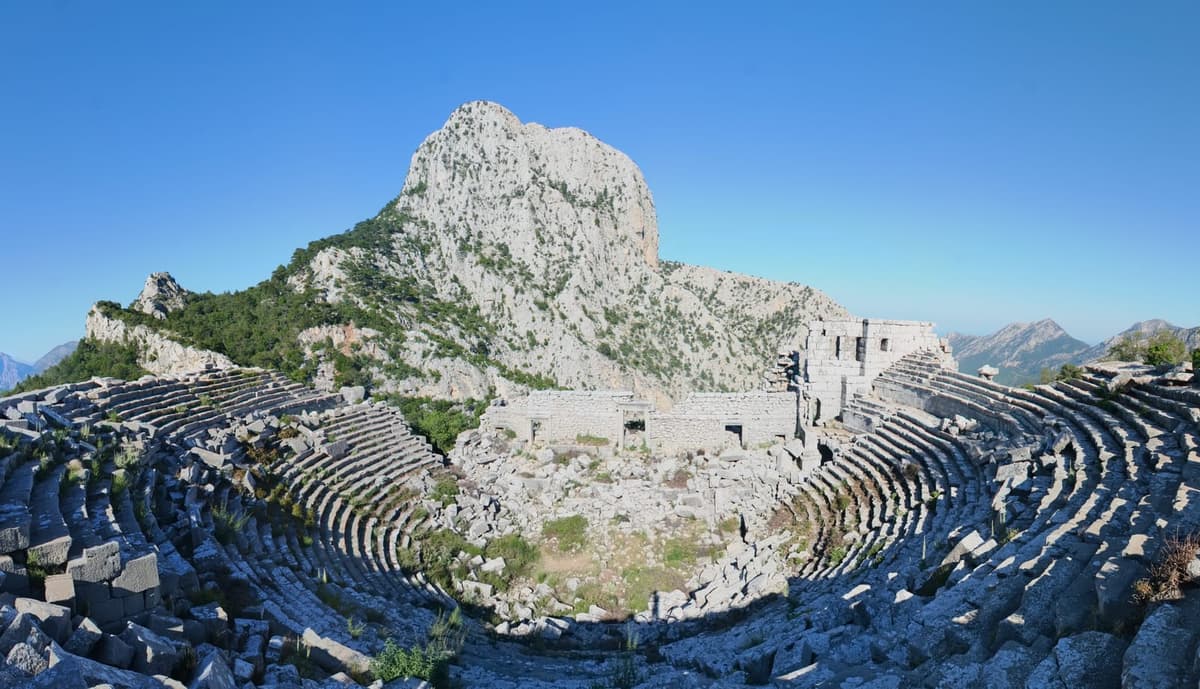
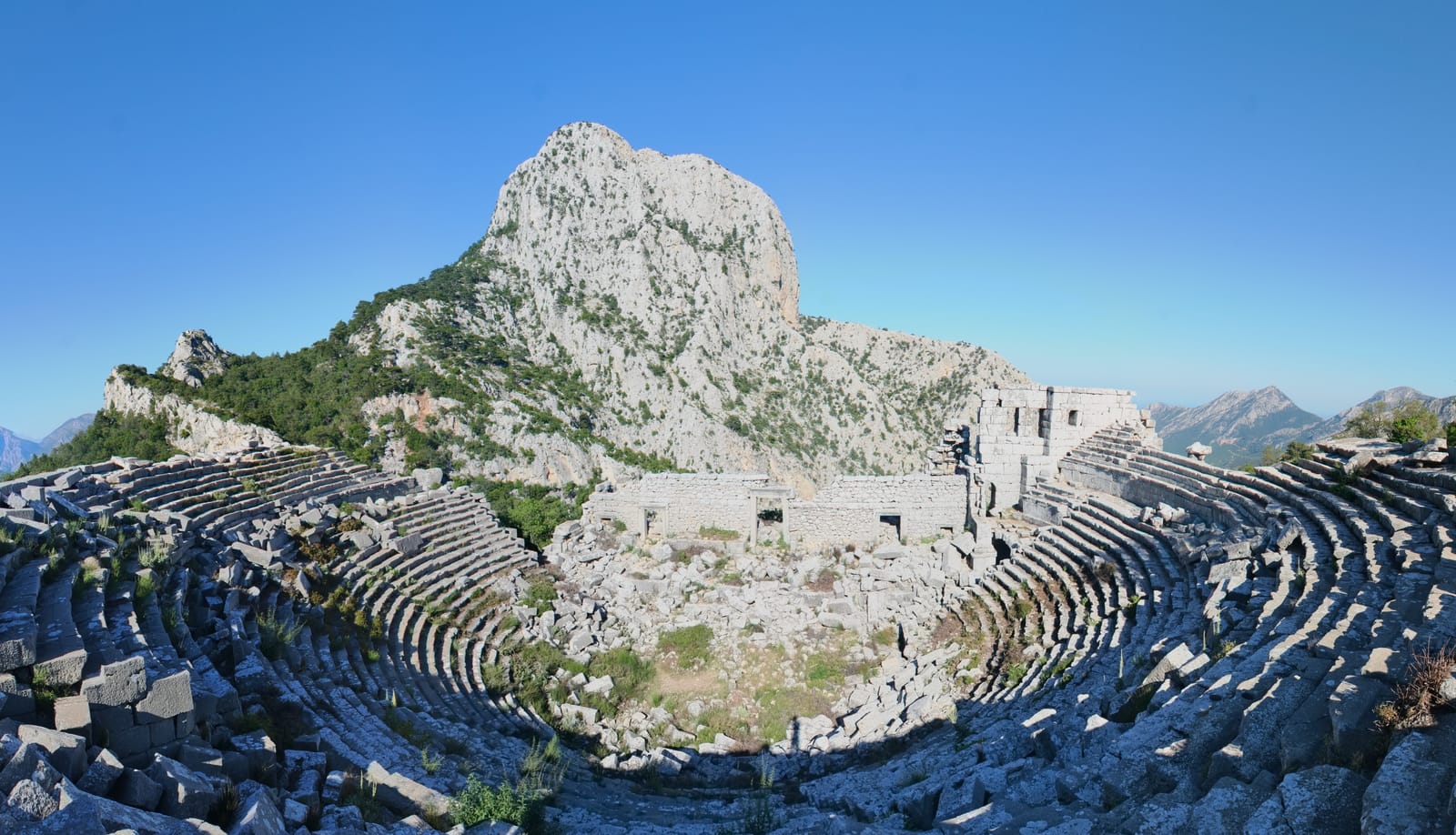
The approach to Termessos follows the ancient King's Road through a narrow mountain pass that was easily defended. The city itself occupies a series of natural terraces protected by sheer cliffs on multiple sides. The theatre, seating approximately 4,200, commands one of the most spectacular views of any ancient structure — on clear days, the panorama extends across forested peaks to the Mediterranean coast below.
"Termessos is a city built on a mountain pass, naturally fortified and difficult to capture."
— Arrian, c. 2nd century AD (Anabasis Alexandri)
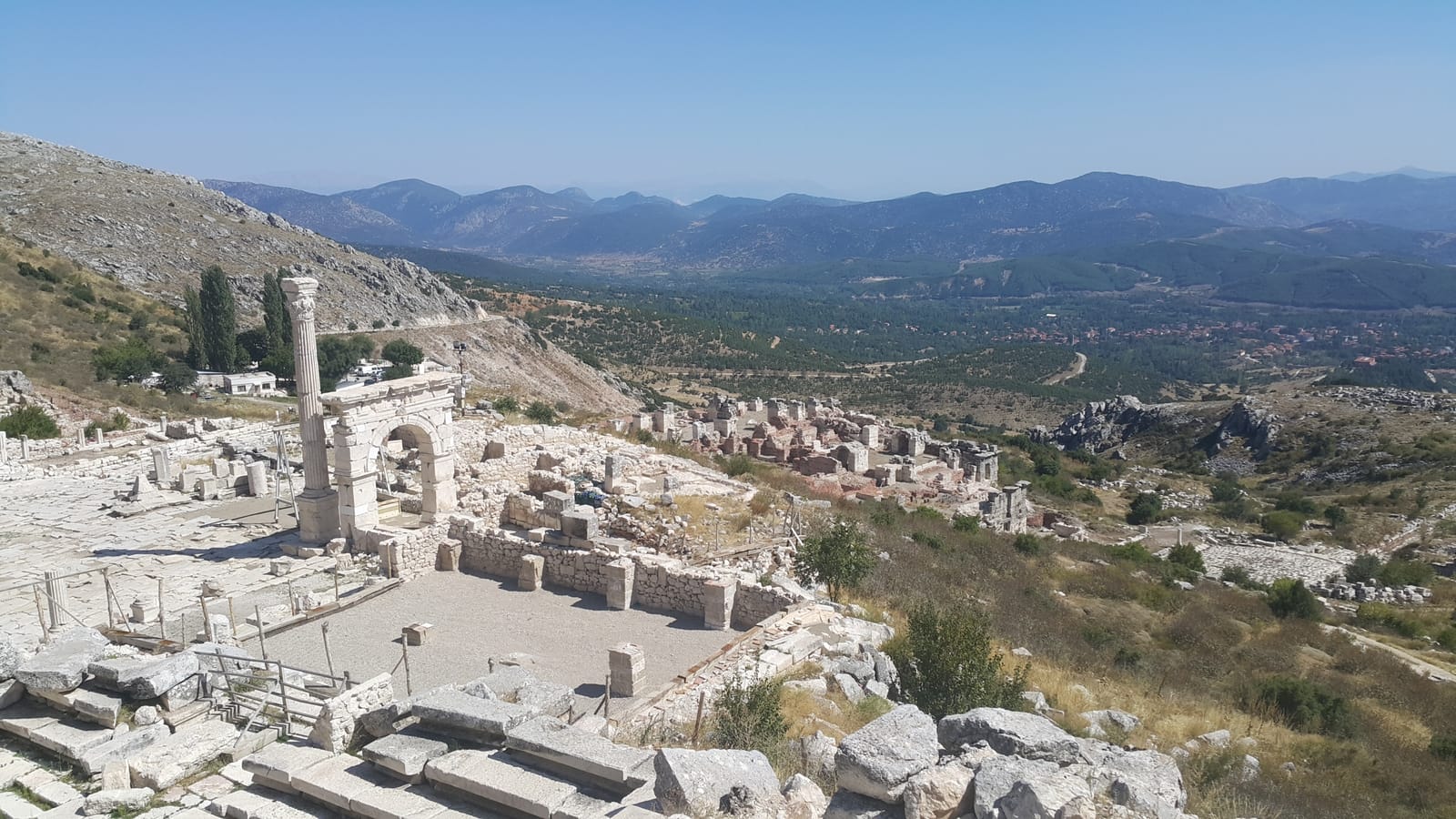
The site was never systematically excavated and remains largely overgrown, lending it a wild, romantic quality. Sarcophagi from the vast necropolis are scattered through pine forests, many with their lids displaced by earthquakes. The agora, five cisterns, a gymnasium, an odeon, and several temples (including one to Artemis and another to Zeus Solymeus, the local patron deity) survive among the trees.
Termessos was designated as Turkey's first national park in 1970, protecting both the ruins and the surrounding mountain ecosystem, which harbors wild goats, eagles, and Mediterranean flora.

Ancient ruins at Termessos | 7oanna (CC BY-SA 4.0)
The city's architecture, built from the local grey limestone, is a testament to its prosperity and Hellenistic influence, seen in the five monumental temples, the colonnaded street, and the well-preserved gymnasium complex. Daily life was sustained by an ingenious system of cisterns and at least one aqueduct channeling mountain water, crucial for a settlement at such an altitude. While fiercely independent, Termessos was connected to regional trade networks, evidenced by finds of imported pottery and its strategic position overlooking the Attaleia (Antalya) plain. Its ultimate abandonment by the 5th century CE is attributed not to conquest but to the gradual decay of its vital water infrastructure, likely after a major earthquake, leaving the city to be reclaimed by the forest.