Overview
Selge was the most remote and fiercely independent city of ancient Pisidia, situated at approximately 1,000 meters elevation in the rugged Koprulu Canyon region of the western Taurus Mountains. The city's extreme isolation — accessible only through narrow mountain passes — allowed it to maintain its independence longer than almost any other Anatolian city, resisting both Persian and Hellenistic domination.
The city thrived on mountain resources: storax resin (used in perfumery and medicine), timber, and olives. At its peak, Selge fielded an army of 20,000 soldiers — remarkable for a mountain city — and minted its own coinage. The population is estimated to have reached 20,000 in the Hellenistic period.
"Selge is a city of Pisidia, situated on a well-fortified hill, with a river flowing beneath it."
— Strabo, c. 7 BCE - 23 CE
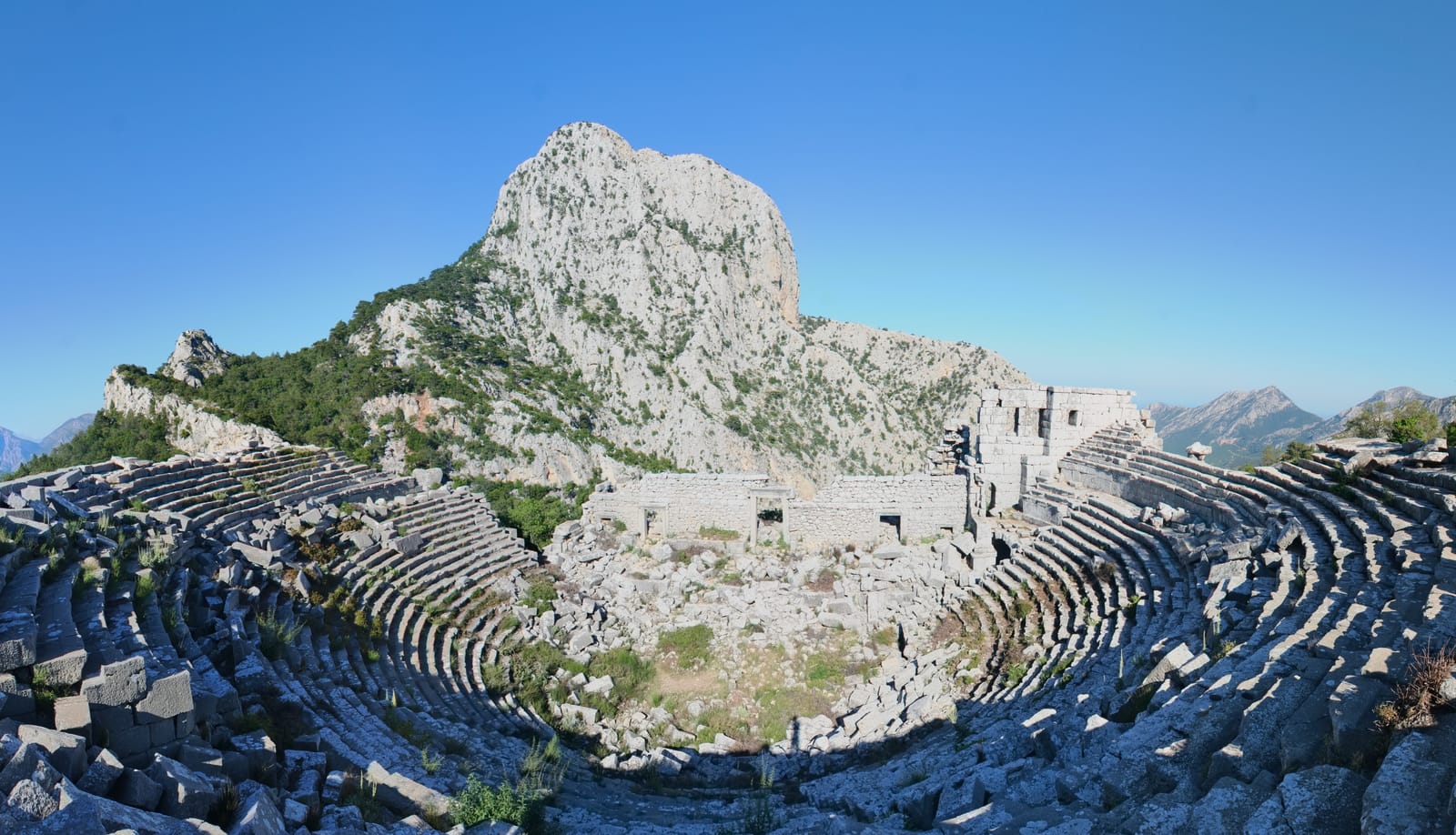
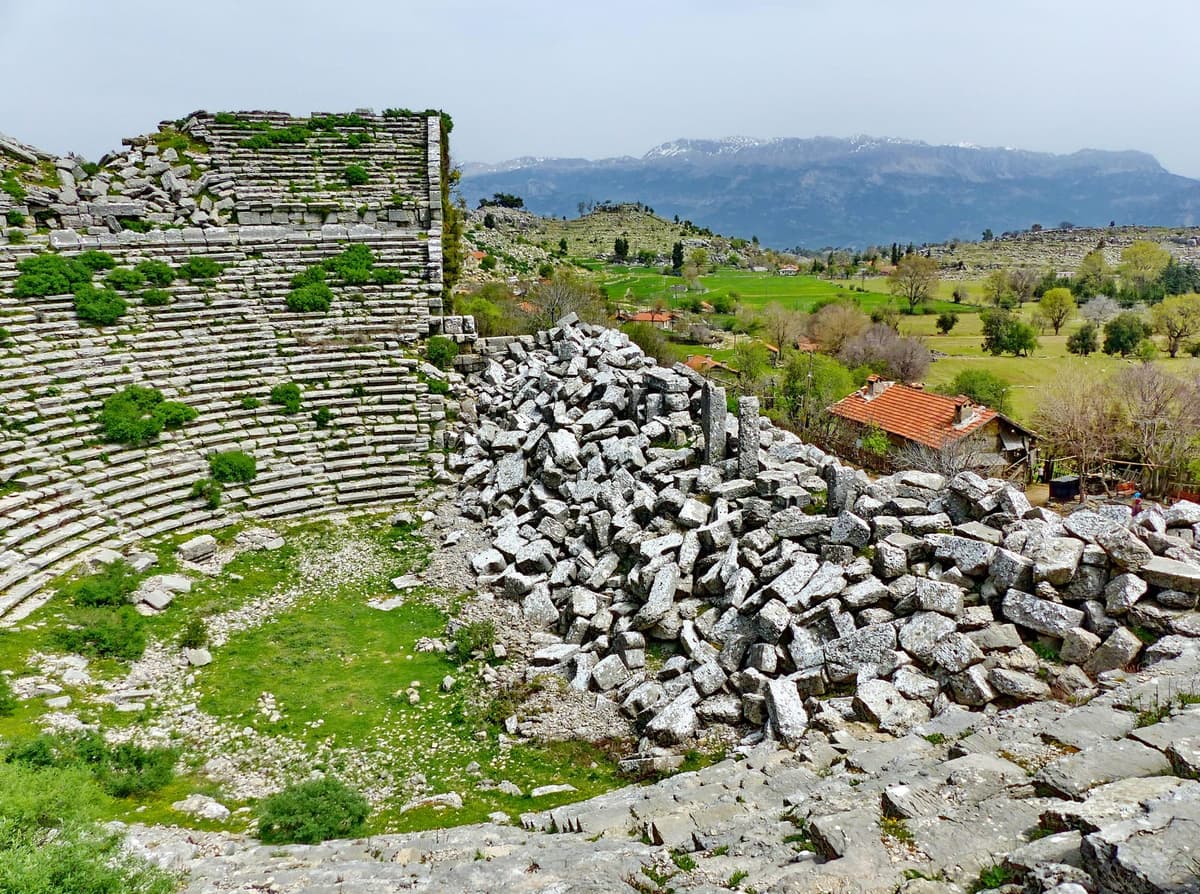
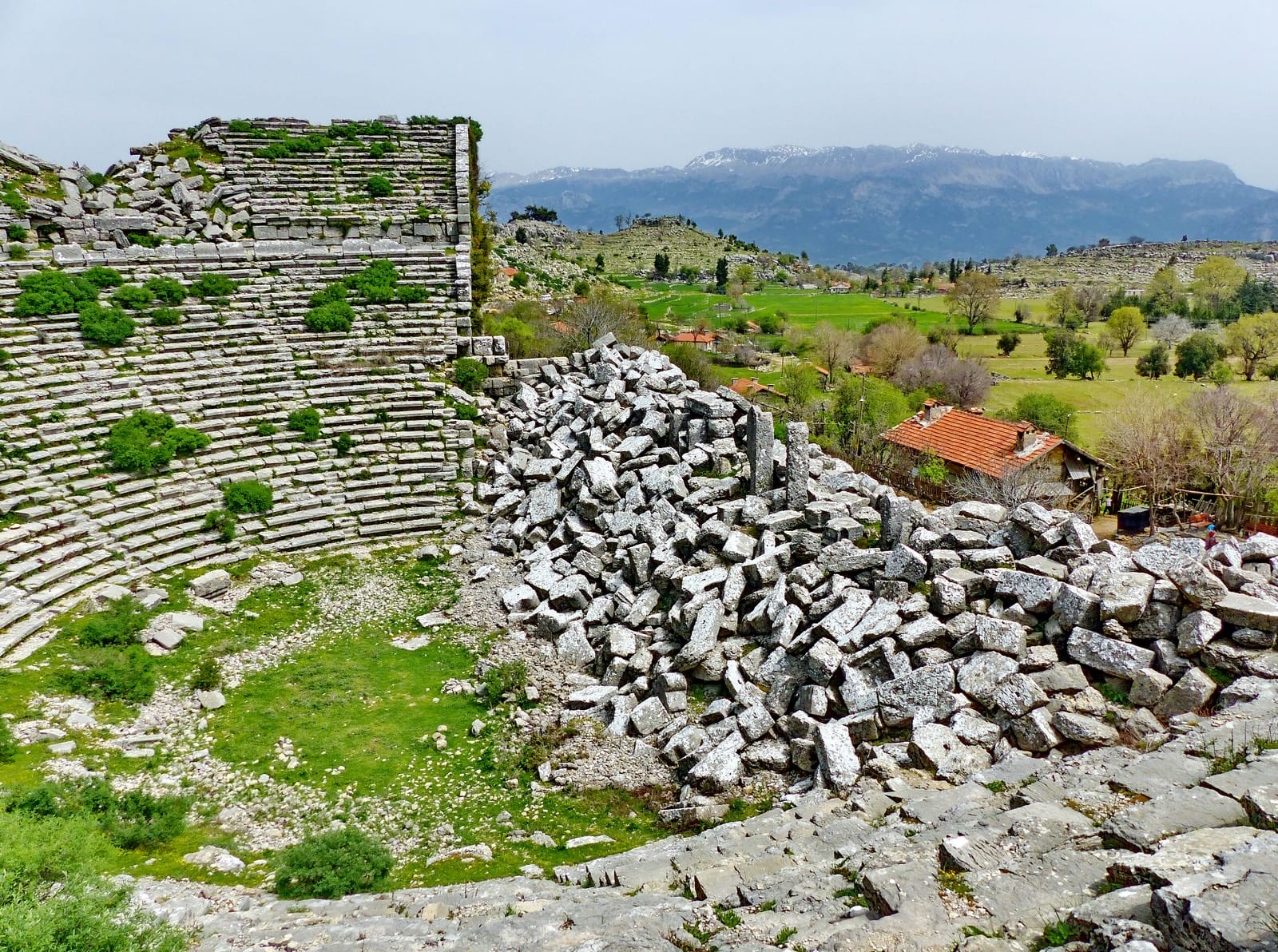
The well-preserved Roman theatre, seating approximately 10,000 spectators, occupies a spectacular hillside position with views across forested mountains. Below the city, the ancient Eurymedon Bridge (modern Oluk Bridge) — a single-arch Roman bridge spanning the Koprulu Canyon at a height of 27 meters — is one of the most photographed ancient bridges in Turkey.
The modern village of Altinkaya (formerly Zerk) sits among the ruins. The surrounding Koprulu Canyon National Park preserves the dramatic landscape of deep gorges, cypress forests, and rushing rivers that defined Selge's mountain world. The ancient city is reached via a winding mountain road that itself offers panoramic views of the canyon.

Selge Theatre Inside 5113 | Dosseman (CC BY-SA 4.0)
The city's urban fabric reveals a blend of Hellenistic planning and local Pisidian tradition. Beyond the theatre, the remains of a large agora, a stadium, two temples dedicated to Zeus and Artemis, and a monumental nymphaeum speak to a prosperous civic life. The extensive system of cisterns and aqueducts highlights the engineering required to support a major settlement in this arid, high-altitude environment. Selge's economy was not solely based on storax; its prolific coinage, minted from the 5th century BCE through the Roman Imperial period, facilitated trade and asserted its political autonomy. These coins often featured local symbols like the club of Heracles or the head of Artemis. The city's decline began in the 3rd century CE, likely due to regional instability and the changing dynamics of trade. It remained a bishopric into the early Byzantine era but was gradually abandoned, its formidable isolation eventually becoming a liability rather than a defense.