Overview
Patara was the principal city of the Lycian League — one of the earliest known democratic federations in history — and its chief port on the Mediterranean. Located where the Xanthos River meets the sea, Patara was both a political capital and a critical maritime waystation between the Aegean and the eastern Mediterranean.
The city's monumental assembly hall (bouleuterion), where representatives of the Lycian League's member cities gathered to deliberate and vote, is the best-preserved example of an ancient democratic parliament building. The American founders, including James Madison, studied the Lycian League's proportional representation system when drafting the U.S. Constitution.
"Patara is a city of Lycia, where there is a temple of Apollo, and an oracle which gives responses in winter."
— Strabo, c. 7 BCE - 23 CE
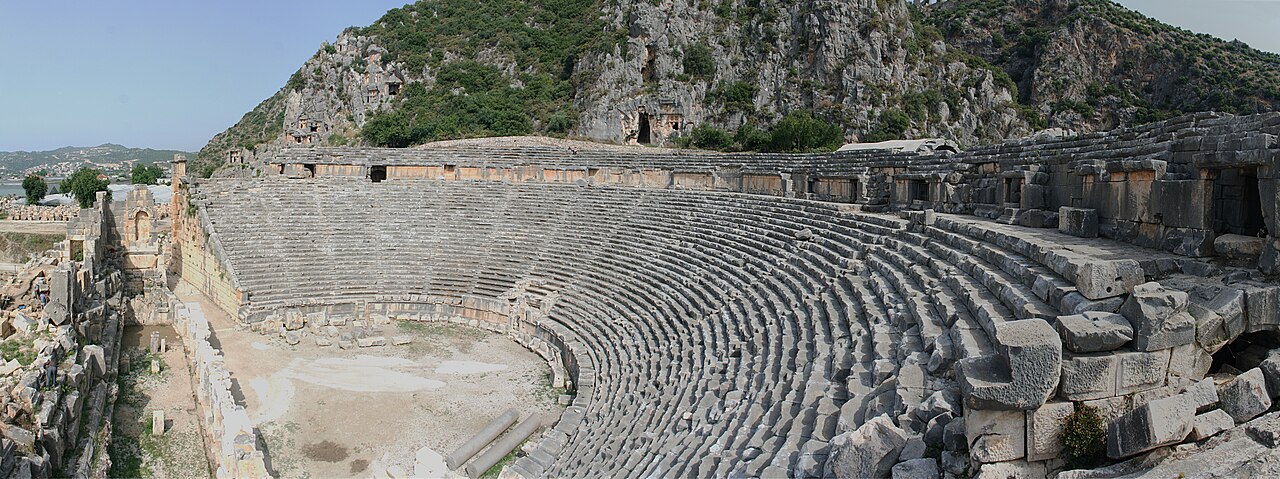
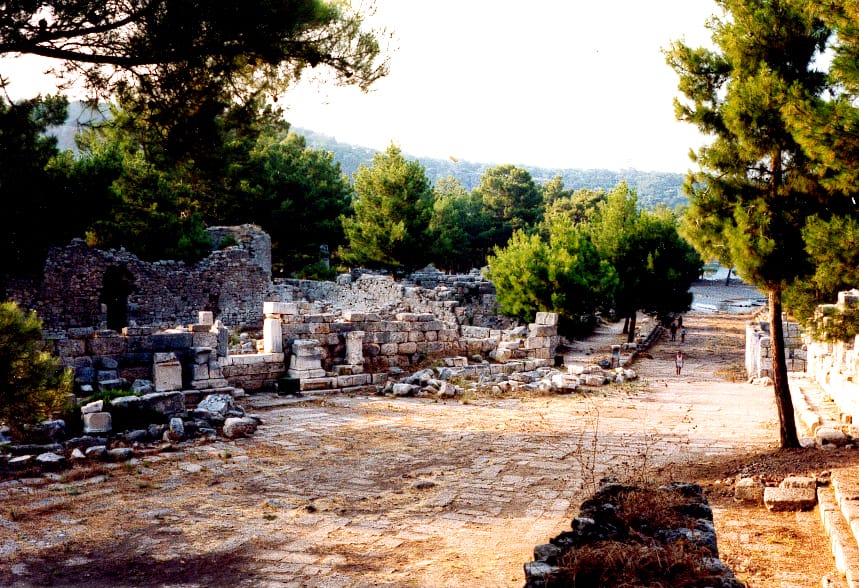
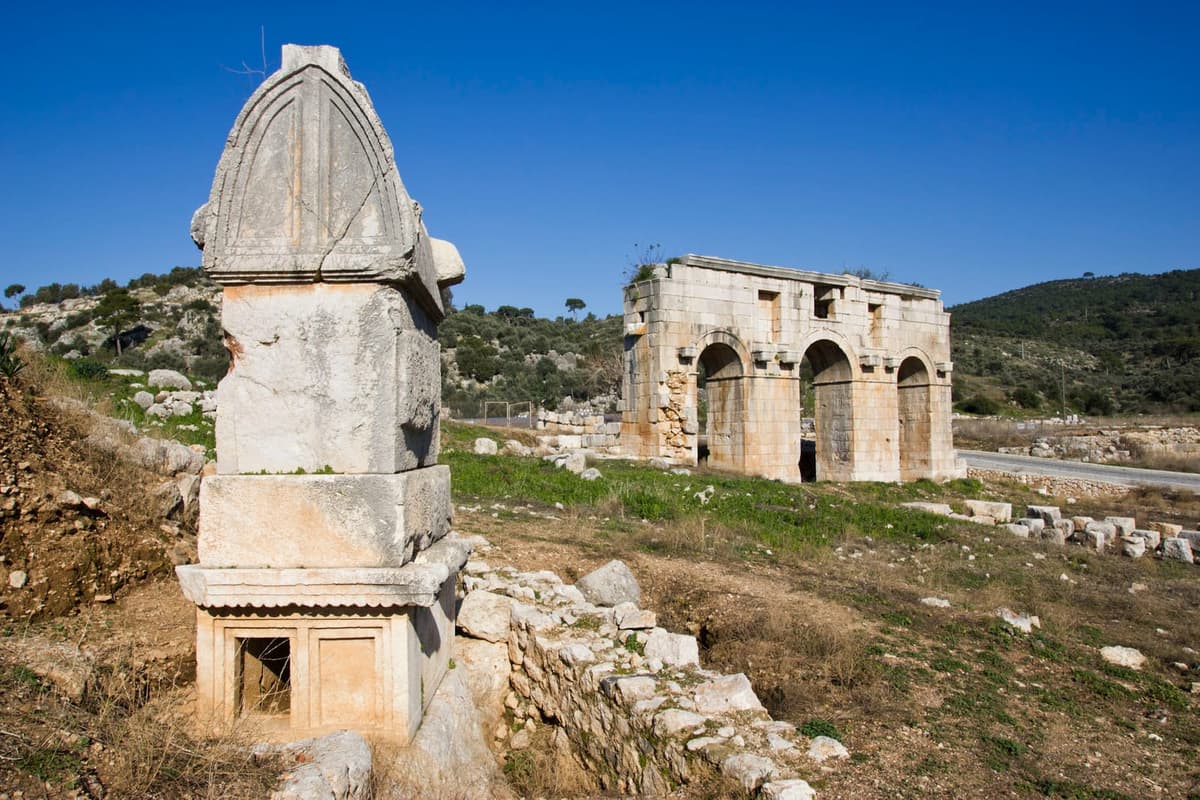
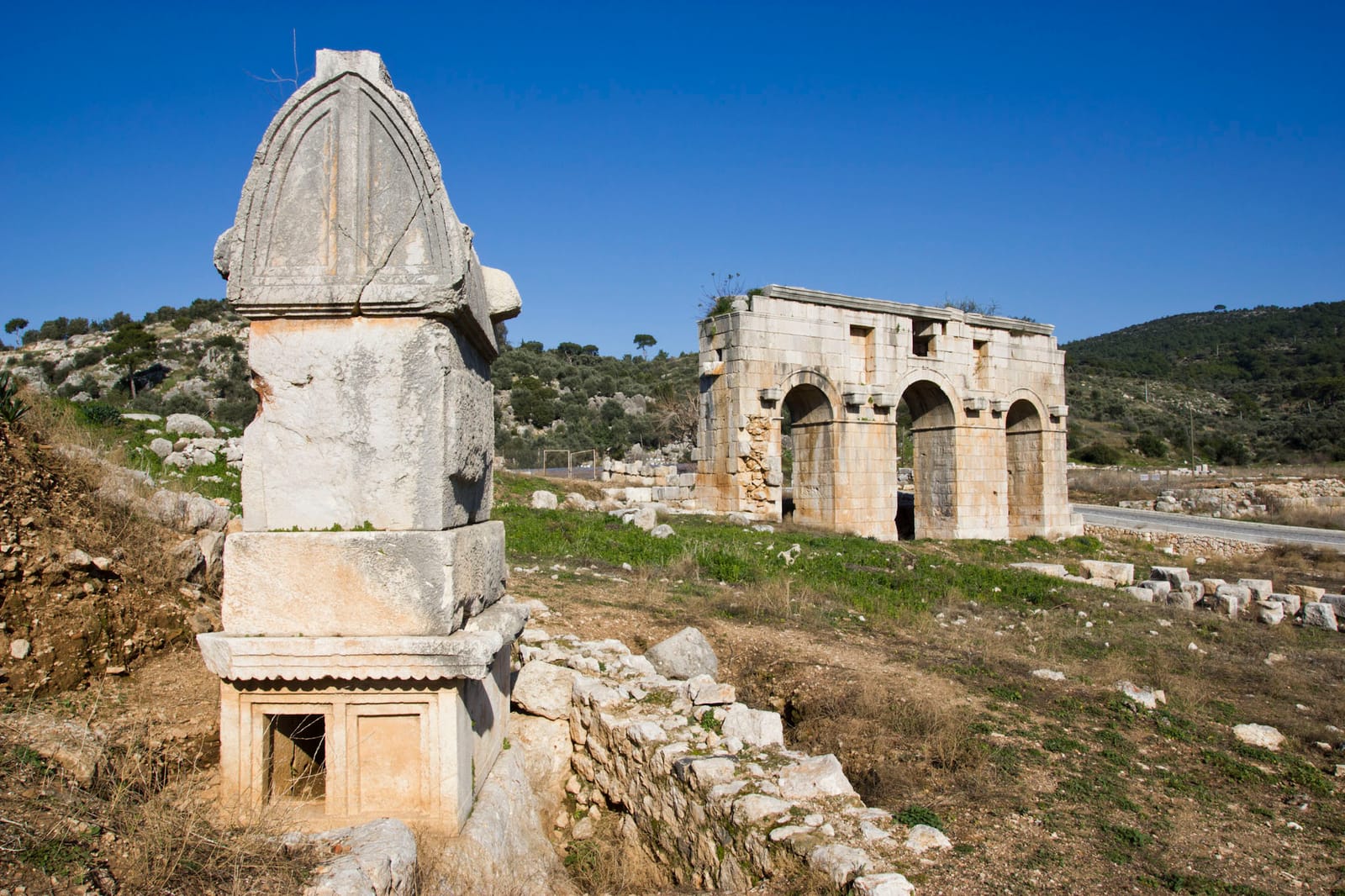
Patara's lighthouse, dated by inscription to the reign of Nero (54-68 CE), is considered the oldest known lighthouse structure in the world. The city also boasts a massive Roman theatre, a triple-arched triumphal gate, a colonnaded main street, Roman baths, granaries, and a basilica.
St. Nicholas of Myra — the historical figure behind Santa Claus — was born in Patara around 270 CE. The city's 18-kilometer beach, one of the longest in Turkey, now serves as a nesting ground for endangered loggerhead sea turtles (Caretta caretta), intertwining natural and cultural conservation.

Ruins of Patara, capital of Lycia, Turkey | Roman_Zacharij (CC BY-SA 4.0)
Beyond its political monuments, Patara was a city of grand public works. Its main entrance, the triple-arched Mettius Modestus Gate, erected around 100 CE, marked the start of the city's colonnaded main street. A sophisticated water system, including a monumental nymphaeum and a 22.5 km long Roman aqueduct, sustained its population and bath complexes. The city's prosperity was fueled by its role as a key node in Mediterranean trade, evidenced by its massive Hadrianic granary, which stored grain for the imperial fleet. Daily life centered around its theater, baths, and bustling harbor. Patara's decline began with harbor siltation from the Xanthos River and Arab raids in the 7th century CE, leading to its eventual abandonment.