Overview
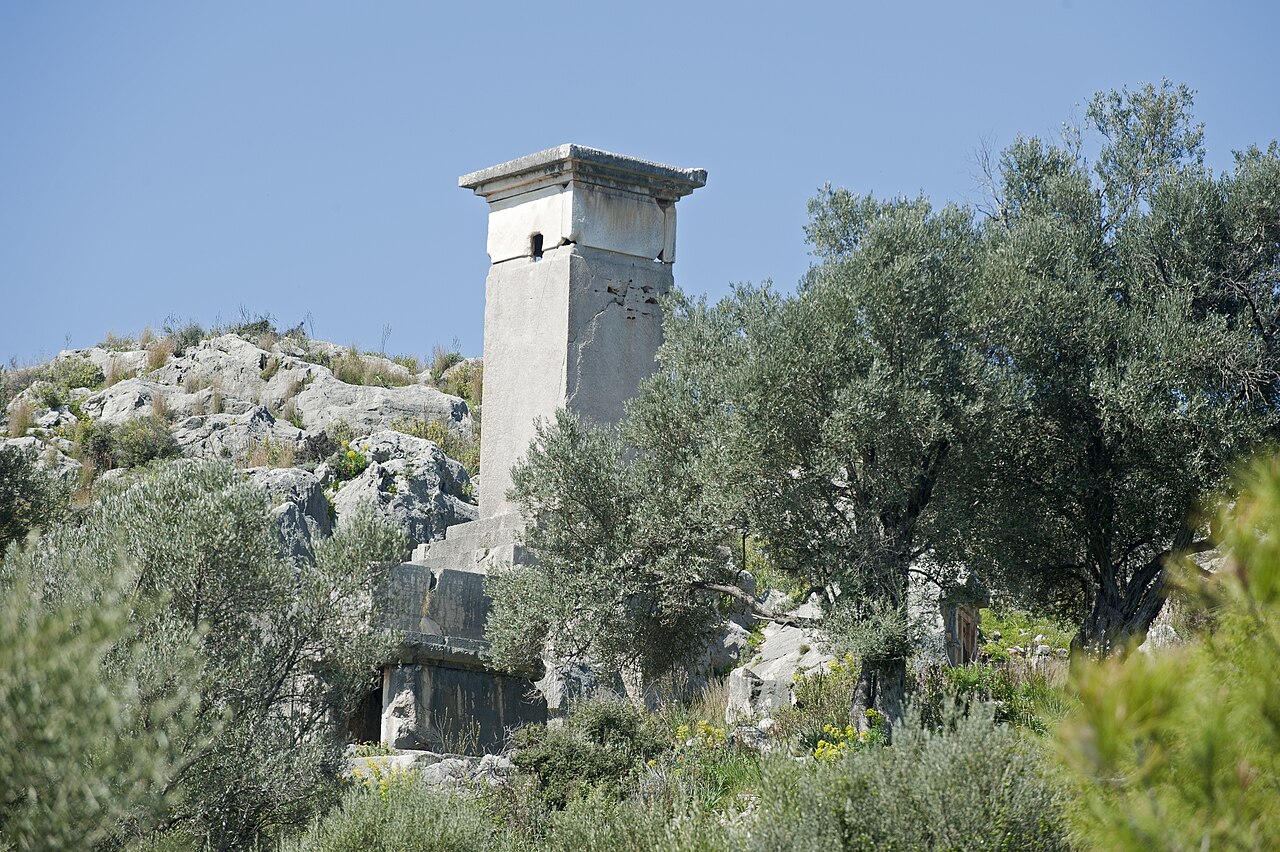
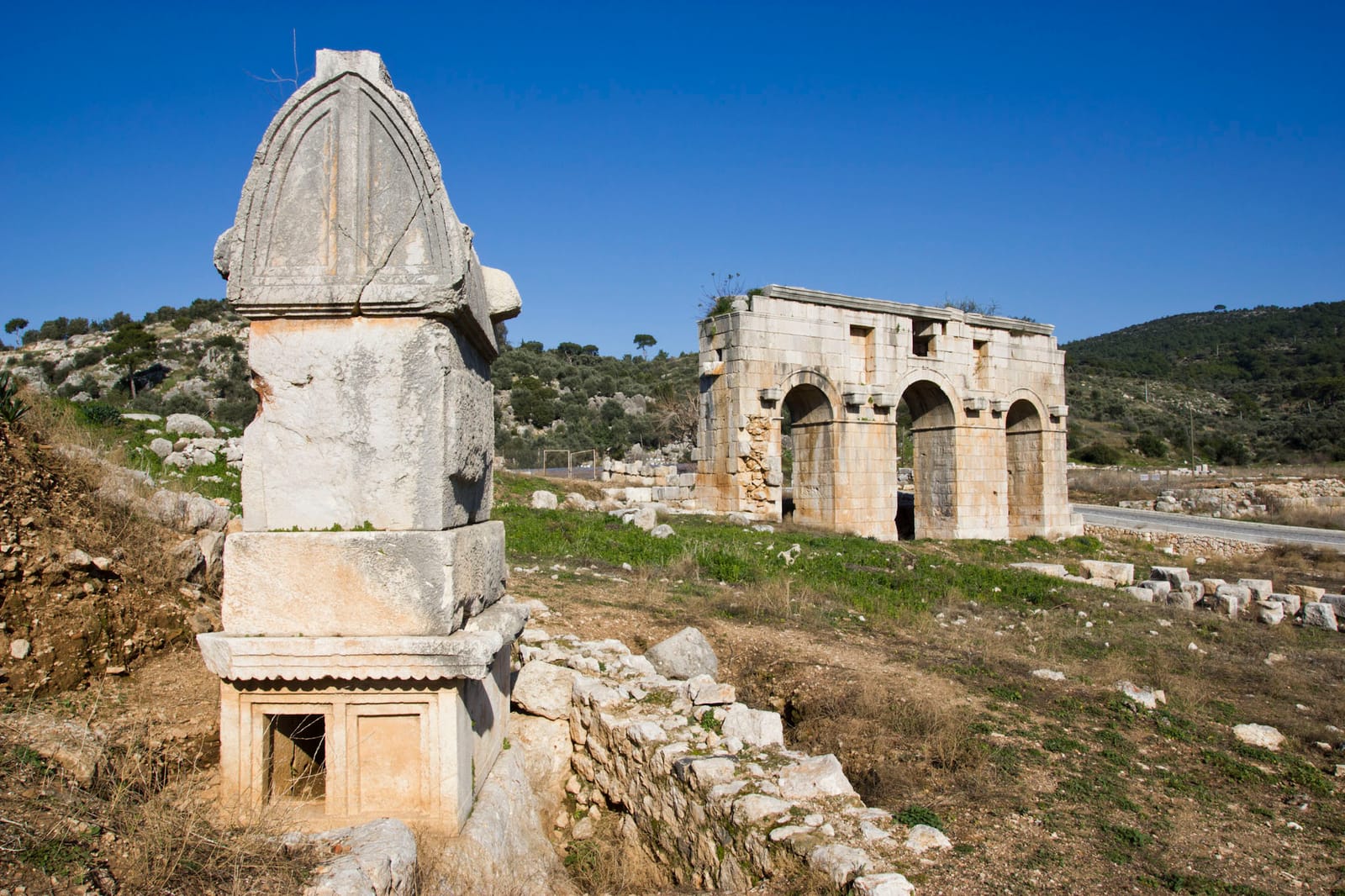
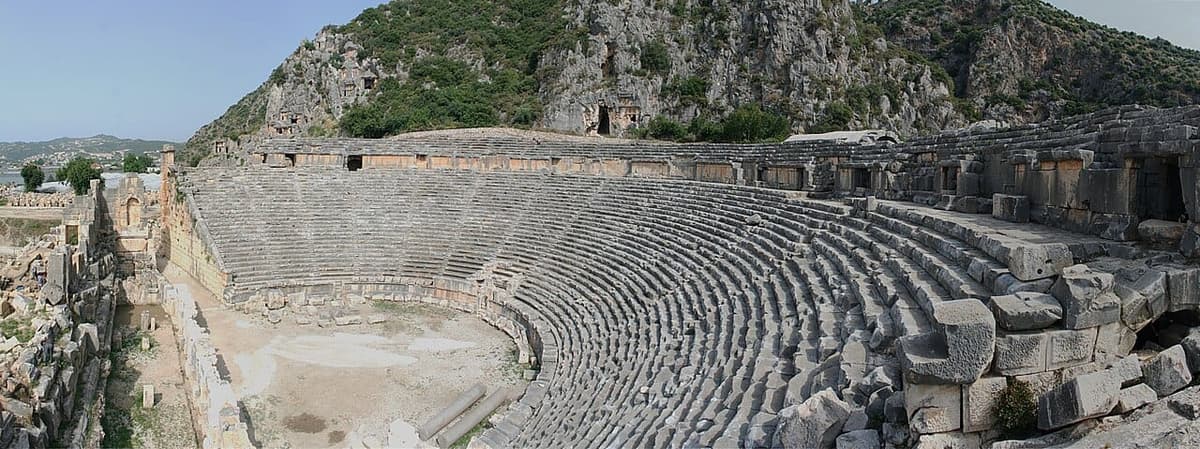
Myra, located in modern-day Demre within Turkey's Antalya Province, presents a striking physical landscape where human ingenuity meets dramatic natural geology. The city's acropolis rises on a plateau overlooking the fertile alluvial plain formed by the Myros River (Demre Çayı), but it is the sheer cliff face below, honeycombed with elaborate façades, that defines its visual impact. These renowned Lycian rock-cut tombs, carved directly into the vertical rock in the 4th century BCE, mimic the wooden architecture of Lycian houses and temples, complete with intricate reliefs and false doors. Across the river, the well-preserved Roman theatre, capable of holding up to 10,000 spectators, sits adjacent to these necropoleis, creating a powerful juxtaposition of spaces for the living and the dead.
Historically, Myra was a major and influential city of the Lycian League, a democratic federation of ancient city-states, and even served as one of its six principal voting members. Its significance continued into the Roman and early Byzantine periods, due in large part to its strategic position along important maritime and overland trade routes. The city's historical prominence is further underscored by the visit of Emperor Hadrian in 131 CE and its role as the metropolitan see of the region of Lycia. This enduring importance is encapsulated in its two primary archaeological complexes: the monumental cliff-side tombs of the ancient Lycian and Roman elite, and the later ecclesiastical structures associated with its most famous bishop.
"The city of Myra is situated on a hill, and has a harbor."
— Pseudo-Scylax, Periplous, c. 4th century BCE
The key structures at Myra are a testament to its layered history. The Lycian necropolis, particularly the "Painted Tomb" and the "Lion Tomb," features elaborate façades adorned with reliefs depicting funeral feasts and mythological scenes. The large Roman theatre, later modified after an earthquake, retains much of its original form, including ornately carved theatrical masks on its proscaenium. However, the site is equally famous for the Church of St. Nicholas, located a short distance from the ancient city center. This Byzantine church, built and rebuilt from the 5th to the 8th centuries over the saint's original burial place, honors Nicholas, the 4th-century bishop of Myra whose legendary generosity evolved into the figure of Santa Claus. His tomb became a major pilgrimage site, drawing visitors from across the Christian world.
Culturally, Myra offers profound insight into Lycian beliefs about the afterlife, where tombs were constructed as eternal houses for the deceased, prominently positioned for visibility. The transition from a major pagan city to an important Christian center is vividly illustrated by the physical coexistence of the pagan rock tombs and the pilgrimage church. This continuity of sacred space underscores the site's enduring spiritual significance. The blend of distinctive Lycian traditions, Roman imperial architecture, and deep Christian heritage makes Myra a unique palimpsest, where the cult of the dead and the veneration of a saint together narrate the long and complex history of Anatolia.

The rock tombs of ancient Myra, carved into the cliffs of Demre, Turkey | Buğra Kaan Ersoy (CC BY-SA 4.0)