Overview
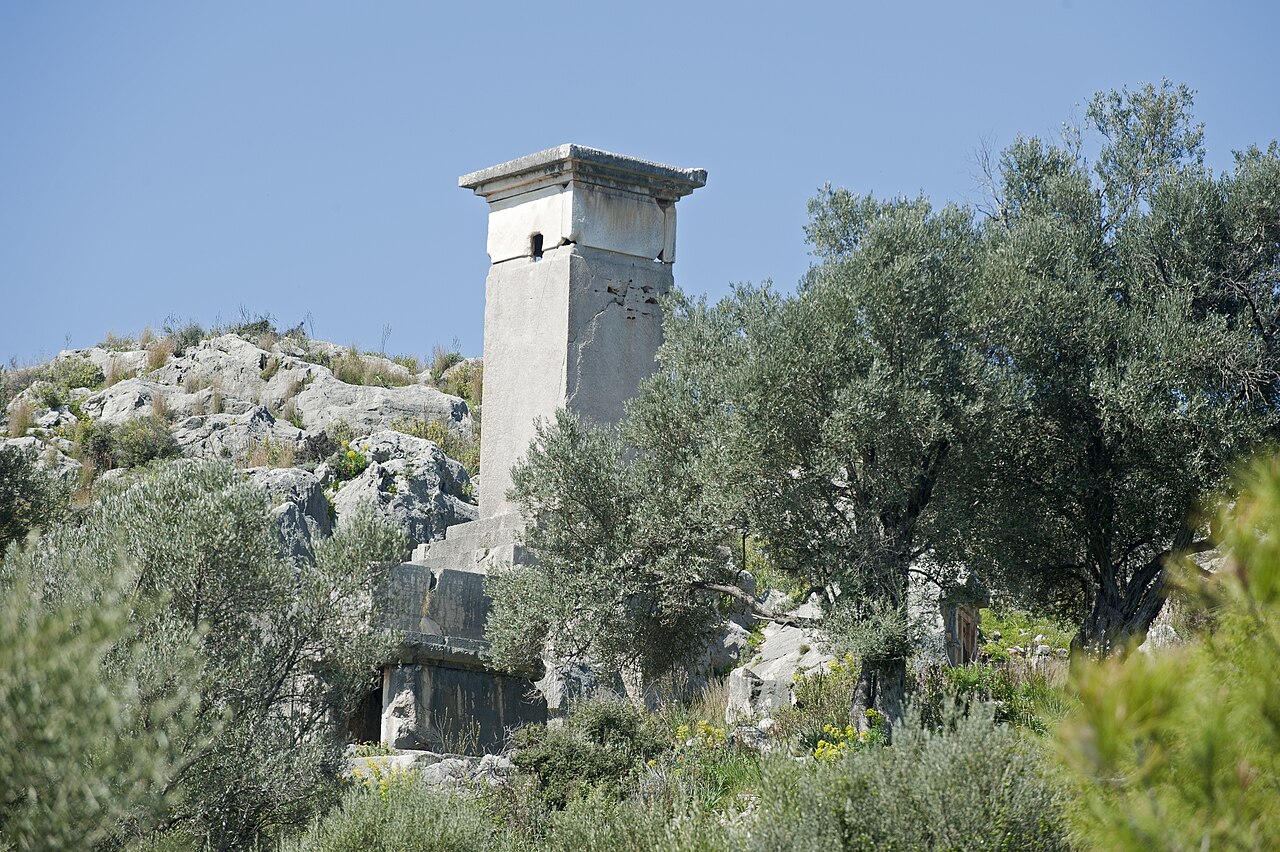
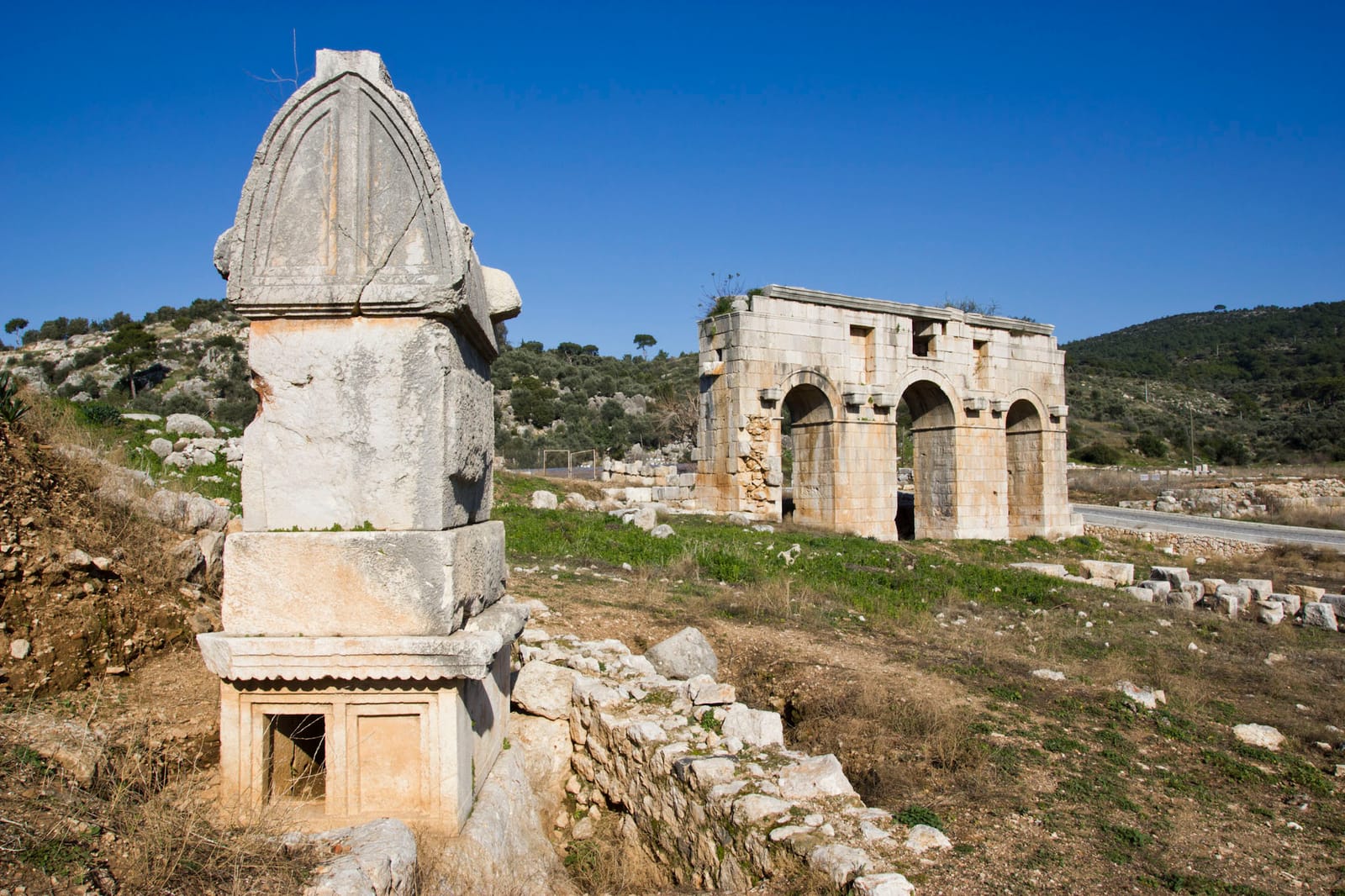
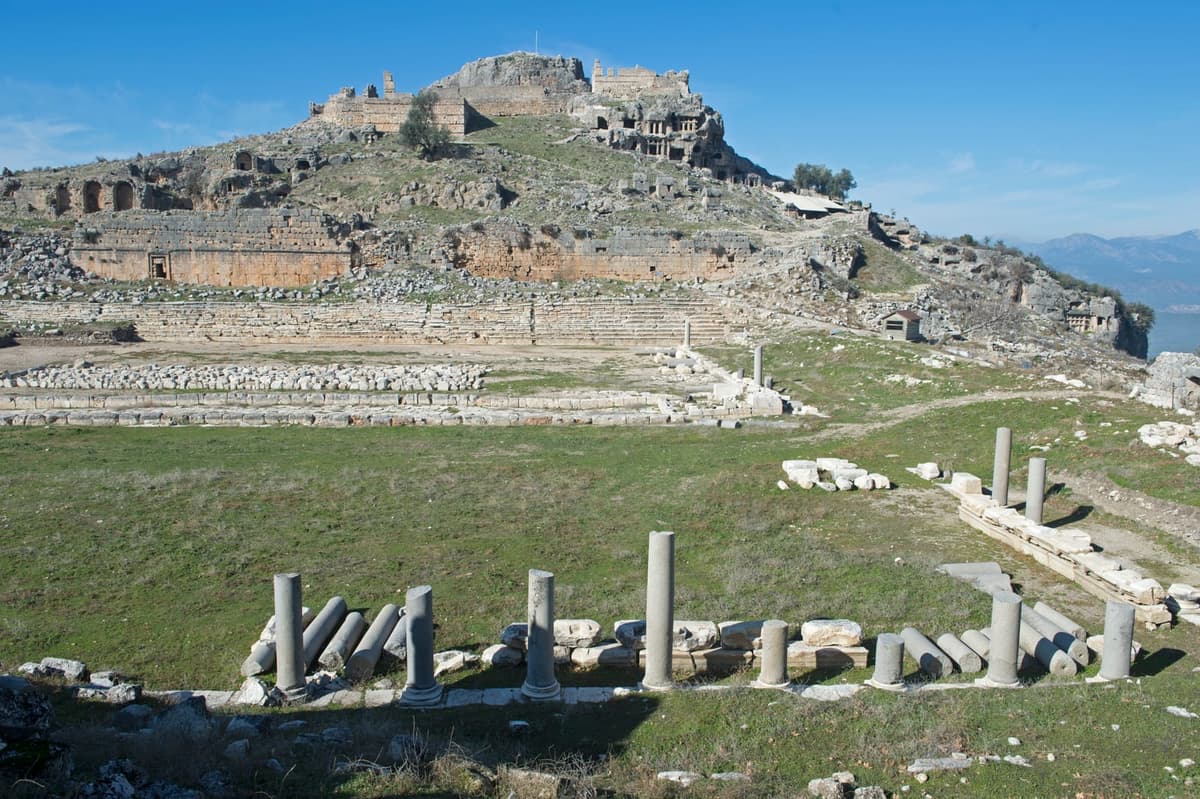
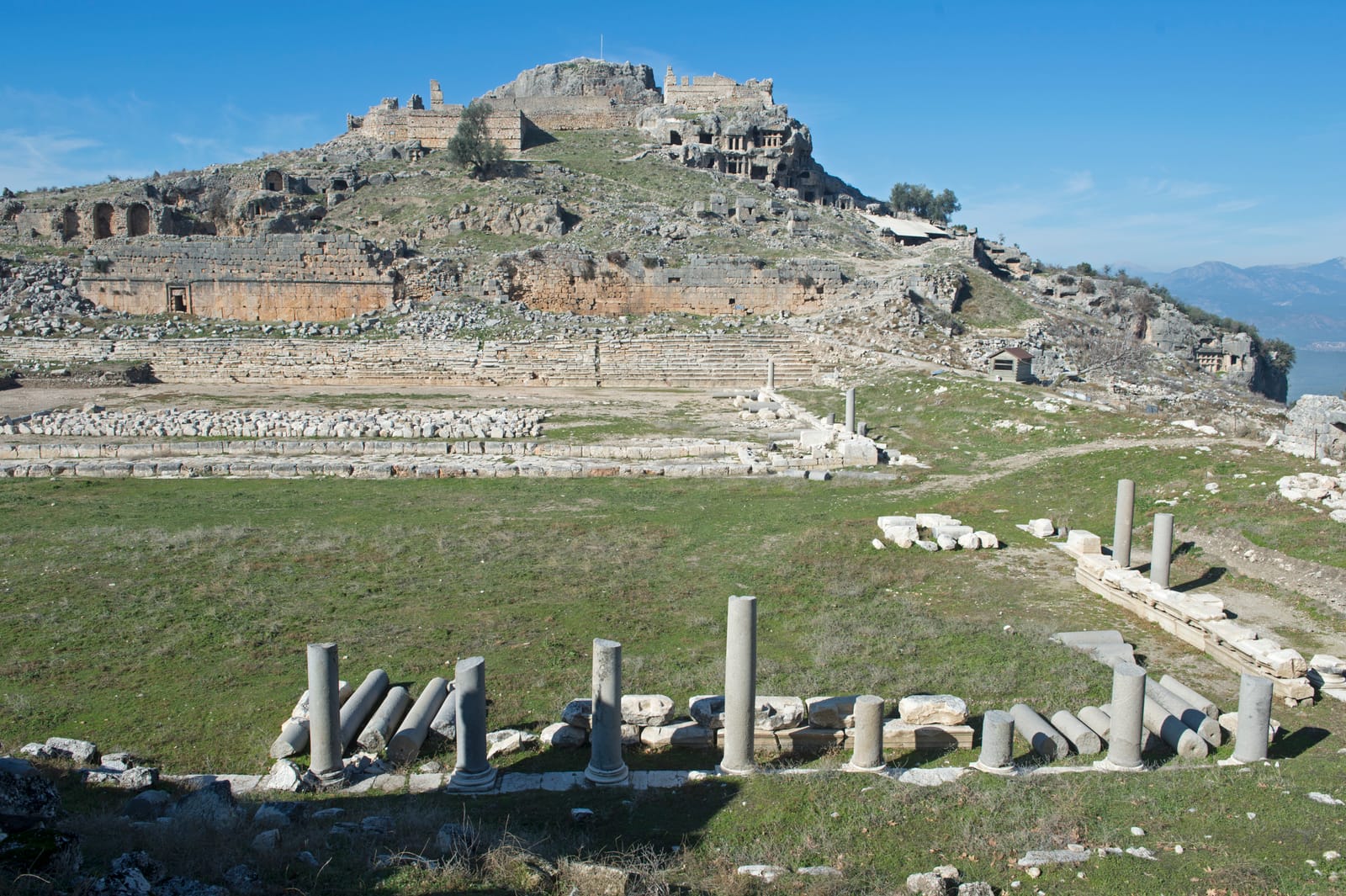
Tlos is one of the six principal cities of the Lycian League and among the oldest continuously inhabited settlements in Lycia. Its rocky acropolis rises dramatically above the Xanthos Valley, offering commanding views of the surrounding mountains and fertile plain. The site bears witness to nearly four millennia of occupation, from Bronze Age beginnings through Ottoman times.
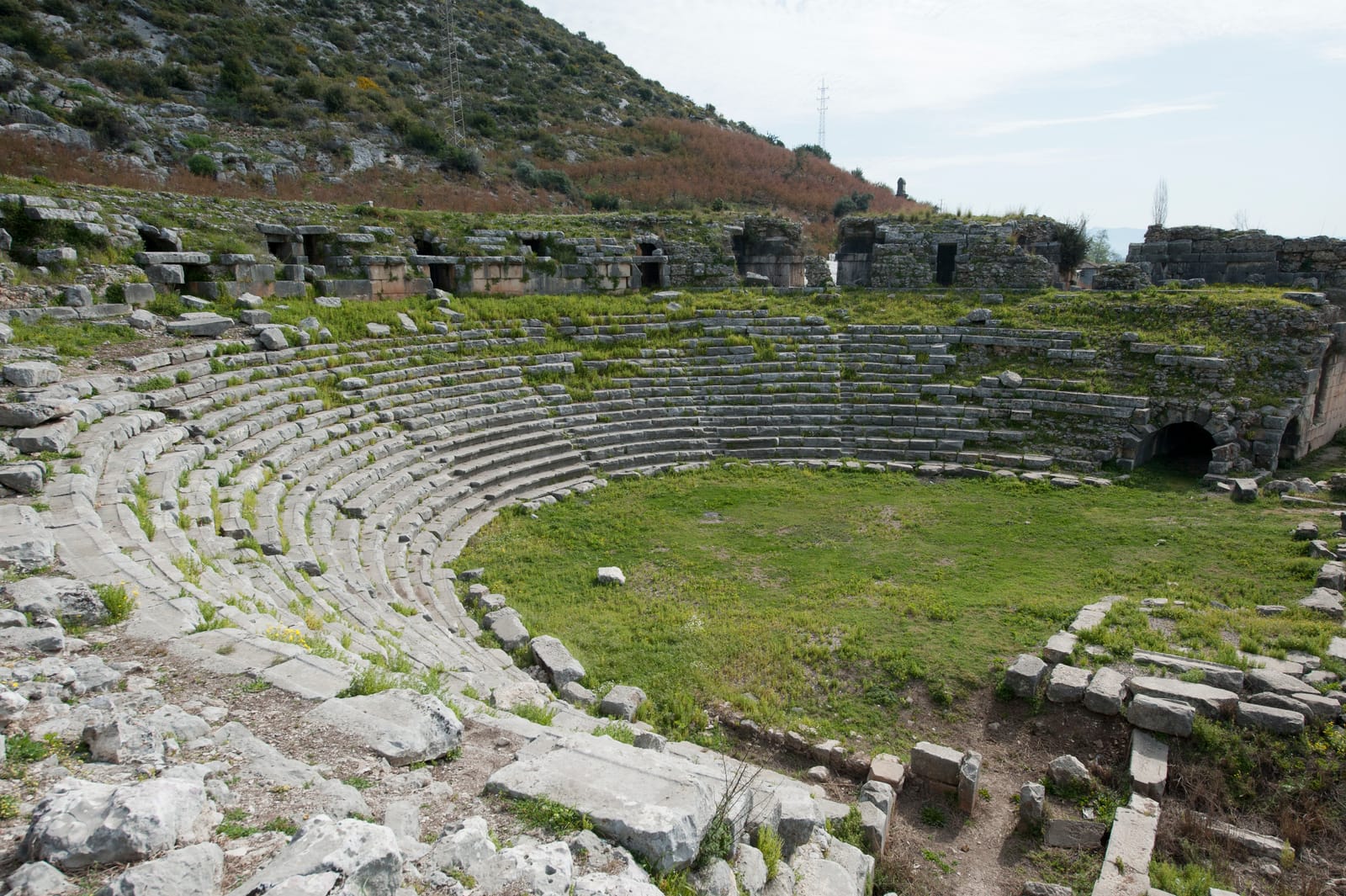
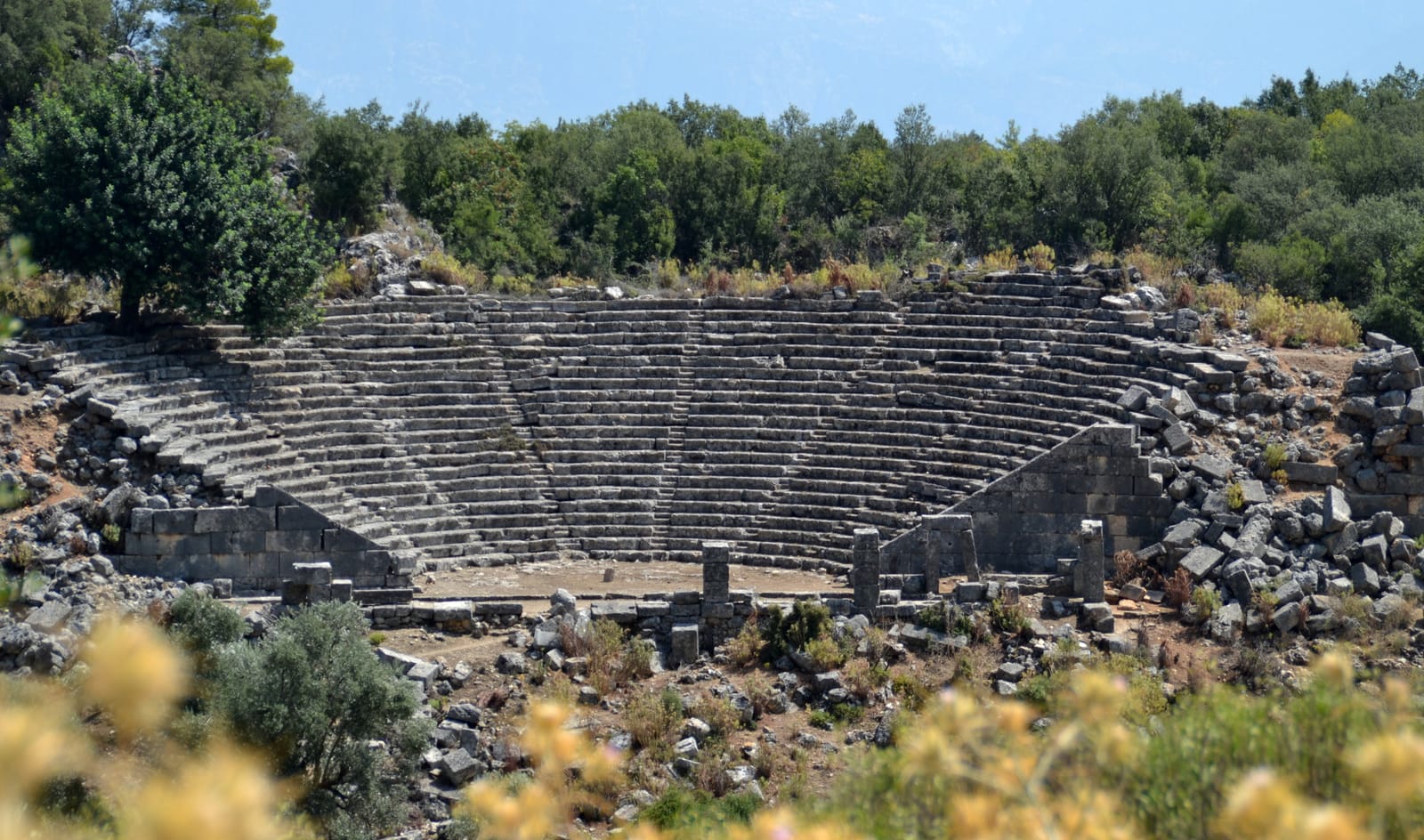
The acropolis cliff face is carved with elaborate Lycian rock tombs, including the celebrated Tomb of Bellerophon — decorated with a relief depicting the mythological hero riding Pegasus. Below the acropolis, a well-preserved Roman theatre with seating for 3,400 spectators faces the valley. Nearby stand the remains of Roman baths, an agora, and a colonnaded street.
"Tlos, a city of the Lycians, is situated on a lofty mountain."
— Strabo, c. 7 BCE - 23 CE
Tlos appears in Hittite records as "Dalawa" or "Tlawa," confirming its antiquity. It was among the cities that formed the Lycian League, and inscriptions attest to its status as one of Lycia's most honored members with three votes in the federal assembly.
An Ottoman fortress crowns the summit of the acropolis, built over earlier fortifications. The warlord Kanli Ali Aga made Tlos his stronghold in the 19th century, adding to the already layered archaeological landscape. The site's setting — surrounded by forested mountains with the Saklikent Gorge nearby — is among the most scenic in Lycia.

Arched ruins of the ancient city of Tlos | Buğra Kaan Ersoy (CC BY-SA 4.0)
Beyond the acropolis, the lower city reveals the scale of Roman Tlos. A large bath complex, with intact hypocaust systems, and a stadium capable of hosting athletic contests and spectacles, speak to its status as a major urban center. A colonnaded street likely formed the city's commercial spine. In the Byzantine era, the city's character shifted; the Roman theatre was repurposed into a fortified residential quarter, with dwellings constructed directly into the seating area, a vivid testament to changing needs and security concerns. The site's decline as a significant urban center accelerated in the later Byzantine period, though a small settlement persisted into the Ottoman era, culminating in the construction of a fortress atop the ancient acropolis, adding the final layer to this millennia-long palimpsest.