Overview
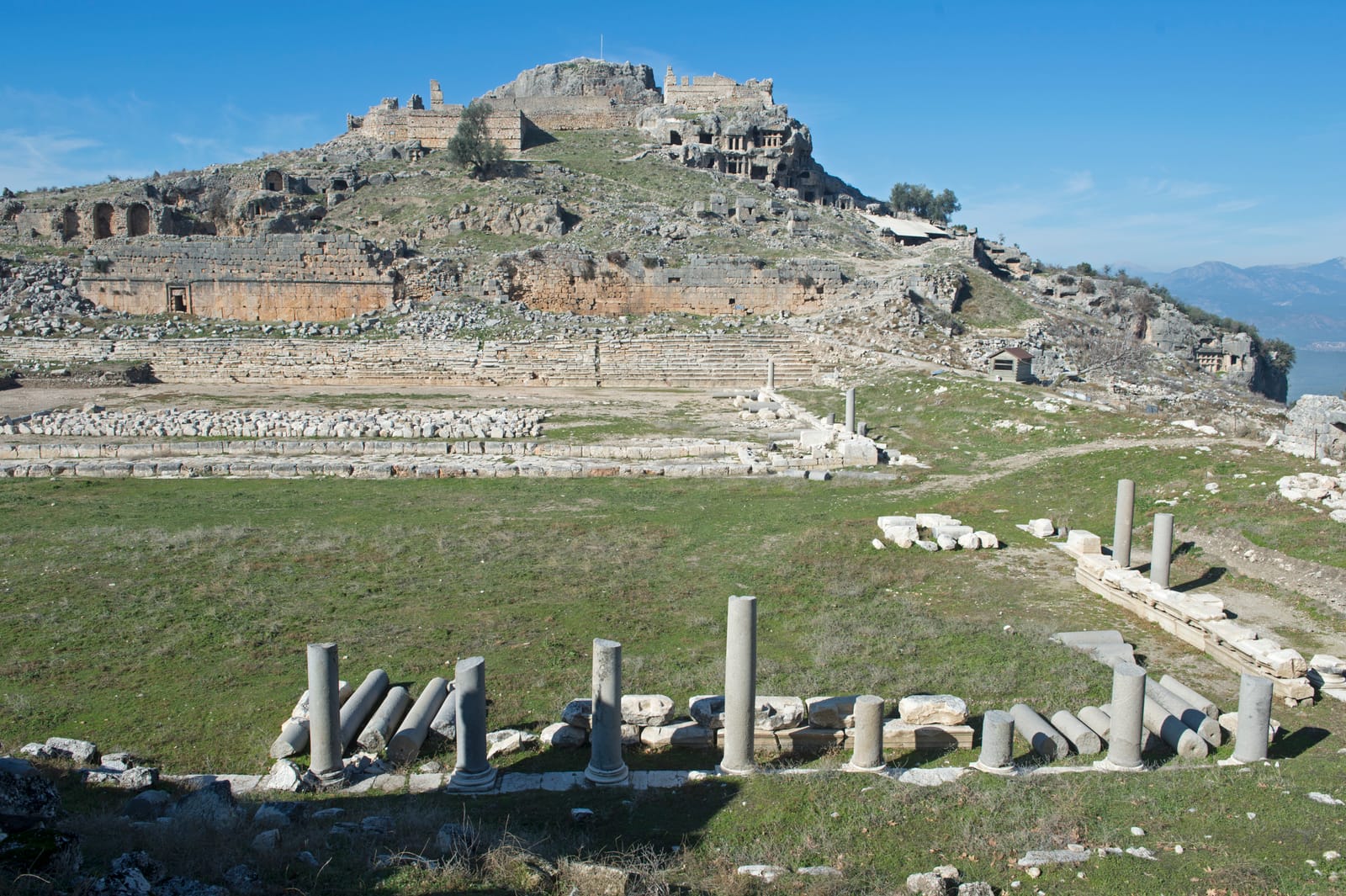
Pinara occupies one of the most dramatic settings of any Lycian city. A massive cylindrical rock pillar — the ancient acropolis — rises from the valley floor, its vertical face honeycombed with hundreds of rectangular tomb openings carved into the cliff at dizzying heights. How the ancient Lycians accessed these high tombs remains a mystery, as no paths or staircases are visible on the sheer rock face.
The city was one of the six principal cities of the Lycian League, entitled to three votes in the federal assembly. According to tradition, Pinara was founded as a colony of Xanthos when that city became overcrowded. The Lycian name "Pillenika" may mean "round," referring to the distinctive shape of the acropolis rock.
"Pinara is one of the largest cities in Lycia, with a very lofty acropolis of rock, precipitous on all sides."
— Strabo, Geography (c. 7 BCE - 23 CE)
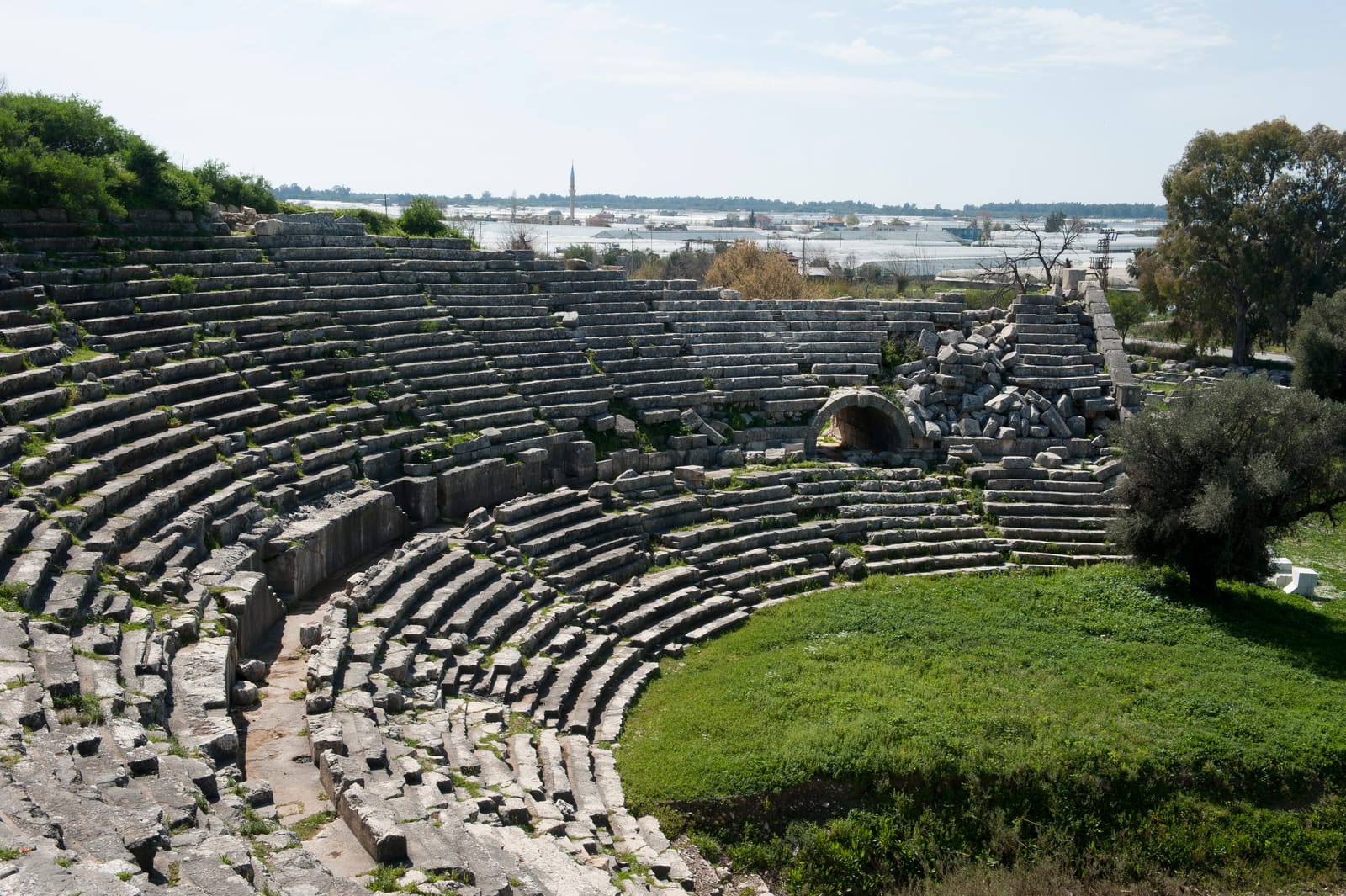
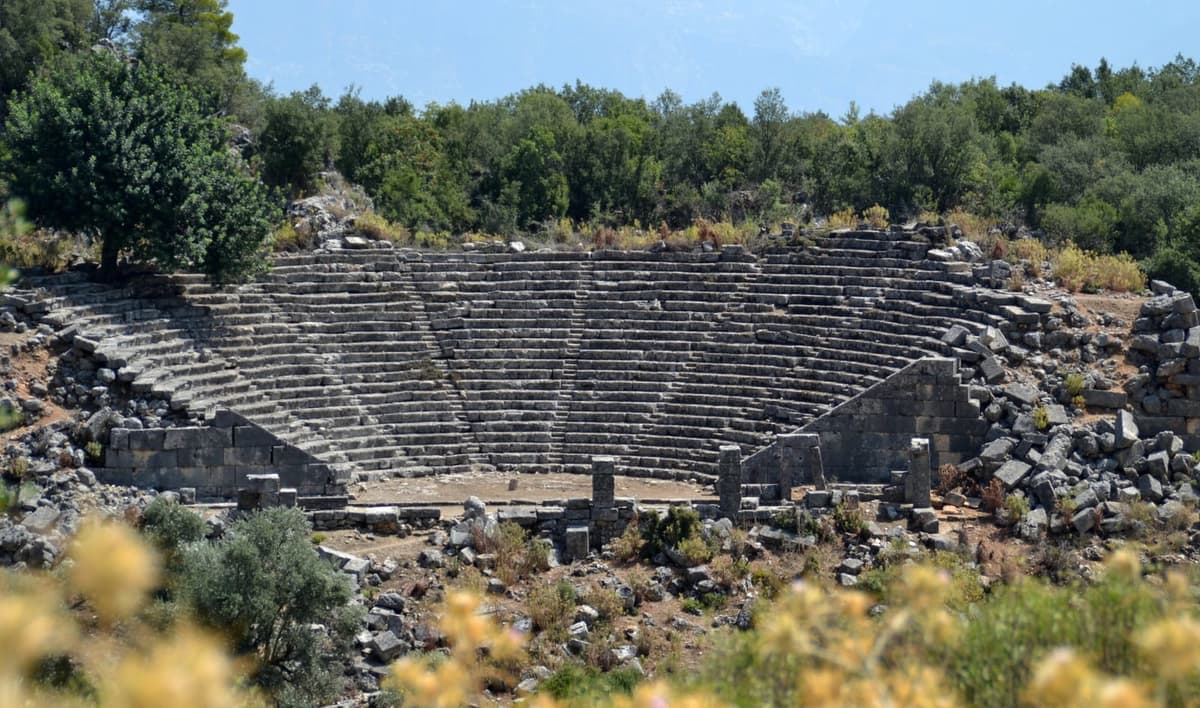
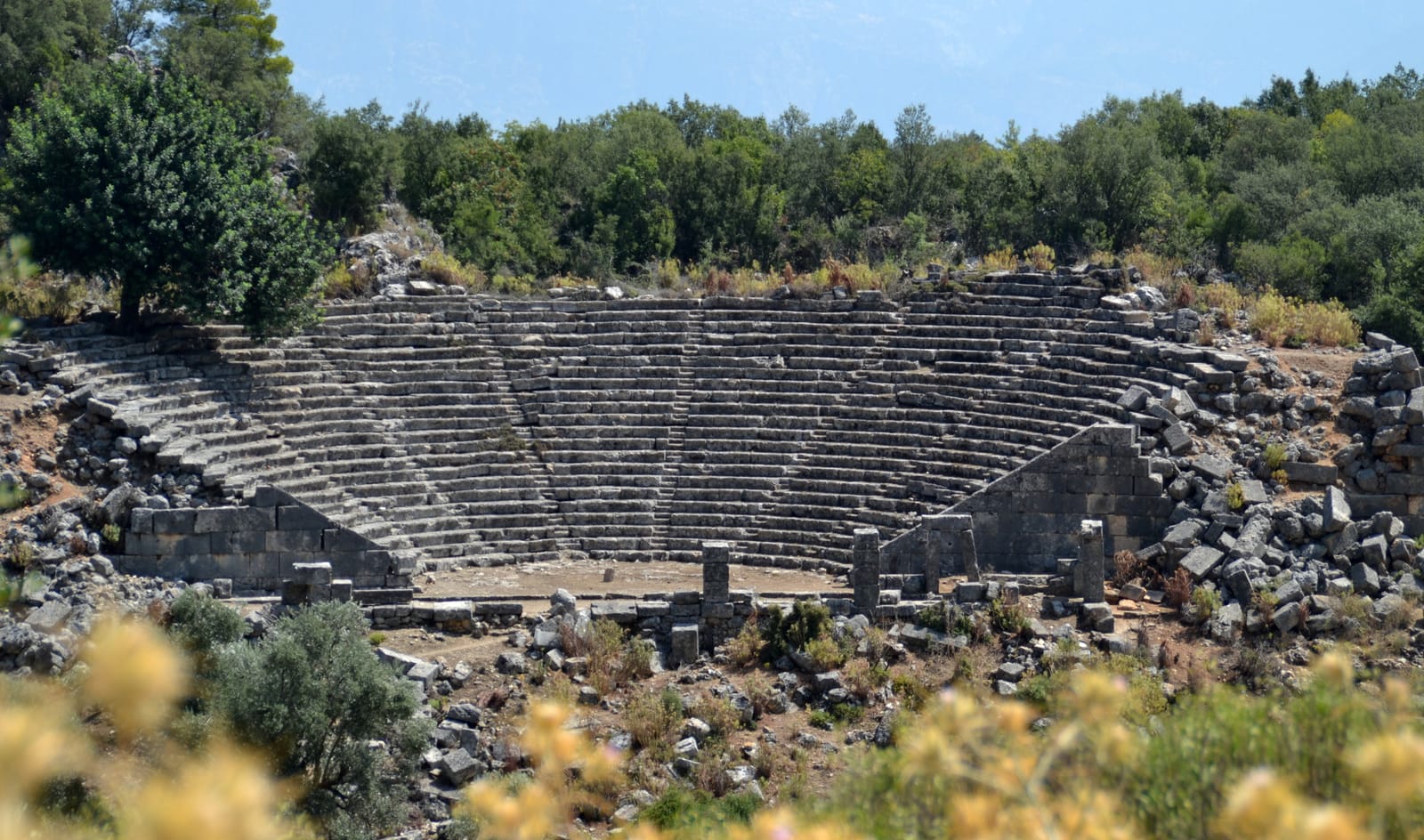
Below the towering acropolis, the lower city contains a well-preserved theatre, a colonnaded agora, temples, and numerous freestanding tombs, including the richly decorated Royal Tomb with relief panels depicting walled cities — possibly a visual record of Lycian urban geography.
Pinara's relative isolation — reached by a winding road through pine forests — has spared it from both modern development and mass tourism. The site retains a wild, atmospheric quality, with ancient ruins emerging from dense vegetation against the backdrop of the perforated cliff face. It is one of the most visually striking yet least-visited major Lycian sites.

Ruins of Pinara, Ancient Lycian city, Lycia, Turkey | Roman_Zacharij (CC BY-SA 4.0)
Beyond the tombs, the city's urban plan reveals a sophisticated civic center. The well-preserved bouleuterion, or council house, with its semi-circular seating, stands as a testament to the city's political life within the Lycian League. Nearby, a Roman-era odeon and the remains of an agora speak to continued public activity. The lower city also contains extensive residential ruins, rock-cut house foundations, and several temple platforms, including one dedicated to an unknown deity, possibly the city's patron. Evidence from pottery and coinage indicates Pinara maintained trade connections across the Lycian coast and with the wider Aegean world. The city's decline appears gradual, with habitation continuing into the Byzantine era when a church was constructed, before eventual abandonment likely due to regional instability and earthquakes.