Overview
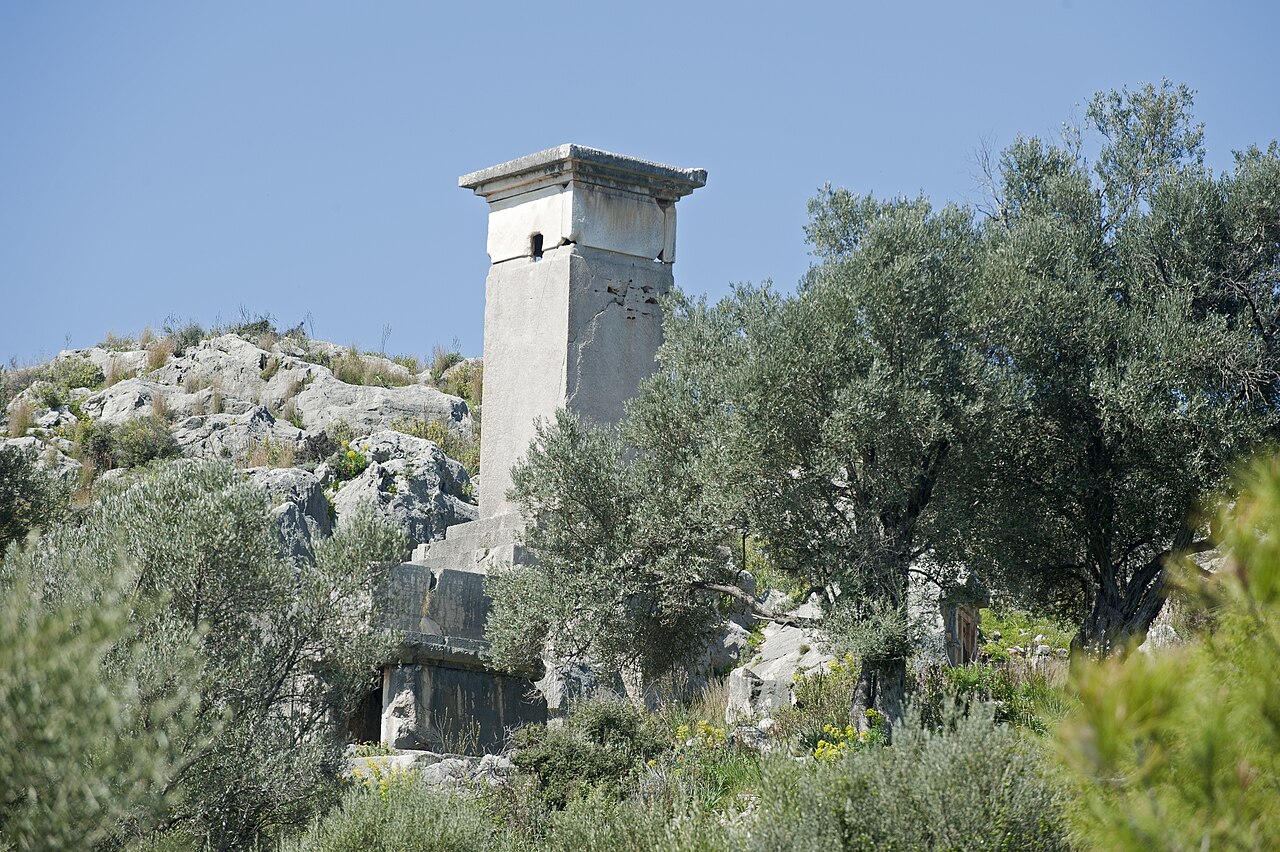
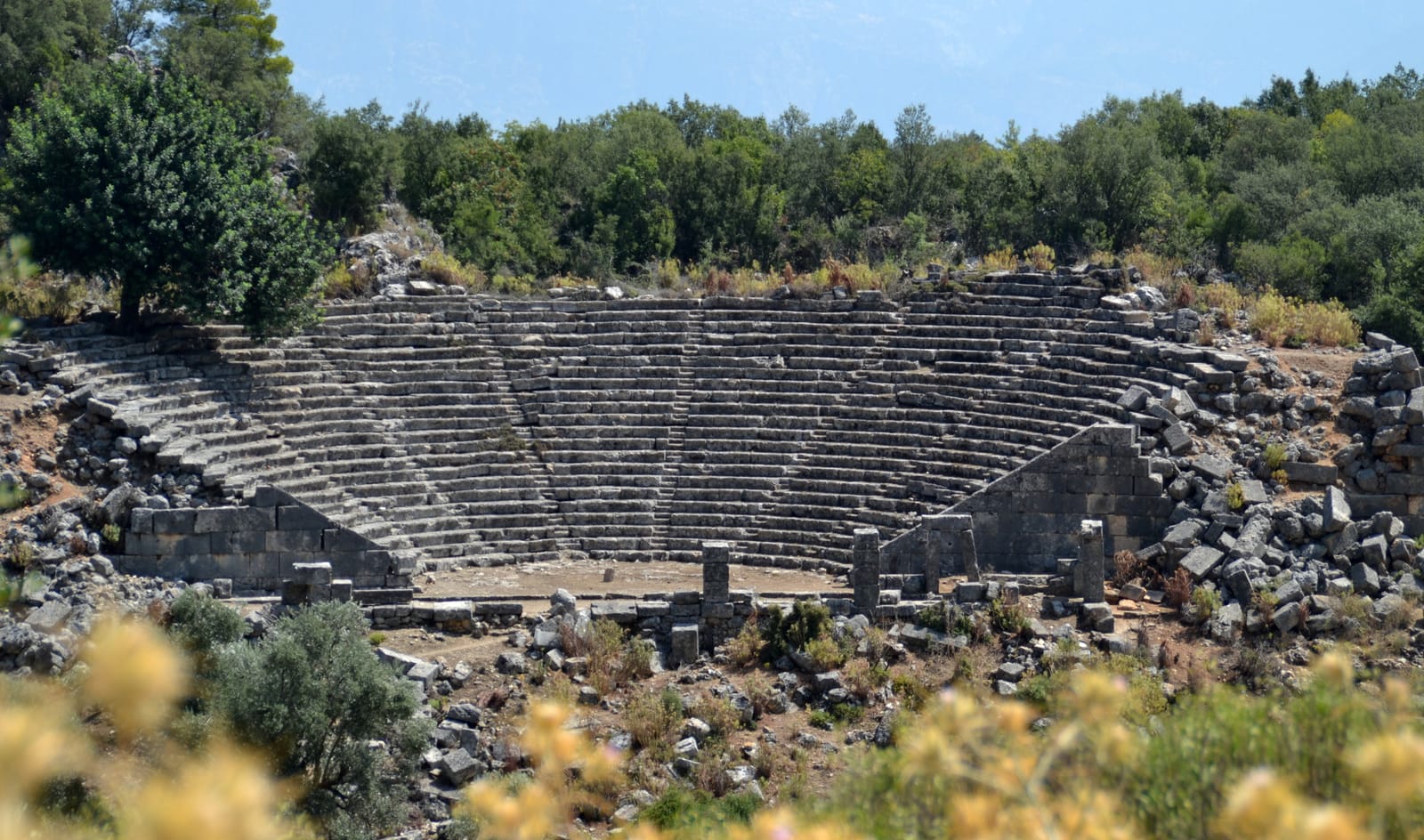
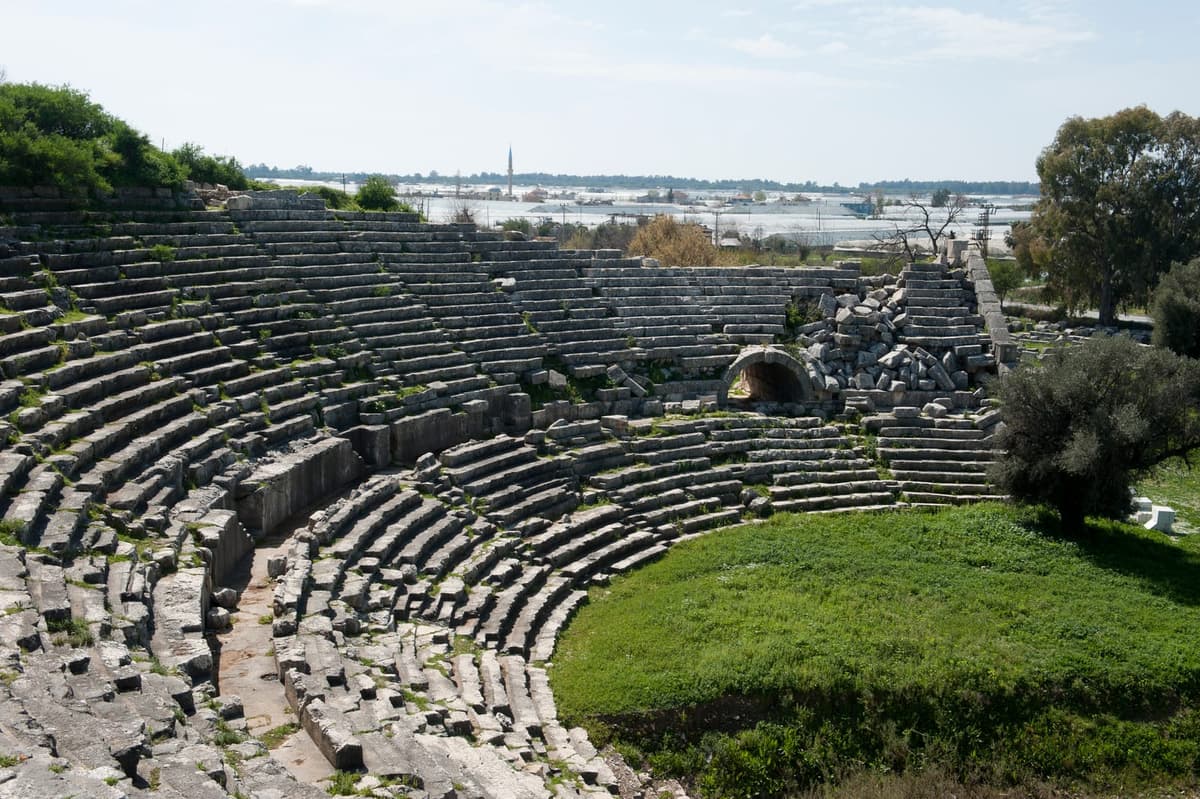
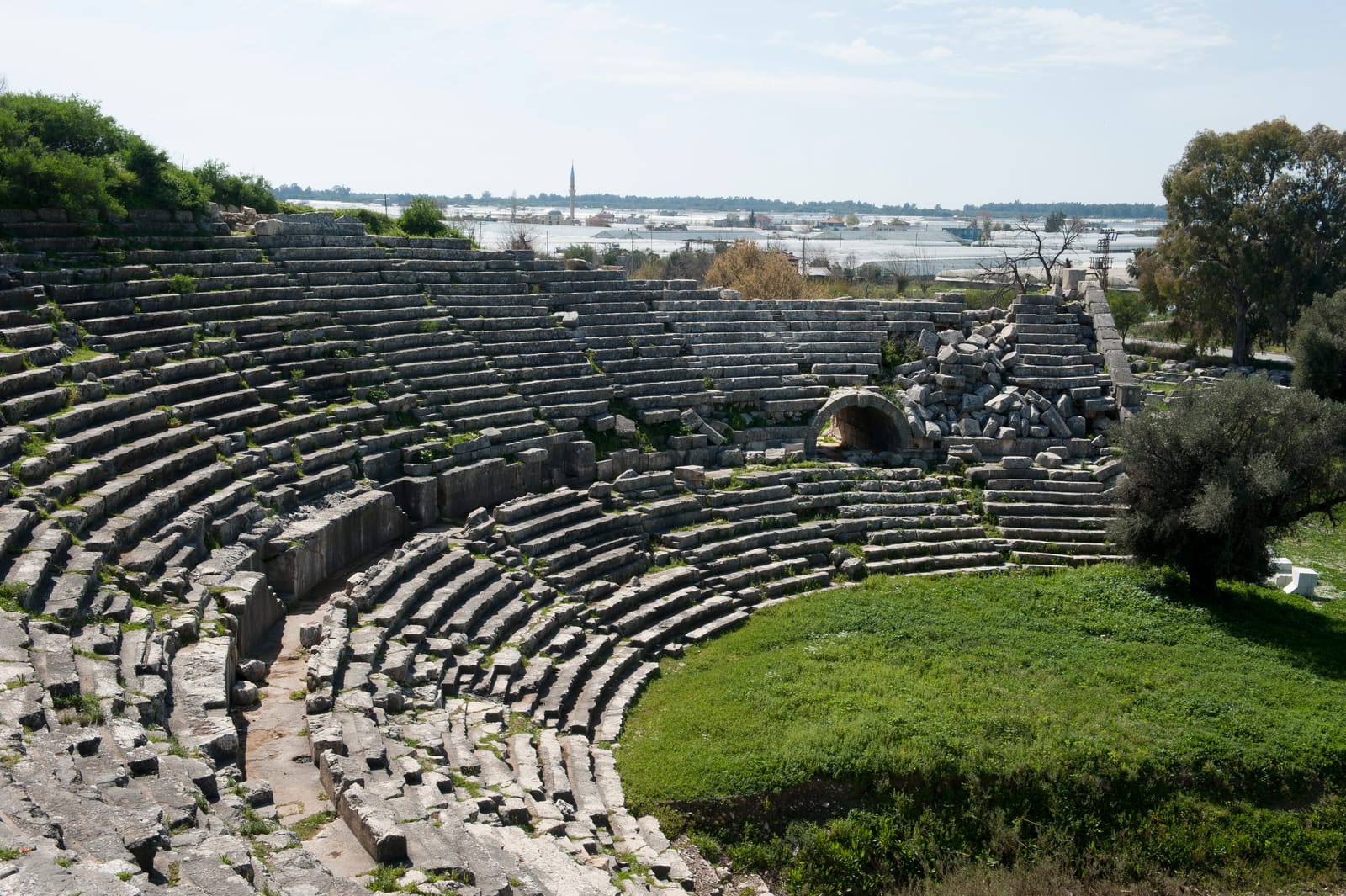
Letoon was the sacred center of the Lycian Federation — the political and religious heart of the Lycian world. Situated in a lush valley near the Xanthos River, the sanctuary was dedicated to the goddess Leto and her divine children Apollo and Artemis. Three temples arranged side by side form the core of the sacred precinct, surrounded by a nymphaeum (fountain house), a large portico, and a Hellenistic theatre.
The largest temple, dedicated to Leto, dates to the late 5th or early 4th century BCE and stands on a raised podium with Ionic columns. The smaller temples to Apollo and Artemis complete the divine triad that was central to Lycian religious identity.
"The Lycians have a temple of Leto, which is the most sacred of all their temples."
— Herodotus, c. 440 BCE
The site's most significant archaeological discovery was the Trilingual Inscription (c. 337 BCE), written in Lycian, Greek, and Aramaic. This text — recording the establishment of a cult — was instrumental in the decipherment of the Lycian language, much as the Rosetta Stone was for Egyptian hieroglyphs.
A large nymphaeum fed by a natural spring remains partially submerged, creating a hauntingly beautiful scene where ancient mosaics depicting birds and geometric patterns lie beneath shallow water — a reminder of the site's connection to water and the goddess's mythology.

Fethiye museum 7050 | Dosseman (CC BY-SA 4.0)
The sanctuary's infrastructure reveals its importance as a bustling federal center. The large nymphaeum, with its elaborate basin and statues, provided water for rituals and visitors, while the adjacent portico (stoa) likely served as a covered market and meeting place during federal gatherings. The theatre, dating to the 2nd century BCE, hosted performances during religious festivals in honor of Leto and her children, which would have drawn citizens from across the Lycian League's member cities.
The site's prosperity continued into the Roman Imperial period, evidenced by repairs and dedications. However, like many pagan sanctuaries, Letoon declined with the rise of Christianity. The temples were systematically abandoned and quarried for building materials. The site was ultimately buried by alluvial deposits from the Xanthos River, which paradoxically helped preserve its remains until their rediscovery by modern archaeology.