Atlas AnatoliaAtlas Anatolia
Remains of the Byzantine basilica of St. John at Alaşehir, ancient Philadelphia

Philadelphia (Alaşehir)

Alaşehir189 BCE – 1400 CE
HellenisticRomanByzantinePergameneRomanByzantineManisa

Seven Churches

Only church praised without rebuke in Revelation (3:7-13)

Last Byzantine City

Last independent Byzantine city in Asia Minor, fell 1390

Founded

By Eumenes II of Pergamon c. 189 BCE, honoring his brother Attalus II

Earthquake of 17 CE

Devastated and rebuilt with aid from Emperor Tiberius

Pillar Metaphor

"I will make you a pillar in the temple of my God" (Rev 3:12)

Resilience

Survived as a Byzantine enclave in Turkish territory for a century

Philadelphia's unique distinction as the only one of the Seven Churches to receive unqualified praise in Revelation has made it a symbol of faithful endurance throughout Christian history.”

WFrom Wikipedia

Philadelphia (modern Alaşehir) was one of the Seven Churches of Revelation, receiving only praise, and the last Byzantine city in Asia Minor to fall.

Read full article on Wikipedia

Overview

Philadelphia — modern Alaşehir — was founded around 189 BCE by King Eumenes II of Pergamon and named in honor of his brother Attalus II Philadelphus ("the brother-loving"), whose exceptional loyalty gave the city its name and established a tradition of steadfastness that would echo through centuries of history. Located in the fertile Cogamus valley in western Anatolia, the city commanded an important position on the imperial Roman road from Sardis to the east.

The city gained its greatest enduring fame as one of the Seven Churches of Asia addressed in the Book of Revelation (Revelation 3:7-13). Uniquely among the seven, Philadelphia receives only praise and no rebuke in the apocalyptic letter. The text promises that God has set before the church an open door that no one can shut, and calls the faithful a "pillar in the temple of my God." This metaphor of the pillar is particularly resonant given the city's frequent experience of devastating earthquakes — the catastrophic earthquake of 17 CE, which also destroyed Sardis, left Philadelphia in ruins. Emperor Tiberius provided generous financial support for reconstruction, and the grateful city briefly adopted the name Neocaesarea.

"Philadelphia alone remains, a pillar of faith, holding fast what little is left."
— Manuel II Palaiologos (c. 1390 CE)

Philadelphia's seismic vulnerability continued throughout its history, with ancient authors noting that the city's walls were perpetually cracked and that inhabitants frequently fled to the countryside. The geographer Strabo described the alarming spectacle of walls pulling apart and remarked on the courage of the citizens who chose to remain. This geological reality gave the Revelation promise of becoming a permanent pillar even deeper meaning for the local community.

Under Roman rule, Philadelphia served as an important regional center and episcopal see. The city was noted for its wine production and festivals honoring Dionysus. As the Byzantine Empire contracted under Turkish pressure in the 13th and 14th centuries, Philadelphia became famous as the last independent Byzantine city in all of Asia Minor. Surrounded by Turkish-controlled territory for over a century, the city held out through a combination of diplomacy, tribute payments, and military tenacity that astounded contemporary observers.

Alaşehir Church of St. John 2

Alaşehir Church of St. John 2 | simonjenkins' photos (Αρχικό) Wolfymoza (Ανέβασμα) (CC BY-SA 2.0)

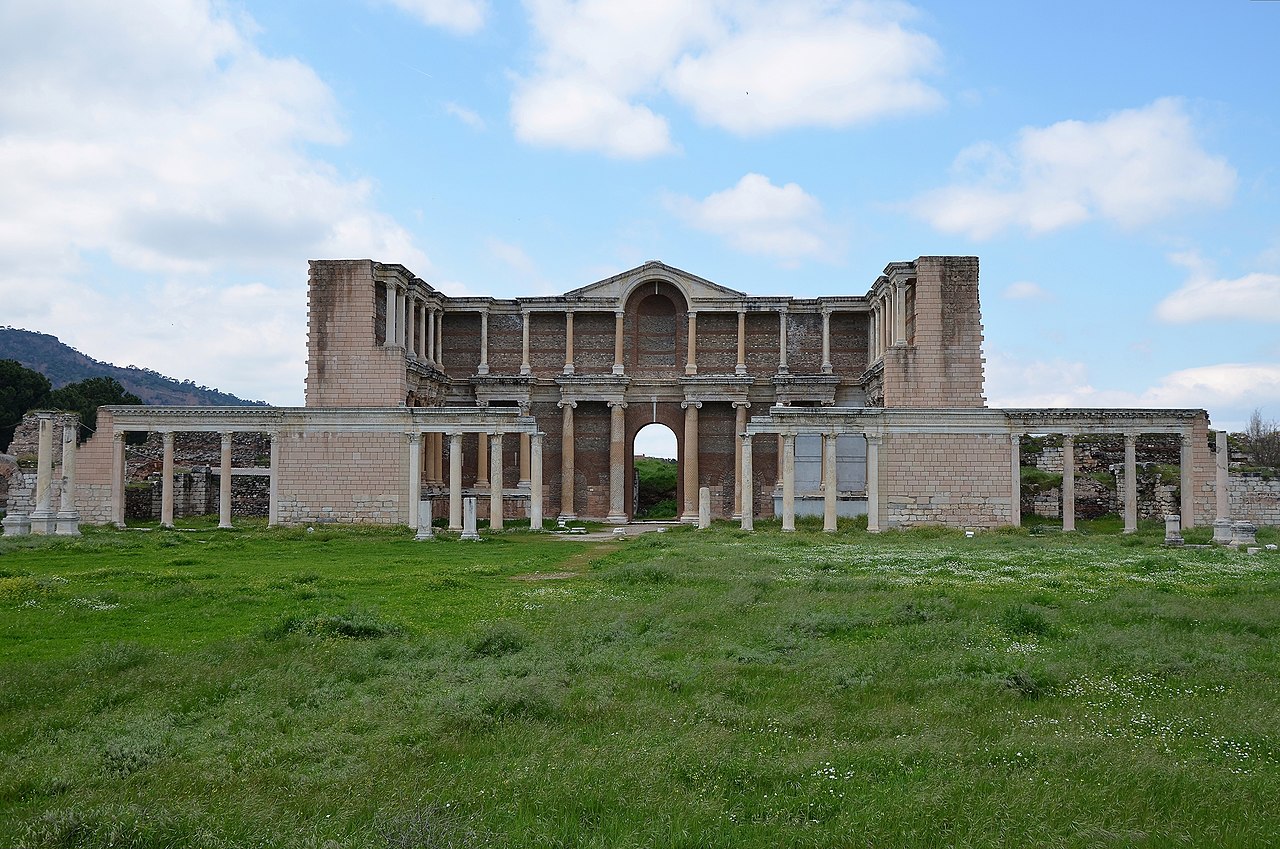
The city finally fell to Sultan Bayezid I in 1390, reportedly after a combined Ottoman-Byzantine force besieged it — a bitter irony that the last Byzantine city in Asia was conquered with Byzantine assistance. When Tamerlane's Mongol army swept through Anatolia in 1402, Philadelphia again endured siege and destruction. The modern town of Alaşehir preserves scattered remains of the ancient and Byzantine city, including portions of the 6th-century basilica of St. John and sections of the Byzantine fortification walls.
Why It Matters

Philadelphia's unique distinction as the only one of the Seven Churches to receive unqualified praise in Revelation has made it a symbol of faithful endurance throughout Christian history. The apocalyptic promise of becoming a pillar resonated profoundly with a community perpetually threatened by earthquakes. As the last Byzantine city in Asia Minor, Philadelphia represented the extraordinary tenacity of the empire's final outpost in the land that had been Byzantium's heartland. Its fall in 1390 marked the definitive end of Roman-Byzantine urban civilization in Anatolia — a tradition stretching back over a millennium and a half to the foundations of Greek colonial cities along the Aegean coast.

Stay curious

New stories and sites, once a month. No spam.

Evidence & Interpretation

Distinguishing what is well-established from what remains debated.

Well-Established Facts

3
  • The Book of Revelation (3:7-13), dated to the late 1st century CE, addresses the church at Philadelphia with praise and no criticism, and the city is independently attested in Roman-period inscriptions and literary sources.
  • Strabo (Geography 12.8.18) and Tacitus (Annals 2.47) confirm the devastating earthquake of 17 CE that destroyed Philadelphia and eleven other cities, and Tiberius's financial aid for reconstruction.
  • Byzantine historians including Pachymeres and Gregoras document Philadelphia's extraordinary survival as the last independent Byzantine city in Asia Minor through the 13th and 14th centuries.

Scholarly Inferences

2
  • The Revelation metaphor of becoming a pillar in God's temple likely carried particular resonance for a community whose physical pillars and walls were perpetually cracked by earthquakes.
  • The scarcity of visible ancient remains relative to the city's documented importance suggests that much of ancient Philadelphia lies beneath the modern town of Alaşehir, with earthquake destruction contributing to burial and loss.

Debated Interpretations

1
  • Whether Philadelphia fell to Sultan Bayezid I in 1390 or 1391, and whether Byzantine forces actively assisted in the siege, is debated among Ottoman and Byzantine historians.

Discovery & Excavation

1850

Early European surveys

European travelers including Charles Fellows documented the visible ruins at Alaşehir, including the Byzantine basilica walls and scattered inscriptions.

1960–1970

Turkish archaeological surveys

Systematic surveys mapped the extent of the ancient city, identifying the acropolis, theater site, stadium, and Byzantine fortification walls beneath and around the modern town.

2000–2008

St. John Basilica excavations

Excavations at the 6th-century basilica of St. John uncovered mosaic floors, carved architectural elements, and evidence of multiple construction phases spanning the early Byzantine period.

2011

Seven Churches archaeological project

International archaeological survey of all Seven Churches of Revelation included new documentation and geophysical prospection at Philadelphia, identifying subsurface structures in the ancient city center.

2017–2020

Byzantine fortification studies

Detailed archaeological study of the surviving Byzantine wall sections documented construction techniques and repair phases consistent with the city's long history of earthquake damage and military threats.

More Photos

Museum Artifacts

Community Photos

Share your experience

Have you visited this site? Upload your photos to help others discover it.

Location

Related Sites

Sources

  • The Letters to the Seven Churches of Asia in Their Local SettingColin Hemer (1986)
  • The Last Byzantine Frontier: Philadelphia and the Turkish Advance in Western Asia MinorAngeliki Laiou (1972)
  • Wikipedia — AlaşehirLink

Research Papers

Stay in the loop

Get notified when we add new sites or major features. We send at most 1–2 emails per year. We never sell your email.

Atlas AnatoliaAtlas Anatolia

An interactive atlas of ancient Anatolian sites. Explore civilizations, monuments, and stories across millennia.

info@atlasanatolia.com

© 2026 Atlas Anatolia. Content is provided for educational purposes.

Map data © OpenStreetMap contributors