Atlas AnatoliaAtlas Anatolia
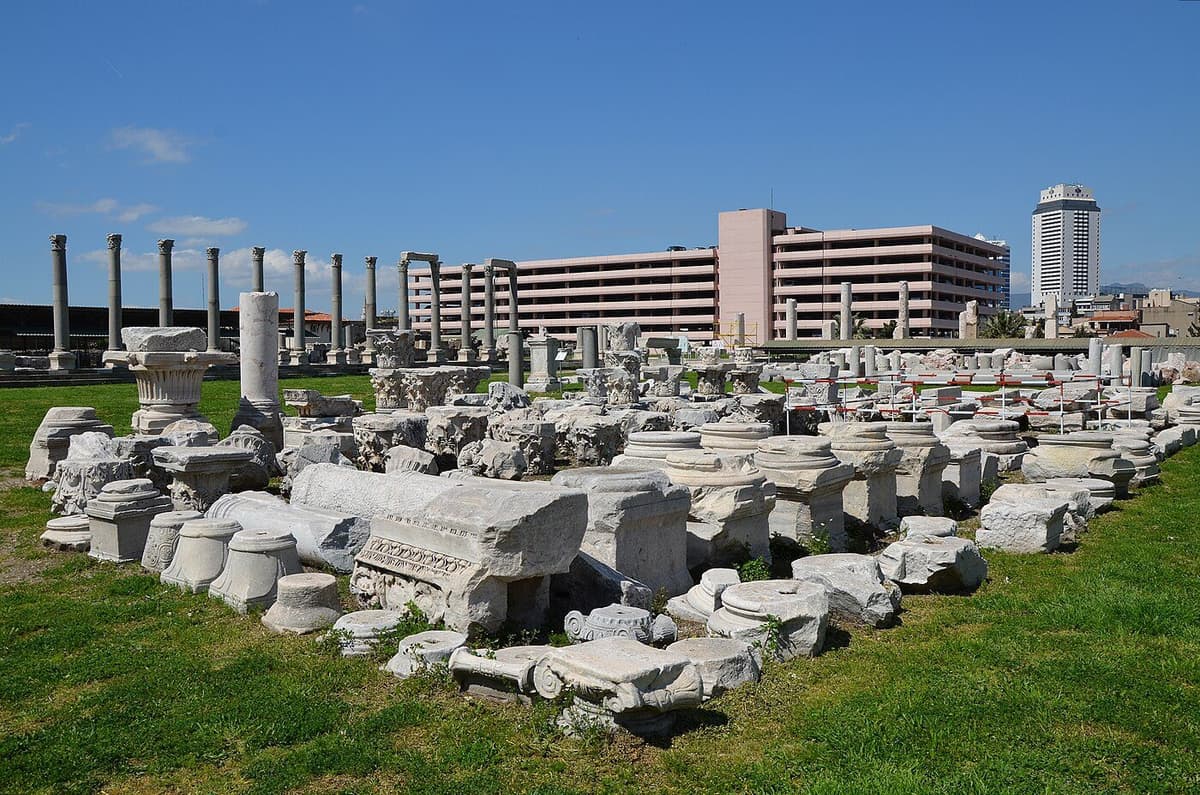
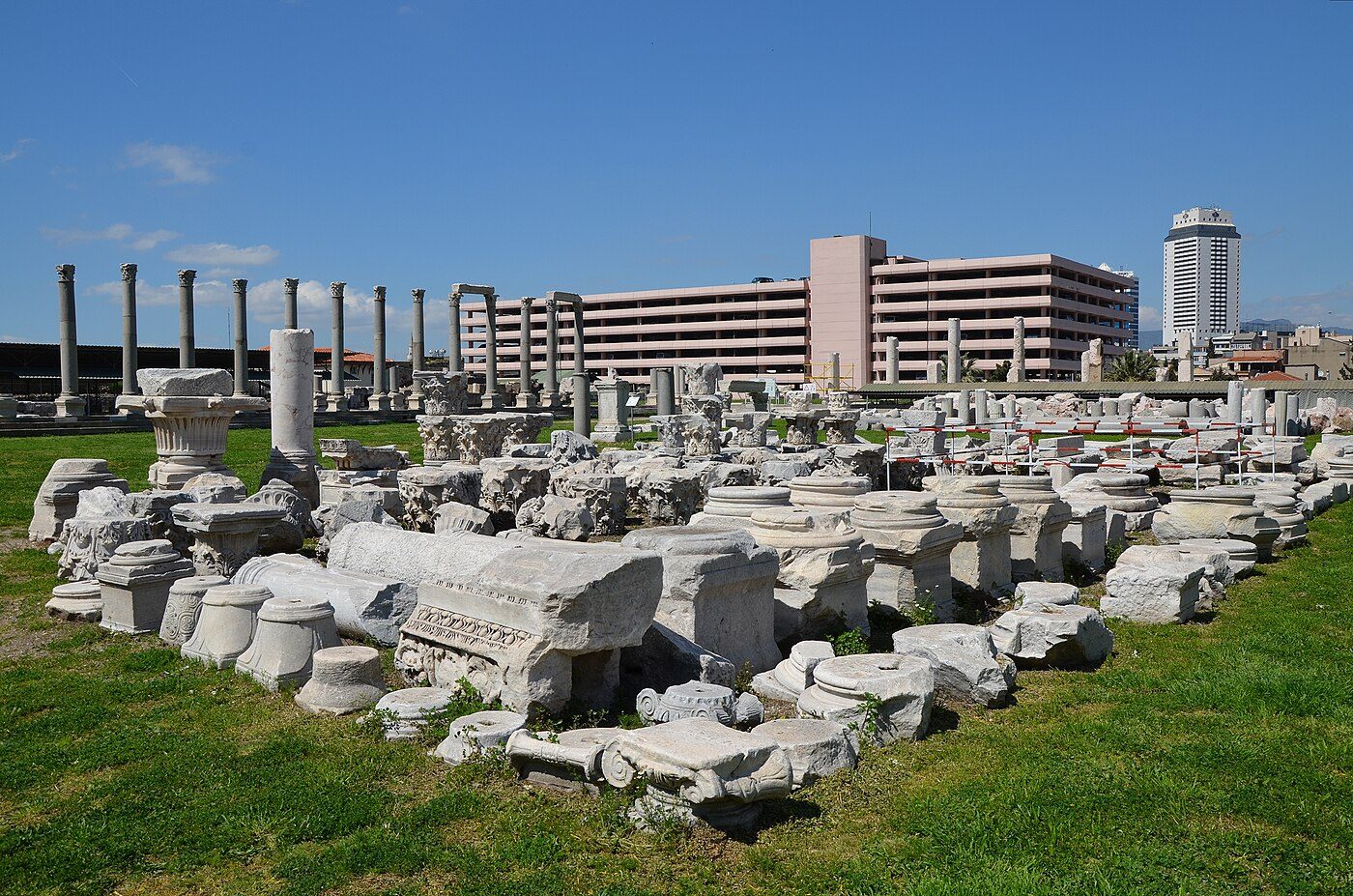
The Roman Agora of Smyrna with reconstructed colonnade in modern İzmir

Smyrna (İzmir)

İzmir3000 BCE – 700 CE
Bronze AgeClassicalHellenisticRoman+1GreekRomanByzantineİzmir

Homer's Birthplace

Strongest ancient claimant as Homer's city of origin

Seven Churches

One of the Seven Churches of Revelation (Rev 2:8-11)

Roman Agora

Impressive civic space rebuilt by Marcus Aurelius after 178 CE

Polycarp

Site of Bishop Polycarp's martyrdom c. 155 CE

Old Smyrna

Bronze Age settlement at Bayraklı, destroyed c. 600 BCE

Alexander

Refounded c. 300 BCE at Alexander the Great's direction

Smyrna's claim as Homer's birthplace — the most persistent of the seven cities that competed for this honor — connects the city to the very origins of Western literature.”

WFrom Wikipedia

Smyrna (modern İzmir) was one of the great cities of the ancient Aegean, claimant to Homer's birthplace and one of the Seven Churches of Revelation.

Read full article on Wikipedia

Overview

Smyrna — modern İzmir — is one of the oldest and most storied cities of the Aegean world, with a history stretching back to the 3rd millennium BCE. Located at the head of a deep, sheltered gulf on the western coast of Anatolia, the city's superb natural harbor and fertile hinterland made it one of the wealthiest and most culturally significant cities of antiquity, rivaling Ephesus, Pergamon, and Alexandria.

The earliest settlement, known as Old Smyrna (Bayraklı), dates to the Early Bronze Age and became a prosperous Aeolian and later Ionian Greek city by the early first millennium BCE. Old Smyrna was one of the cities that most vigorously claimed to be the birthplace of Homer, and this tradition, whether or not historically accurate, reflects the city's deep roots in Greek literary culture. The settlement was destroyed by the Lydian king Alyattes around 600 BCE and lay in ruins for centuries.

"Smyrna is the most beautiful of all cities."
— Strabo, c. 7 BCE - 23 CE

The city was refounded at its current location on the slopes of Mount Pagus (Kadifekale) around 300 BCE, supposedly at the direction of Alexander the Great, who dreamed of establishing a new city after resting under a plane tree on the mountain. The refounded city flourished under Hellenistic and Roman rule, becoming one of the most important cities of the province of Asia. Strabo called it the most beautiful of all cities, praising its regular street plan, gymnasium, and harbor.

As one of the Seven Churches addressed in the Book of Revelation (Revelation 2:8-11), Smyrna holds profound significance for early Christianity. The letter to Smyrna is notably the only one of the seven that contains no criticism — the church is praised for enduring tribulation and poverty. The martyrdom of Bishop Polycarp around 155 CE, one of the best-documented early Christian martyrdoms, took place in the city's stadium.

Izmir - Agora (1)
Izmir - Agora (1)

Izmir - Agora (1) | Glorious 93 (CC BY-SA 4.0)

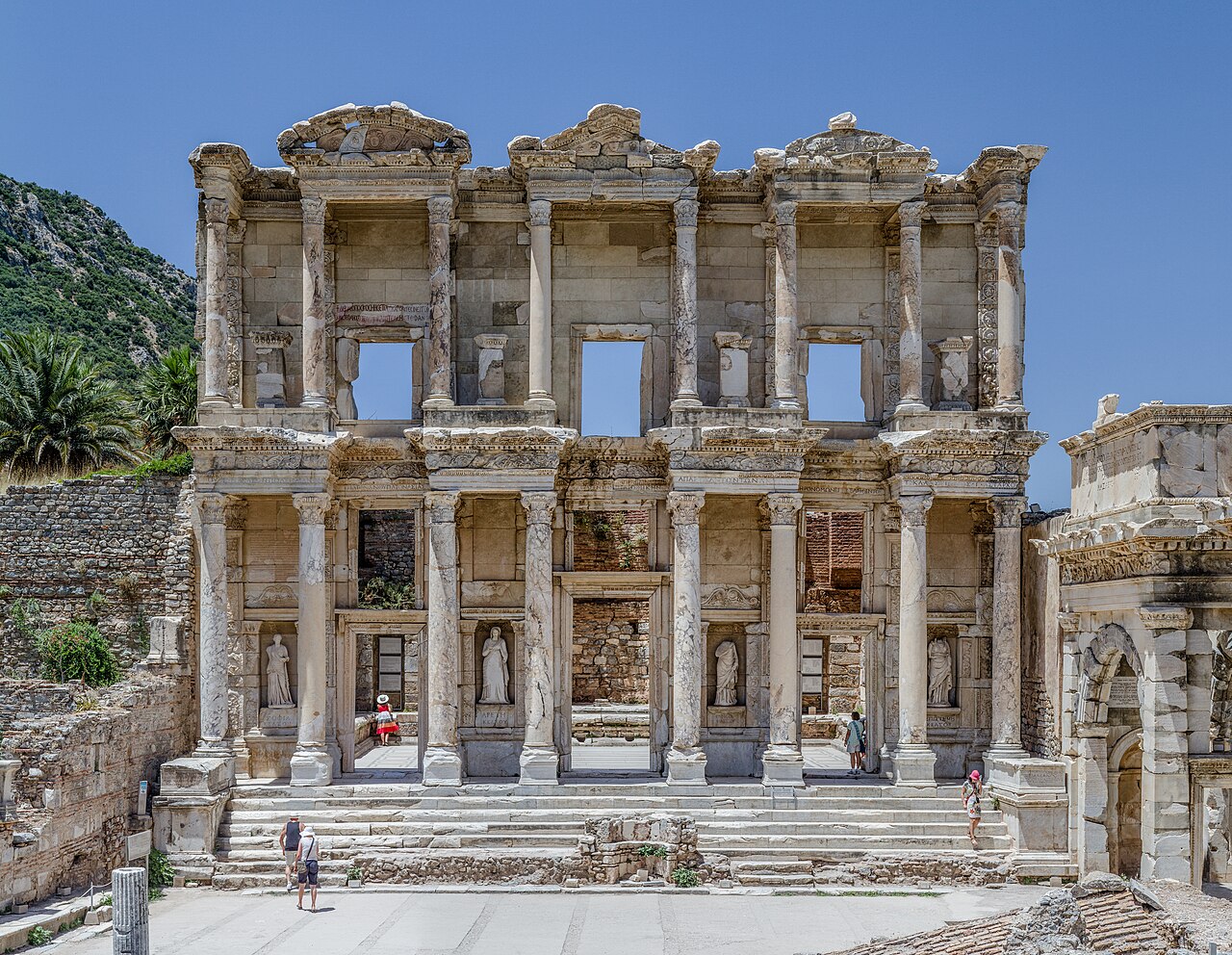
The Roman Agora of Smyrna, excavated in the heart of modern İzmir's Kemeraltı district, is one of the most impressive Roman civic spaces visible in western Turkey. Originally built in the Hellenistic period and rebuilt after a devastating earthquake in 178 CE with the financial support of Emperor Marcus Aurelius, the agora features a two-story colonnade with beautifully carved Corinthian capitals, basement corridors, and monumental arched entryways. The adjacent Kadifekale (Velvet Castle) preserves fortification walls from the Hellenistic through Ottoman periods.

Smyrna remained a major Byzantine city and later became one of the most cosmopolitan cities of the Ottoman Empire, with large Greek, Armenian, Jewish, and Levantine populations that earned it the nickname "Infidel İzmir" (Gavur İzmir). The Great Fire of Smyrna in 1922 destroyed much of the historic waterfront, but archaeological investigation continues to reveal the city's ancient layers beneath the modern metropolis.
Why It Matters

Smyrna's claim as Homer's birthplace — the most persistent of the seven cities that competed for this honor — connects the city to the very origins of Western literature. As one of the Seven Churches of Revelation, Smyrna also occupies a central place in Christian sacred geography. The city's Roman Agora, excavated in the center of a modern metropolis of five million, demonstrates how archaeological investigation can reveal ancient urban life even beneath densely developed cities. Smyrna's multicultural Ottoman-era identity, with its Greek, Armenian, Jewish, and Turkish communities, makes it essential for understanding the cosmopolitan character of the eastern Mediterranean world.

Stay curious

New stories and sites, once a month. No spam.

Evidence & Interpretation

Distinguishing what is well-established from what remains debated.

Well-Established Facts

3
  • Excavations at Old Smyrna (Bayraklı) have confirmed continuous habitation from the 3rd millennium BCE, including a well-preserved Iron Age settlement with one of the earliest known Greek temples, dating to the 9th century BCE.
  • The Roman Agora, rebuilt after the earthquake of 178 CE, preserves architectural inscriptions and coin finds confirming the role of Emperor Marcus Aurelius in financing the reconstruction.
  • The Martyrdom of Polycarp, one of the earliest surviving accounts of a Christian martyrdom, provides detailed information about the bishop's death in the stadium of Smyrna around 155-160 CE.

Scholarly Inferences

1
  • The legend of Alexander the Great directing the refounding of Smyrna after a dream on Mount Pagus, reported by Pausanias, likely reflects the Hellenistic-period refoundation but its specific details are legendary.

Debated Interpretations

2
  • Whether Homer was actually born in Smyrna remains unprovable, though the tradition is among the oldest and most persistent, attested from at least the 7th century BCE onward.
  • The identification of specific archaeological remains with the church addressed in Revelation 2:8-11 has not been possible, and the exact location of the early Christian community's meeting place remains unknown.

Discovery & Excavation

1932–1941

Old Smyrna (Bayraklı) excavations

Led by Ekrem Akurgal

Ekrem Akurgal led pioneering excavations at Old Smyrna, uncovering the Early Iron Age settlement, a remarkable 9th-century BCE temple of Athena, and portions of the archaic city wall.

1933–1943

Roman Agora excavations

Rudolf Naumann and Selahittin Kantar began excavations of the Roman Agora, revealing the western portico, basement galleries, and portions of the two-story colonnade.

1996–2012

Expanded Agora excavations

Major expansion of the Agora excavation area uncovered additional sections of the colonnade, the northern basilica, and an extensive network of underground corridors and shops.

2007–2015

Kadifekale investigations

Archaeological survey and conservation work at Kadifekale documented fortification phases from Hellenistic through Ottoman periods and addressed landslide risk to the ancient walls.

2019

Theatre discovery

Geophysical survey identified the location of the ancient theatre on the slopes of Kadifekale, where Polycarp's martyrdom reportedly took place, beneath modern urban development.

More Photos

Museum Artifacts

Community Photos

Share your experience

Have you visited this site? Upload your photos to help others discover it.

Location

Related Sites

Sources

  • Old Smyrna Excavations at BayraklıEkrem Akurgal (1983)
  • The Seven Churches of Asia: Their Setting and Early HistoryWilliam Ramsay (1904)
  • Wikipedia — SmyrnaLink

Research Papers

Stay in the loop

Get notified when we add new sites or major features. We send at most 1–2 emails per year. We never sell your email.

Atlas AnatoliaAtlas Anatolia

An interactive atlas of ancient Anatolian sites. Explore civilizations, monuments, and stories across millennia.

info@atlasanatolia.com

© 2026 Atlas Anatolia. Content is provided for educational purposes.

Map data © OpenStreetMap contributors