
Atlas AnatoliaAtlas Anatolia
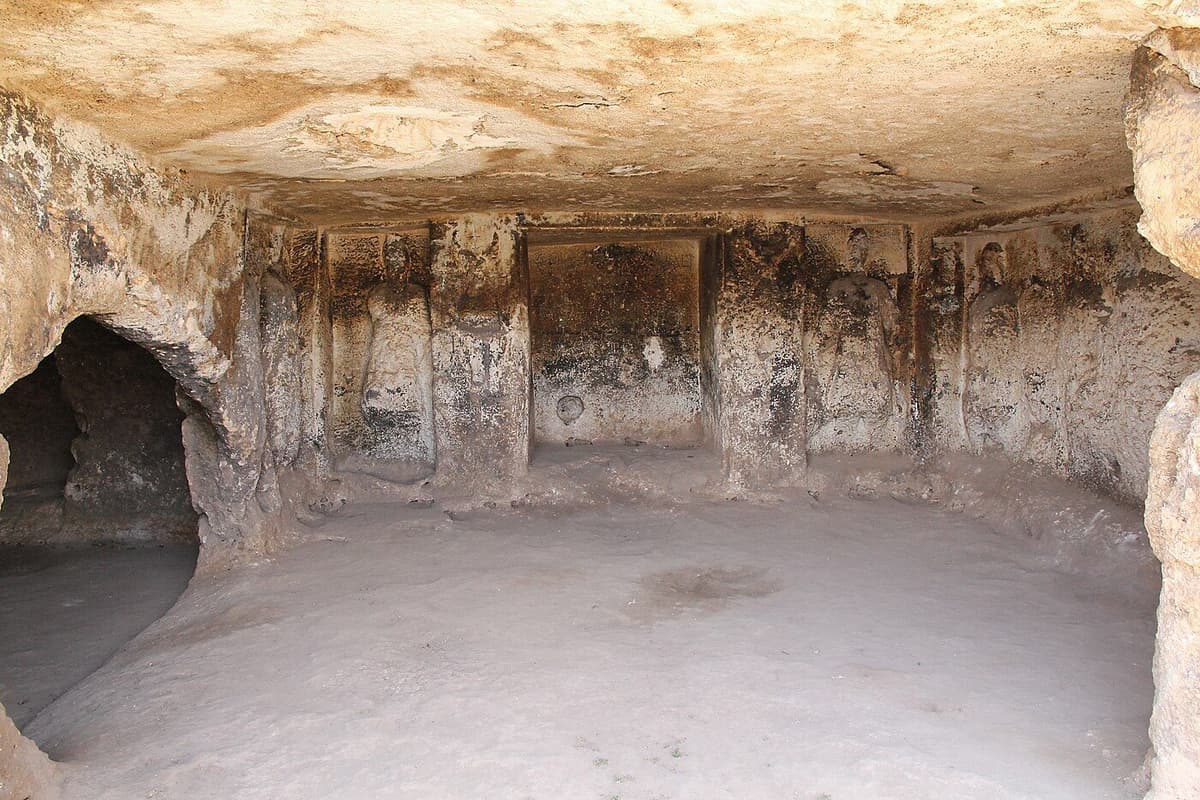
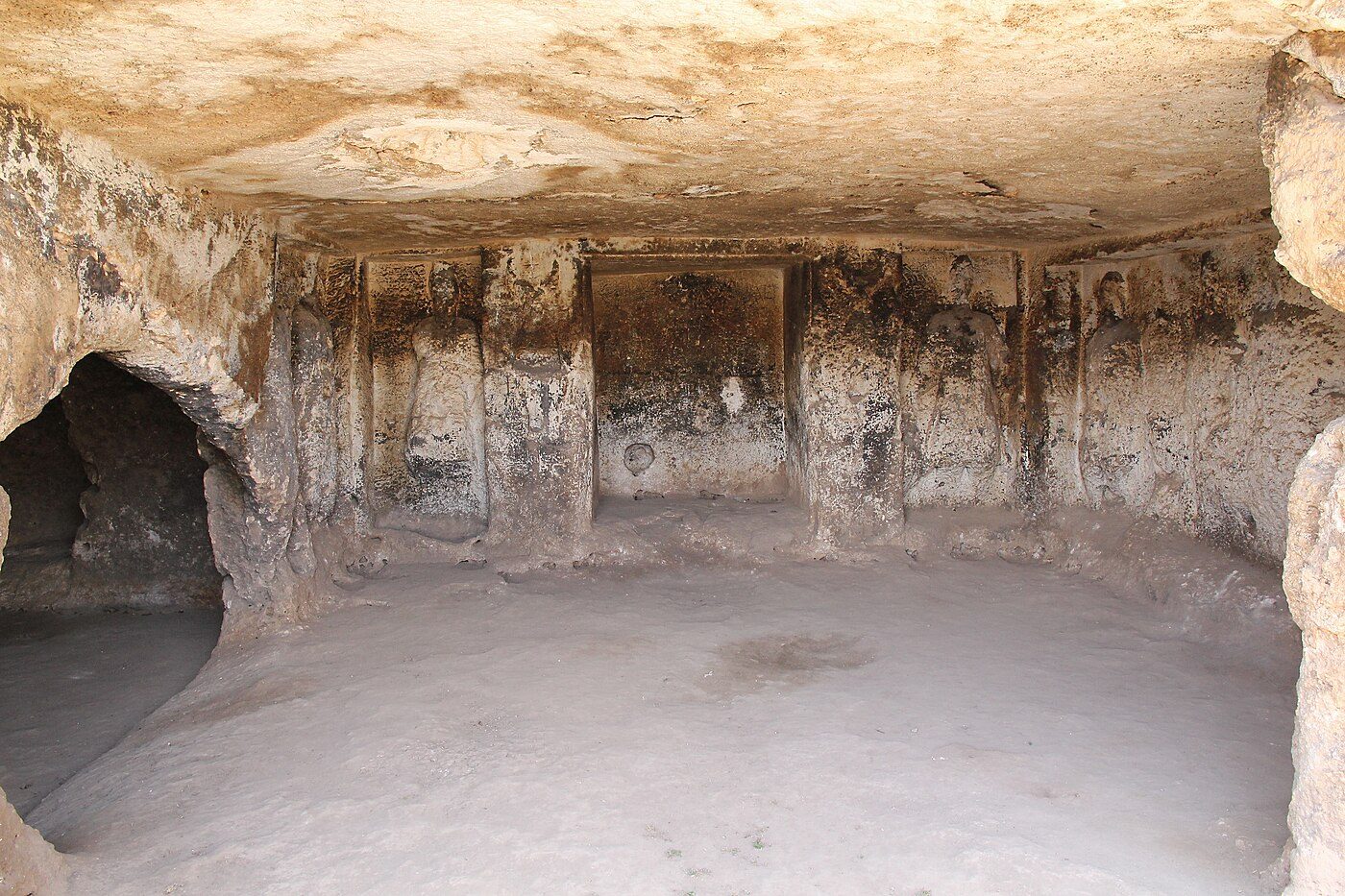
Rock-cut relief of a priestly figure at the Sumatar Harabesi sanctuary in the Tektek Mountains

Sumatar Harabesi

200 BCE – 300 CE
HellenisticRomanAssyrianRomanSanliurfa

Moon God

Central sanctuary dedicated to Sin (Marilaha), the Mesopotamian moon god

Planetary Temples

Seven subsidiary shrines representing the seven classical planets

Sabians

Connected to the mysterious Sabian star-worshippers of Harran

Inscriptions

Syriac inscriptions documenting astral cult practices

Location

Tektek Mountains, 60 km northeast of Sanliurfa

Period

2nd century BCE through 3rd century CE (possibly later)

Sumatar Harabesi offers unparalleled evidence for the survival of Mesopotamian astral religion into the Roman and possibly early Islamic periods.”

WFrom Wikipedia

Sumatar Harabesi is an ancient open-air sanctuary in southeastern Turkey dedicated to the moon god Sin, with seven planetary temples linked to the Sabian star-worshippers of Harran.

Read full article on Wikipedia

Overview

Sumatar Harabesi is one of the most enigmatic archaeological sites in southeastern Turkey, a sprawling open-air sacred precinct set among the rocky hills of the Tektek Mountains approximately 60 kilometers northeast of Sanliurfa. The site preserves the remains of a remarkable pagan sanctuary where the moon god Sin and associated planetary deities were worshipped from at least the 2nd century BCE through the 3rd century CE, and possibly much later in secret.

The sanctuary consists of a central sacred mound (the "Sacred Hill") surrounded by seven smaller cult installations distributed across the surrounding hilltops. Ancient sources and modern scholars have connected these seven subsidiary temples to the seven classical planets — Sun, Moon, Mars, Mercury, Jupiter, Venus, and Saturn — creating an open-air planetarium of worship that reflects the deep astronomical knowledge of the region's inhabitants.

"The Harranians worship the stars, especially the moon, and have temples in the mountains where they perform their rites."
— Ibn al-Nadim, c. 987 CE

The central mound at Sumatar features rock-cut reliefs depicting a figure in priestly robes, identified through accompanying Syriac inscriptions as a devotee or priest of Sin (Marilaha — "Lord God" in Syriac). Additional inscriptions in Syriac script on the rocks and cave walls provide crucial evidence for the syncretic religious practices that blended Mesopotamian astral religion with local Aramaic culture.

Sumatar is frequently associated with the Sabians of Harran, a mysterious religious community mentioned in the Quran that practiced star worship and maintained pre-Islamic Mesopotamian religious traditions well into the Islamic period. The site's remote location in the rugged Tektek Mountains may have provided the isolation needed to continue these practices away from the centers of Roman and later Christian authority. The caves show evidence of use as both cult chambers and living quarters, suggesting a resident priestly community.
Why It Matters

Sumatar Harabesi offers unparalleled evidence for the survival of Mesopotamian astral religion into the Roman and possibly early Islamic periods. The seven planetary temples represent a cosmological system that links this remote Anatolian hilltop to the great astronomical traditions of Babylon and Assyria. The site's connection to the enigmatic Sabians of Harran illuminates one of the most fascinating episodes in religious history — the persistence of pagan star worship in a region that successively came under Christian and Islamic rule. Sumatar challenges conventional narratives of religious change by showing how marginal communities could maintain ancient traditions for centuries in remote refuges.

Stay curious

New stories and sites, once a month. No spam.

Evidence & Interpretation

Distinguishing what is well-established from what remains debated.

Well-Established Facts

3
  • Syriac inscriptions on the central mound identify the deity worshipped as Marilaha ("Lord God"), a title for the moon god Sin, and name several priestly figures associated with the cult.
  • Seven subsidiary cult installations have been documented on surrounding hilltops, consistent with ancient descriptions of planetary shrines associated with Harranian astral religion.
  • Rock-cut reliefs depict a figure in priestly robes with raised arms in a gesture of worship, carved directly into the limestone of the sacred hill.

Scholarly Inferences

2
  • The remote location in the Tektek Mountains suggests the sanctuary functioned as a refuge where Mesopotamian astral religion could be practiced away from Roman and later Christian authority.
  • The cave chambers with living quarters adjacent to cult installations suggest a resident priestly community maintaining continuous ritual activity at the sanctuary.

Debated Interpretations

1
  • Whether the Sumatar cult community is directly connected to the Sabians mentioned in the Quran, or represents an earlier phase of the same tradition, remains debated among scholars of Near Eastern religion.

Discovery & Excavation

1954

Initial discovery and survey

Led by Helmuth Theodor Bossert

Helmuth Theodor Bossert and Seton Lloyd documented the site for the first time, recording the rock-cut reliefs and Syriac inscriptions on the central sacred hill.

1972–1975

Syriac inscription study

Jan Willem Drijvers conducted comprehensive epigraphic documentation of all Syriac inscriptions at the site, establishing the connection to Sin worship and planetary cult practices.

1986–1990

Archaeological survey

Systematic survey identified and mapped all seven subsidiary cult installations in the surrounding hills and documented cave shrines with votive niches and relief carvings.

2005

Conservation assessment

Assessment of weathering damage to the rock-cut reliefs and inscriptions led to recommendations for protective measures at the exposed sanctuary.

2015–2020

Digital documentation project

Modern photogrammetric and 3D scanning techniques created detailed digital records of the deteriorating reliefs and inscriptions for preservation and further study.

More Photos

Museum Artifacts

Community Photos

Share your experience

Have you visited this site? Upload your photos to help others discover it.

Location

Related Sites

Sources

  • Cults and Beliefs at EdessaHan J.W. Drijvers (1980)
  • The Sabians of Harran and the Classical TraditionTamara Green (1992)
  • Wikipedia — SogmatarLink

Research Papers

Stay in the loop

Get notified when we add new sites or major features. We send at most 1–2 emails per year. We never sell your email.

Atlas AnatoliaAtlas Anatolia

An interactive atlas of ancient Anatolian sites. Explore civilizations, monuments, and stories across millennia.

info@atlasanatolia.com

© 2026 Atlas Anatolia. Content is provided for educational purposes.

Map data © OpenStreetMap contributors