Overview
Harran sits on the upper Mesopotamian plain of southeastern Turkey, a crossroads of civilizations for at least 5,000 years. The city appears in the Hebrew Bible as the place where Abraham resided before continuing to Canaan, and in Assyrian records as a major cult center of Sin, the Moon God.
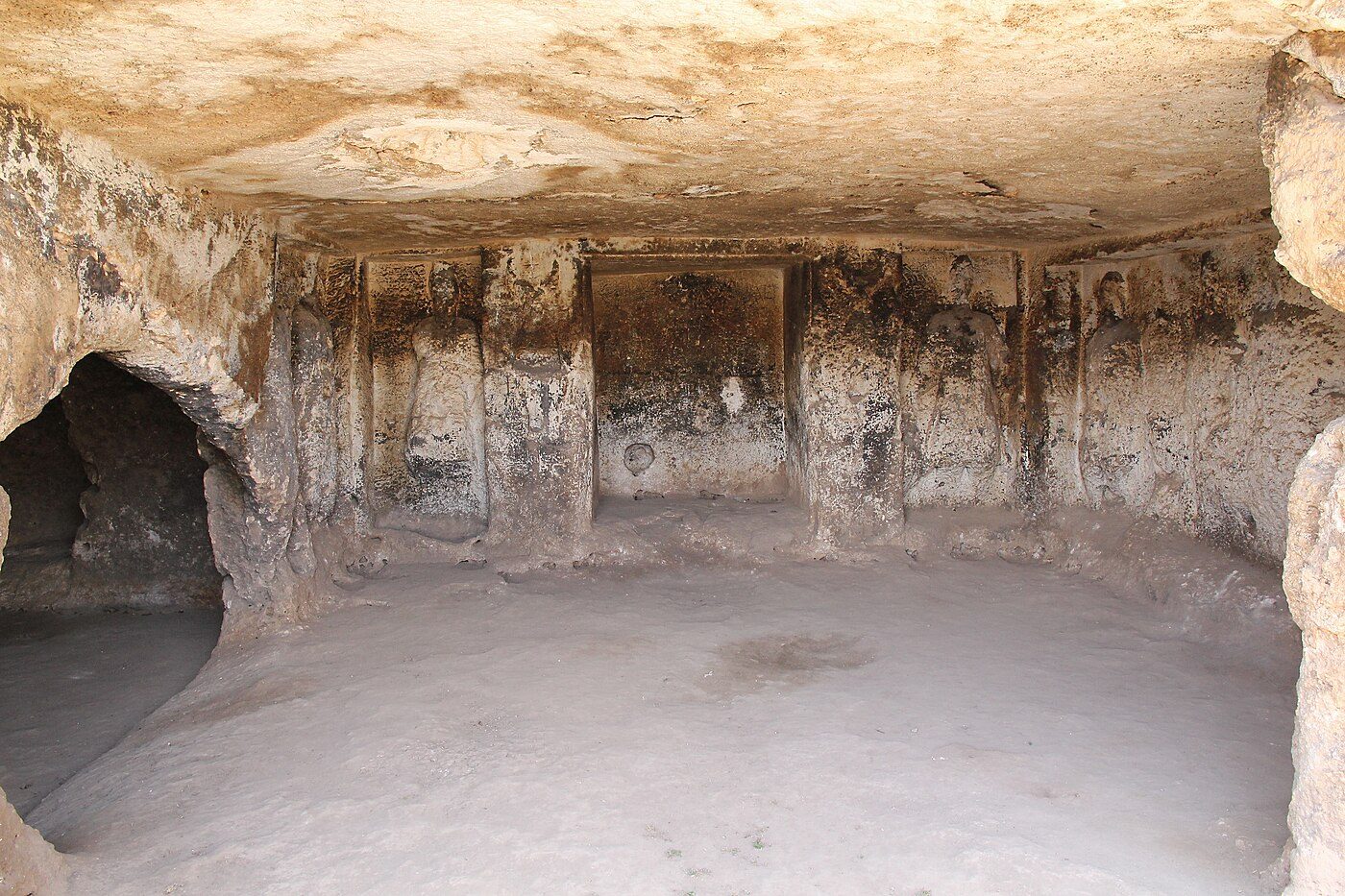
The Temple of the Moon God at Harran was one of the last functioning pagan temples in the Near East, persisting well into the Islamic period. The Sabians of Harran — a mysterious community of star-worshippers mentioned in the Quran — maintained their astronomical and mathematical traditions here until the 11th century CE, serving as a crucial bridge between Greek philosophical thought and the Islamic Golden Age.
"The city of Harran, where the temple of the Moon is located, is a great city in the desert."
— Ibn Battuta, 14th century CE
In 53 BCE, Harran entered Roman history as the site of the Battle of Carrhae, one of Rome's most devastating defeats, where the Parthian general Surena annihilated seven Roman legions under Marcus Licinius Crassus. The battle demonstrated the lethal effectiveness of Parthian mounted archery and ended Roman expansion eastward for a generation.
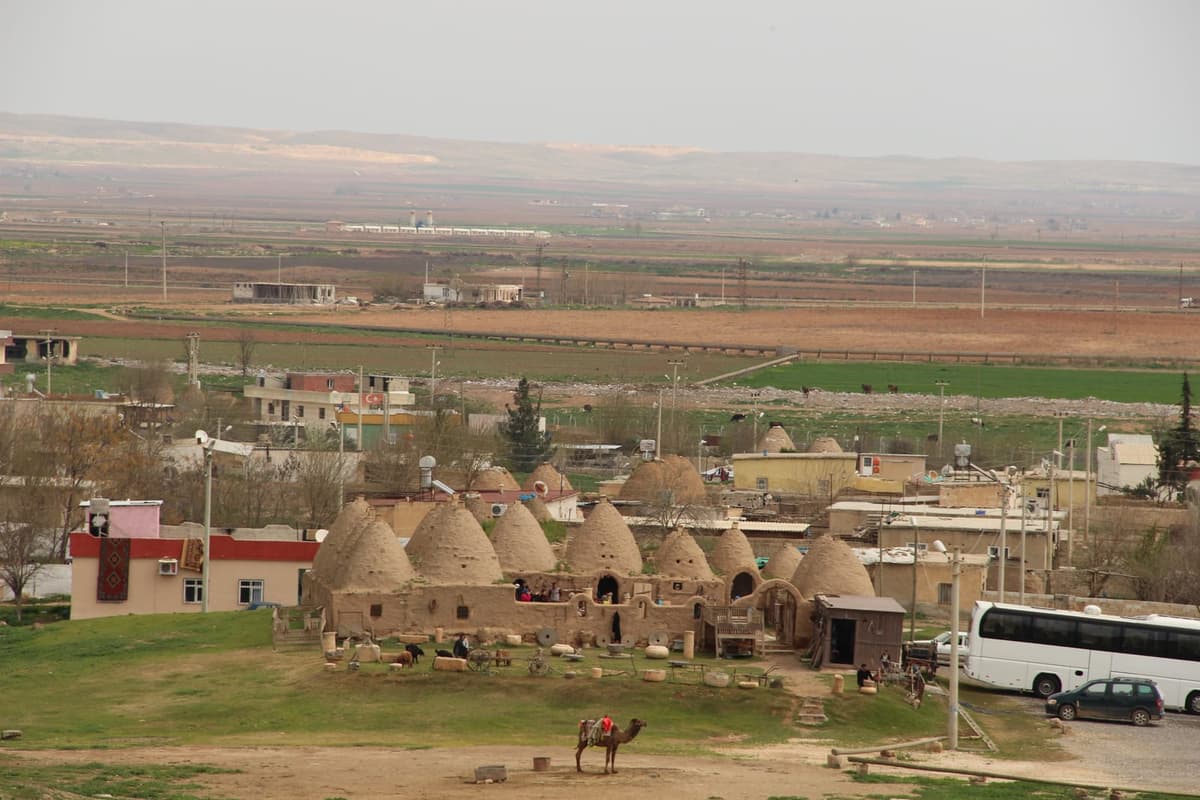
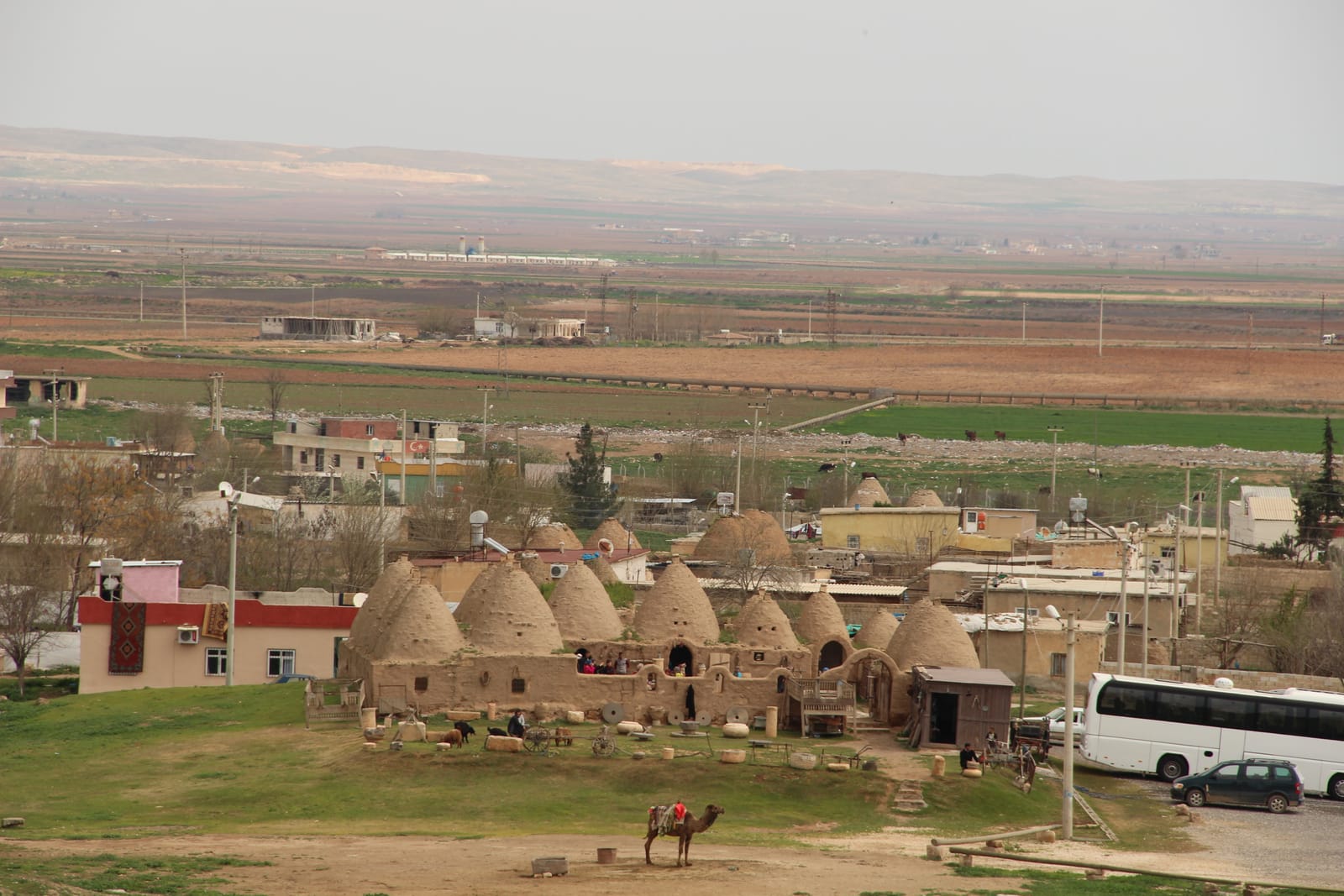
The city's most distinctive surviving feature is its beehive houses (kubbeli evler) — conical mudbrick dwellings that have been built in the same style for at least 3,000 years. Their shape provides natural insulation against the extreme Mesopotamian heat. The ruins of the Ulu Cami (Great Mosque) and the citadel with its astronomical observatory evoke Harran's medieval golden age as a center of Islamic scholarship.

Ancient city of Harran Ruins - Sanliurfa | Theugursevinc (CC BY-SA 4.0)
The city's urban fabric was dominated by its massive 4th-century CE city walls, whose ruins still define the site's perimeter. Within, excavations have revealed a dense network of streets and domestic structures, indicating a thriving urban center engaged in regional trade. Daily life was sustained by sophisticated water management, including a system of canals and cisterns. Harran's decline as a major center began after its sack by the Mongols in 1259-60 CE, which destroyed its irrigation infrastructure and led to its gradual abandonment in favor of nearby Urfa. The iconic beehive houses, constructed from mud brick without timber, represent a direct architectural lineage from ancient Mesopotamian building techniques, perfectly adapted to the region's extreme climate.