Overview
Zeugma, situated on the eastern bank of the Euphrates River in southeastern Turkey, occupies a dramatic and strategic position. The city sprawled across steep slopes descending to the river, with its urban fabric divided into two main sectors: the upper city on the plateau and the lower city extending to the waterfront. Its most defining geographical feature was the ancient pontoon bridge, from which its name (meaning "bridge" or "crossing" in Greek) derives, connecting it to the opposite bank and the city of Apamea. This location made it a vital control point for river traffic and caravan routes between Anatolia, Syria, and Mesopotamia. Today, the visible remains are a testament to both its ancient grandeur and modern rescue efforts, with excavated areas revealing terraced streets, wealthy residential districts, and the stark reality of the now-submerged lower city lying beneath the waters of the Birecik Dam reservoir.
Historically, Zeugma's significance stems from its role as a pivotal military and commercial frontier city. Founded around 300 BCE by Seleucus I Nicator as one of a pair of cities guarding the river crossing, it came under Roman control in 64 BCE and became a key legionary base for the Legio IV Scythica, securing the eastern border of the empire against the Parthians and later the Sassanids. This military importance fueled its prosperity, transforming it into a cosmopolitan hub where Roman, Greek, and Eastern Syrian cultures intermingled. Its wealth, derived from taxes on trade and the presence of well-paid soldiers and officials, reached its zenith during the 2nd and 3rd centuries CE, before a Sassanian sack in the mid-3rd century began its gradual decline.
"Zeugma is a city of Commagene, where a bridge of boats connects the two banks of the Euphrates."
— Strabo, Geographica (c. 20 CE)
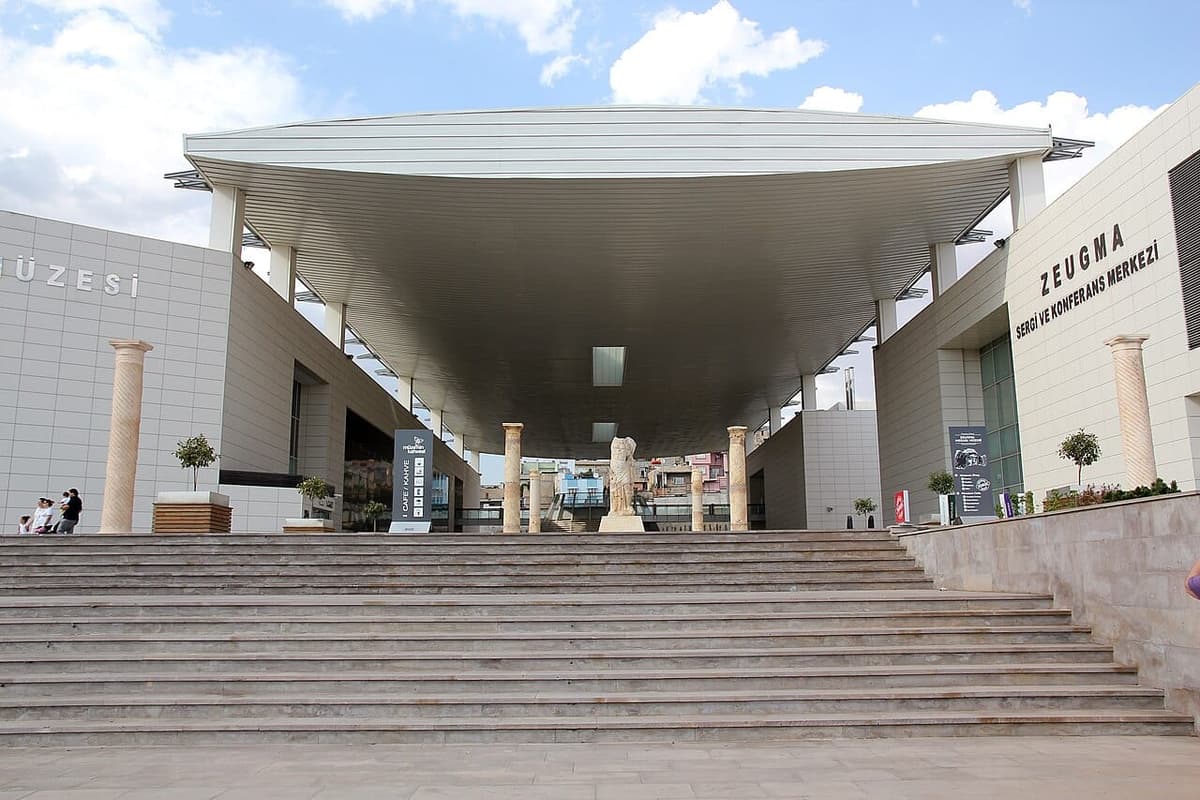
The site is most renowned for the opulent Roman houses of the elite, whose floors are adorned with an extraordinary collection of mosaic pavements, among the finest in the Roman world. These mosaics, depicting mythological scenes, intricate geometric patterns, and vivid portraits, adorned structures like the Poseidon House and the House of Dionysus. The most famous single image is the hauntingly beautiful "Gypsy Girl" (often identified as a maenad or personification of Gaia), whose eyes seem to follow the viewer. Key excavated structures include a large Roman villa, a stadium, and several temples. The ongoing excavations continue to reveal public baths, market areas, and an extensive network of water pipes and sewers, illustrating sophisticated urban planning. The Zeugma Mosaic Museum in Gaziantep now houses the rescued treasures, preserving the artistic legacy of the flooded city.
Culturally, Zeugma embodies the synthesis of Greco-Roman and Eastern traditions characteristic of the Roman East. Its art and architecture reflect the tastes of a wealthy, hybrid society that worshipped both the classical pantheon and local deities. The sheer quantity and quality of the mosaics indicate a highly skilled local workshop tradition and a clientele eager to display their status and cultural affiliation. The dramatic rescue archaeology project, launched in the 1990s ahead of the dam's completion, turned Zeugma into an international symbol of cultural heritage preservation, racing against time to save its unparalleled artworks from permanent inundation.

Gaziantep Zeugma Museum Mars statue 4076 | Dosseman (CC BY-SA 4.0)