Overview
Founded around 300 BCE by Seleucus I Nicator — one of Alexander the Great's generals — Antioch rapidly became one of the largest and most cosmopolitan cities of the ancient world. Situated on the Orontes River at the crossroads of major trade routes linking the Mediterranean to Mesopotamia, it served as the capital of the Seleucid Empire and later became the seat of Roman governance in the East.
Under Roman rule, Antioch grew to a population estimated at 500,000, making it the third-largest city in the empire after Rome and Alexandria. The city was famous for its colonnaded main street — one of the earliest in the ancient world — its chariot-racing hippodrome, and the pleasure gardens of Daphne (Harbiye) on its outskirts.
"Antioch is a city of great size and population, the metropolis of Syria."
— Strabo, c. 7 BCE - 23 CE
Antioch holds a pivotal place in the history of Christianity. According to the Acts of the Apostles, it was here that the followers of Jesus were first called "Christians." The city became the seat of one of the five original patriarchates of the early church, and its theological school shaped Christian doctrine for centuries.
The Hatay Archaeological Museum houses one of the world's finest collections of Roman-period floor mosaics, rescued from villas in Antioch and its suburb Daphne. These mosaics — depicting mythological scenes, hunting parties, and daily life — are masterpieces of ancient pictorial art.

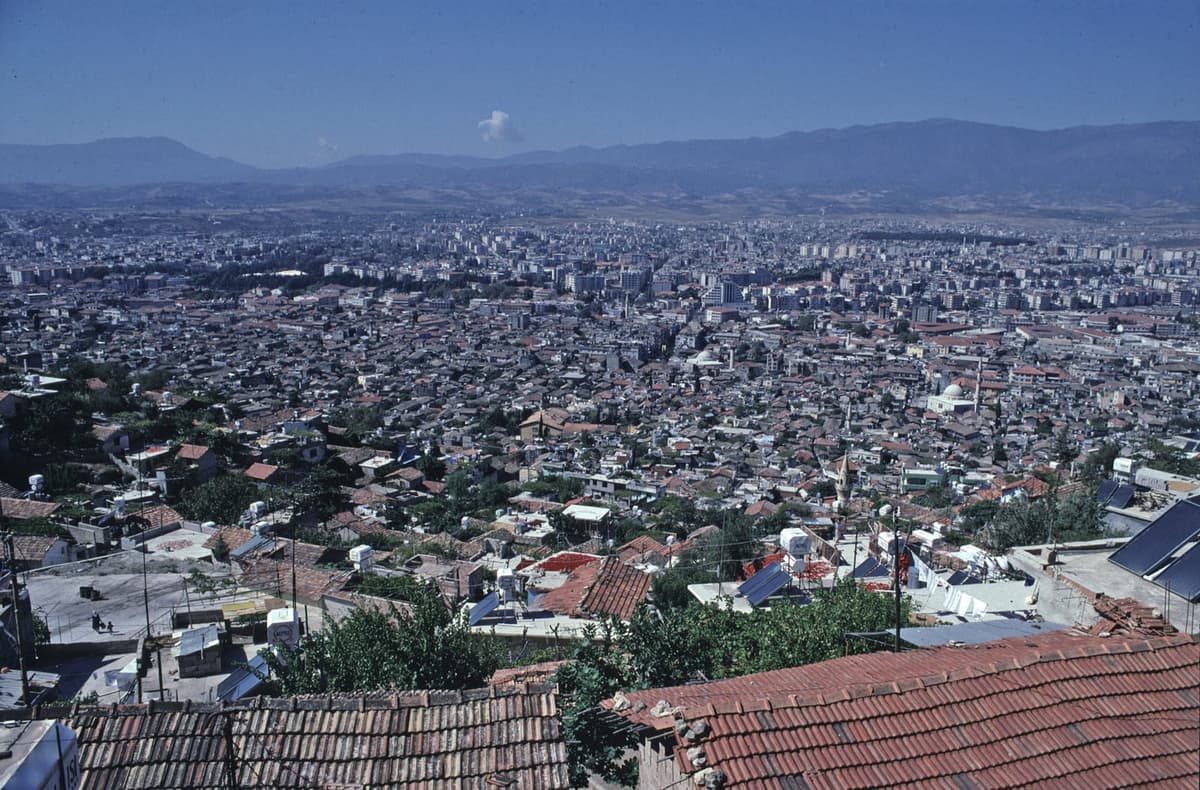
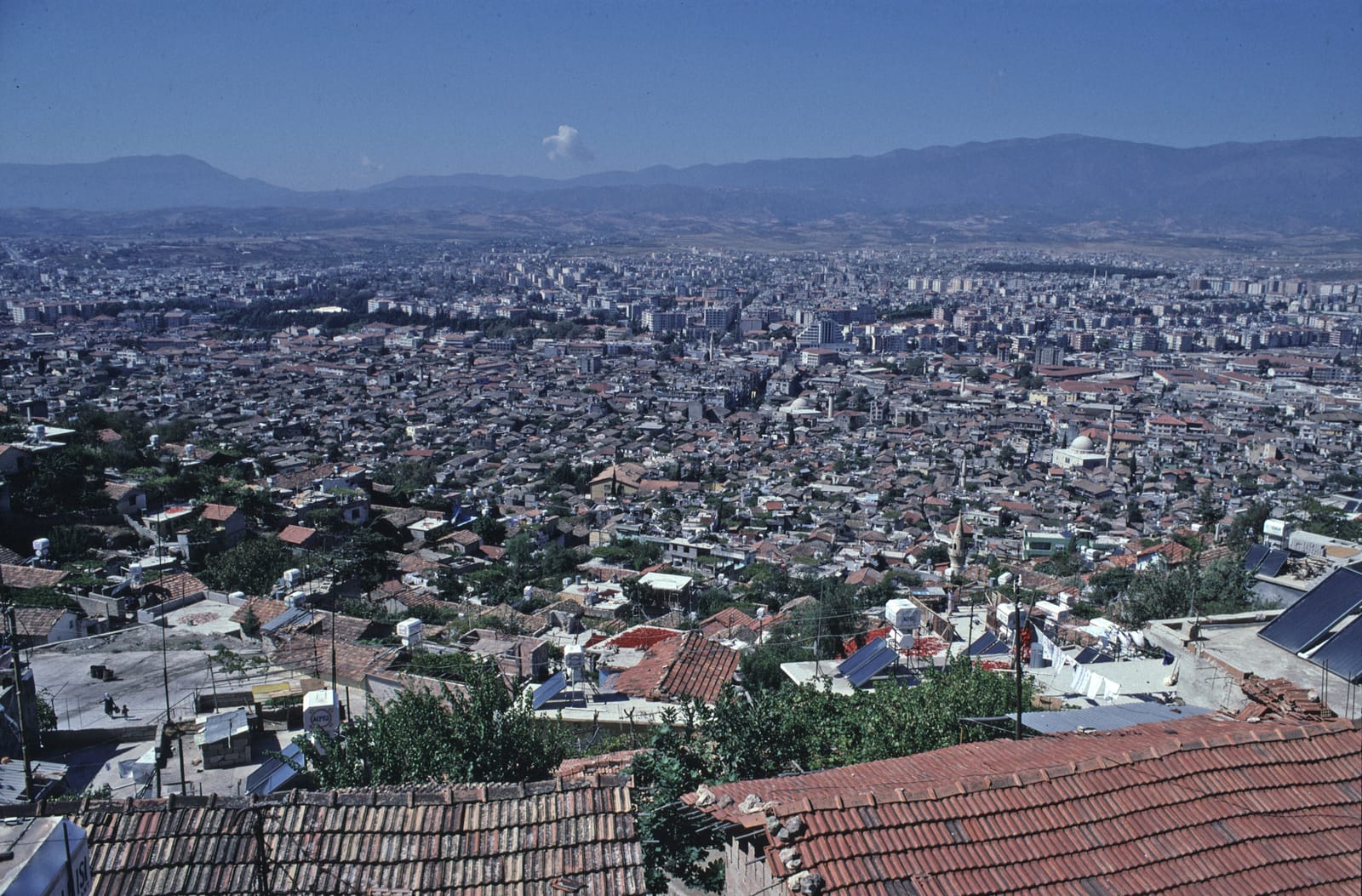
Antakya - 2011-04-10 | Maarten Sepp (CC BY-SA 4.0)
The city's urban fabric was defined by its famous colonnaded street, the Plateia, stretching for over 2 kilometers and lined with porticoes, shops, and monuments. This grand artery, illuminated by street lamps at night, was the commercial and social heart of the metropolis. Antioch was also renowned for its sophisticated water infrastructure, including aqueducts like the one from Daphne and the monumental Charonion relief carved into Mount Silpius.
Daily life in Antioch was famously vibrant and cosmopolitan, marked by public baths, theaters, and the circus. The suburb of Daphne, with its sacred grove and sanctuary of Apollo, served as a luxurious resort for the elite. The city's prosperity was fueled by its role as a terminus for the Silk Road and other eastern trade routes, bringing spices, silks, and luxury goods from Persia and beyond to the Mediterranean markets.
Antioch's decline was gradual, accelerated by a series of catastrophic earthquakes, Persian sackings in the 6th century, and its capture by Arab forces in 638 CE. Though it remained a significant provincial center under Byzantine and later Seljuk rule, it never regained its former imperial stature. The final blow to its ancient urban continuity came with its sack by the Mamluk Sultan Baybars in 1268, which reduced the great city to a small town.