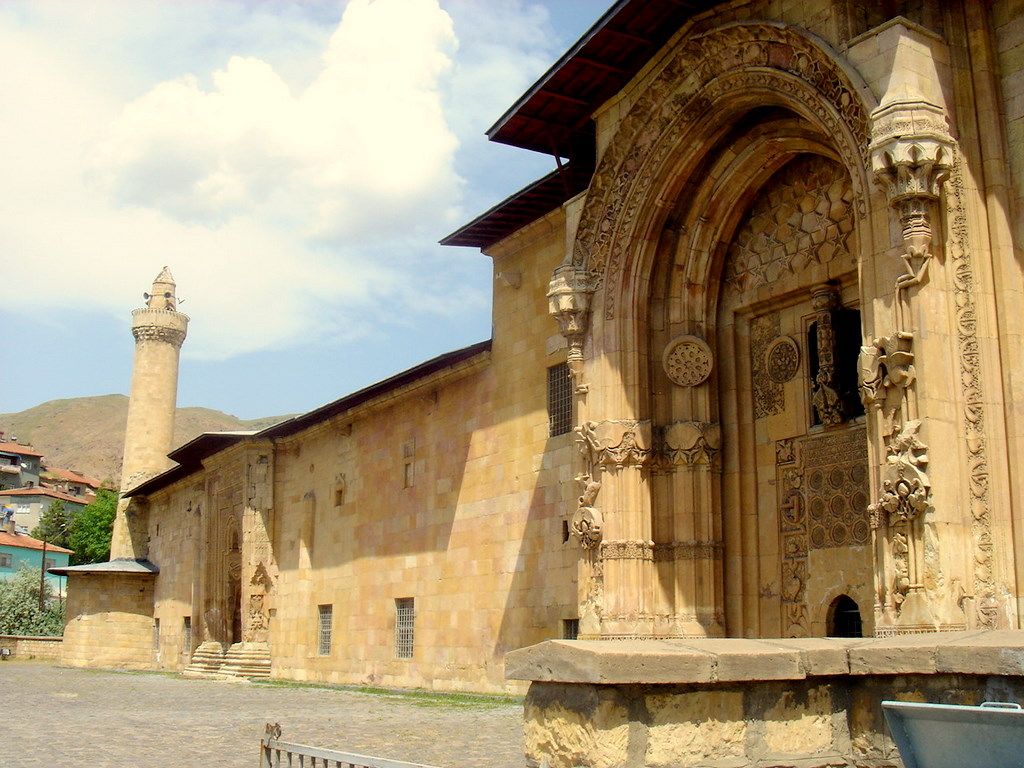
Overview
Ani is located in Kars Province, on a triangular plateau above the Akhurian River gorge that now forms part of the Turkish-Armenian border. In the 10th and 11th centuries, Ani was the capital of the Bagratid Armenian Kingdom and one of the most prosperous cities in the world.
At its height around 1050 CE, Ani may have had a population exceeding 100,000, rivaling the size of Constantinople. The city was known as the "City of 1001 Churches" and was a major center of Armenian culture, architecture, and commerce along the Silk Road.
"Ani is a great city, the capital of Armenia, with impregnable walls and a thousand churches."
— Ibn al-Athir (c. 1160–1233), Arab historian
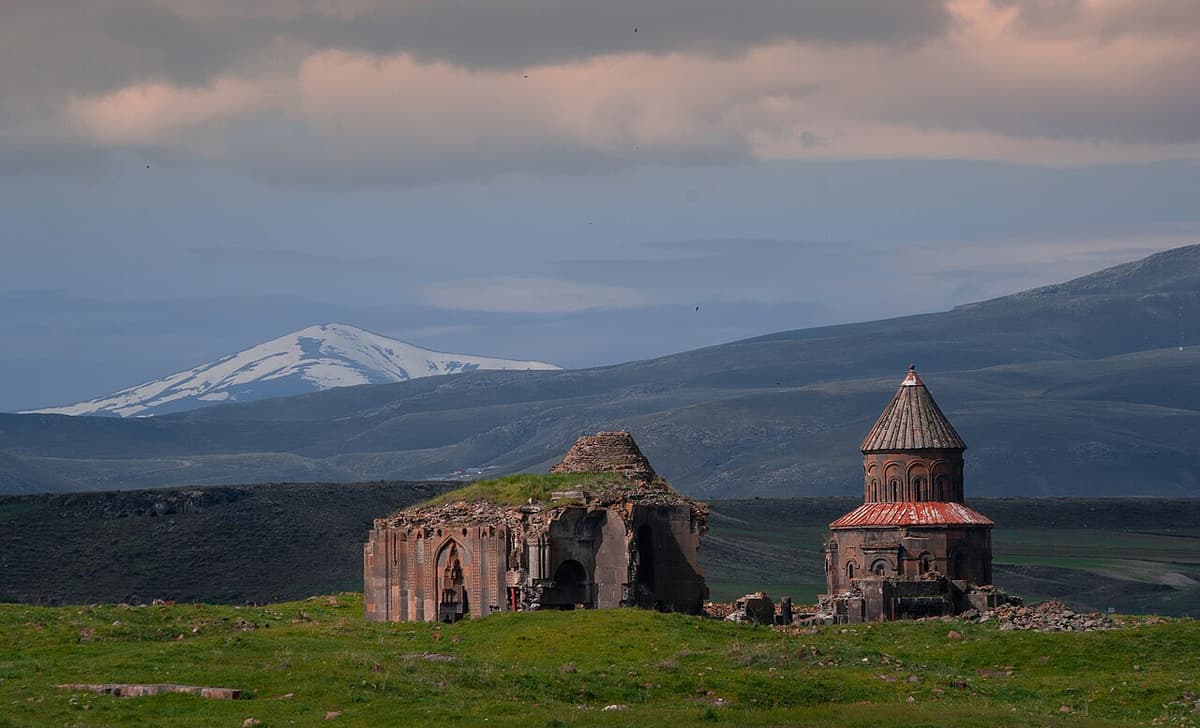
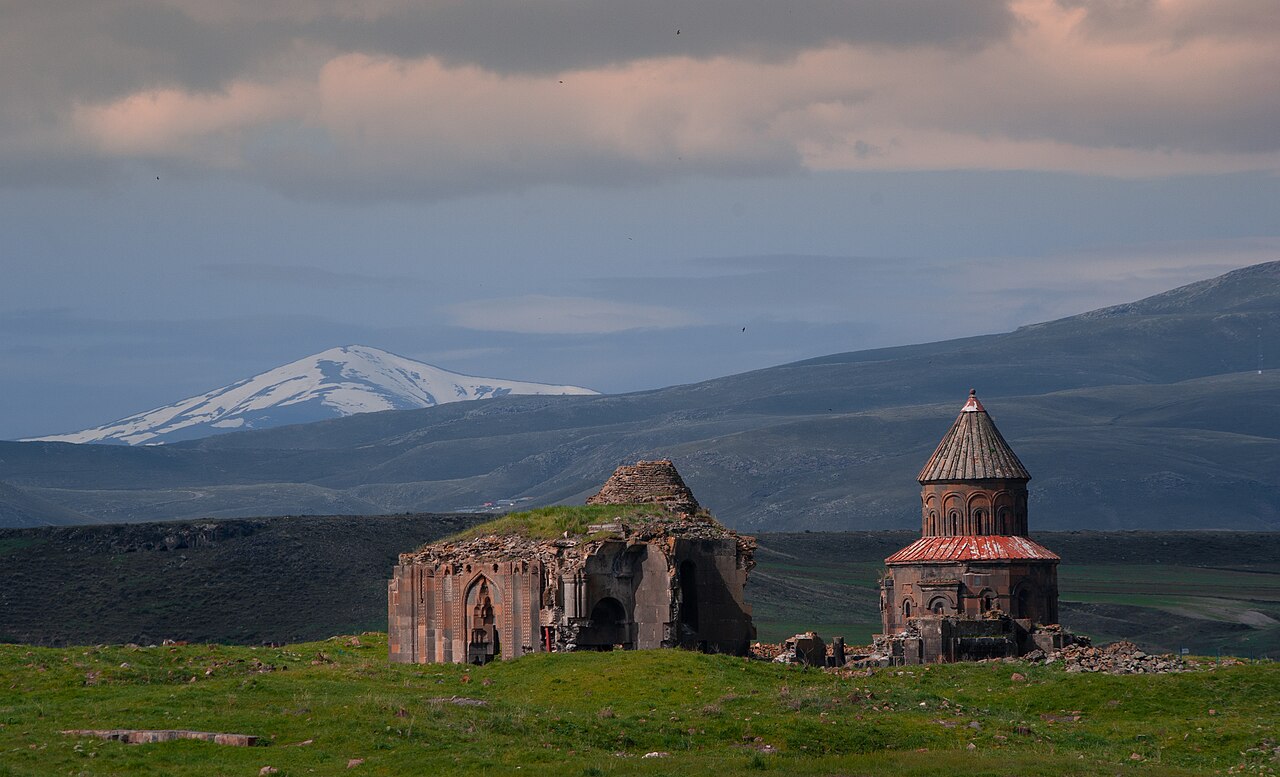
The site contains the ruins of numerous churches (including the Cathedral of Ani, built 989–1001), mosques, a Seljuk palace, defensive walls, and a citadel. The Church of the Redeemer (1035) and the Church of St. Gregory of Tigran Honents (1215), with its remarkable frescoes, are among the most notable structures.
Ani changed hands between Armenian, Byzantine, Seljuk, Georgian, and Ottoman rulers before being largely abandoned after Tamerlane's invasion in 1319 and a devastating earthquake in 1319.

Türkei, historische Stadt Ani, Erlöserkirche | Feldstein (CC BY-SA 4.0)
The city's formidable double walls, constructed under King Smbat II (977–989 CE), featured numerous semicircular towers and elaborate gates, demonstrating advanced military engineering. Within these defenses, archaeological evidence points to a thriving urban economy. Excavations have revealed workshops for metalworking, pottery, and glass production, alongside caravanserais that serviced Ani's role as a key node on east-west trade routes linking the Byzantine Empire, the Caucasus, and Persia.
Ani's decline was a protracted process. Following its capture by the Seljuk Turks in 1064 CE, it remained an important center but suffered from successive changes in rule, including the Georgian Kingdom, local Kurdish emirs, and the Mongols. The devastating sack by Tamerlane's forces in 1386, combined with a major earthquake in 1319 and the gradual shift of trade routes, led to the city's abandonment by the 18th century. Its ruins, preserved by the remote location, offer a poignant snapshot of a vanished medieval metropolis.