Ishak Pasha PalaceIshak Pasa Sarayi
Construction
1685-1784 (nearly 100 years)
Rooms
366 rooms in the complex
Elevation
~2,000 meters
Architecture
Ottoman-Persian-Armenian-Georgian fusion
“Ishak Pasha Palace is the supreme monument of Ottoman eastern Anatolia — a synthesis of multiple architectural traditions that reflects the cultural diversity of the region where Turkish, Persian, Armenian, and Georgian civilizations intersected for centuries.”
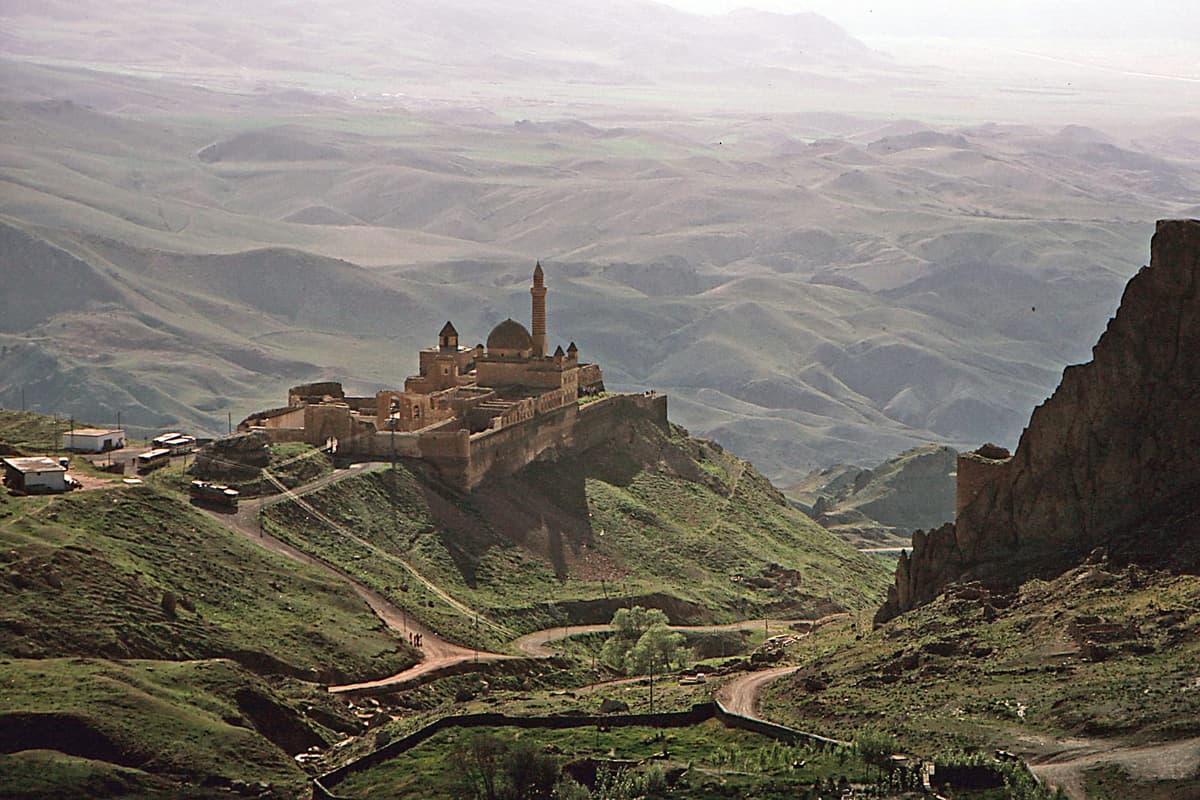
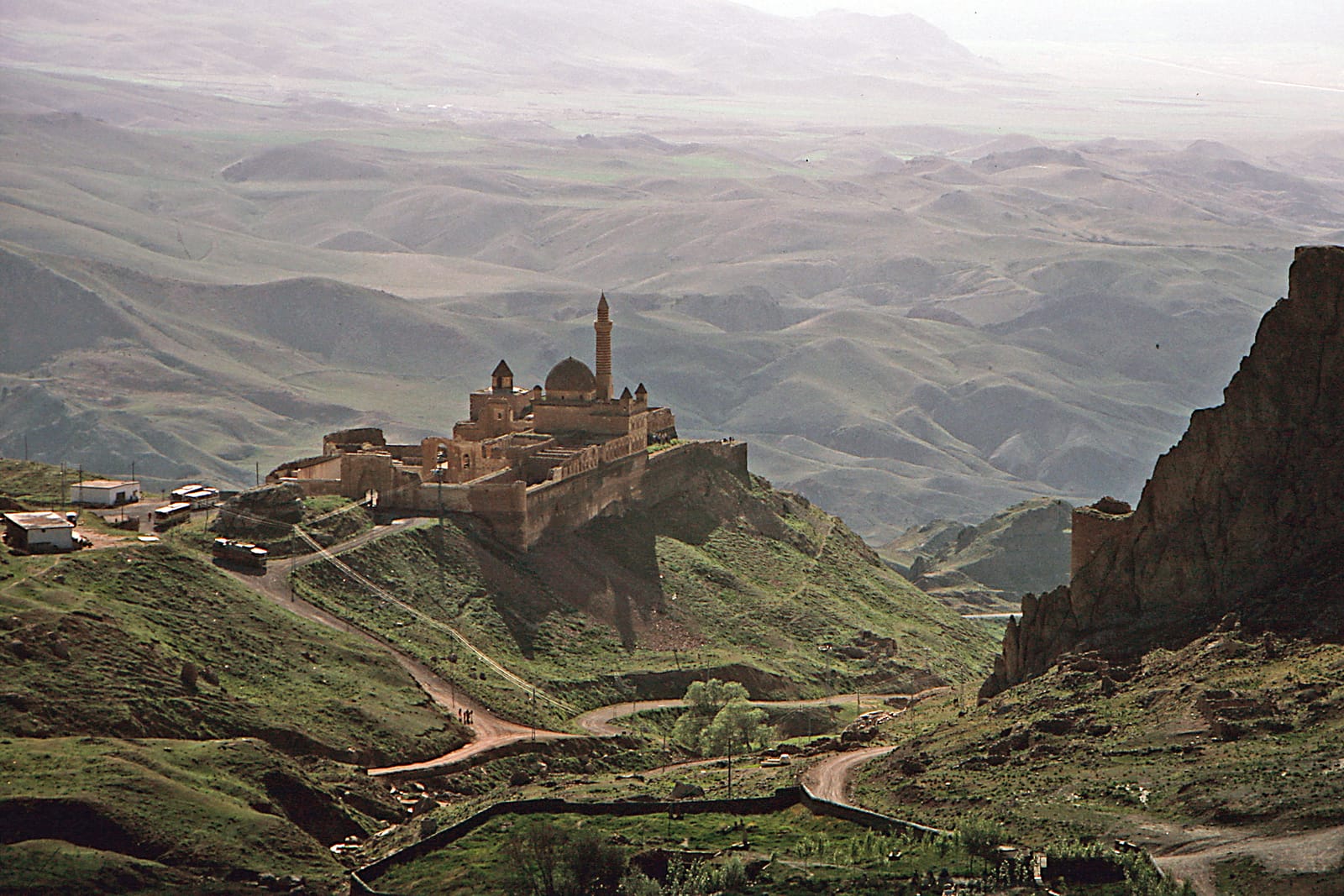
Ishak Pasha Palace is a magnificent Ottoman-period palace complex near Dogubayazit in eastern Turkey, blending Ottoman, Persian, Armenian, and Georgian architectural traditions.
read_wikipedia →overview
Ishak Pasha Palace (Ishak Pasa Sarayi) stands at an elevation of nearly 2,000 meters on a rocky terrace overlooking the Dogubayazit plain, with the snow-capped cone of Mount Ararat rising majestically in the background. This monumental complex — palace, mosque, harem, dungeon, and tomb combined — is one of the most architecturally ambitious constructions in eastern Turkey. Construction began in 1685 under Colak Abdi Pasha and was completed by his grandson Ishak Pasha in 1784, taking nearly a century. The complex reflects the multicultural reality of eastern Anatolia: Ottoman spatial planning, Seljuk decorative motifs, Persian-influenced stone carving, Armenian masonry techniques, and Georgian architectural elements all coexist within a unified design. The palace contains 366 rooms organized around two courtyards. The ceremonial gate is one of the most elaborate carved stone portals in Ottoman architecture. The tomb (turbe) features a distinctive conical roof. The mosque's minaret and the harem section with its intricate stonework represent the finest surviving examples of Ottoman provincial architecture. The palace complex also housed one of the earliest central heating systems in an Ottoman building — a network of heated air channels running beneath the floors, likely adapted from traditional hammam technology. Its position on the Silk Road and near the Persian border made it both a symbol of Ottoman authority and a way station for east-west travelers.
why_it_matters
evidence
evidence_desc
confirmed
3- Construction inscription on the palace dates its completion to 1784 and attributes the project to Ishak Pasha, grandson of Colak Abdi Pasha who began construction in 1685.
- Architectural analysis identifies Ottoman, Seljuk, Persian, Armenian, and Georgian decorative and structural elements throughout the complex.
- Archaeological investigation revealed a central heating system of heated air channels beneath floors — one of the earliest in Ottoman domestic architecture.
inferred
1- The palace's position on the historic Silk Road route suggests it served commercial and diplomatic functions alongside its role as a provincial seat of power.
debated
1- The relative contributions of Armenian, Georgian, and Persian craftsmen to the palace's construction and the significance of each tradition in the overall design are debated.
excavation
First restoration
Turkish Ministry of Culture began the first major restoration campaign on the palace complex, stabilizing walls and roofing.
Comprehensive restoration
Major restoration project funded by the Turkish government restored the ceremonial rooms, courtyards, and heating system.
Ongoing conservation
Continued conservation work including stone repair, drainage improvements, and visitor infrastructure development.
more_photos
artifacts
Community Photos
Share your experience
Have you visited this site? Upload your photos to help others discover it.
location
related_sites
sources
- Ishak Pasha Palace — Hamza Gundogdu (2002)
- Ottoman Architecture in Eastern Anatolia — Ara Altun (1998)
- Wikipedia — Ishak Pasha Palacelink

