Divrigi
UNESCO
World Heritage Site since 1985 (among Turkey's first)
Built
1228-1229 CE by Mengujekid emir Ahmed Shah
Portals
Most elaborately carved doorways in Islamic architecture
Complex
Integrated mosque and hospital (darussifa) in one building
“The Divriği Mosque and Hospital represents one of the supreme achievements of medieval Anatolian art and architecture.”
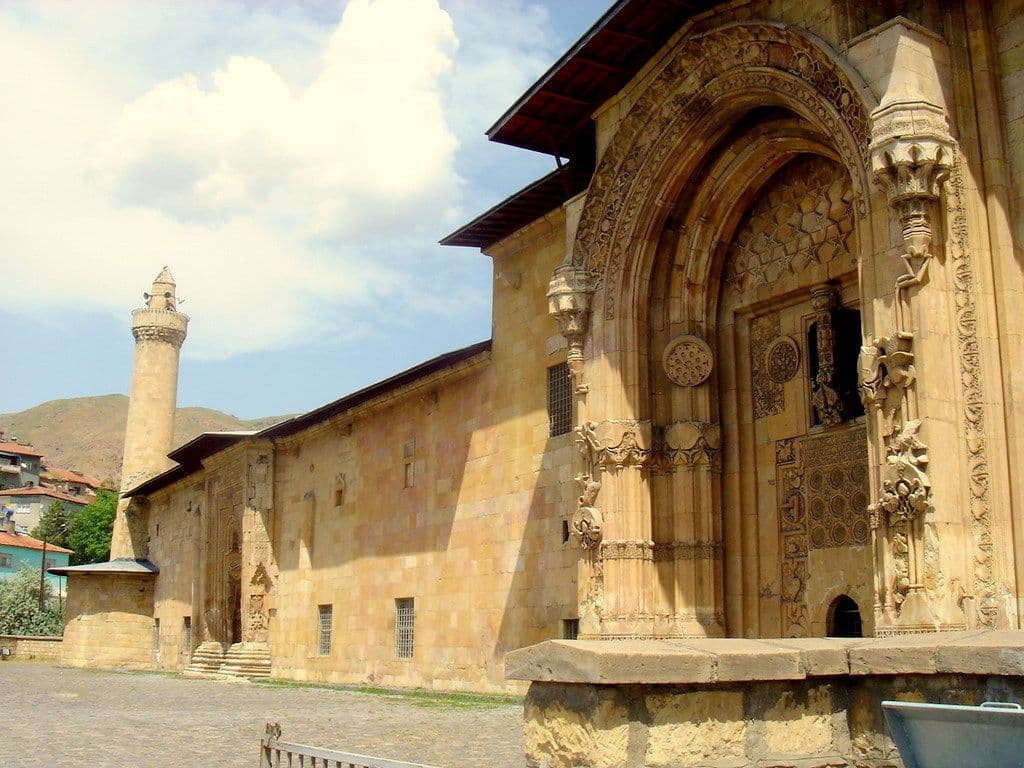
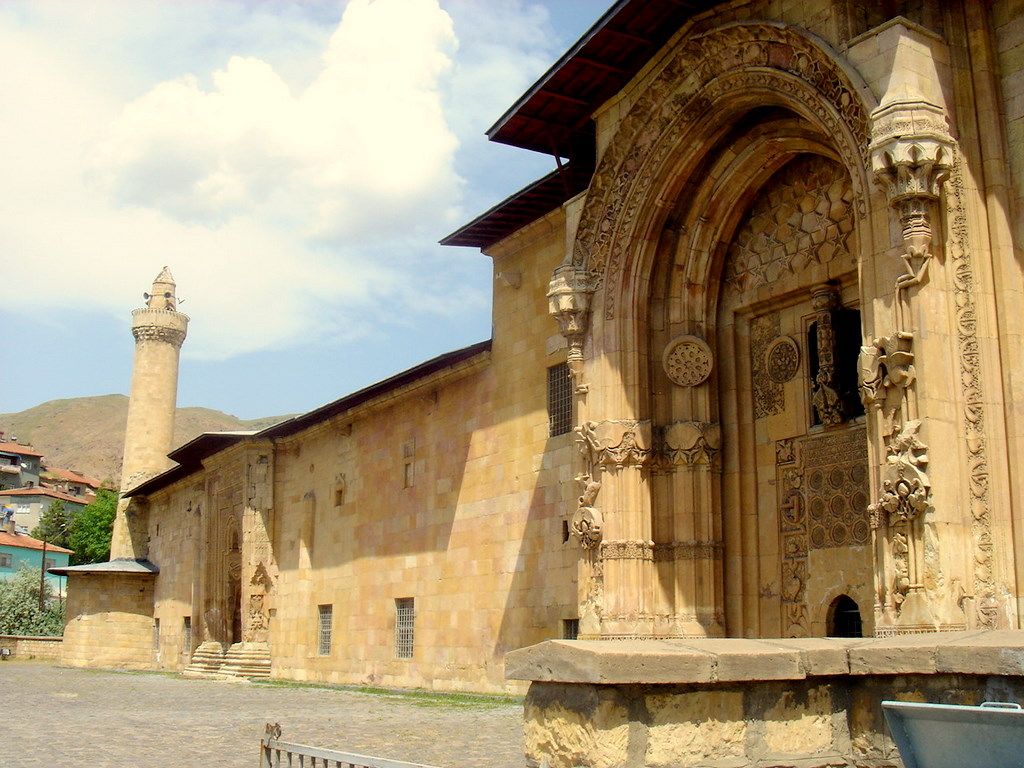
The Great Mosque and Hospital of Divriği is a UNESCO World Heritage masterpiece featuring the most elaborately carved portals in Islamic architecture, built in 1228-1229.
read_wikipedia →overview
The Great Mosque and Hospital of Divriği, inscribed as Turkey's first UNESCO World Heritage Site in 1985 (alongside Istanbul's historic areas and Goreme), is a singular masterpiece of medieval Anatolian architecture. Built in 1228-1229 by the Mengujekid emir Ahmed Shah, the complex combines a congregational mosque and a hospital (darussifa) under a single, integrated design. What sets Divriği apart from all other medieval Islamic buildings is the breathtaking sculptural decoration of its three monumental portals. The stone carving transcends any known tradition — Islamic, Christian, or Central Asian — combining geometric patterns, vegetal arabesques, and figurative elements (including human and animal heads) in a style that defies easy categorization. The northern portal of the mosque, in particular, is considered the most elaborately carved doorway in Islamic architecture. Art historians have struggled to classify the Divriği portals. The carving incorporates elements reminiscent of Armenian, Georgian, Seljuk, Central Asian, and even Gothic traditions, suggesting the work of artisans drawing on multiple cultural streams. The three-dimensional depth of the carving, with elements projecting and receding in complex interplay, creates a light-and-shadow effect that changes throughout the day. The hospital section features a sophisticated acoustic design, an octagonal pool, and an innovative ventilation system. The complex sits in the remote town of Divriği in Sivas province, far from major tourist routes, giving visitors who make the journey the privilege of experiencing one of humanity's greatest architectural works in relative solitude.
why_it_matters
evidence
evidence_desc
confirmed
2- Foundation inscriptions on the building identify the patron as Ahmed Shah of the Mengujekid dynasty and the construction date as 626 AH (1228-1229 CE).
- The architect is named in inscriptions as Hurrem Shah of Ahlat, connecting the building to the Armenian-influenced architectural traditions of the Lake Van region.
inferred
2- The presence of figurative elements (animal and human heads) in the mosque portal carvings suggests the artisans drew on pre-Islamic Central Asian and Armenian sculptural traditions.
- The hospital's octagonal pool and acoustic design suggest medical practices that incorporated water therapy and music therapy, consistent with medieval Islamic medical traditions.
debated
1- The stylistic sources of the unique portal decoration are debated, with scholars variously proposing Armenian, Georgian, Crusader, Central Asian, and indigenous Anatolian influences.
excavation
Initial restoration
Turkish General Directorate of Foundations conducted the first major restoration campaign, stabilizing the structure and documenting the portal carvings.
UNESCO inscription
The complex was inscribed as a World Heritage Site, one of the first in Turkey, recognizing its exceptional universal value.
Comprehensive restoration
Major restoration project addressed structural concerns, cleaned centuries of accumulated soot from interior surfaces, and implemented modern conservation techniques for the stone carvings.
more_photos
artifacts
Community Photos
Share your experience
Have you visited this site? Upload your photos to help others discover it.
location
related_sites
sources
- The Art of the Seljuks in Iran and Anatolia — Robert Hillenbrand (1999)
- The Great Mosque and Hospital of Divriği — Oluş Arık (1967)
- Wikipedia — Divriği Great Mosque and Hospitallink