
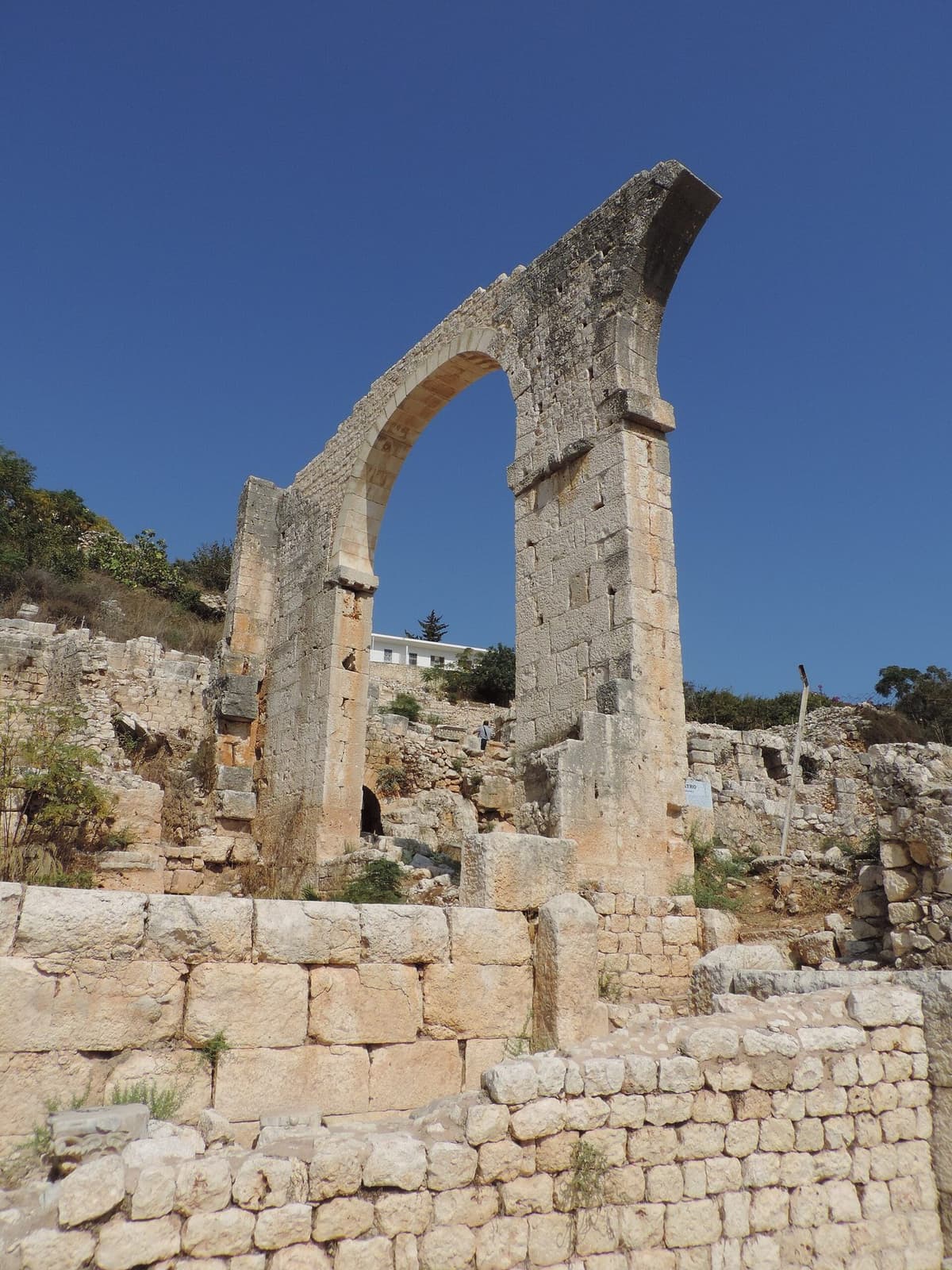
Overview
Historical Overview
Elaiussa Sebaste was founded on a small island and adjacent mainland in the 2nd century BCE, later connected by a causeway. Its strategic coastal location in Rough Cilicia made it a vital harbor. The city's name combines the Greek 'elaia' (olive) with 'Sebaste' (Augustan), reflecting its economic base and Roman imperial patronage. It served as a capital for the local client-king Archelaos in the 1st century CE before full integration into the Roman province.
Urban Layout and Infrastructure
The city featured a typical Hellenistic-Roman grid plan. Key infrastructure included a well-protected harbor, an extensive aqueduct system bringing water from the Lamos River, and massive cisterns. A paved colonnaded street linked the main public areas. The island sector contained elite residences and early Christian buildings, while the mainland held major public monuments.
"Elaiussa was a city of considerable importance in the Roman period, controlling the sea routes along the Cilician coast."
— Eugenia Equini Schneider, Excavation Director

Major Monuments and Public Buildings
Notable structures include a well-preserved Roman theater facing the sea, a large agora, and a nymphaeum. A monumental temple platform, possibly dedicated to Augustus or the imperial cult, dominates the site. Later, several large basilica churches with elaborate mosaic floors were constructed, signifying its continued importance in the Byzantine era.
Economic Basis and Trade
The city's economy centered on the production and export of olive oil (from which it derived its name) and wine, facilitated by its port. Local amphora production sites have been identified. Its position on coastal trade routes between Anatolia, Cyprus, and the Levant made it a commercial hub, handling goods like timber, grain, and manufactured items.
Decline and Abandonment
Elaiussa began to decline in the 7th century CE, likely due to Arab raids, seismic activity, and silting of its harbor. The population gradually shifted to the more defensible nearby settlement at Ayas. The city was largely abandoned by the early medieval period, its ruins used as a quarry for later buildings.