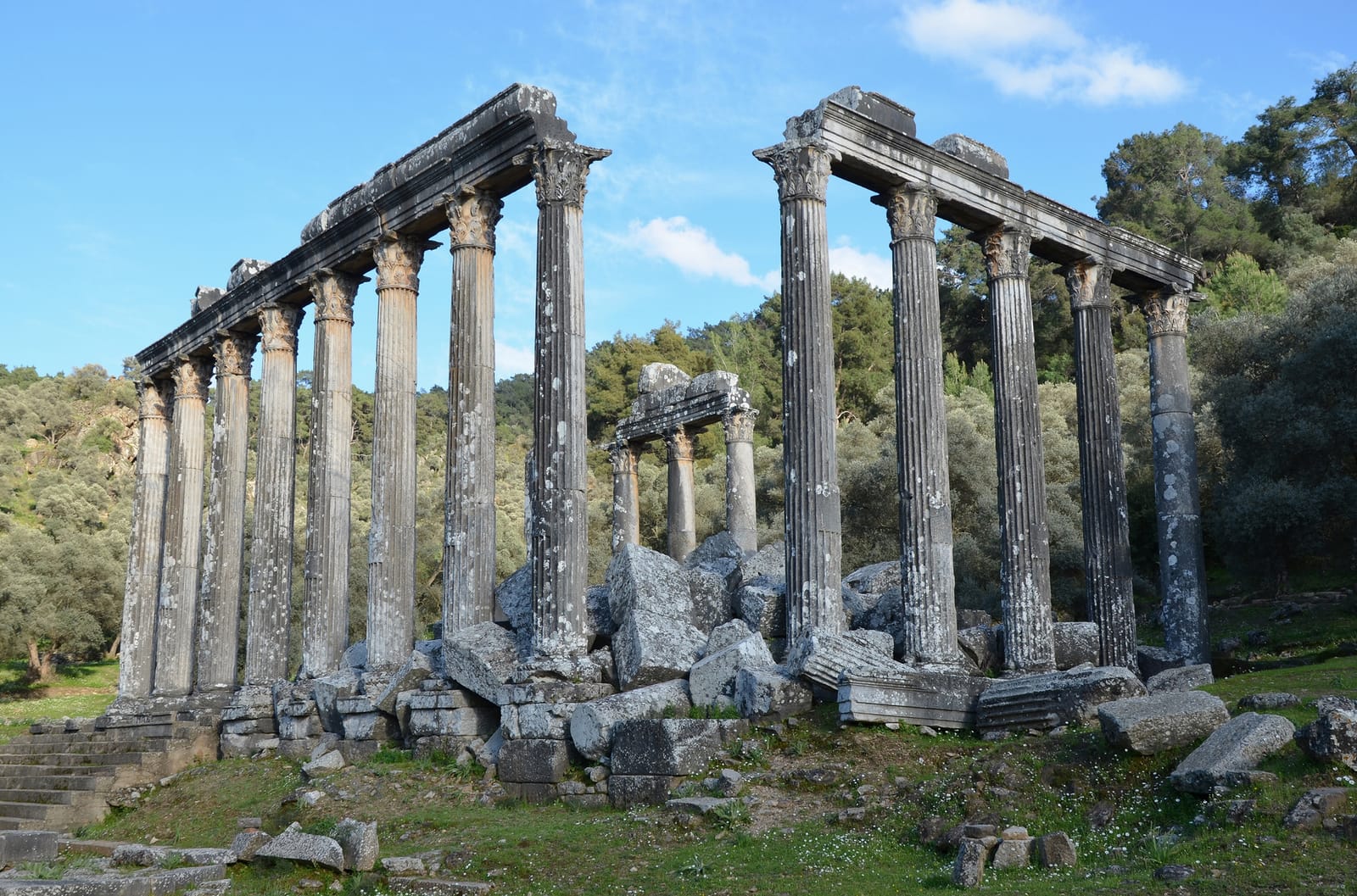
Overview
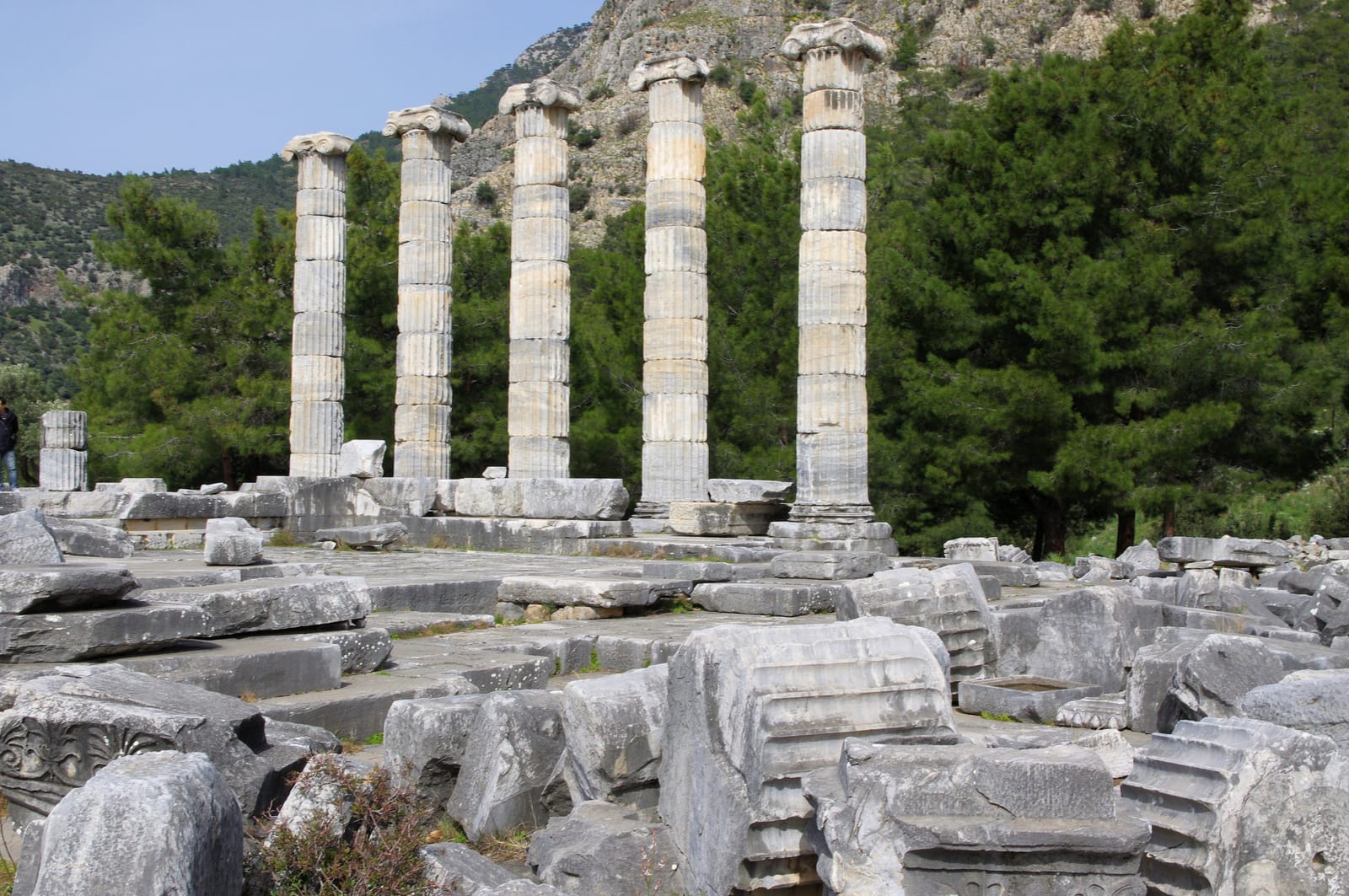
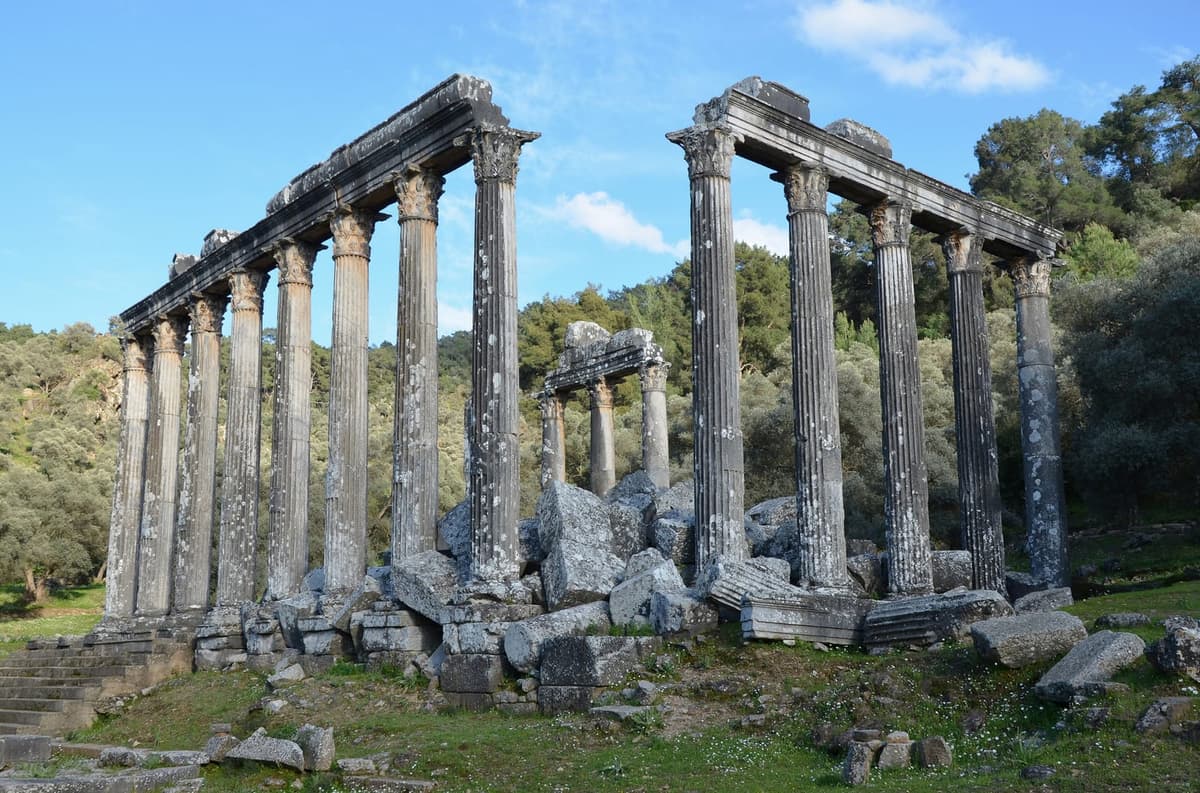
Euromos is an ancient Carian city whose Temple of Zeus Lepsynos ranks among the best-preserved classical temples in all of Anatolia. Sixteen of the original columns still stand with their Corinthian capitals and architrave largely intact, rising from a serene olive grove between Milas and the coast — one of the most photogenic archaeological sites in Turkey.
The temple was built in the 2nd century CE during the reign of Emperor Hadrian, though the cult of Zeus Lepsynos — a local Carian deity later assimilated to Greek Zeus — has roots stretching back centuries earlier. Dedicatory inscriptions on the column shafts record the names of individual donors who funded specific columns, providing a rare window into how temple construction was financed through civic patronage.
"Euromos, a city of the Mylasians, has a temple of Zeus Lepsynos."
— Strabo, c. 7 BCE - 23 CE
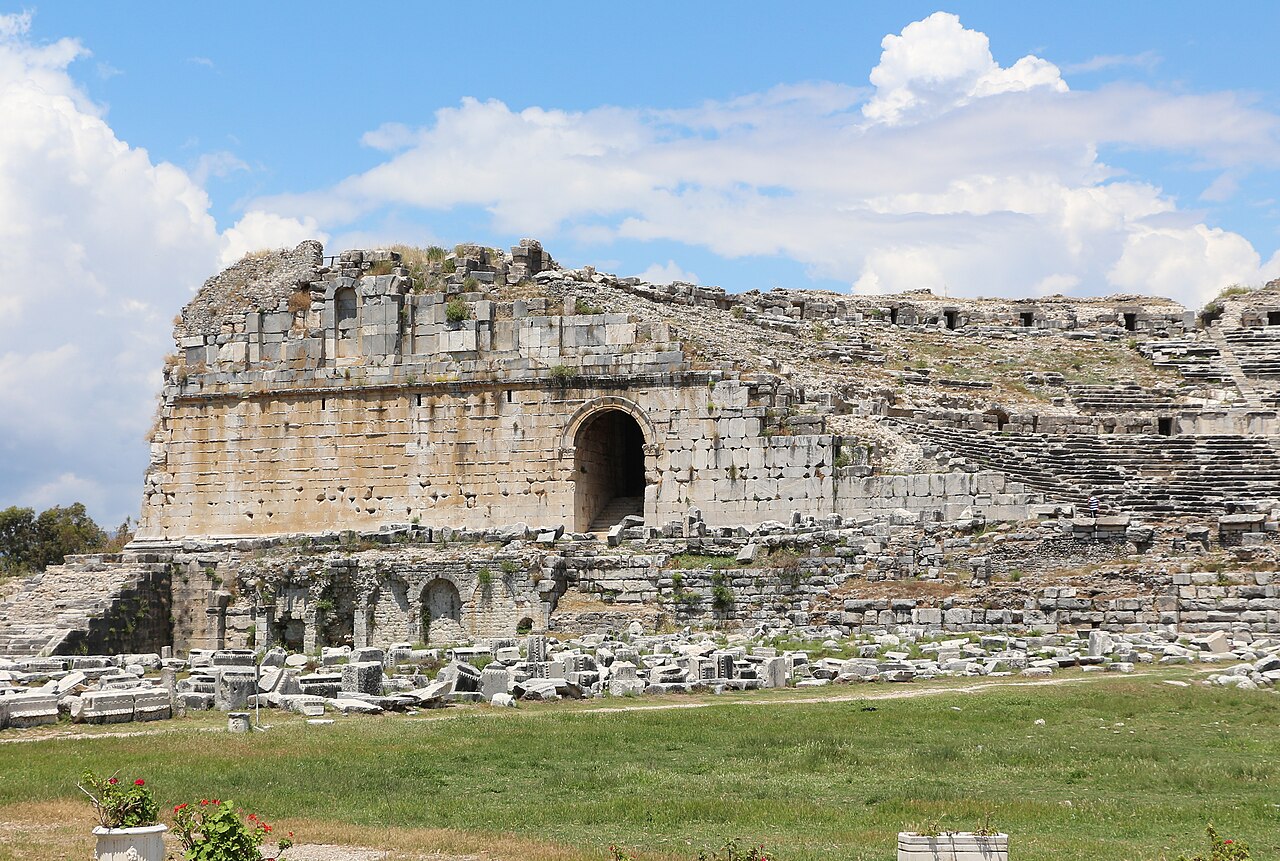
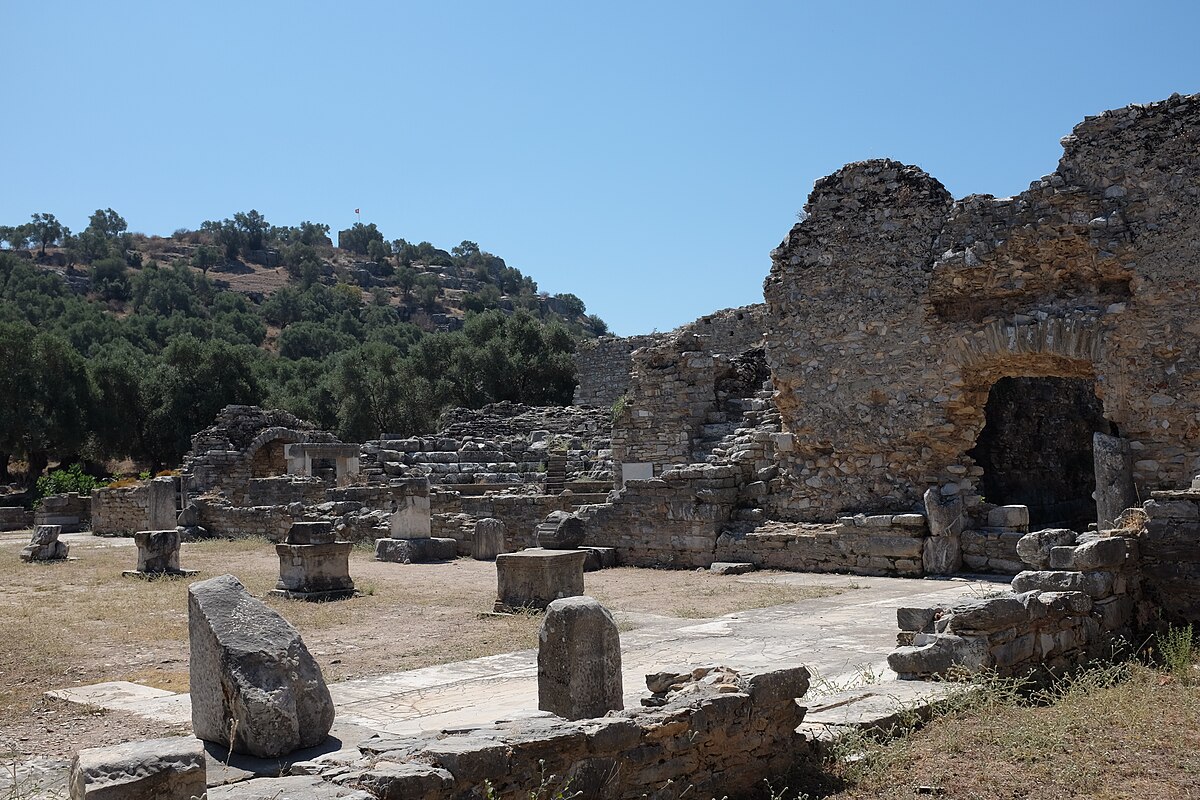
Beyond the temple, Euromos preserves the remains of a theatre, agora, Roman baths, and fortification walls, though these are less well excavated. The city's ancient name evolved through several forms — Kyromos, Euromos, Euromus — reflecting the complex linguistic landscape of Carian-speaking Anatolia.
The site lies along the ancient road connecting Mylasa (modern Milas, the capital of Caria) to the coast, explaining its importance as a waypoint between the interior and the Aegean harbors.

Euromus temple | Pax:Vobiscum (CC BY-SA 3.0)
Beyond the temple, the city's extensive Hellenistic fortifications, with their distinctive isodomic masonry and towers, testify to its strategic importance. The lower city contained a well-defined agora, a theater, and bath complexes, indicating a thriving urban center. Euromos was a member of the Chrysaorian League, a federation of Carian cities, and its numerous inscribed decrees provide detailed insights into its civic administration and diplomatic relations during the Hellenistic period.
The city's economy was supported by the fertile Maeander River valley and its access to the Gulf of Iasos. This prosperity continued into the Roman Imperial era, as evidenced by the temple's construction and other public buildings. However, like many inland cities of the region, Euromos appears to have declined from the late Roman period onward, likely due to shifting trade routes and insecurity, eventually being abandoned by the early Byzantine era.