Overview
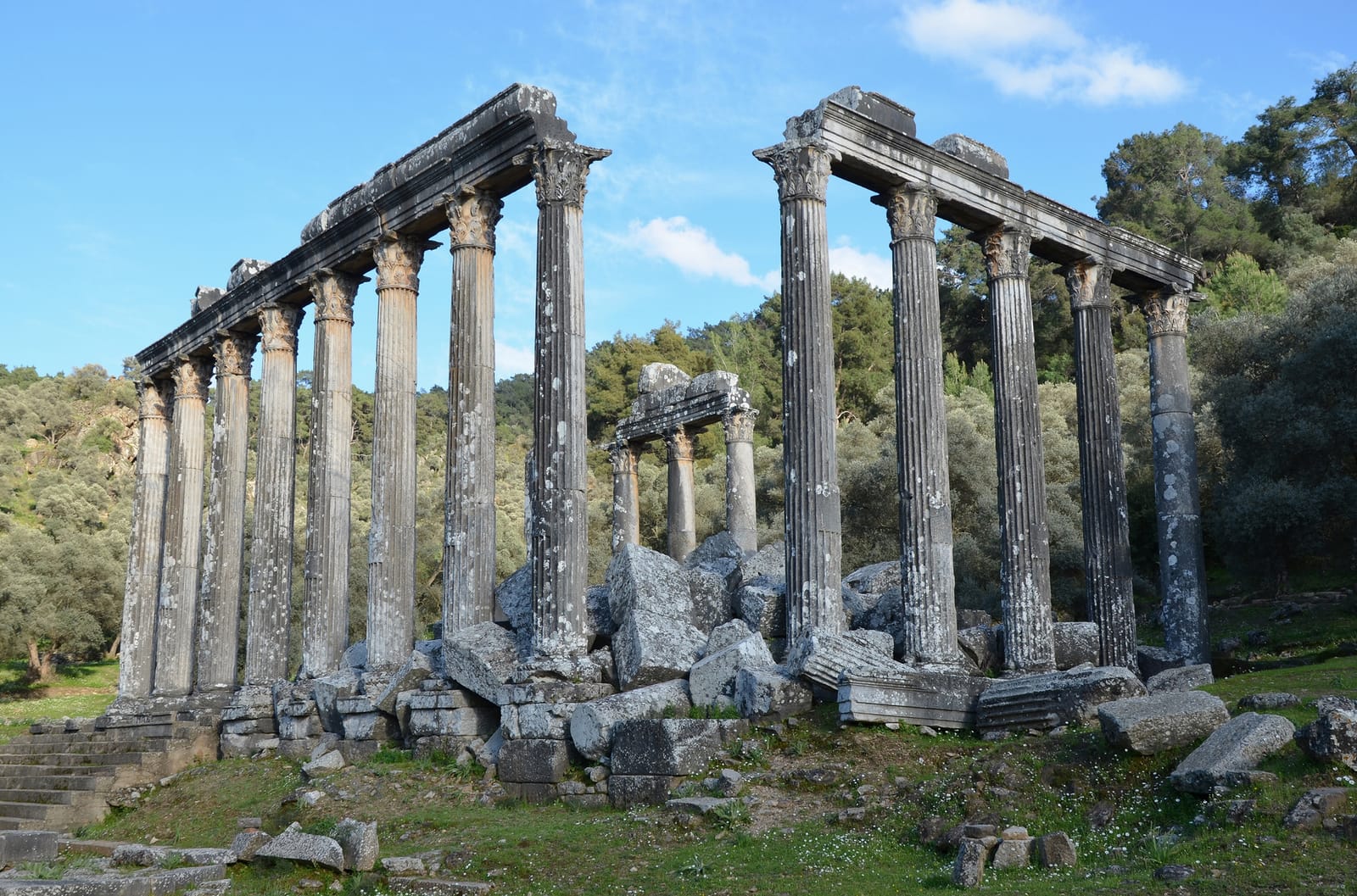
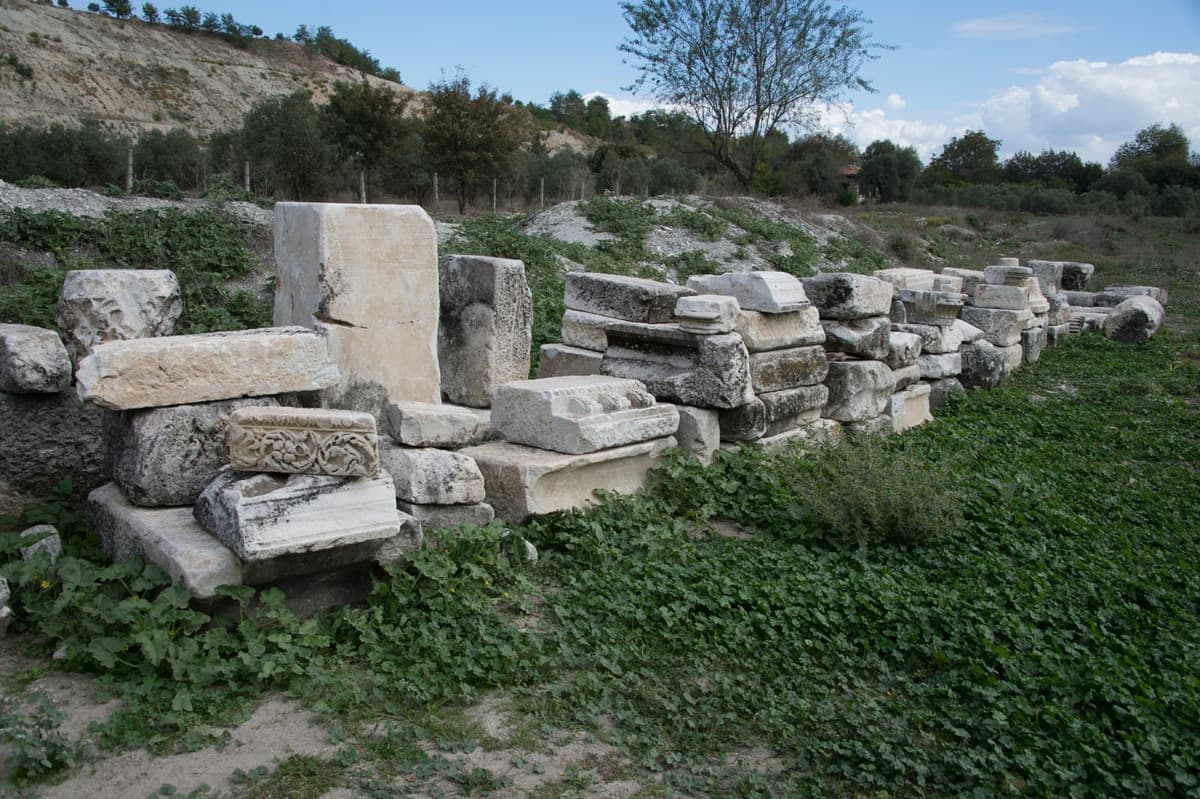
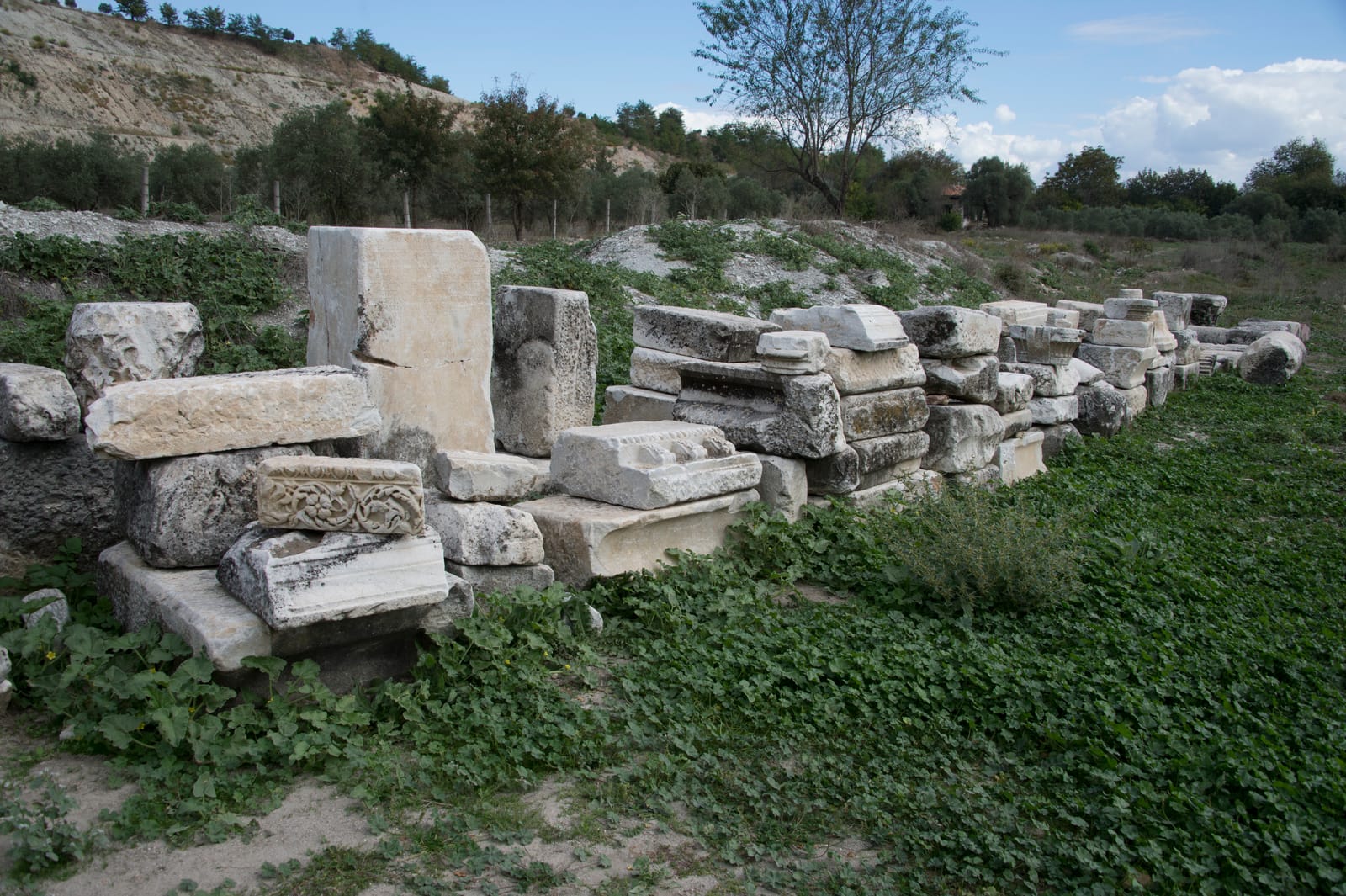
Stratonikeia is one of the best-preserved ancient cities in western Turkey, distinguished by the extraordinary circumstance of a modern village — Eskihisar — occupying the ancient city center. Village houses stand among Roman columns, and ancient walls serve as garden boundaries, creating a layered landscape where daily life unfolds amid monumental ruins.
Founded in the 3rd century BCE by the Seleucid king Antiochus I and named after his wife Stratonike, the city was built on the site of an earlier Carian settlement called Idrias or Chrysaoris. It became a major center of the Carian region, administering the important nearby sanctuaries of Lagina (dedicated to Hekate) and Panamara (dedicated to Zeus).
"Stratonicea is a city of Caria, founded by Antiochus Soter, who named it after his wife Stratonice."
— Strabo, Geography (c. 7 BCE - 23 CE)
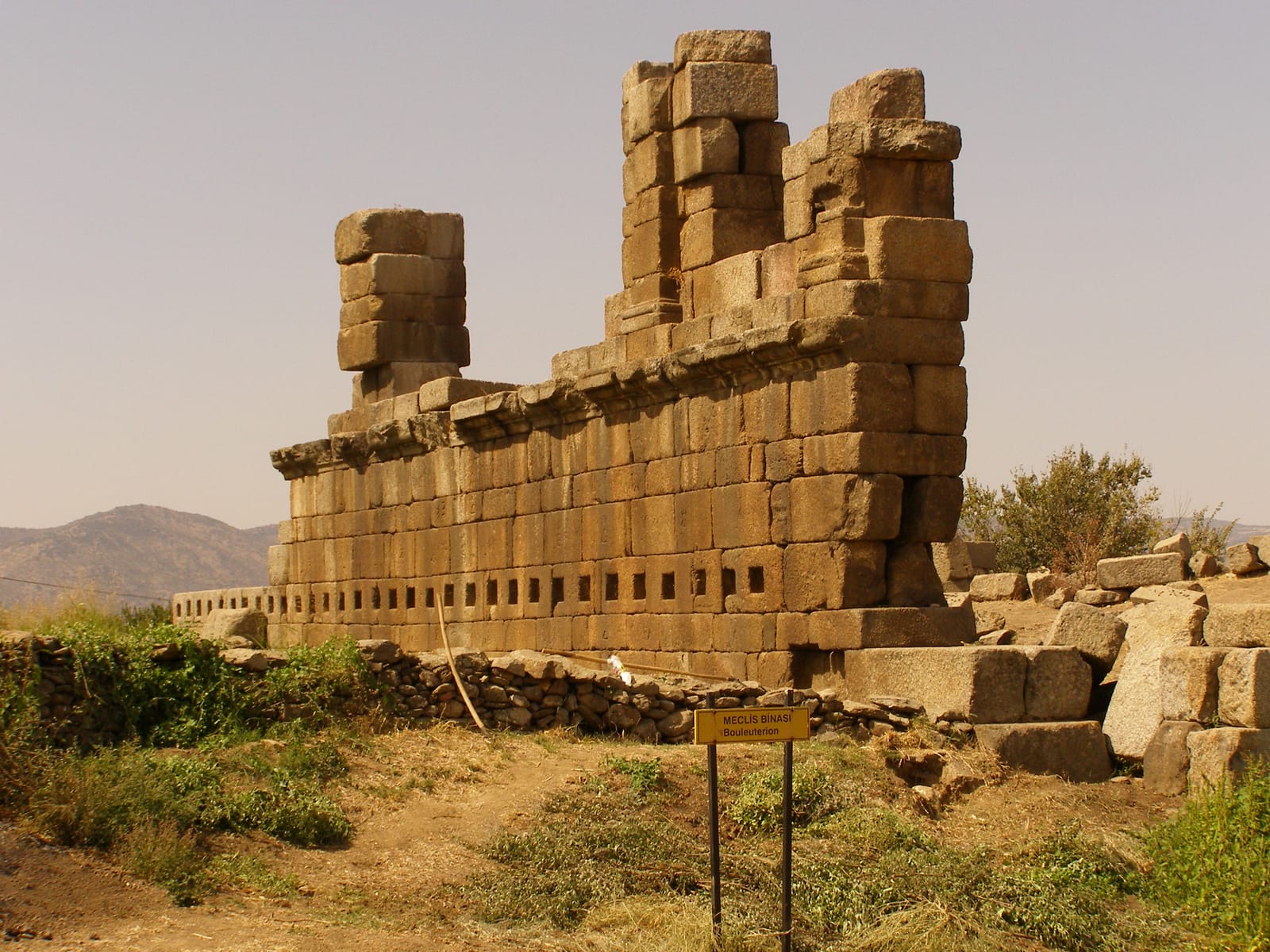
The city preserves an impressive array of Roman-period monuments, including a large theatre, a bouleuterion (council house), a gymnasium, monumental gates, colonnaded streets, and a well-preserved Serapeum. The city walls, extending over four kilometers, are among the most complete in Caria.
The sanctuary of Lagina, connected to Stratonikeia by a sacred road, was one of the most important cult centers of Hekate in the ancient world. Annual festivals along this sacred route drew pilgrims and reinforced the bond between city and sanctuary.

Eskihisar Kalesi | Tansugunal (Public domain)
The city's urban fabric reveals a sophisticated infrastructure, including a colonnaded street (North-South Street) paved with marble and flanked by shops, leading to the monumental city gate. Public life centered on the agora, bouleuterion, and a large Roman Imperial bath-gymnasium complex, showcasing the city's prosperity and civic pride. Stratonikeia was a significant node in regional trade, benefiting from its location on routes connecting the Maeander Valley to the coast, exporting agricultural products like grain and figs. The city's decline began in the 3rd century CE with economic and military crises, but it remained a bishopric into the Byzantine era before gradually shrinking to the village scale seen today.