Overview
Alabanda was a prosperous Carian city in the Marsyas (Cine) River valley of western Anatolia, in present-day Aydin province. The city gained fame in antiquity for its dark-veined marble, which was prized across the Roman world for architectural decoration and sculpture. Vitruvius specifically mentions Alabanda's marble as among the finest decorative stones.
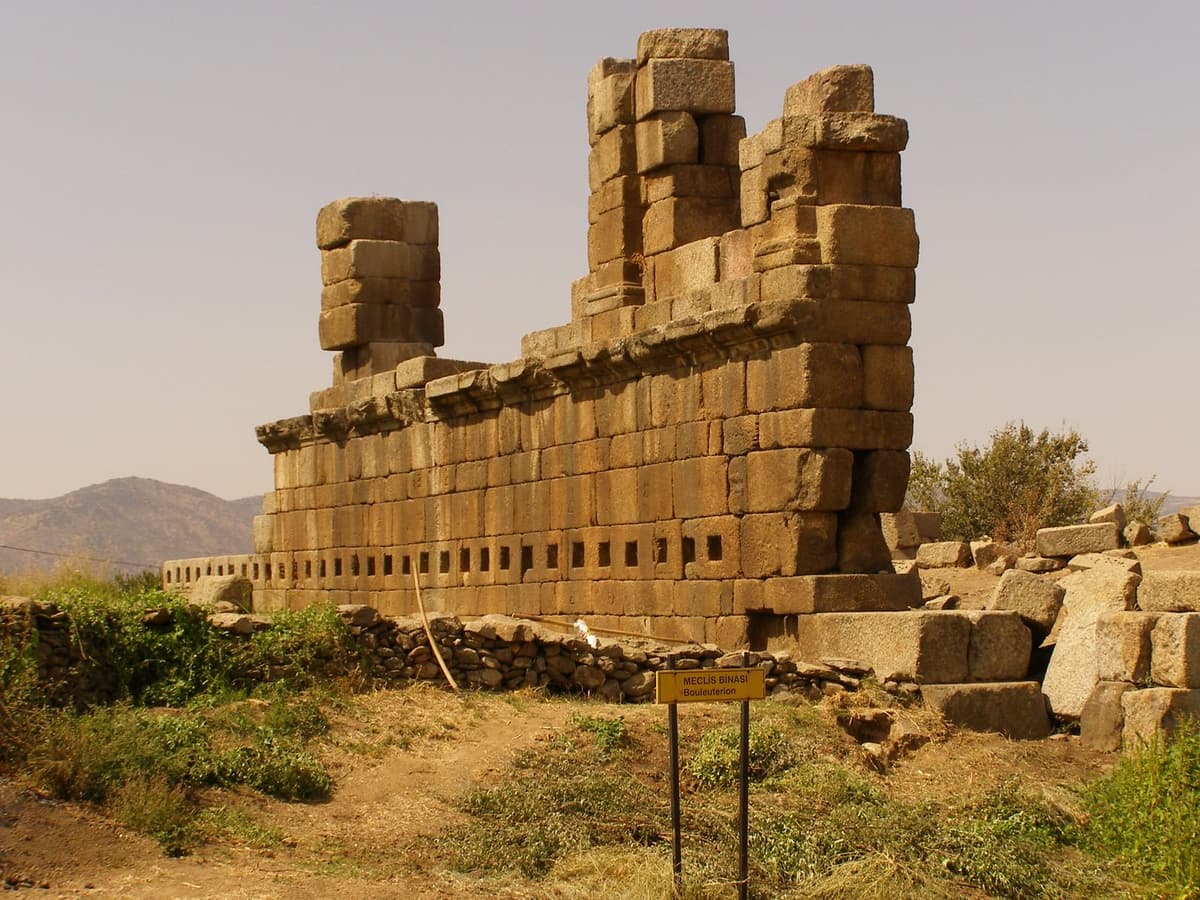
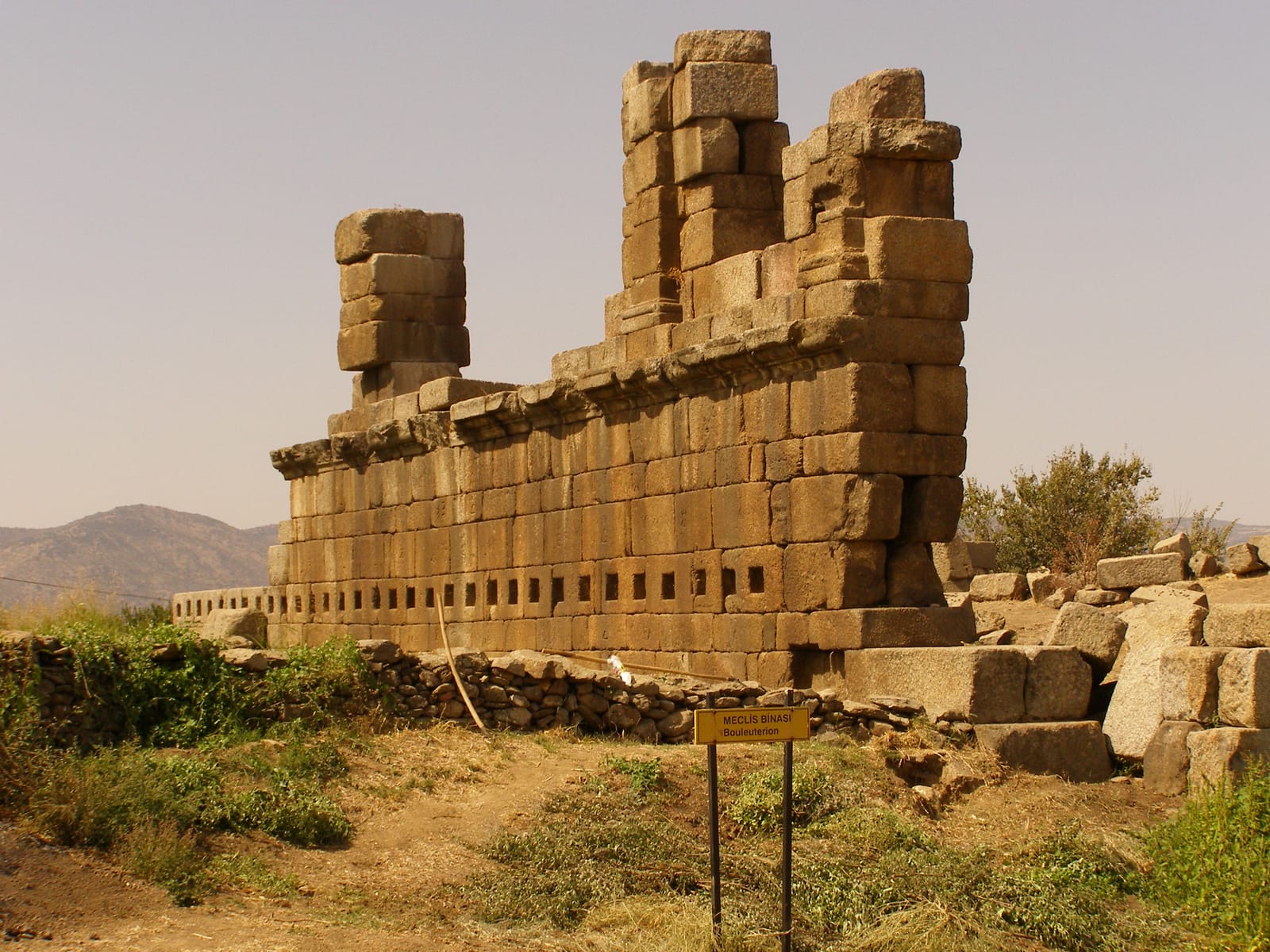
The city's most distinctive surviving monument is its bouleuterion, an unusually shaped senate house that departs from the standard semicircular plan. The theatre, built into a hillside overlooking the valley, and remnants of a temple dedicated to Apollo Isotimos are also prominent features. Cicero, in his rhetorical works, used Alabanda as an example of a city whose orators spoke technically correct Greek but with a provincial accent that amused Athenians.
"Alabanda is a city of Caria, where the stone called alabandite is quarried."
— Strabo, c. 7 BCE - 23 CE
Ancient writers noted Alabanda's reputation for luxury. Strabo remarked that the city was full of entertainment and that scorpions were so numerous they were considered a local hazard. The city's wealth derived from its marble quarries, fertile agricultural hinterland, and position on trade routes connecting the Aegean coast to the Anatolian interior.
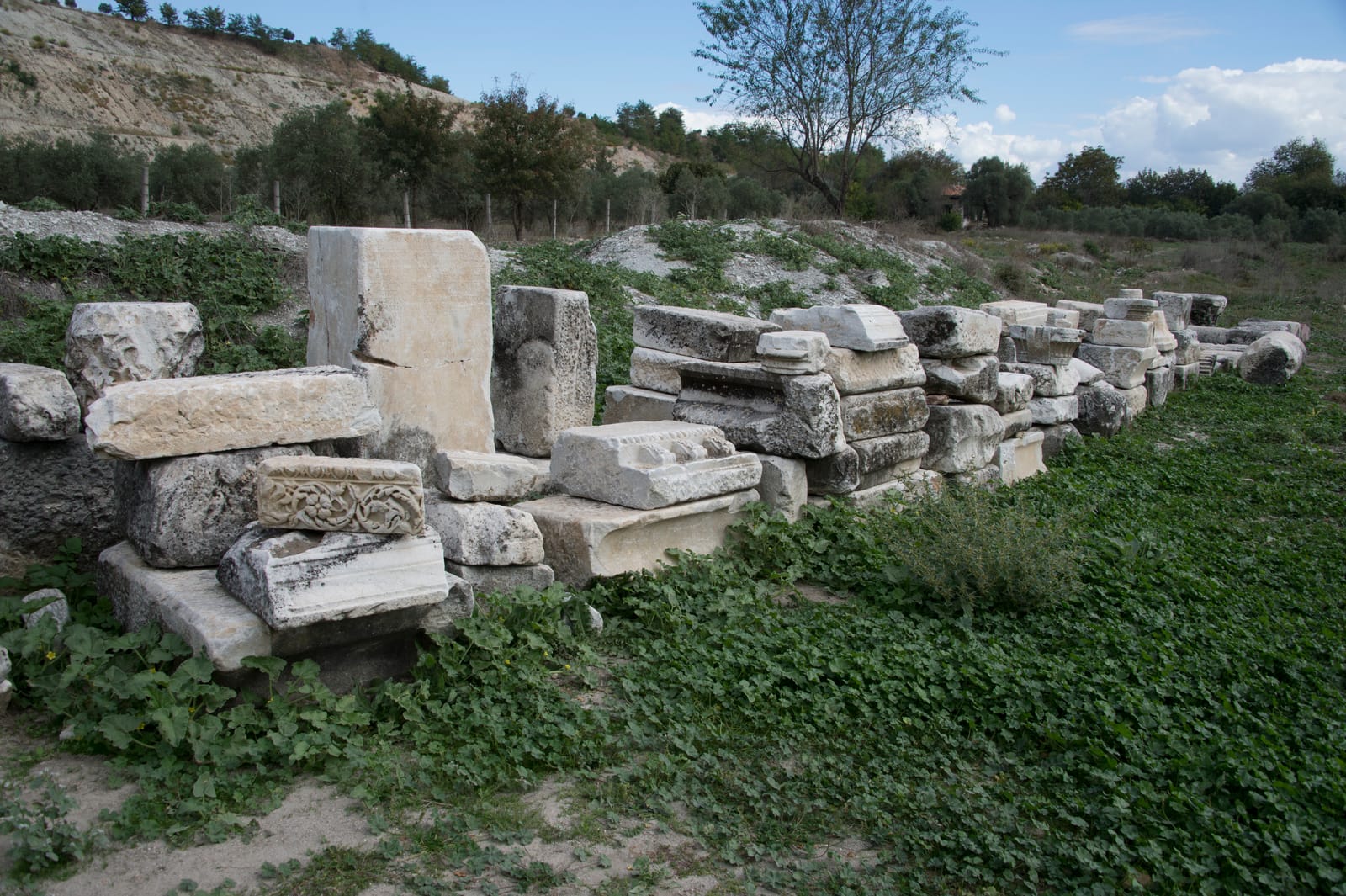
Despite its ancient fame, Alabanda remains one of the less-visited archaeological sites of western Turkey. The ruins spread across olive groves and agricultural land, with the theatre, bouleuterion, and temple foundations visible among scattered architectural blocks.
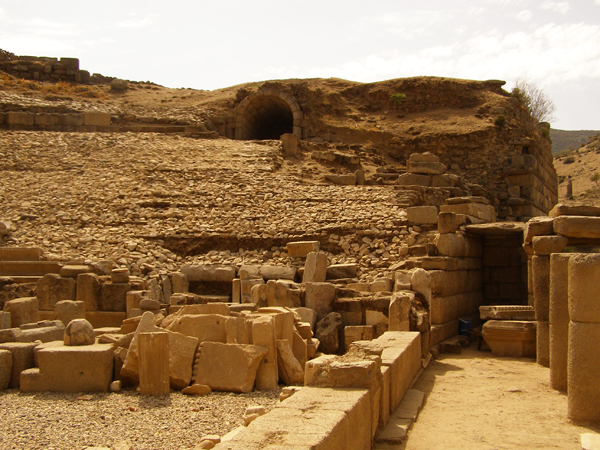
Alabanda Tiyatro | Kefaser at Turkish Wikipedia (Public domain)
Beyond its marble, Alabanda's urban fabric reveals a prosperous Hellenistic and Roman city. The remains include a substantial theater built into a hillside, a large agora flanked by stoas, and a well-preserved Roman bath complex. The city was fortified with walls incorporating Hellenistic masonry, and a temple, possibly dedicated to Apollo Isotimos, stood on the acropolis. As a conventus juridicus, a regional judicial center for Roman administration, Alabanda attracted legal professionals, contributing to its wealth and cosmopolitan character mentioned by ancient authors.
The city's economy was underpinned by the marble quarries, agriculture in the fertile Marsyas valley, and its position on trade routes. Its decline began in the late Roman period, likely due to seismic activity and a shift in trade networks. By the Byzantine era, it was reduced to a small settlement, with some spolia from its grand buildings reused in later structures. Systematic excavations since the early 2000s continue to clarify the transition from its Carian origins through its Hellenistic zenith to its Roman provincial importance.