Overview
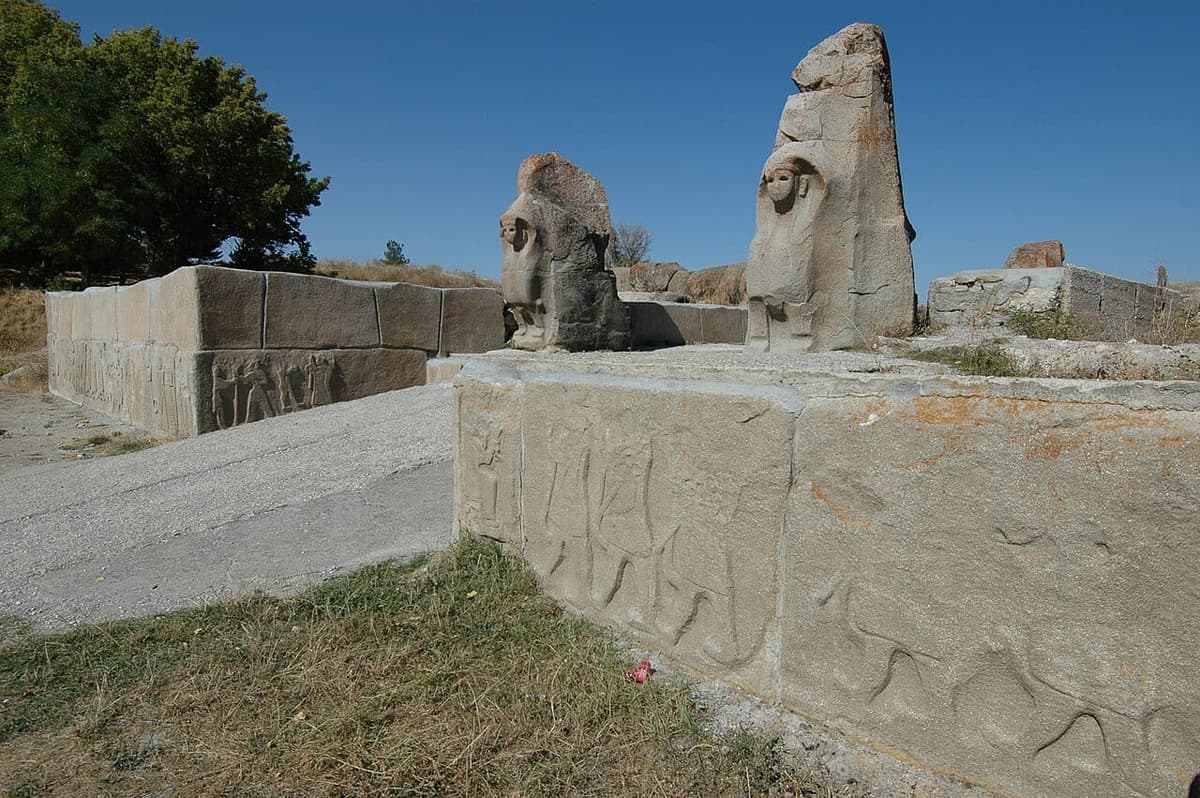
Alacahöyük is a distinctive archaeological mound rising from the flat plains of north-central Anatolia, near the modern town of Alaca. The site consists of a large, flat-topped höyük, or settlement mound, created by the successive layers of human habitation over millennia. Its strategic position allowed control over fertile agricultural land and important routes leading to the Black Sea coast. Excavations have revealed a complex stratigraphy, with the most prominent visible remains belonging to the Hittite Imperial period, including an impressive stone gateway flanked by two monumental sphinxes and sections of a defensive wall with a glacis.
The historical significance of Alacahöyük is profound, bridging two major Anatolian civilizations. Its deepest layers belong to the Early Bronze Age Hattian culture, a pre-Hittite indigenous people. The site gained international fame from the discovery of thirteen spectacular "Royal Tombs" dating to the third millennium BCE. These shaft graves yielded an extraordinary collection of grave goods, including finely crafted solar discs and stylized stag statuettes in gold and electrum, alongside bronze standards, weapons, and jewelry, demonstrating advanced metallurgy and complex religious symbolism. Following a period of abandonment, the site was reoccupied and heavily fortified by the Hittites, serving as an important cultic and administrative center within the Hittite heartland.
"The land of Hatti, rich in silver and gold, is a mountainous country."
— Anitta Text (c. 18th century BCE)
Key structures at the site vividly illustrate its Hittite phase. Visitors approach through the imposing Sphinx Gate, whose monolithic stone blocks and guardian sculptures lead into the city. Within, the foundations of a large temple complex dedicated to the storm god can be seen, aligned with a processional way. The settlement was protected by a formidable circuit wall with projecting towers. While the Hittite structures are most visible, the earlier Hattian period is represented by the carefully excavated tomb chambers themselves, which were set within a dedicated necropolis area outside the contemporary living quarters.
Culturally, Alacahöyük provides a crucial window into the transition and synthesis of Anatolian traditions. The Hattian artifacts from the tombs, with their solar and stag imagery, suggest a sophisticated belief system focused on nature and fertility, likely influencing later Hittite religion. The Hittite rebuilding of the site into a fortified city reflects the imperial organization and monumental architecture characteristic of their empire. Thus, Alacahöyük stands as a testament to both the brilliant indigenous development of the Hattians and their eventual absorption into the Hittite world, with its artifacts representing some of the most iconic treasures of ancient Anatolia.

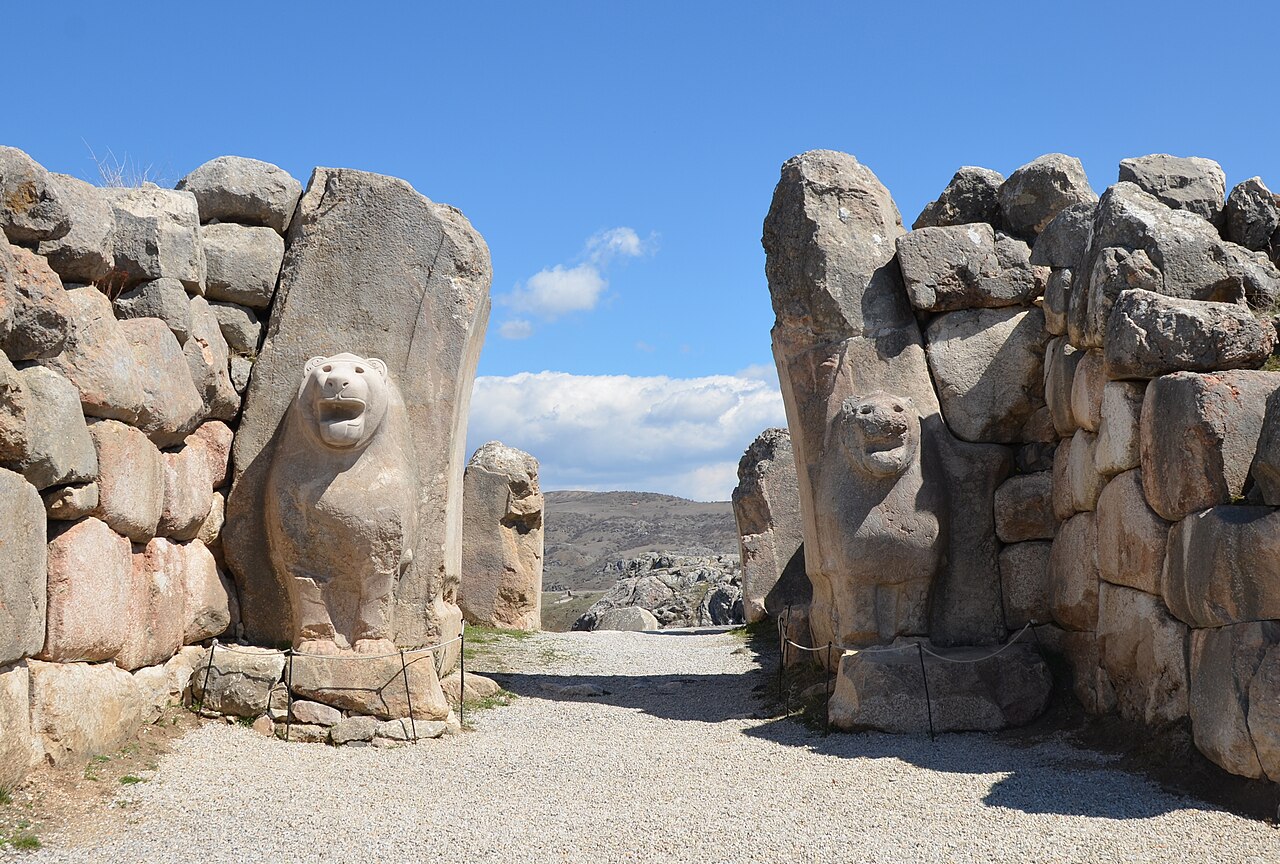
Boğazköy-Alacahöyük National Park - Lions' Gate, Çorum, Turkey | Murat Özsoy 1958 (CC BY-SA 4.0)