Overview
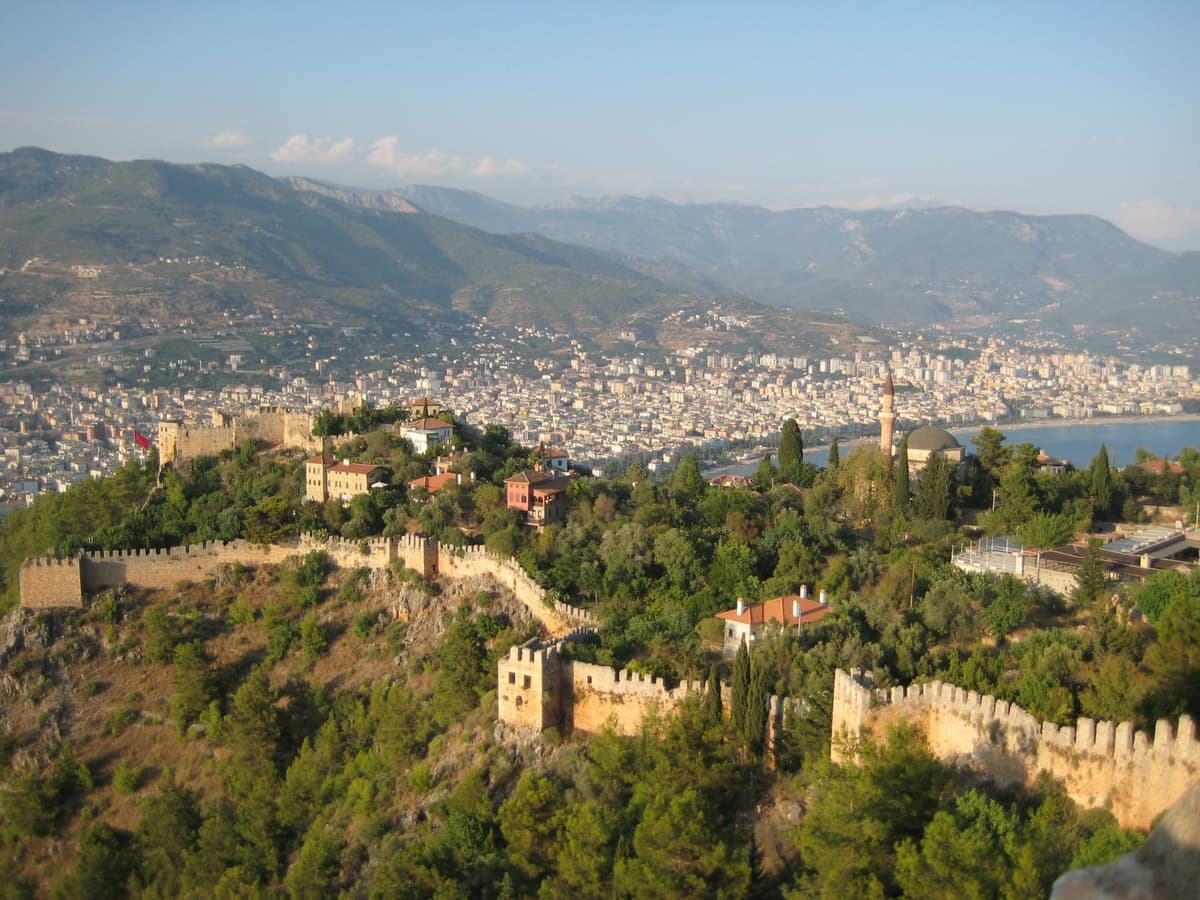
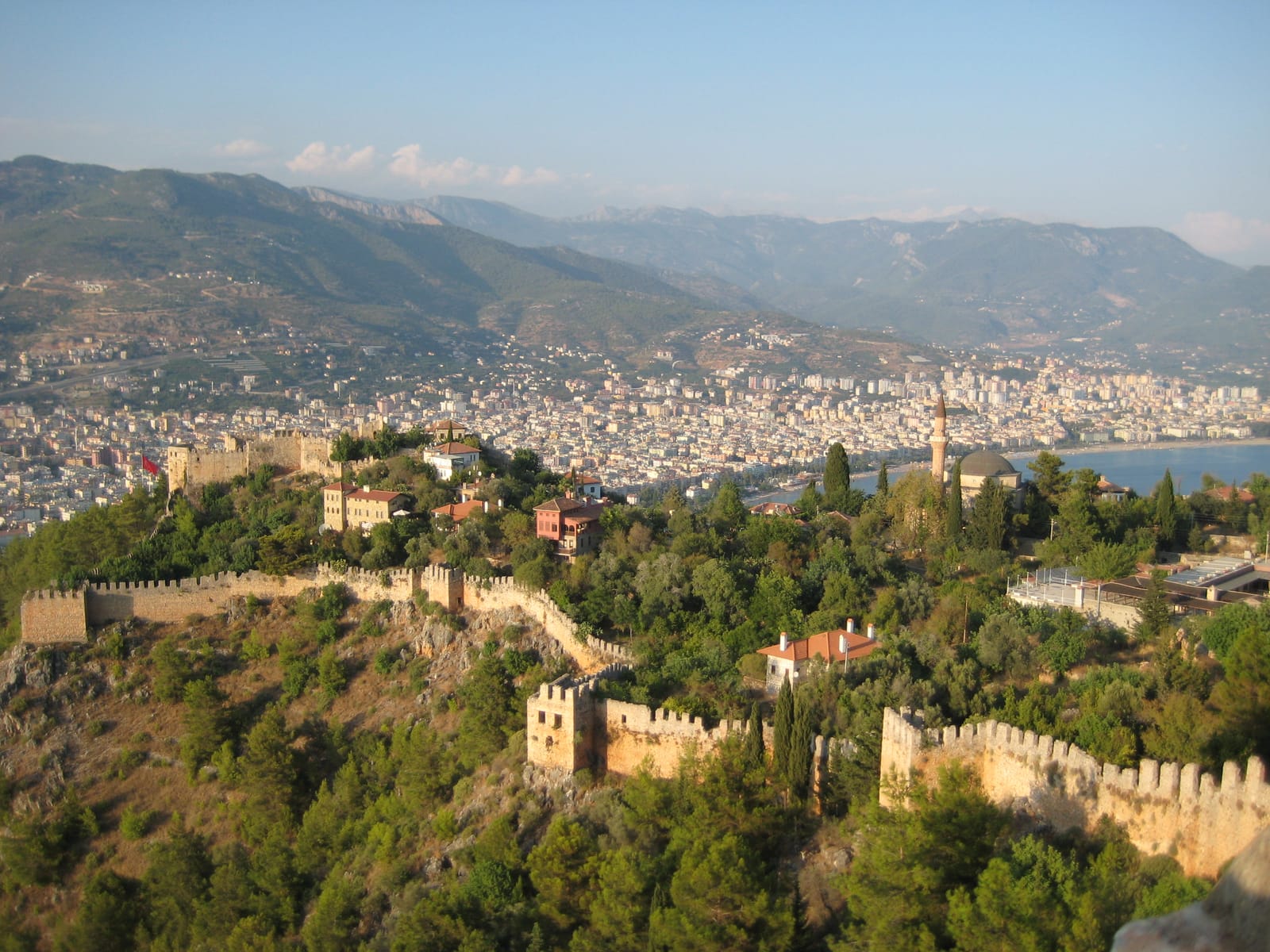
Alanya Castle occupies a dramatic rocky peninsula jutting into the Mediterranean Sea, its fortifications cascading down steep cliffs to the waterline. The castle complex — built primarily by the Seljuk Sultan Alaeddin Keykubad I in 1221 — is one of the most impressive medieval fortress systems on the Mediterranean coast, with over six kilometers of walls incorporating 140 towers.
The ancient city of Coracesium occupied this peninsula long before the Seljuks. It served as a pirate stronghold until Pompey the Great cleared the Cilician pirates in 67 BCE. The site's natural defensive advantages — steep cliffs on three sides, a narrow neck connecting to the mainland — made it nearly impregnable.
"Alaiye is a fine city, built on the seashore, with a strong fortress on a high rock."
— Ibn Battuta, c. 1330 CE
The Kizil Kule (Red Tower), built in 1226, is the most iconic structure — an octagonal defensive tower standing 33 meters tall that has become the symbol of Alanya. Its architect, Ebu Ali Reha el-Kettani from Aleppo, employed innovative defensive design including a rooftop water collection system.
The Tersane (Seljuk Shipyard), carved into the cliff base with five barrel-vaulted chambers opening to the sea, is one of the few surviving medieval shipyards in the world. Together with the fortress walls, Red Tower, and shipyard, the complex represents the apex of Seljuk military and maritime architecture.

Alanya kalesi içkale girişi 3 | Satirdan kahraman (CC0)
Within the İçkale (inner castle), the heart of the fortress, stood the Sultan's Palace, a bath complex, and the Byzantine-era Church of St. George, repurposed as a mosque. This area housed the elite garrison and administration, sustained by a sophisticated network of over 400 cisterns that captured rainwater, making the citadel self-sufficient during sieges. Daily life for the garrison and civilians within the walls revolved around military readiness, craft production, and trade, with the castle overseeing a key node in Mediterranean maritime routes connecting Anatolia to Cyprus and the Levant.
Following the Seljuk period, the castle remained strategically vital. It was incorporated into the Beylik of Karaman and, after a brief occupation by the Kingdom of Cyprus, was captured by the Ottoman Sultan Mehmed II in 1471 CE. The Ottomans maintained it as an administrative center and naval base, though its military significance gradually declined after the 16th century, leading to its eventual transition into a historic monument and residential area.