Overview
Side was one of the most important port cities of ancient Pamphylia, occupying a dramatic peninsula that juts into the Mediterranean along the southern Turkish coast. Founded around the 7th century BCE by Aeolian Greek colonists, the city's name derives from an old Anatolian word meaning "pomegranate."
The city reached its zenith under Roman rule in the 2nd and 3rd centuries CE, when it became a thriving center for the slave trade and olive oil commerce. Its massive theatre, seating approximately 15,000 to 20,000 spectators, is the largest in Pamphylia and was built against the flat terrain using a substructure of arches — an engineering solution that distinguished it from hillside Greek theatres.
"Side is a city of Pamphylia, situated on the coast, having a port."
— Strabo, c. 7 BCE - 23 CE
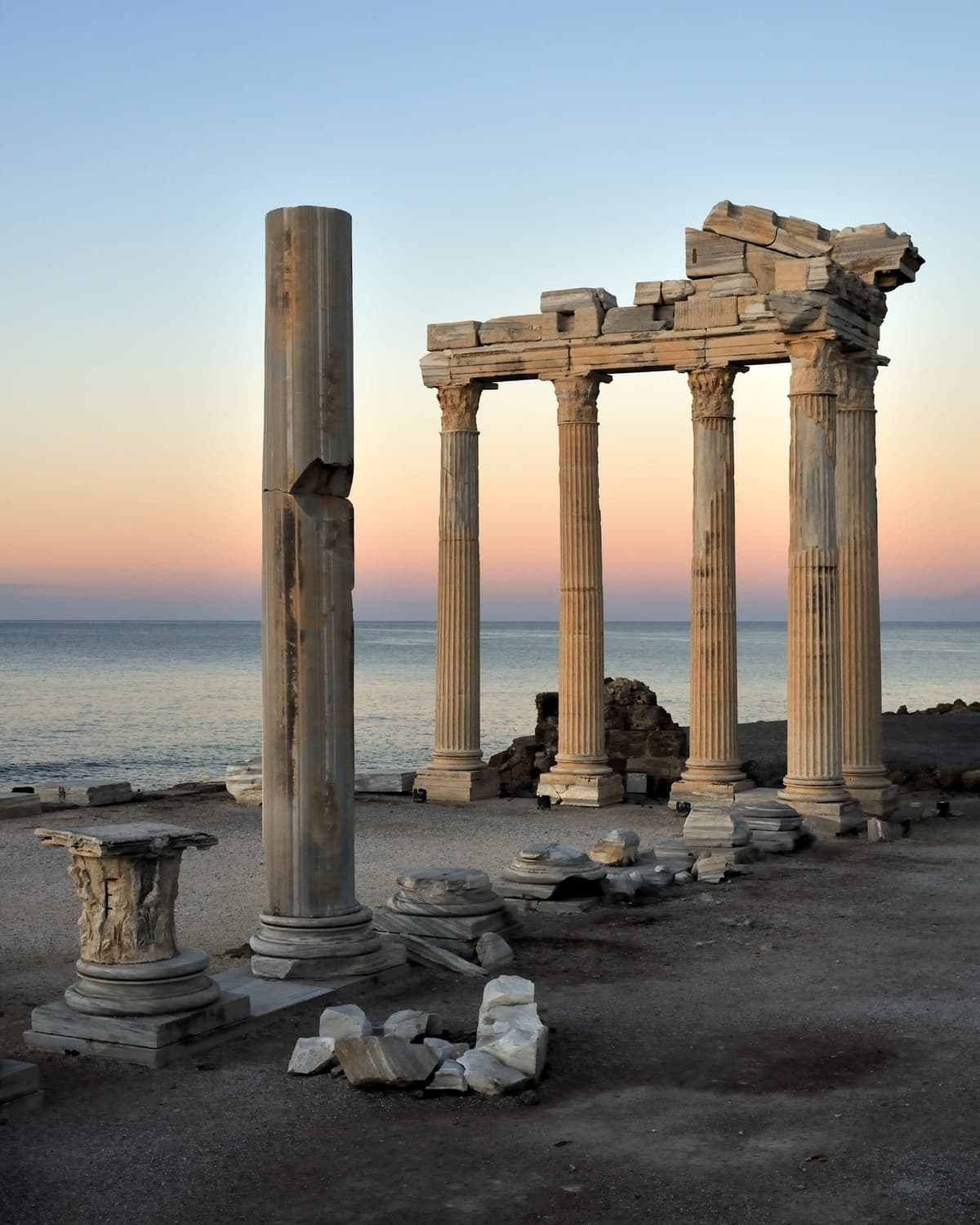
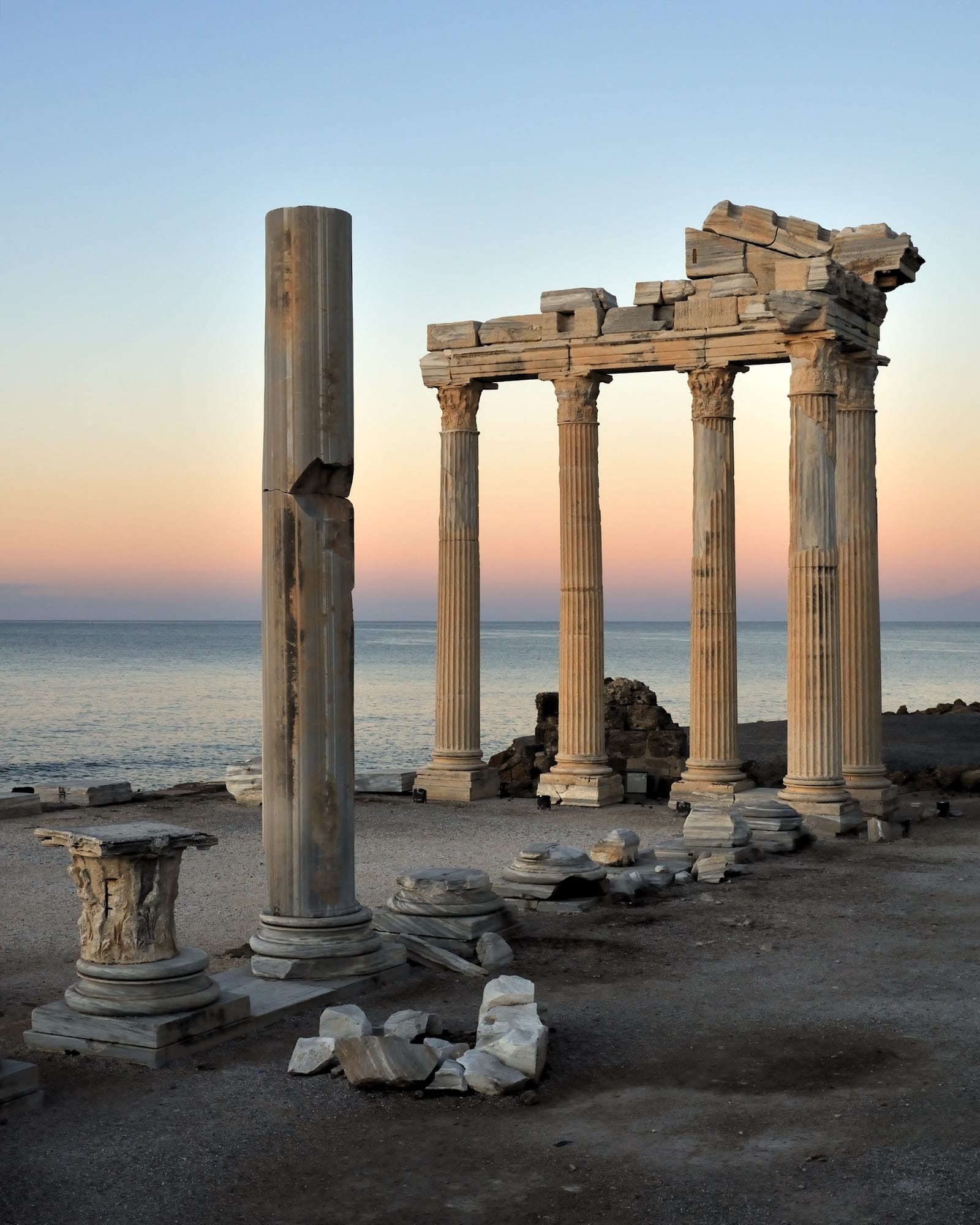
The Temple of Apollo, with its five re-erected Corinthian columns standing against the Mediterranean sunset, has become one of Turkey's most iconic archaeological images. Adjacent stood the Temple of Athena, the city's patron deity. The monumental gate, colonnaded agora, Roman baths (now the Side Museum), and nymphaeum speak to the wealth that flowed through this maritime hub.
Side also preserves one of the most complete Roman city walls in Turkey, stretching from the main gate across the peninsula, with towers and defensive features intact.

Side Ancient City | Litobates (CC BY-SA 4.0)
Beyond its grand monuments, Side's urban fabric reveals a sophisticated infrastructure. A complex network of colonnaded streets, including the main colonnaded avenue leading from the city gate to the harbor, connected its districts. The city's water supply was secured by a 25 km long Roman aqueduct from the Manavgat River, terminating in a monumental three-story nymphaeum (fountain house) near the main gate. The extensive agora, excavated by Arif Müfid Mansel, functioned as the commercial and civic heart, featuring shops, a library, and a circular temple to Tyche, the goddess of fortune.
Side's prosperity began to wane in the 4th century CE due to a combination of factors: earthquakes, the silting of its harbor, and increasing pirate raids. It was largely abandoned by the 10th century, though it saw a brief revival in the 12th century as a Byzantine settlement. The site was eventually covered by sand dunes, which paradoxically aided in the preservation of its spectacular ruins until systematic excavations began in the mid-20th century.