Overview
Sillyon occupies one of the most visually commanding positions in Mediterranean Turkey — a steep-sided, flat-topped hill rising abruptly from the Pamphylian coastal plain east of Antalya. The city is one of five traditional Pamphylian cities (alongside Perge, Aspendos, Side, and Attaleia) and is distinguished by its dramatic hilltop setting and its defiance of Alexander the Great.
When Alexander marched through Pamphylia in 333 BCE, Sillyon was one of the very few cities that successfully resisted his forces. The natural defensibility of the steep-sided acropolis, combined with a determined garrison, forced Alexander to bypass the city — a rare setback for the conqueror.
"Sillyon is a strong fortress on a high hill, difficult to capture."
— Strabo, c. 20 CE
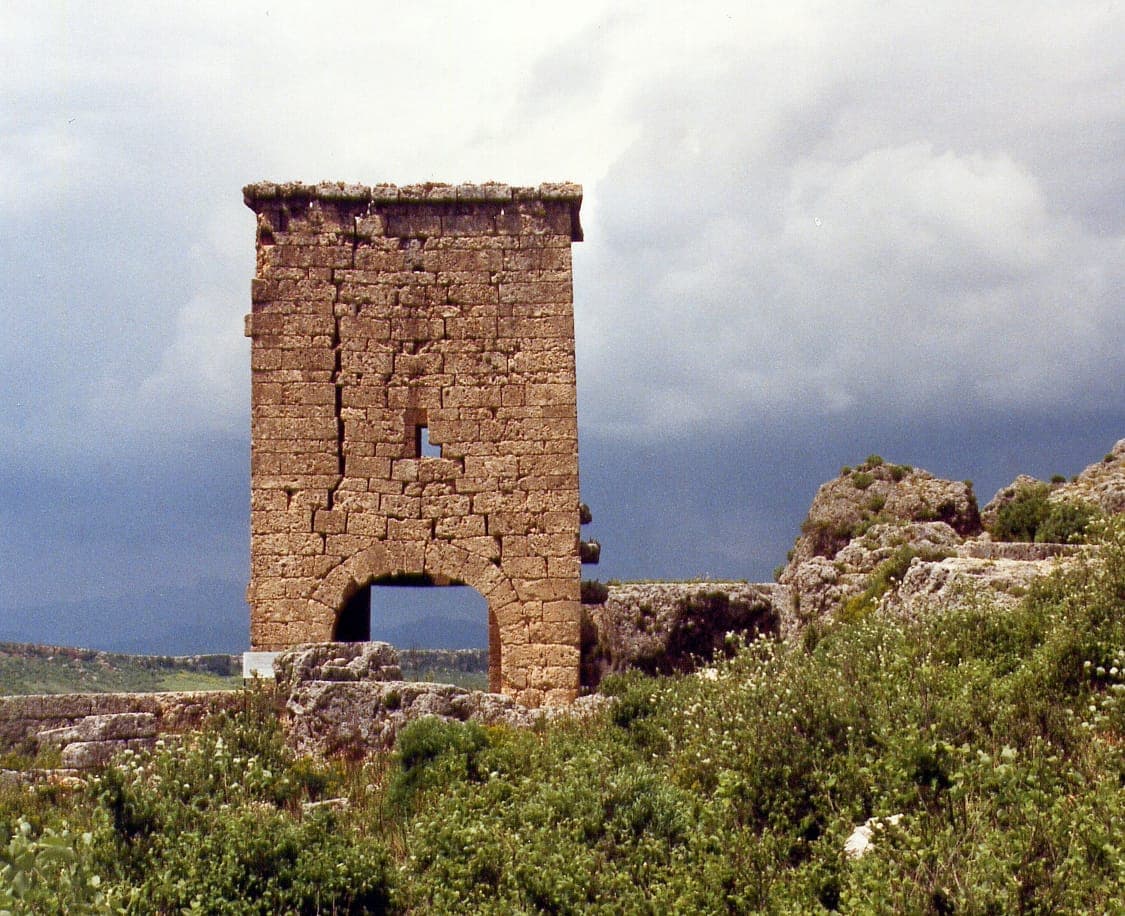
The ruins span multiple periods, from Hellenistic fortifications and a Pamphylian-language inscription (one of the few surviving texts in this poorly understood language) to Roman-period buildings, a Byzantine church, and a Seljuk mosque. The lower city includes a stadium built against the hillside and a gate complex. The upper acropolis preserves massive defensive walls, cisterns, and building foundations.
A partial collapse of the hillside in recent decades has exposed geological layers and damaged some structures, creating a dramatic landscape of tilted walls and displaced masonry that adds to the site's atmosphere of ancient power gradually yielding to natural forces.

Karahisar-i Teke (Sillyon) Situationsskizze | Volker Höhfeld (CC BY-SA 4.0)
The city's architecture reflects its strategic and economic history. The lower city, where most inhabitants lived, contains the remains of a substantial Roman bath complex with a hypocaust heating system, indicating a high standard of urban life. A Hellenistic-era bouleuterion (council house) and several large cisterns carved into the bedrock underscore civic organization and preparedness for siege. Sillyon's position overlooking the major land route along the Pamphylian plain facilitated trade, evidenced by finds of imported pottery and a local coinage. The city's decline appears gradual, linked to the shifting of trade routes and seismic activity; a significant landslide in antiquity damaged part of the acropolis. It remained a fortified settlement into the Byzantine and Seljuk periods, with the latter constructing a small mosque atop the ancient acropolis, symbolizing the site's continuous, layered occupation.