Overview
Anemurion occupies the southernmost point of the Anatolian peninsula, where the Mediterranean coast reaches its closest approach to Cyprus — just 64 kilometers across open water. This geographic position made the city a vital link in maritime routes connecting Anatolia to Cyprus, the Levant, and Egypt.
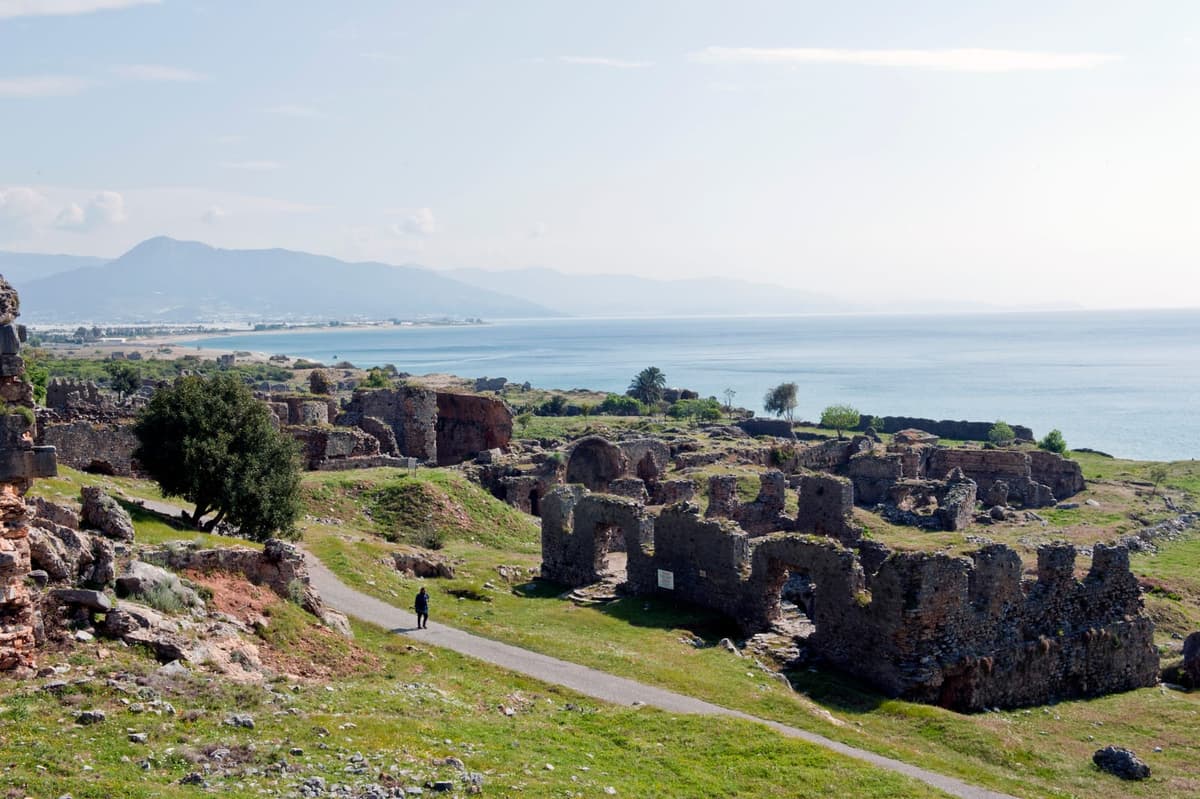
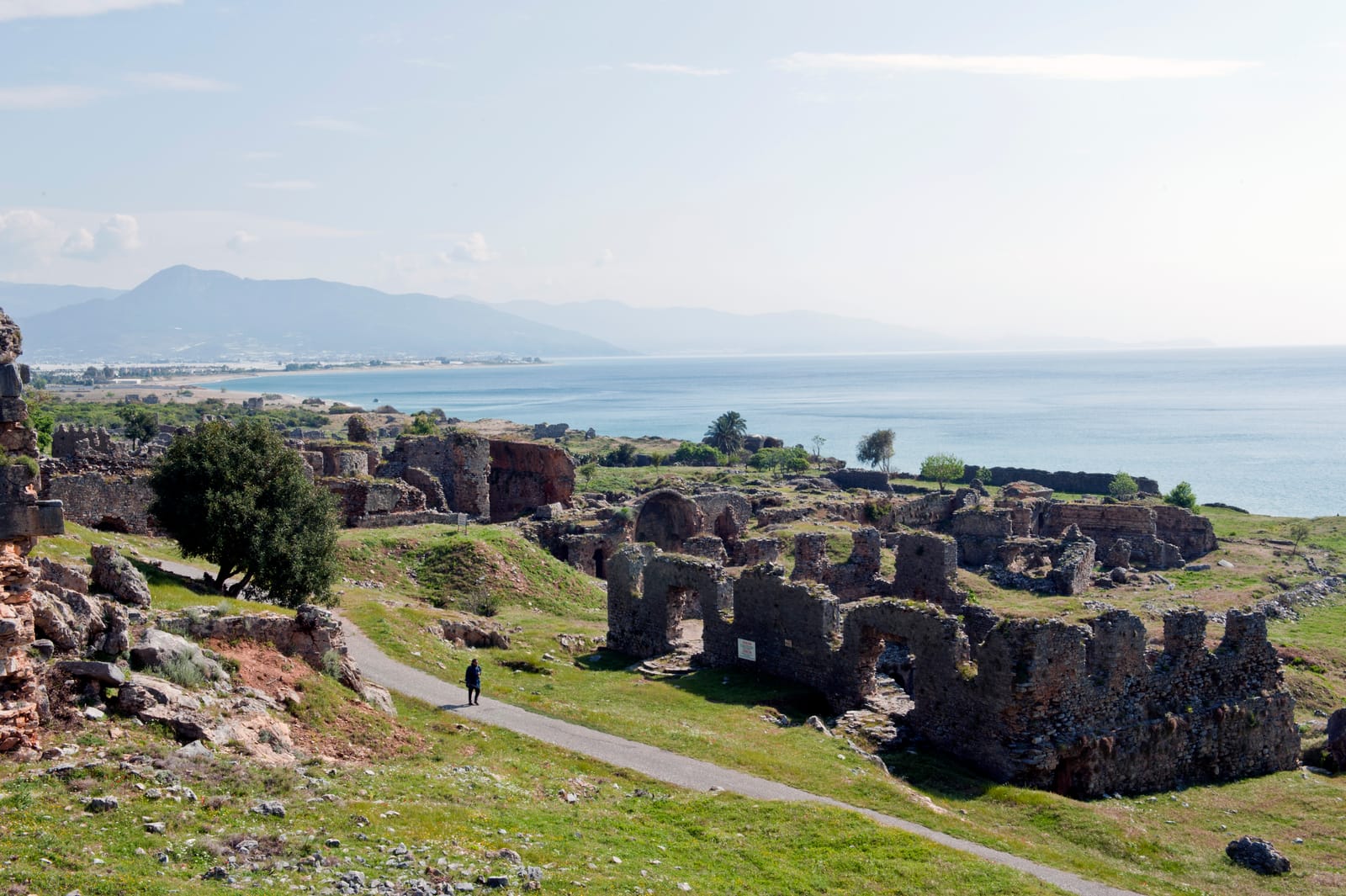
The city flourished particularly during the Roman and early Byzantine periods (1st-7th centuries CE), when it grew into a prosperous commercial center. Its ruins stretch along the shoreline and up the adjacent hillside, creating one of the most evocative archaeological landscapes in Mediterranean Turkey. Buildings preserve remarkably well-preserved mosaic floors depicting geometric patterns, marine scenes, and mythological figures.
"Anemurium is a promontory of Cilicia Tracheia, opposite Cyprus, with a city of the same name."
— Strabo, Geographica (c. 7 BCE - 23 CE)
The city's most striking feature is its vast necropolis on the hillside above the residential quarter, containing hundreds of vaulted tomb buildings arranged along terraces. Many tombs preserve their original frescoed interiors with scenes of daily life, banqueting, and religious imagery — a rare survival that provides unique insight into provincial Roman and early Byzantine funerary art.
The lower city includes a bath complex, an odeon, churches, residential buildings with mosaics, and the remains of a harbor. The city was abandoned after Arab raids in the 7th century and never reoccupied, contributing to its exceptional preservation. The nearby medieval castle of Mamure Kalesi was built partly from Anemurion's stones.

Turkey, Anamur - Anemurion 01 | Островский Александр, Киев (CC BY-SA 3.0)
The city's urban plan reveals distinct public and residential quarters. Notable public structures include a theater overlooking the sea, a large bath-gymnasium complex with intricate geometric mosaics, and a colonnaded street. The residential area features well-appointed houses (domus) with central courtyards and elaborate mosaic floors depicting marine life, Dionysiac scenes, and geometric patterns, reflecting the wealth of the local merchant class.
Anemurion's economy was underpinned by its strategic harbor and trade in local agricultural products, likely including wine, oil, and timber. Daily life for its inhabitants, as revealed by small finds like pottery, glassware, and coins, was typical of a prosperous provincial Roman city, with access to imported goods from across the Mediterranean. The city's ultimate decline was sealed by the mid-7th century CE Arab naval raids, which severed its maritime lifelines and led to a complete, permanent abandonment, leaving its ruins undisturbed for centuries.