
Atlas AnatoliaAtlas Anatolia
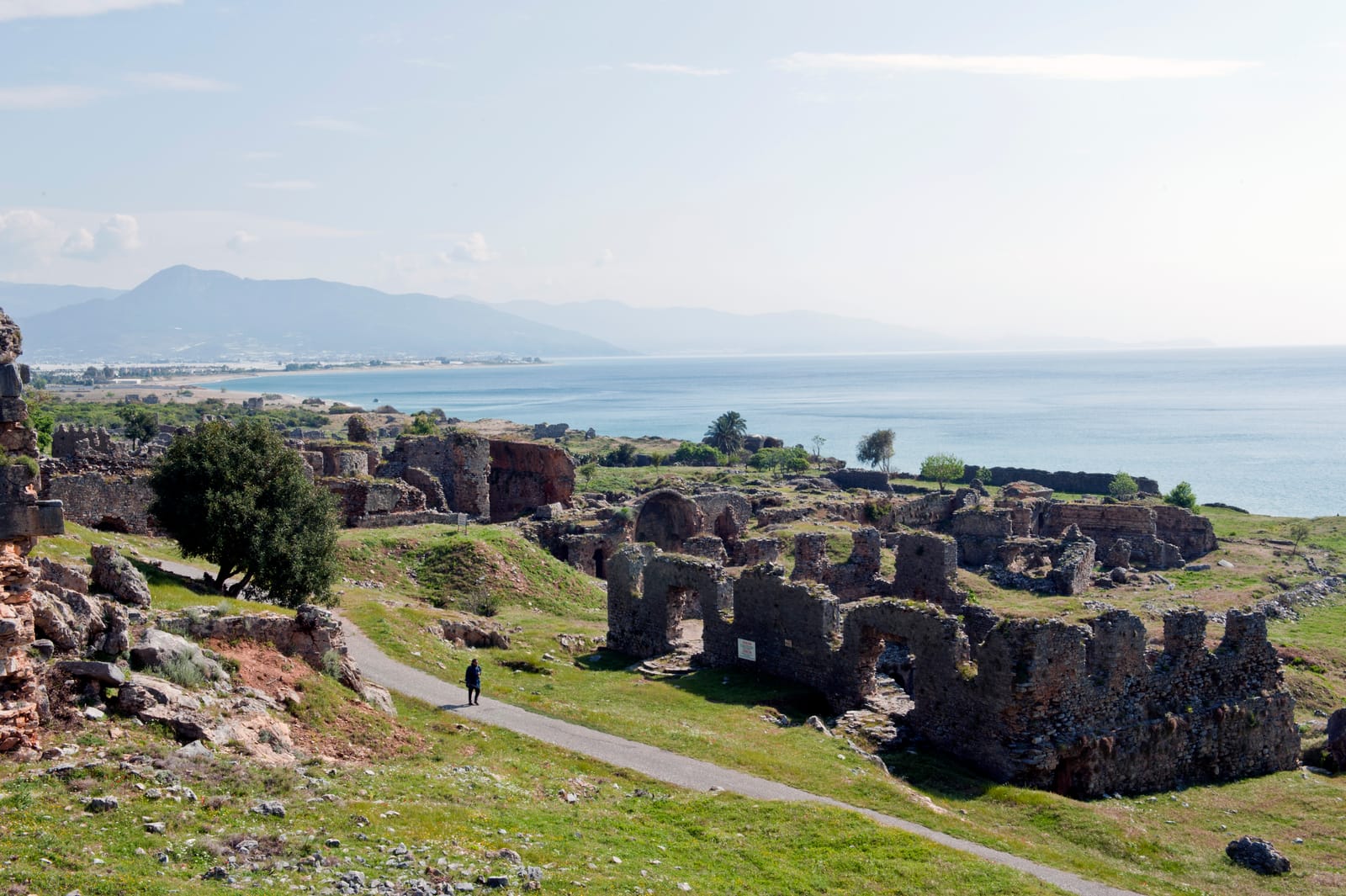
The ancient harbor of Kelenderis at modern Aydincik on the Cilician coast

Kelenderis

Aydincik700 BCE – 700 CE
ClassicalRomanByzantineGreekRomanByzantineMersin

Ship Mosaic

Oldest known realistic ship depiction in mosaic art (5th century BCE)

Founded

Greek colony from Samos, 7th century BCE

Harbor

Exceptionally preserved harbor infrastructure spanning 1,000+ years

Region

Rough Cilicia (Cilicia Tracheia), mountainous coast

Underwater

Submerged harbor installations and shipwreck remains

Province

Mersin, Mediterranean coast

Kelenderis's ship mosaic is an artwork of world significance — the earliest realistic depiction of a sailing vessel in mosaic, providing technical details about ancient ship construction unavailable from any other source.”

WFrom Wikipedia

Kelenderis was an ancient Greek port city on the Cilician coast preserving the oldest known realistic ship mosaic and well-preserved harbor installations.

Read full article on Wikipedia

Overview

Kelenderis, modern Aydincik in Mersin province, was an important harbor city along the rocky coastline of Rough Cilicia (Cilicia Tracheia), the wild and mountainous western portion of the Cilician coast. Founded as a Greek colony from Samos in the 7th century BCE, the city prospered as a maritime trading station linking the eastern Mediterranean to the interior of Anatolia through mountain passes that penetrated the Taurus range.

The city's most celebrated archaeological discovery is a remarkably detailed mosaic depicting a sailing ship, dating to approximately the 5th century BCE. This mosaic, found in a waterfront building, is considered the oldest known realistic portrayal of a ship in mosaic art anywhere in the ancient world. The vessel is shown with extraordinary technical accuracy — its hull construction, rigging, and sail configuration provide invaluable evidence for ancient naval architecture that supplements the often stylized ship depictions found on Greek pottery.

"Kelenderis is a city of Cilicia, with a harbor."
— Strabo, Geographica (c. 7 BCE - 23 CE)

Kelenderis thrived under Roman and Byzantine rule, its natural harbor providing shelter for coastal shipping along the busy Cilician route. The site preserves an unusual wealth of harbor infrastructure including quay walls, breakwaters, and storage buildings that document the evolution of Mediterranean port engineering over nearly a millennium. Underwater archaeological surveys have revealed submerged harbor installations and shipwreck remains in the waters off the ancient city.

The city's fortifications, partially preserved along the promontory overlooking the harbor, include walls from the Hellenistic through Byzantine periods. A series of rock-cut tombs in the surrounding cliffs reflect the Cilician tradition of mountainside burial, while churches and public buildings from the Byzantine period attest to the city's continued importance as a bishopric and regional center well into the early medieval period.
Aydincik, Yozgat 01
Aydincik, Yozgat 01

Aydincik, Yozgat 01 | The original uploader was Yrlmz66 at Turkish Wikipedia. (CC BY-SA 3.0)
Why It Matters

Kelenderis's ship mosaic is an artwork of world significance — the earliest realistic depiction of a sailing vessel in mosaic, providing technical details about ancient ship construction unavailable from any other source. This single artifact has fundamentally influenced our understanding of 5th century BCE naval architecture. The site's exceptionally well-preserved harbor installations offer a rare opportunity to study the evolution of Mediterranean port engineering from the Archaic Greek period through the Byzantine era. Kelenderis demonstrates that even the smaller ports of the ancient Mediterranean could achieve remarkable architectural sophistication and maintained sophisticated maritime infrastructure.

Stay curious

New stories and sites, once a month. No spam.

Evidence & Interpretation

Distinguishing what is well-established from what remains debated.

Well-Established Facts

3
  • The ship mosaic from Kelenderis, dated to the 5th century BCE through stratigraphic and stylistic analysis, is confirmed as the oldest known realistic depiction of a sailing vessel in mosaic art.
  • Harbor infrastructure including stone quay walls, rubble breakwaters, and warehouse foundations has been documented through both terrestrial and underwater excavation.
  • Ceramic evidence and coin finds confirm continuous occupation from the 7th century BCE through the Byzantine period, consistent with literary sources identifying Kelenderis as a Samian colony.

Scholarly Inferences

2
  • The technical accuracy of the ship mosaic — showing hull planking, rigging details, and sail configuration — suggests the artist had intimate knowledge of shipbuilding, possibly indicating a shipwright or maritime guild patron.
  • Rock-cut tombs in the surrounding cliffs follow Cilician burial traditions and may indicate a distinct regional identity among the city's inhabitants despite their Greek colonial origins.

Debated Interpretations

1
  • Whether Kelenderis served primarily as an independent trading port or functioned mainly as a waystation for larger maritime networks centered on cities like Tarsus or Soli is debated among historians.

Discovery & Excavation

1987–1993

Initial excavations and ship mosaic discovery

Led by Levent Zoroglu

Levent Zoroglu of Selcuk University directed excavations that uncovered the famous ship mosaic in a waterfront building, dating it to the 5th century BCE.

1994–2005

Harbor and city excavations

Continued excavations documented the harbor installations including quay walls, breakwaters, and storage buildings spanning the Classical through Byzantine periods.

2006–2012

Underwater survey

Underwater archaeological surveys revealed submerged harbor infrastructure, ancient anchorage areas, and ceramic concentrations indicating shipwreck sites in the bay.

2013

Mosaic conservation

Major conservation project to stabilize and protect the ship mosaic in situ, including construction of a protective shelter and environmental monitoring system.

2018–2022

Byzantine quarter excavation

Excavation of the Byzantine-period quarter uncovered churches, residential buildings, and evidence for the city's continued prosperity as a bishopric and trading port.

More Photos

Museum Artifacts

Community Photos

Share your experience

Have you visited this site? Upload your photos to help others discover it.

Location

Related Sites

Sources

  • Kelenderis Ship MosaicLevent Zoroglu (1994)
  • Rough Cilicia: New Historical and Archaeological ApproachesMichael C. Hoff & Rhys F. Townsend (2013)
  • Wikipedia — KelenderisLink

Research Papers

Stay in the loop

Get notified when we add new sites or major features. We send at most 1–2 emails per year. We never sell your email.

Atlas AnatoliaAtlas Anatolia

An interactive atlas of ancient Anatolian sites. Explore civilizations, monuments, and stories across millennia.

info@atlasanatolia.com

© 2026 Atlas Anatolia. Content is provided for educational purposes.

Map data © OpenStreetMap contributors