Overview
Kibyra was one of the largest and most powerful cities of ancient southwestern Anatolia, situated on a fertile plateau at the junction of Lycia, Caria, and Phrygia in what is now Burdur province. At its height, the city commanded a four-city confederation (tetrapolis) that could reportedly field 30,000 infantry and 2,000 cavalry.
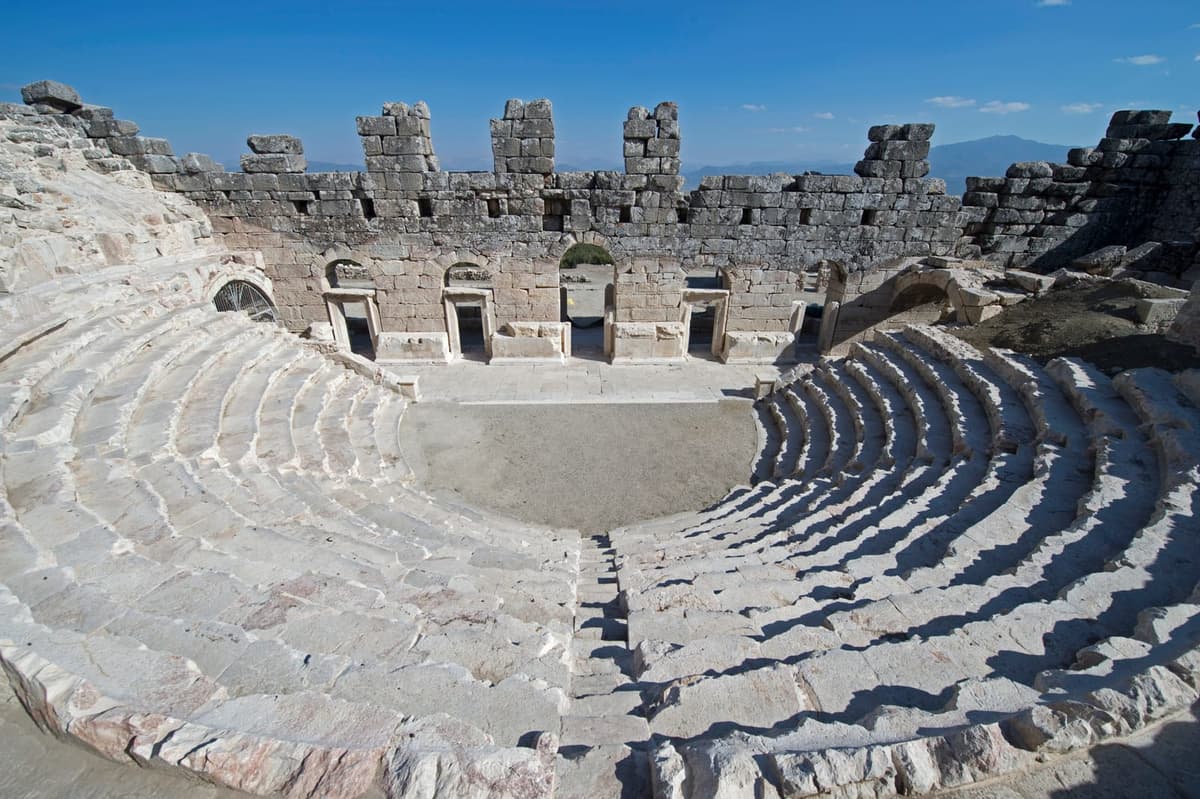
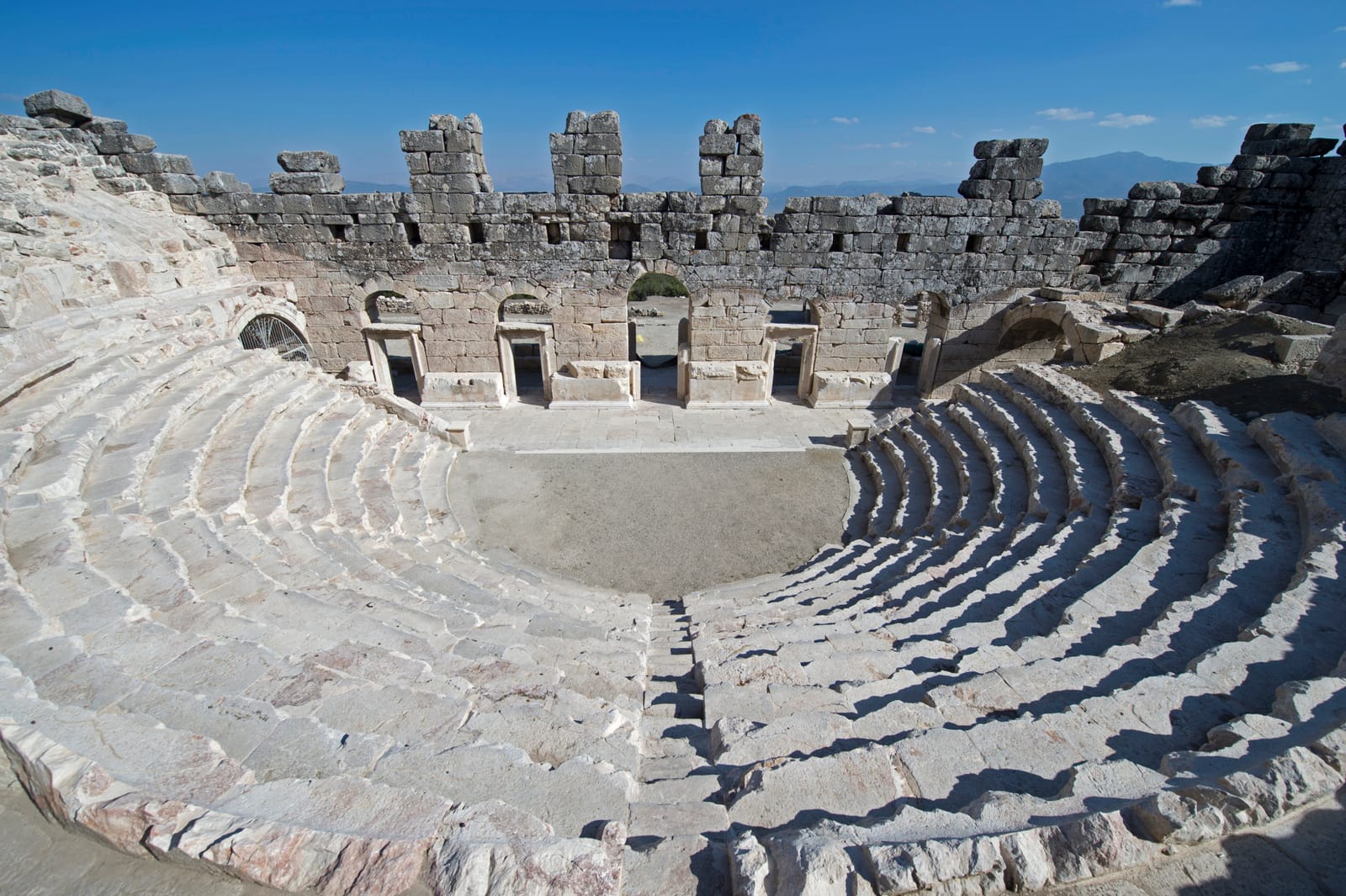
The city's most impressive surviving monument is its stadium, one of the largest in the ancient world with an estimated capacity of 15,000 spectators. Cut into the natural hillside, the stadium preserves its starting blocks and turning posts. Equally remarkable is the well-preserved odeon (small theatre for musical performances and lectures), whose floor features an extraordinary mosaic depicting the head of Medusa — one of the finest surviving mosaics from Roman Anatolia.
"Kibyra is a city of Phrygia, situated near the borders of Caria and Pisidia, and is a tetrapolis, having four cities."
— Strabo, Geography (c. 7 BCE - 23 CE)
Kibyra was renowned in antiquity for its ironworking and leatherworking industries. The city minted coins featuring gladiatorial scenes, suggesting it hosted major combat spectacles. After a devastating earthquake in 23 CE, the Roman emperor Tiberius granted the city tax relief and aided its reconstruction.
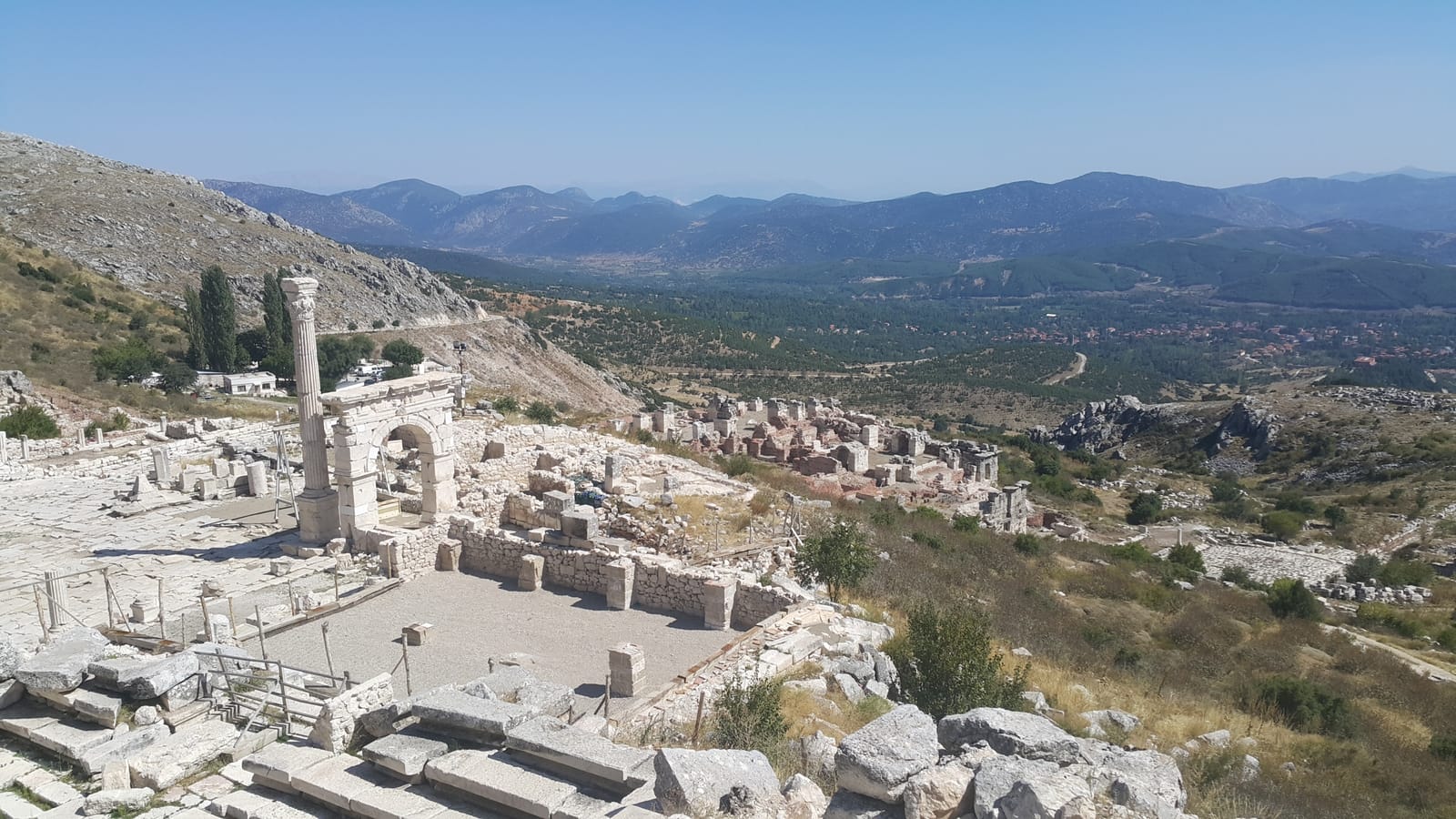
Archaeological work has revealed colonnaded streets, an agora, a large bath complex, a monumental fountain (nymphaeum), and an extensive necropolis with richly decorated sarcophagi. The site spreads across a dramatic landscape of rolling hills and pine forests, relatively unvisited despite its scale and preservation.

Kibyra Theatre 9919 | Dosseman (CC BY-SA 4.0)
Beyond its monumental public buildings, Kibyra's urban fabric reveals a sophisticated city. A well-preserved colonnaded street (plateia) with a central water channel ran through the commercial heart, flanked by shops and a large macellum (market building). The city's prosperity was rooted in its renowned ironworking and leather industries, producing goods like weapons and saddlery that were traded across Anatolia. Archaeological finds, including imported ceramics and coins from distant mints, attest to Kibyra's integration into wider Roman economic networks.
The city's decline began in the 7th century CE, likely hastened by a combination of factors including Arab raids, the disruption of trade routes, and a major earthquake. While habitation continued on a reduced scale, the monumental core was largely abandoned. Systematic excavations since 2006 have been crucial in uncovering the city's layout and history, transforming it from a known historical name into a vividly understood archaeological site.