Overview
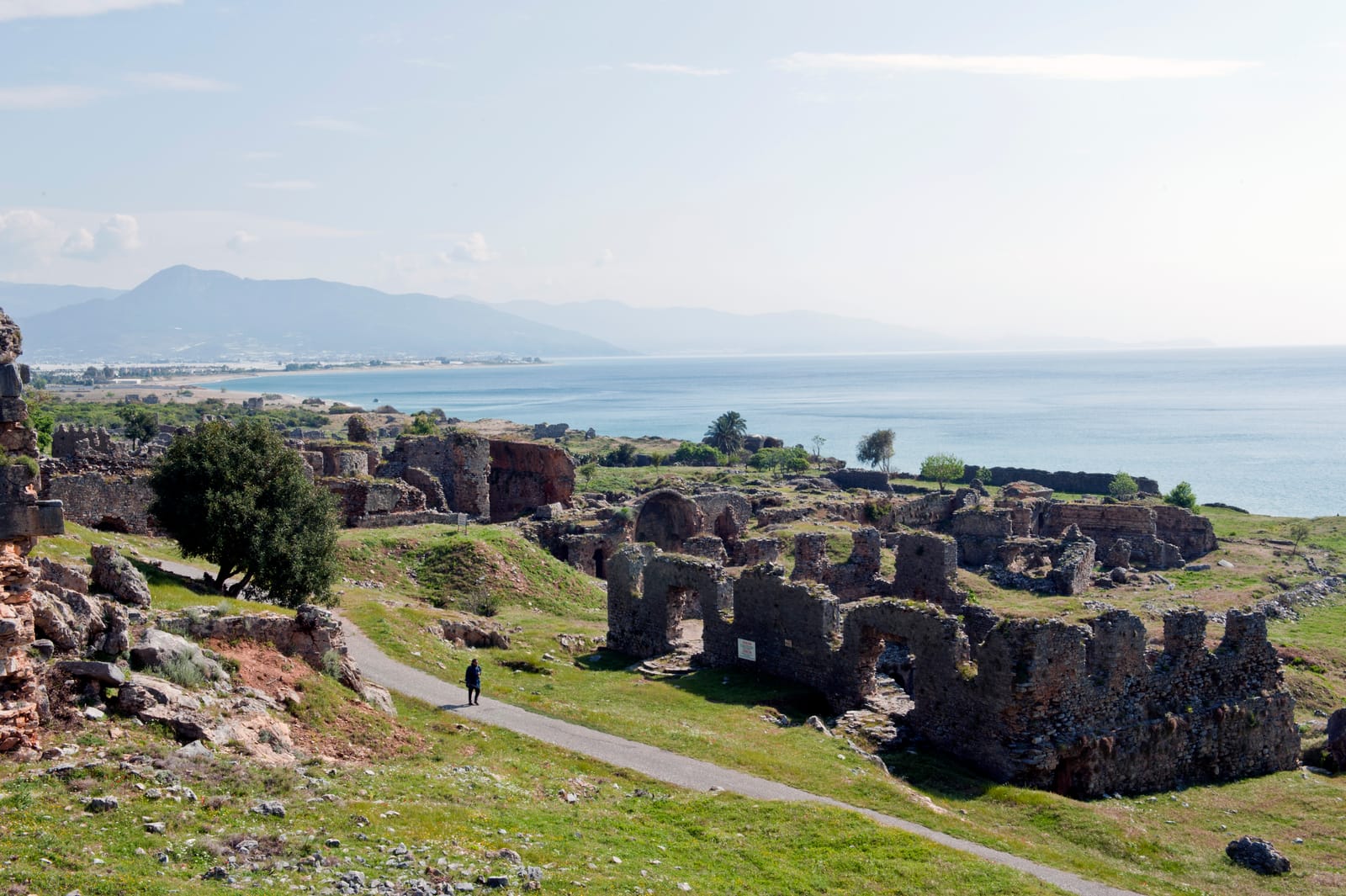
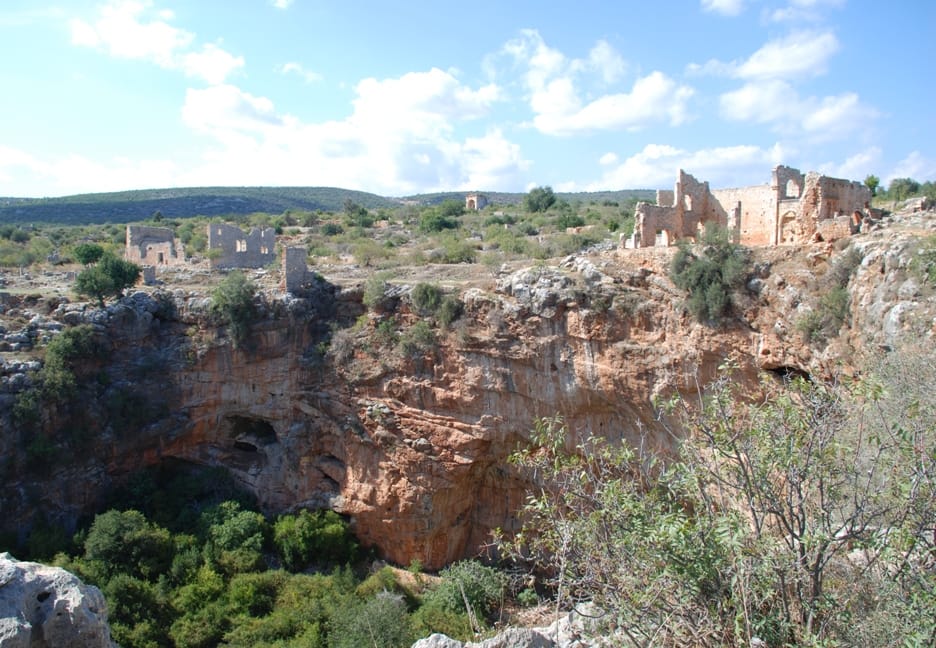
Uzuncaburc — ancient Olba, later renamed Diocaesarea — is one of the most atmospherically complete ancient city sites in Turkey. Situated on a limestone plateau in the foothills of the Taurus Mountains north of Silifke, the site preserves a remarkable concentration of Hellenistic and Roman architecture that gives the visitor a vivid sense of walking through an ancient city.
The Temple of Zeus Olbios, built around 300 BCE, is one of the earliest Corinthian-order temples known and one of the few Hellenistic temples in Anatolia that still stands to significant height. Its thirty columns — some still bearing their capitals and architrave — dominate the site.
"The temple of Zeus Olbios is a magnificent structure of the Hellenistic age, with columns of the Corinthian order."
— Strabo, Geographica (c. 20 BC - 23 AD)
A monumental triple-arched Roman gate from the 1st century CE marks the entrance to the city and leads to colonnaded streets lined with the remains of shops and public buildings. A well-preserved Roman theatre, nymphaeum, and tower tombs add to the cityscape, while an early Christian basilica attests to the site's continued importance into the Byzantine period.
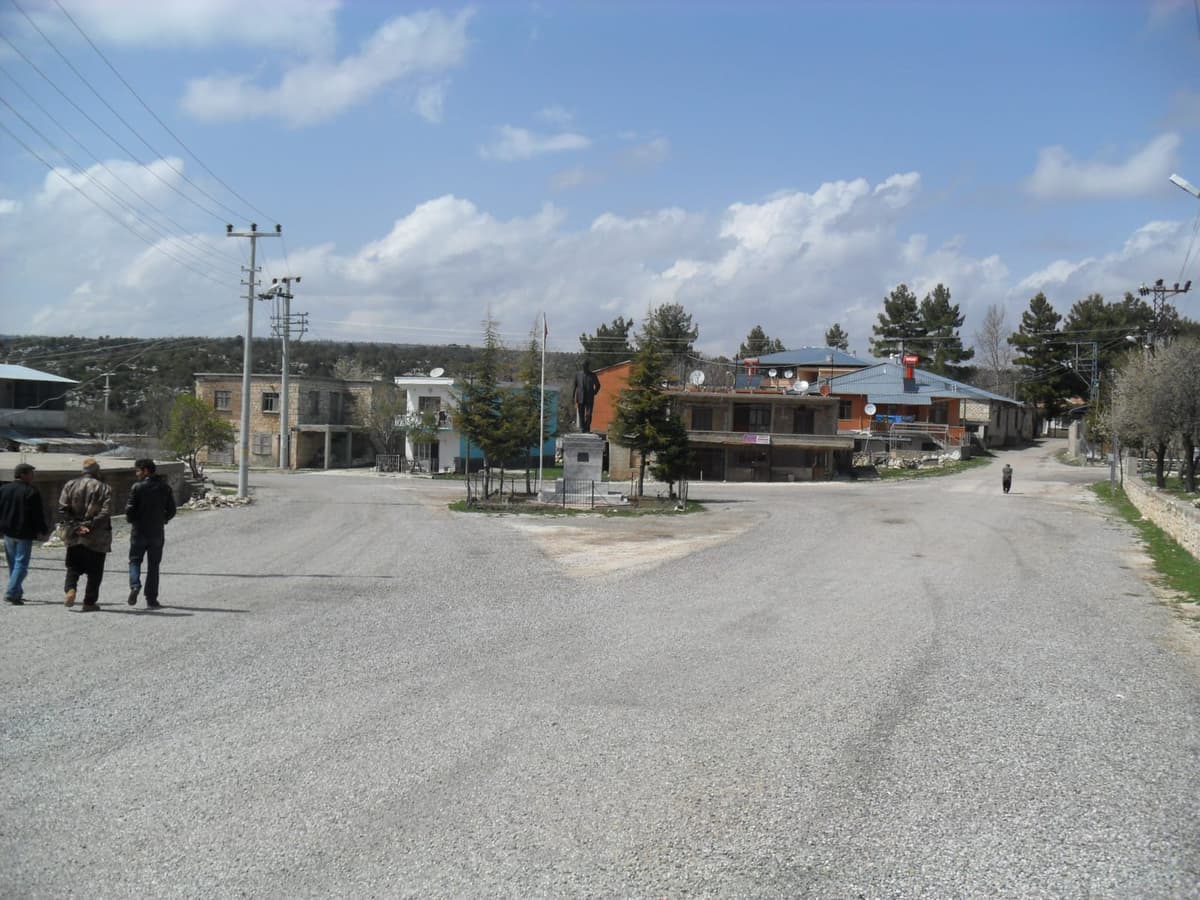
The dynasty of priest-kings who ruled from Olba controlled the surrounding territory of Rough Cilicia and maintained a degree of autonomy even under Roman rule. Their fortress at nearby Ura (modern Uzuncaburc village) served as the administrative center of this semi-independent priestly state.

Olba ancient city Roman aqueduct ruins 2 | Cobija (CC BY-SA 3.0)
Beyond its monumental core, the city's urban fabric reveals a sophisticated infrastructure. A Roman aqueduct channeled water from mountain springs to a central nymphaeum (fountain house) and throughout the settlement, supporting daily life and public baths. The colonnaded street, lined with shops and civic buildings, formed the commercial and social spine of Diocaesarea. The city's prosperity was underpinned by its control over strategic mountain passes connecting the coastal plain to the Anatolian plateau, facilitating trade in timber, olive oil, and wine. Following the site's peak in the Roman Imperial period, Uzuncaburc transitioned into a significant Byzantine bishopric. This phase is marked by the conversion of the Temple of Zeus into a three-aisled Christian basilica in the 5th century CE, a powerful symbol of the region's religious transformation. The city's gradual decline began after the 7th century, likely due to Arab raids and a shift in trade routes, leading to its eventual abandonment and preservation as a remarkably intact archaeological landscape.