Overview
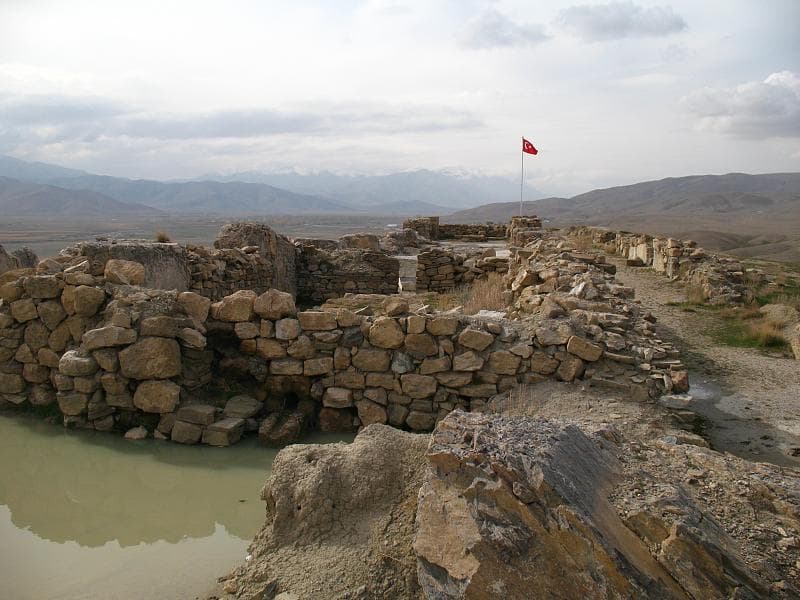
Cavustepe is the best-preserved Urartian fortress in Turkey, built by King Sarduri II around 764 BCE as a royal citadel overlooking the broad plain east of Lake Van. The site consists of an upper and lower fortress connected by massive cyclopean walls, demonstrating the engineering prowess of the Urartian kingdom — a powerful Iron Age state centered on the Van basin that rivaled Assyria.
The upper citadel contains the remains of a palace complex with ceremonial halls, storage rooms, and a temple dedicated to the god Haldi — the chief deity of the Urartian pantheon. Cuneiform inscriptions carved into stone blocks record the building activities of Sarduri II and dedications to Haldi, providing direct evidence of royal construction programs.
"Sarduri, son of Argishti, built this mighty fortress."
— Urartian foundation inscription of Sarduri II, c. 750 BCE
The lower fortress housed administrative buildings, workshops, and extensive storage facilities. Large ceramic storage vessels (pithoi) found in situ indicate the citadel's role as a center of agricultural administration and surplus management.
The site's most remarkable feature is its sophisticated water engineering. An open channel carved through rock brought water from a spring several kilometers away — one of the earliest known aqueduct systems in the world. The channel's precise gradient demonstrates advanced surveying techniques.

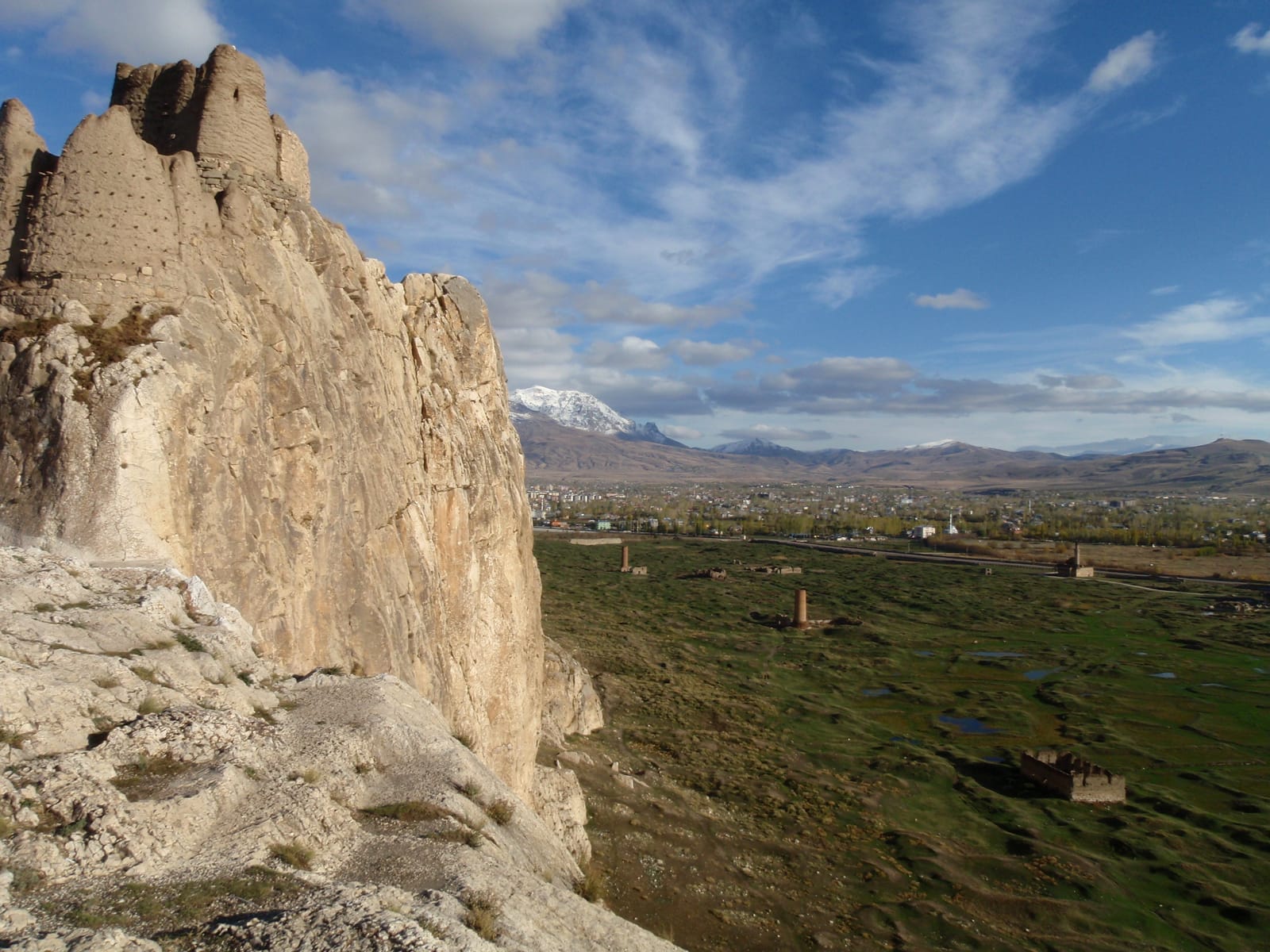
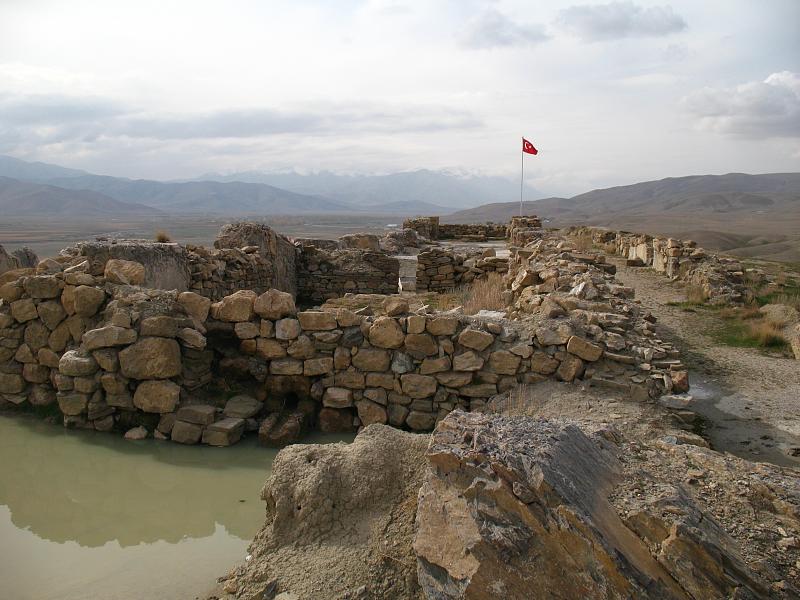
Çavuştepe (38611372590) | Herbert Frank from Wien (Vienna), AT (CC BY 2.0)
Cavustepe offers panoramic views of the Van plain and the distant peaks of the Armenian Highlands, a landscape that defined the Urartian kingdom's territorial heartland.
The architectural layout reveals a highly organized administrative center. The lower fortress housed extensive storage facilities, workshops, and barracks, supporting a garrison and craftspeople. Daily life revolved around state-controlled production, including metalworking and textile manufacture, utilizing resources from the fertile plain and surrounding mountains.
Cavustepe's strategic location placed it on a key route connecting the Urartian heartland to regions northwest towards Anatolia and south to Assyria. This facilitated control over trade in metals, particularly copper and tin. The fortress's ultimate decline is linked to the collapse of the Urartian kingdom in the late 7th or early 6th century BCE, likely due to a combination of military pressure from nomadic Scythians or the emerging Median empire, and possible internal destabilization, leading to its abandonment.
The site provides exceptional insight into Urartian stone masonry, featuring finely dressed ashlar blocks for doorways and monumental structures within the cyclopean walls. The palace complex in the upper citadel included a columned hall (apadana) and a distinctive 'tower temple' design, showcasing the syncretic architectural influences absorbed by the Urartian kingdom from their neighbors.