Overview
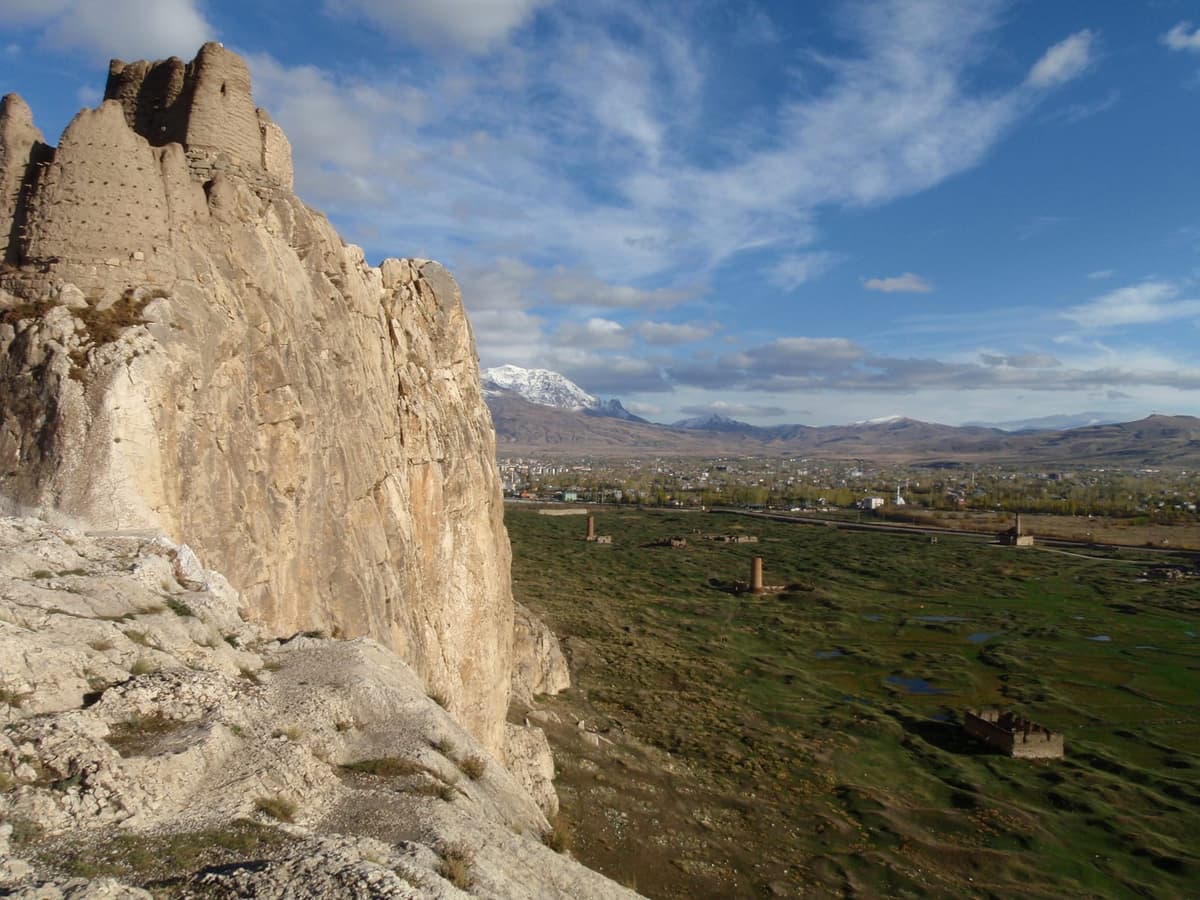
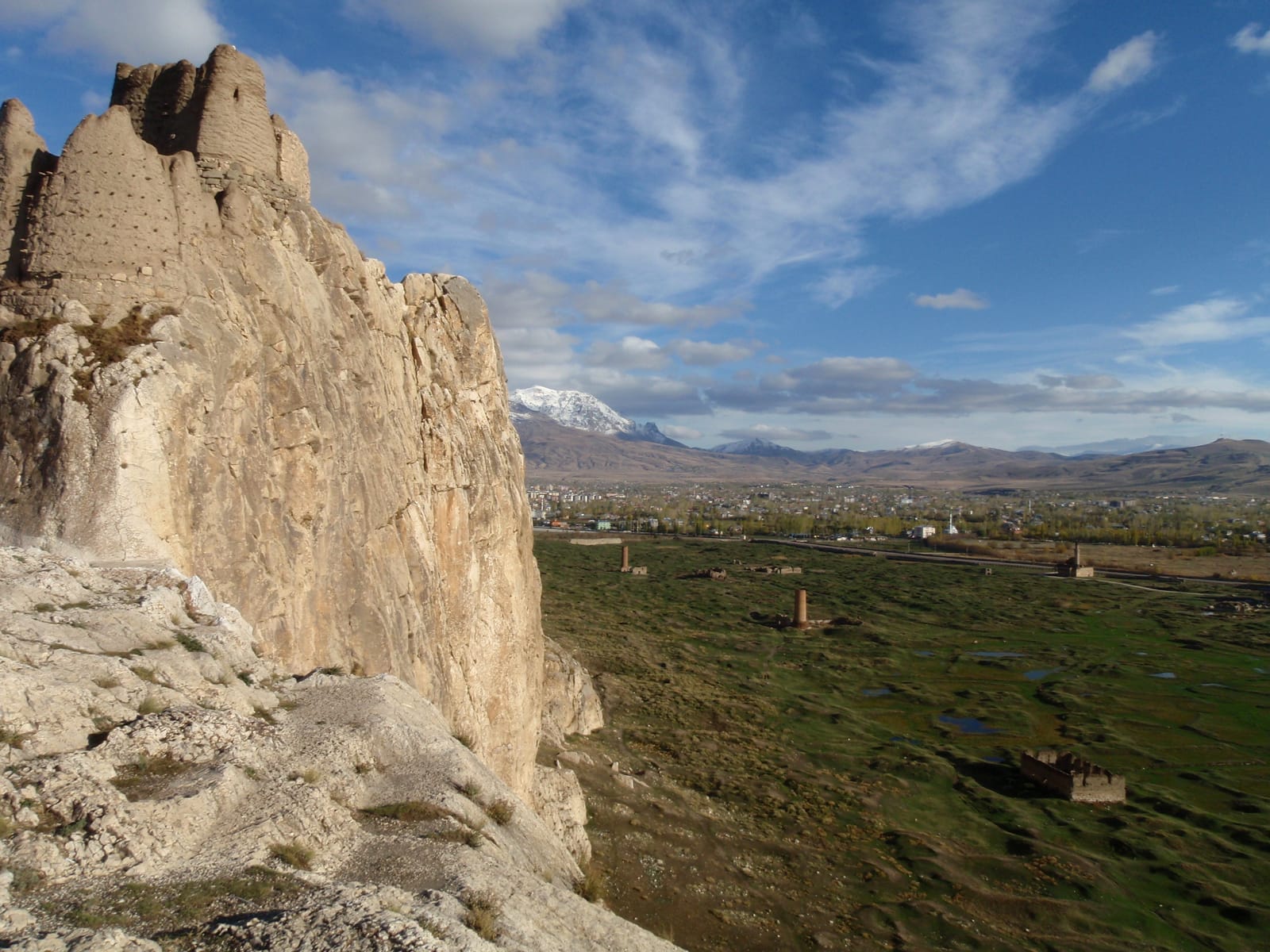
Tushpa — the ancient capital of the Urartian Kingdom — occupies a dramatic elongated rock outcrop rising steeply above the eastern shore of Lake Van, the largest lake in Turkey. The fortress served as the political and military center of Urartu from the 9th to 7th centuries BCE, when this powerful Iron Age kingdom controlled much of eastern Anatolia, the southern Caucasus, and northwestern Iran.
The Rock of Van stretches approximately 1,800 meters in length and rises to 80 meters above the surrounding plain. Its surfaces are carved with cuneiform inscriptions in both Urartian and Assyrian languages, recording royal achievements, building projects, and military campaigns. The most famous is the inscription of King Sarduri I (c. 840-830 BCE), the earliest known Urartian text, written in Assyrian cuneiform.
"Sarduri, son of Lutipri, built this wall."
— Cuneiform inscription of King Sarduri I, circa 830 BCE
Rock-cut chambers honeycomb the fortress — including royal tombs, storage rooms, and ritual spaces. The Urartians built an elaborate canal system bringing water from distant mountains to the capital, a feat of hydraulic engineering that still impresses today. The Menua Channel, built by King Menua around 800 BCE, stretches over 50 kilometers and portions of it remain in use.
Below the fortress, a lower city sprawled along the lakeshore. The fortress continued in use through the Median, Achaemenid, Armenian, and Ottoman periods, with each civilization adding new layers of fortification and habitation.

Van from Van Kalesi | EvgenyGenkin (CC BY-SA 4.0)
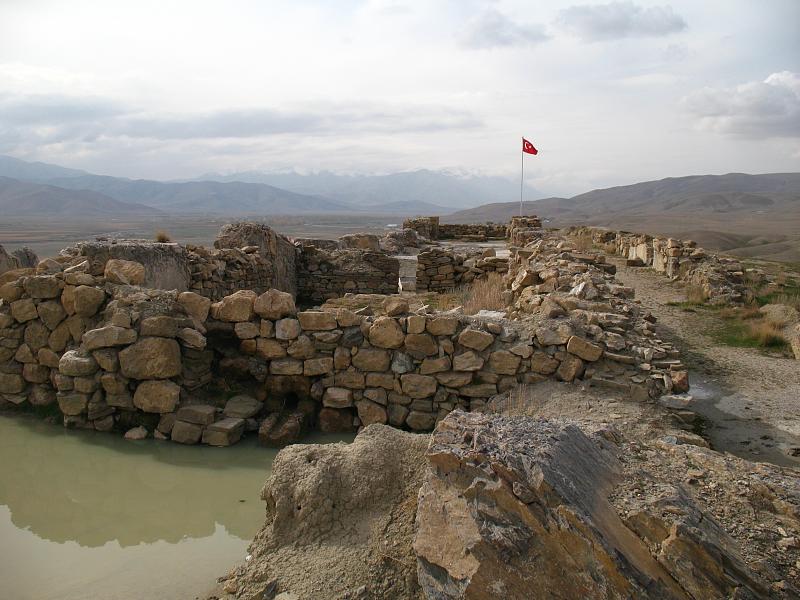
The fortress architecture is characterized by massive cyclopean masonry, with stone blocks weighing several tons. Within the citadel, excavations have revealed the foundations of a temple dedicated to the chief Urartian god Haldi and extensive storage magazines for grain, oil, and wine, indicating centralized economic control. Daily life in the associated lower city, though less understood, would have supported artisans, traders, and a military garrison, with trade connections extending to Assyria for luxury goods and to the Caucasus for metals.
The kingdom's decline began in the late 7th century BCE, likely due to a combination of Scythian or Median incursions and internal instability. Tushpa was sacked, possibly around 590 BCE, ending its role as a royal capital. The site was later occupied by Achaemenid, Armenian, and Ottoman powers, who left their own inscriptions and modifications on the ancient rock.