Overview
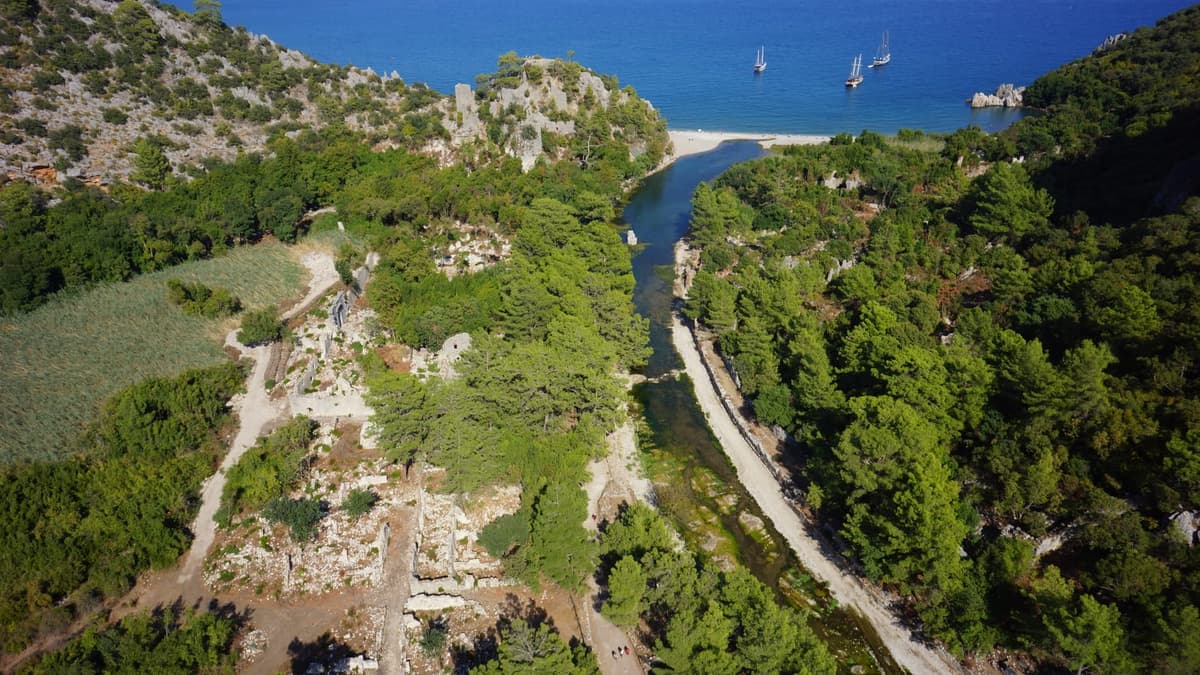
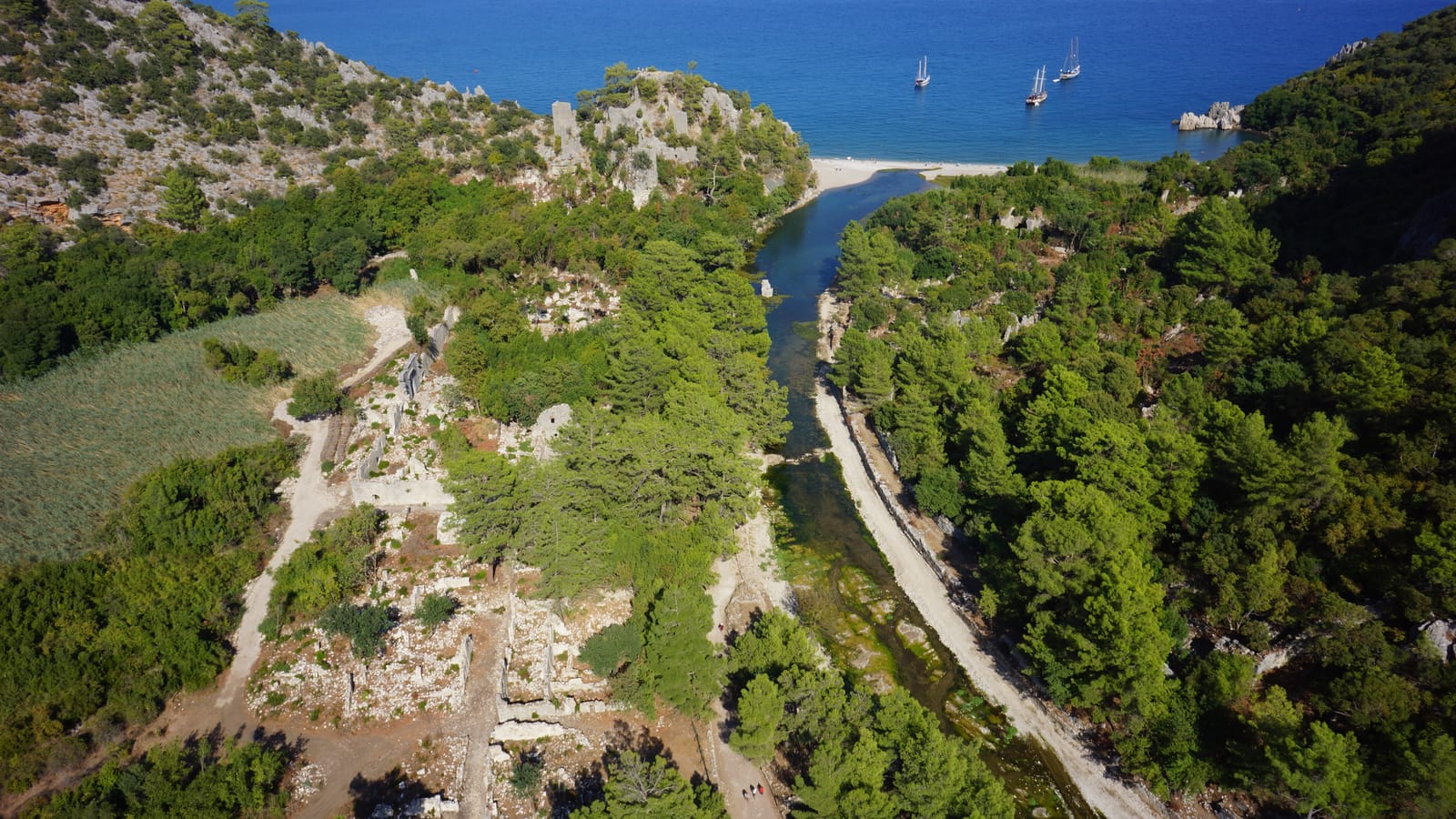
Olympos occupies a dramatic setting in a densely vegetated river gorge that opens onto a pebble beach along the Mediterranean coast. The city was a member of the Lycian League and appears on coins from the 2nd century BCE, though settlement likely predates this by centuries.
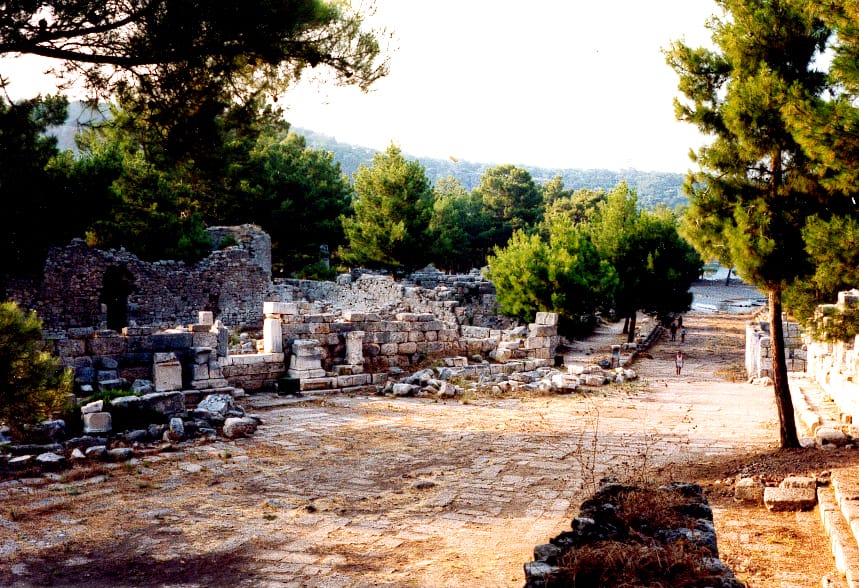
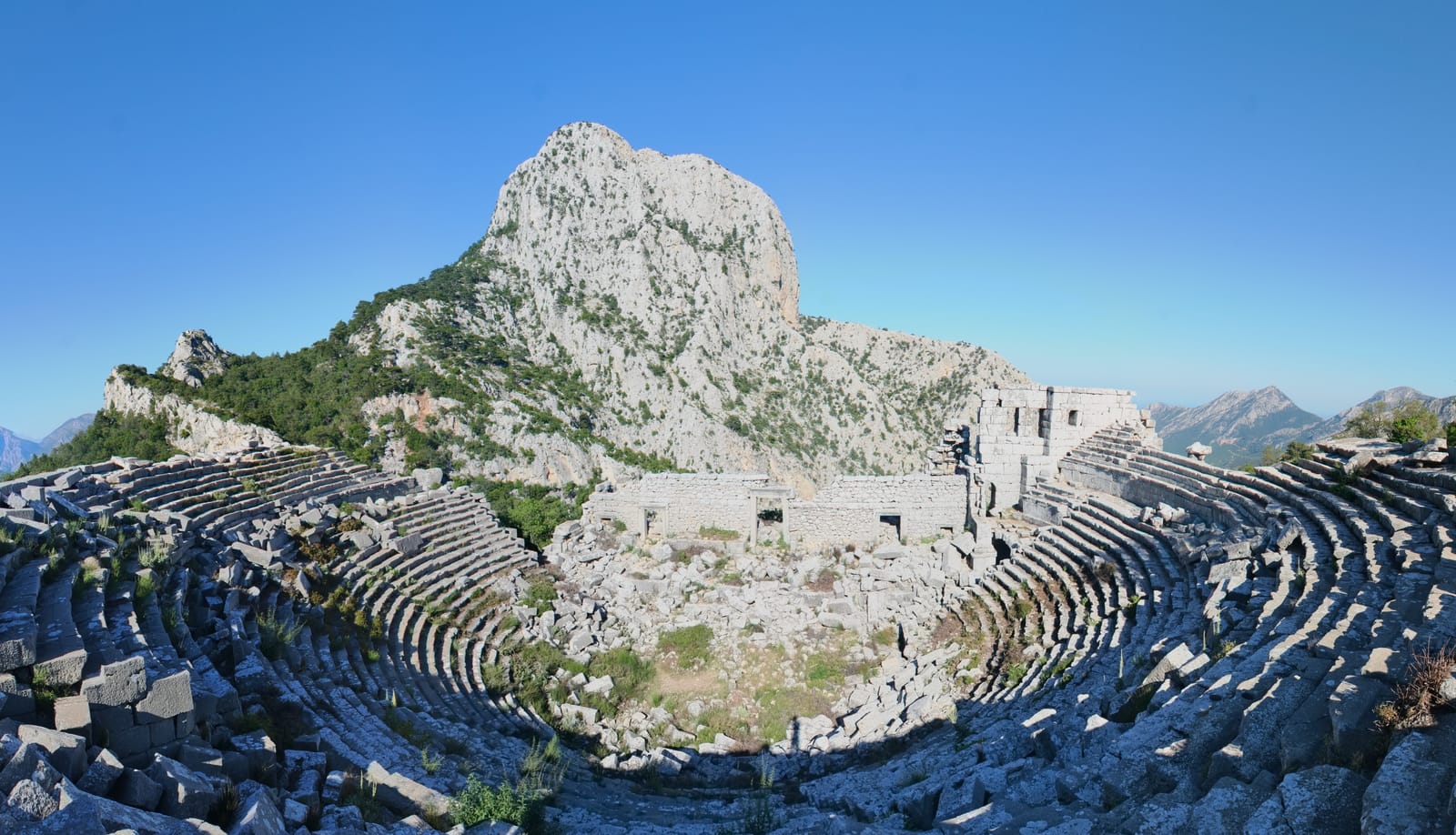
The site is split by the river into northern and southern sectors. Roman-era baths, a theatre, temple foundations, and sarcophagi line the riverbanks, while Byzantine church remains and Genoese fortifications crown the hills above. The vegetation that has reclaimed the ruins gives Olympos a romantic, overgrown quality distinct from more manicured archaeological parks.
"The Lycian Olympus is a city of great beauty, with a harbor and a river flowing through it."
— Strabo, Geographica (c. 7 BCE - 23 CE)
Olympos's most famous association is with the Chimera (Yanartas) — natural gas vents on the slopes of Mount Olympos (Tahtali Dagi) where flames have burned perpetually from cracks in the rock for millennia. The ancient Greeks attributed these flames to the fire-breathing monster Chimera, slain by the hero Bellerophon riding the winged horse Pegasus. The geological phenomenon is caused by methane and hydrogen seeping through ophiolite rocks.
The Chimera flames served as a natural lighthouse for ancient sailors navigating the Lycian coast. The site was sacred and hosted a temple of Hephaestos, the god of fire and forge, directly beside the flames.

Ancient City of Olympos Peak | Güney Özdamar (CC BY-SA 4.0)
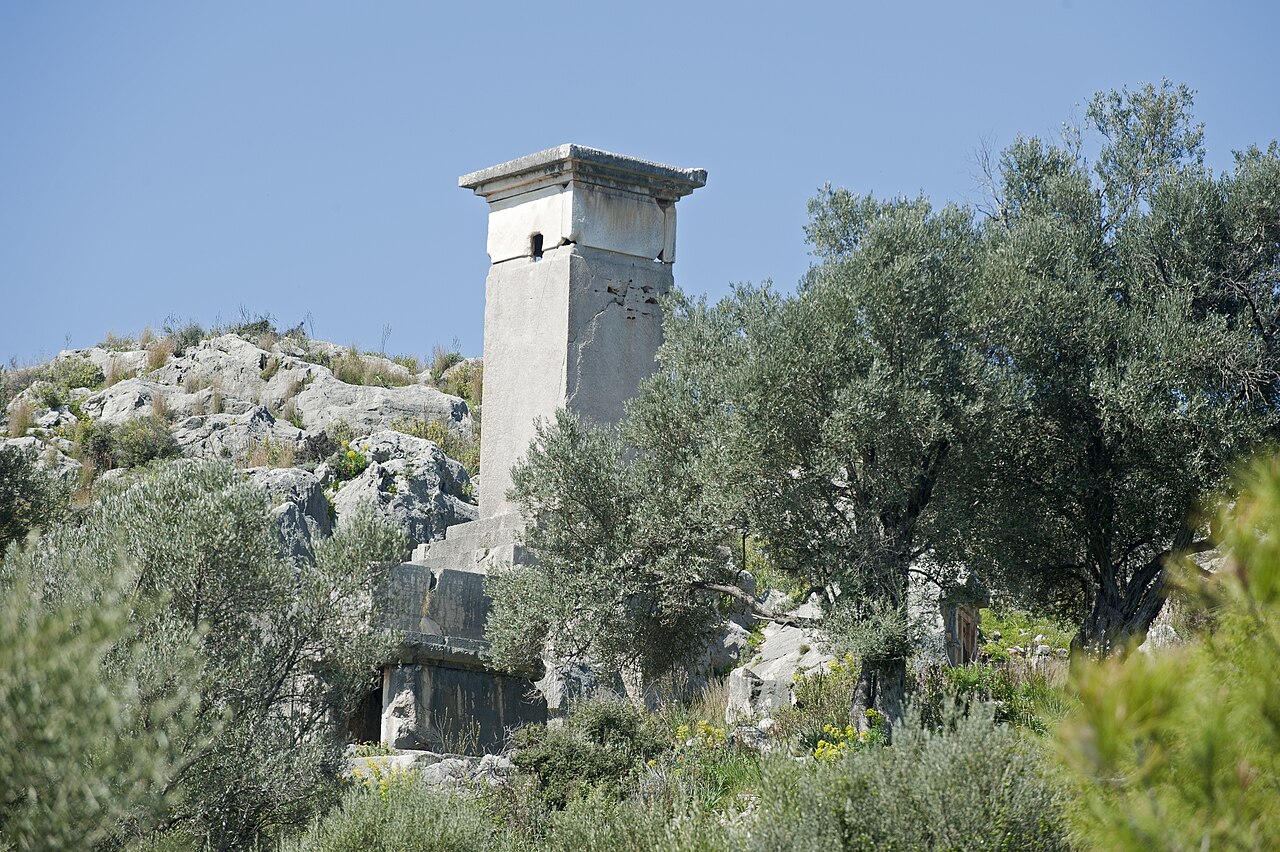
The city's architecture reflects its economic vitality, derived from maritime trade and local resources like timber. The well-preserved Roman bath-gymnasium complex, fed by an aqueduct from the upper gorge, showcases sophisticated hydraulic engineering and served as a central social hub. Numerous Lycian and Roman rock-cut tombs and sarcophagi, some with intricate reliefs, line the riverbanks and hillsides, speaking to the city's funerary traditions and social stratification.
Olympos's decline was gradual, linked to regional insecurity and shifting trade routes in the early Byzantine period. While it remained a bishopric, Arab raids from the 7th century CE onward likely accelerated its abandonment as a significant urban center. The later Genoese and Venetian fortifications on the acropolis highlight the site's continued, albeit reduced, strategic value for controlling the coastline during the medieval period.