Atlas AnatoliaAtlas Anatolia
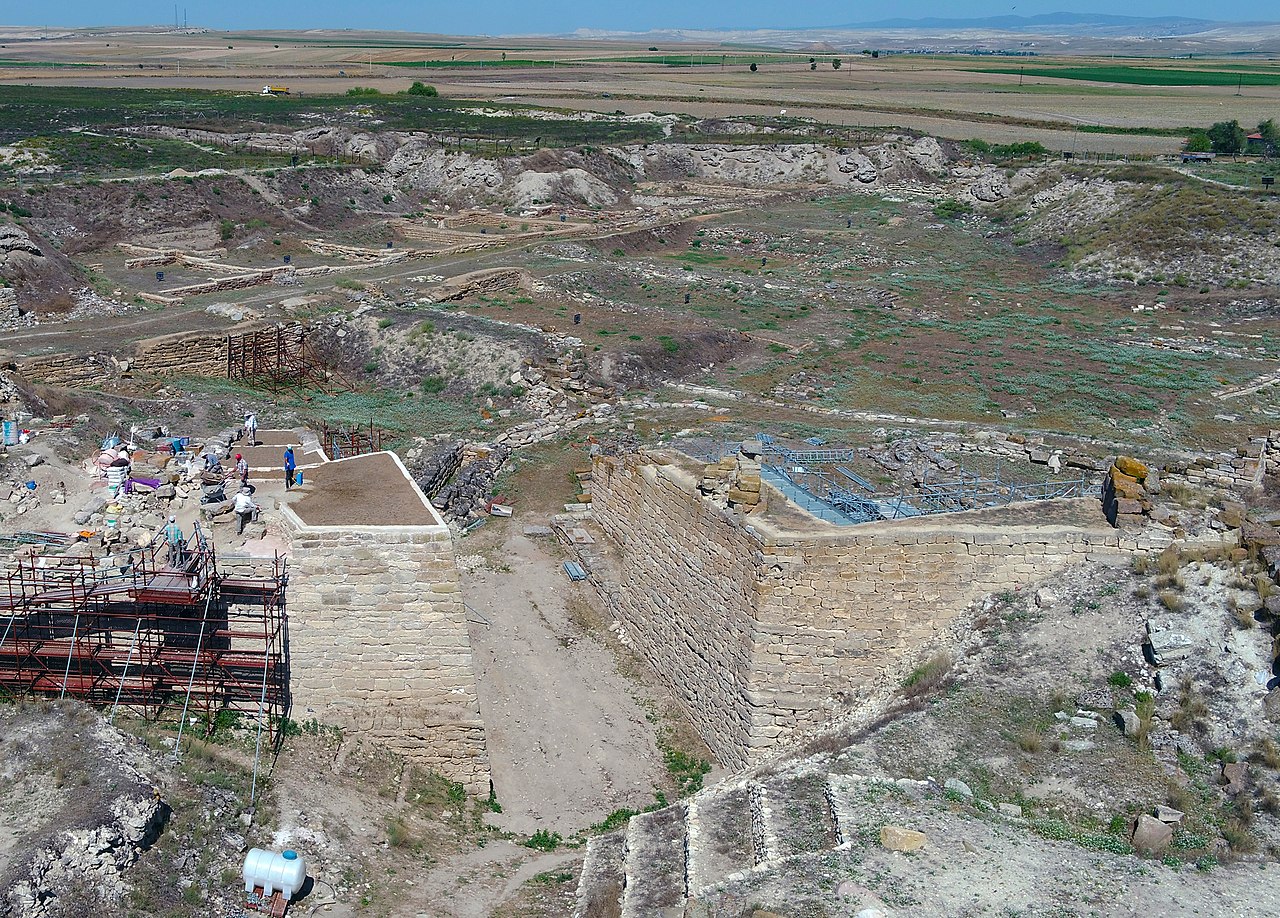
The mound at Buyuknefes marking the site of ancient Tavium in the central Anatolian plateau

Tavium

Buyuknefes300 BCE – 400 CE
HellenisticRomanGalatianRomanYozgat

Galatian Capital

Capital of the Trocmi, one of three Celtic Galatian tribes in Anatolia

Temple of Jupiter

Monumental temple with colossal bronze Zeus statue and asylum rights

Celtic Migration

Galatians arrived in Anatolia 278-277 BCE from Europe

Roman Province

Conventus center after Galatia became a Roman province in 25 BCE

Celtic Language

St. Jerome (4th c. CE) noted Galatians still spoke a Celtic tongue

Province

Yozgat, central Anatolian plateau

Tavium provides essential evidence for understanding one of ancient history's most unexpected cultural encounters — the transplantation of Celtic civilization into the Anatolian heartland.”

WFrom Wikipedia

Tavium was the capital of the Trocmi Galatian Celtic tribe in central Anatolia, featuring a monumental Temple of Jupiter and serving as a major administrative center under Roman rule.

Read full article on Wikipedia

Overview

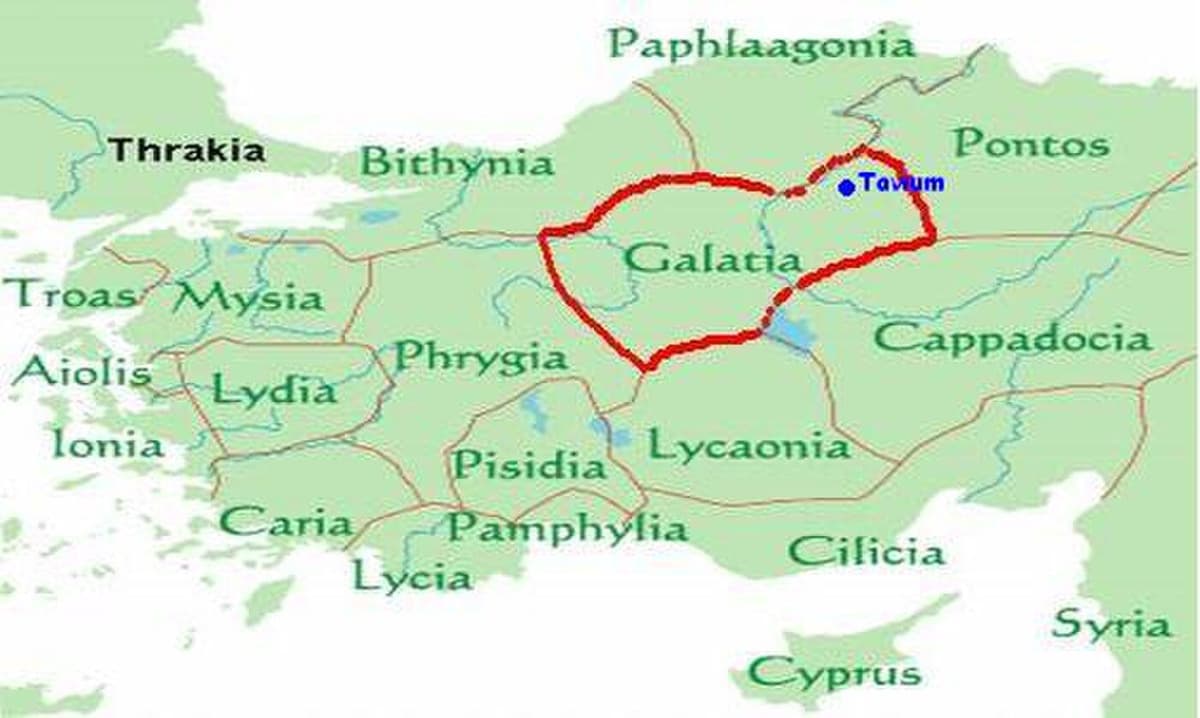
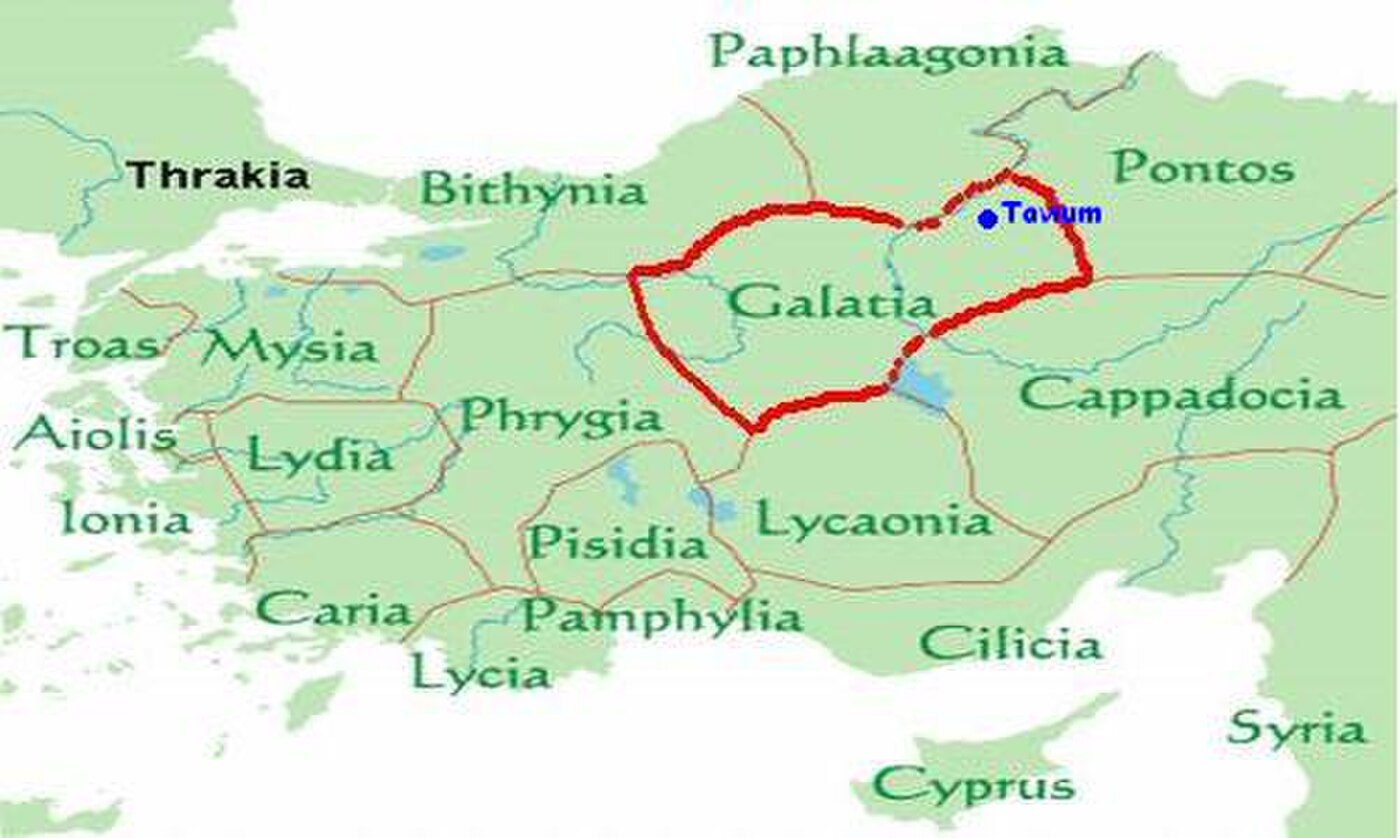
Tavium, located near the modern village of Buyuknefes in Yozgat province, was the political and religious capital of the Trocmi — one of the three Galatian Celtic tribes (alongside the Tolistobogii and Tectosages) who migrated from Europe to central Anatolia in 278-277 BCE and established a distinctive Celtic civilization in the heart of the ancient Near East.

The Galatians are among the most fascinating peoples of ancient Anatolia. Originally Celtic warriors invited as mercenaries by the Bithynian king Nicomedes I, they carved out a territory in the central Anatolian plateau that they controlled for over three centuries. Each of the three tribes had its own capital: the Tolistobogii at Pessinus, the Tectosages at Ancyra (modern Ankara), and the Trocmi at Tavium. Together they formed a federal council, the Koinon, that met at Drynemeton, a sacred oak grove in the Celtic tradition.

"The Trocmi have Tavium, a fortified city with a temple to Jupiter and a famous statue of the god."
— Strabo, Geographica (c. 7 BCE - 23 CE)

Tavium was dominated by a great Temple of Jupiter — the Roman equivalent of the Celtic sky god — which served as both religious center and treasury. Ancient sources describe a colossal bronze statue of Zeus/Jupiter at the temple, and the sanctuary functioned as a place of asylum. The city was an important commercial center on the road from Ancyra eastward to Pontus and Cappadocia, and its markets were noted in Roman itineraries.

Under the Roman Empire, Galatia was annexed as a province in 25 BCE following the death of the last Galatian king, Amyntas. Tavium became one of three conventus centers (judicial districts) within the Roman province. The city continued to prosper, and archaeological evidence includes massive architectural fragments from the temple, Roman road infrastructure, and Byzantine-period churches built over the earlier civic center. The Trocmi's Celtic identity gradually merged with Greco-Roman culture, but elements of Celtic language and custom persisted for centuries — St. Jerome in the 4th century CE noted that the Galatians still spoke a language similar to that of the Treveri in Gaul.
Büyüknefes (Tavium) 2014-02-11 14-31

Büyüknefes (Tavium) 2014-02-11 14-31 | User:Matilabey (CC BY-SA 3.0)
Why It Matters

Tavium provides essential evidence for understanding one of ancient history's most unexpected cultural encounters — the transplantation of Celtic civilization into the Anatolian heartland. The Galatians at Tavium maintained their tribal identity while adapting to the Hellenistic and Roman worlds, creating a unique cultural synthesis. The city's role as one of the three Galatian capitals illuminates how Celtic political organization — with its tribal councils and sacred groves — was adapted to the realities of the ancient Near East. Tavium reminds us that Anatolia's history includes not only the familiar civilizations of Greece, Rome, and the Hittites, but also this remarkable Celtic chapter that has received far less attention than it deserves.

Stay curious

New stories and sites, once a month. No spam.

Evidence & Interpretation

Distinguishing what is well-established from what remains debated.

Well-Established Facts

4
  • Monumental architectural fragments including column drums, capitals, and decorated cornices confirm the existence of a large temple at Tavium, identified as the Temple of Jupiter described in ancient sources.
  • Strabo (Geography 12.5.2) identifies Tavium as the capital of the Trocmi and describes the temple of Zeus with its colossal bronze statue and right of asylum.
  • Roman road milestones and itinerary references document Tavium as a major node in the imperial road network connecting Ancyra to the eastern provinces.
  • St. Jerome (Commentary on Galatians, 4th century CE) reports that the Galatians in Anatolia still spoke a language similar to that of the Celtic Treveri near Trier, indicating remarkable linguistic persistence.

Scholarly Inferences

1
  • The scale of the temple architecture suggests substantial investment by the Trocmi elite, indicating that the transition from Celtic tribal to Hellenistic urban religion was accompanied by significant economic resources.

Debated Interpretations

1
  • Whether the worship at Tavium's temple represented a genuine syncretism of Celtic and Greco-Roman religious traditions or a superficial adoption of classical forms over Celtic practices remains debated.

Discovery & Excavation

1963

Initial survey

Surface survey at Buyuknefes identified the site as ancient Tavium based on inscriptions and architectural fragments, including massive column drums from the Temple of Jupiter.

1997–2003

German-Turkish survey

Systematic survey documented the city's extent, mapping fortification walls, the temple precinct, and Roman road infrastructure converging on the city from multiple directions.

2005–2012

Excavation of the temple area

Excavations in the temple precinct uncovered monumental architectural fragments, column bases, and decorated cornice blocks confirming the scale and grandeur of the Temple of Jupiter.

2013

Geophysical survey

Ground-penetrating radar and magnetometry revealed the subsurface extent of the ancient city, identifying buried structures including what may be the agora and residential quarters.

2018–2021

Byzantine levels investigation

Excavation of the upper levels documented Byzantine churches and structures built over the Roman-period civic center, including reused architectural elements from the temple.

More Photos

Museum Artifacts

Community Photos

Share your experience

Have you visited this site? Upload your photos to help others discover it.

Location

Related Sites

Sources

  • The Galatians: Celtic Invaders of Greece and Asia MinorStephen Mitchell (2003)
  • Anatolia: Land, Men, and Gods in Asia MinorStephen Mitchell (1993)
  • Wikipedia — TaviumLink

Research Papers

Stay in the loop

Get notified when we add new sites or major features. We send at most 1–2 emails per year. We never sell your email.

Atlas AnatoliaAtlas Anatolia

An interactive atlas of ancient Anatolian sites. Explore civilizations, monuments, and stories across millennia.

info@atlasanatolia.com

© 2026 Atlas Anatolia. Content is provided for educational purposes.

Map data © OpenStreetMap contributors