Overview
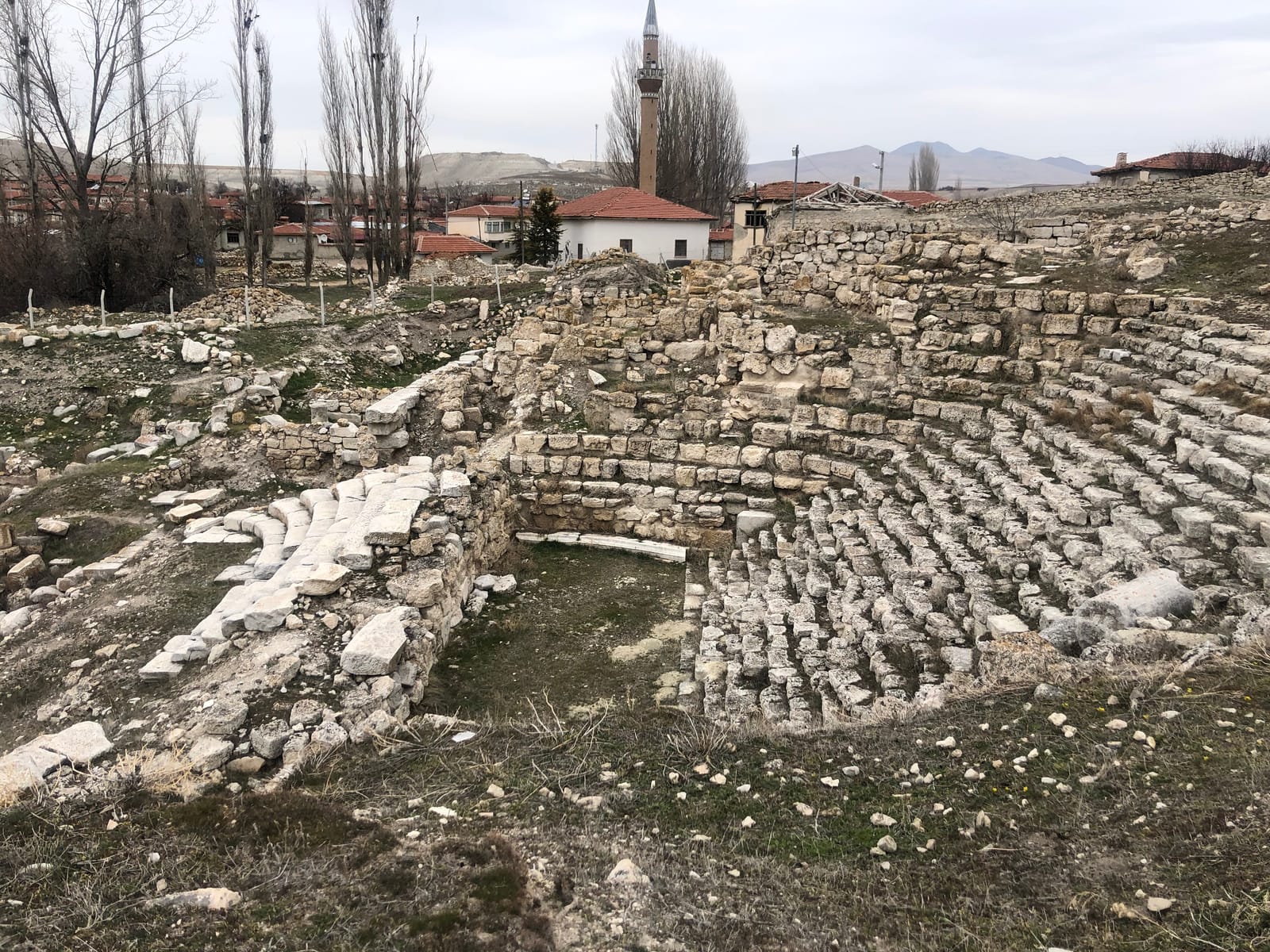
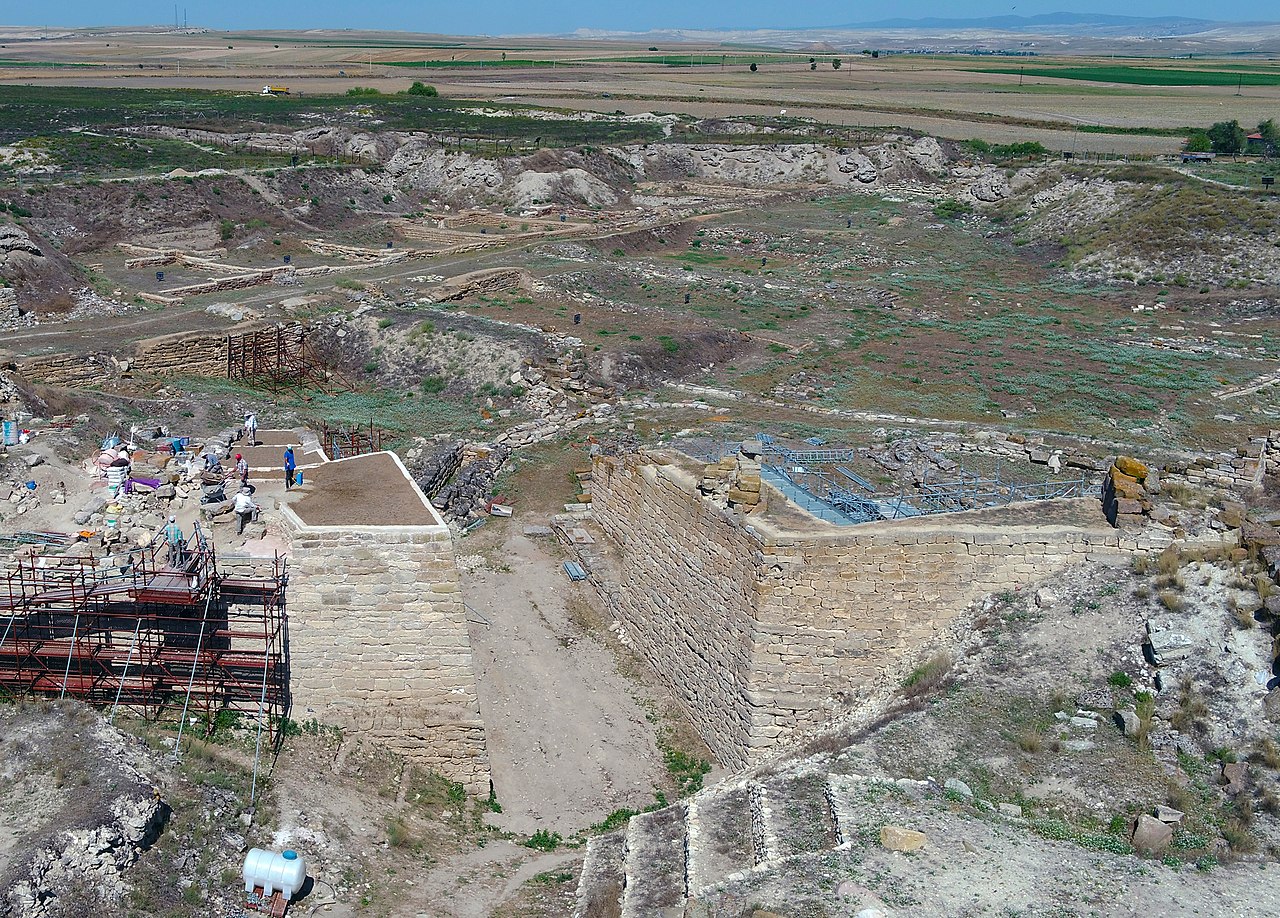
Gordion, located at modern Yassıhöyük in Ankara Province, was the capital of the Phrygian Kingdom from approximately the 9th to the 7th century BCE. The site includes a large settlement mound (the citadel), an extensive lower town, and over 100 burial tumuli.
The largest tumulus, known as the "Midas Mound" or Tumulus MM, stands about 53 meters high and is one of the largest ancient burial mounds in Anatolia. When excavated in 1957 by Rodney Young of the University of Pennsylvania, it was found to contain a remarkably well-preserved wooden burial chamber with the remains of a man in his 60s, surrounded by elaborate wooden furniture and bronze vessels. Tree-ring dating places the tomb around 740 BCE.
"Gordion, the city of Midas, where the ox-cart was fastened with the famous knot."
— Arrian, c. 2nd century AD
Gordion is also associated with the legend of the Gordian Knot — the prophecy that whoever untied the knot on an oxcart in the city would rule all of Asia. Alexander the Great famously dealt with it during his visit in 333 BCE.
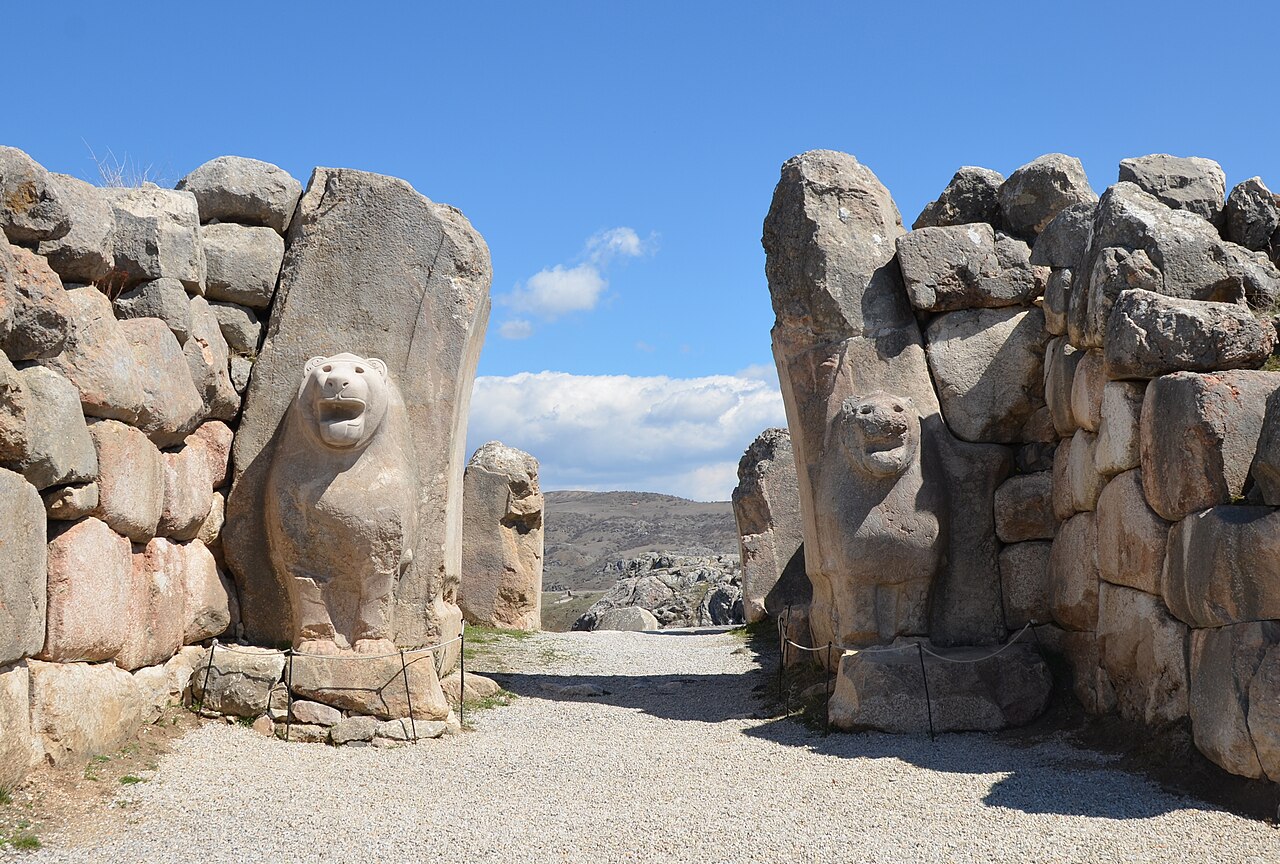
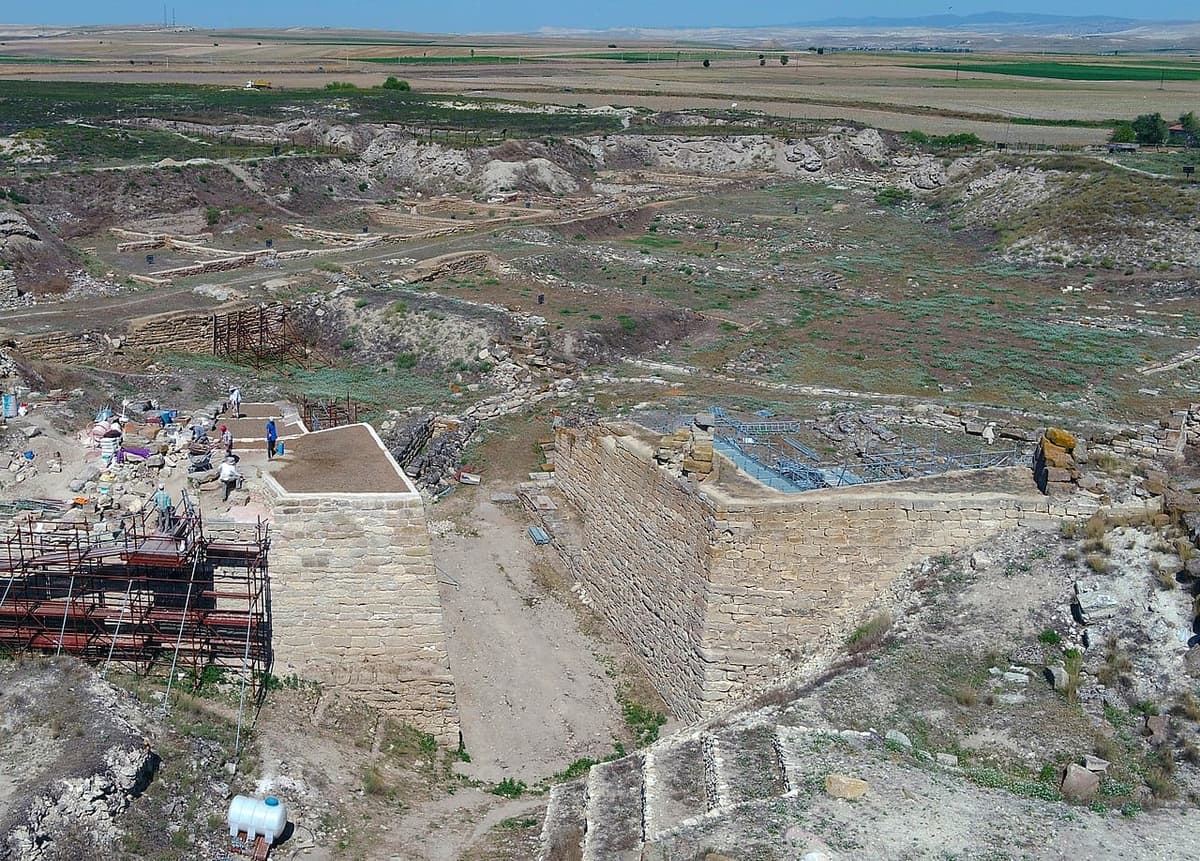
The citadel's architecture reveals a sophisticated urban center. Its most prominent feature is a massive stone gate complex, built around 800 BCE, which controlled access to the elite quarter. Within this quarter, large megaron-style buildings with intricate geometric mosaic floors, the oldest known in Anatolia, served as administrative and ceremonial centers. The settlement's wealth was derived from control over fertile agricultural land and strategic trade routes connecting Anatolia with Assyria and the Aegean world.

Troy Museum Troad Gold (Ankara picture) Gold, Electrum Early Bronze Age 3496 | Dosseman (CC BY-SA 4.0)
Daily life is illuminated by finds from the destruction level, which sealed houses containing tools, loom weights, and foodstuffs. The site's importance waned after its conquest by the Lydians in the 7th century BCE and later by the Persians, though it remained inhabited into the Hellenistic period. Alexander the Great's famous visit in 333 BCE, where he cut the Gordian Knot, marks a final legendary chapter before the city's gradual decline.