Overview
Apameia Kibotos — "Apameia of the Chest" — was one of the largest and wealthiest cities of Hellenistic and Roman Phrygia. Built near the sources of the Maeander River in what is now Afyonkarahisar province, the city stood at the convergence of major trade routes connecting the Aegean coast to the Anatolian interior and beyond to Mesopotamia.
The city's earlier incarnation, Celaenae, was where Xerxes reviewed his armies before marching toward Greece. Alexander the Great also passed through. Refounded as Apameia by the Seleucid king Antiochus I (c. 270s BCE) and named after his mother, the city grew into one of the most important commercial centers in Asia Minor. Its epithet "Kibotos" (chest or ark) has been linked to a local flood tradition that ancient writers connected to the biblical story of Noah.
"Apameia is a great emporium of Asia, second only to Ephesus."
— Strabo, c. 7 BCE - 23 CE
Roman-period coins from Apameia depict a figure emerging from an ark-like vessel, making it one of the earliest visual representations connecting the Noah story to a specific Anatolian location. This tradition influenced early Christian interpretations of the Flood narrative.
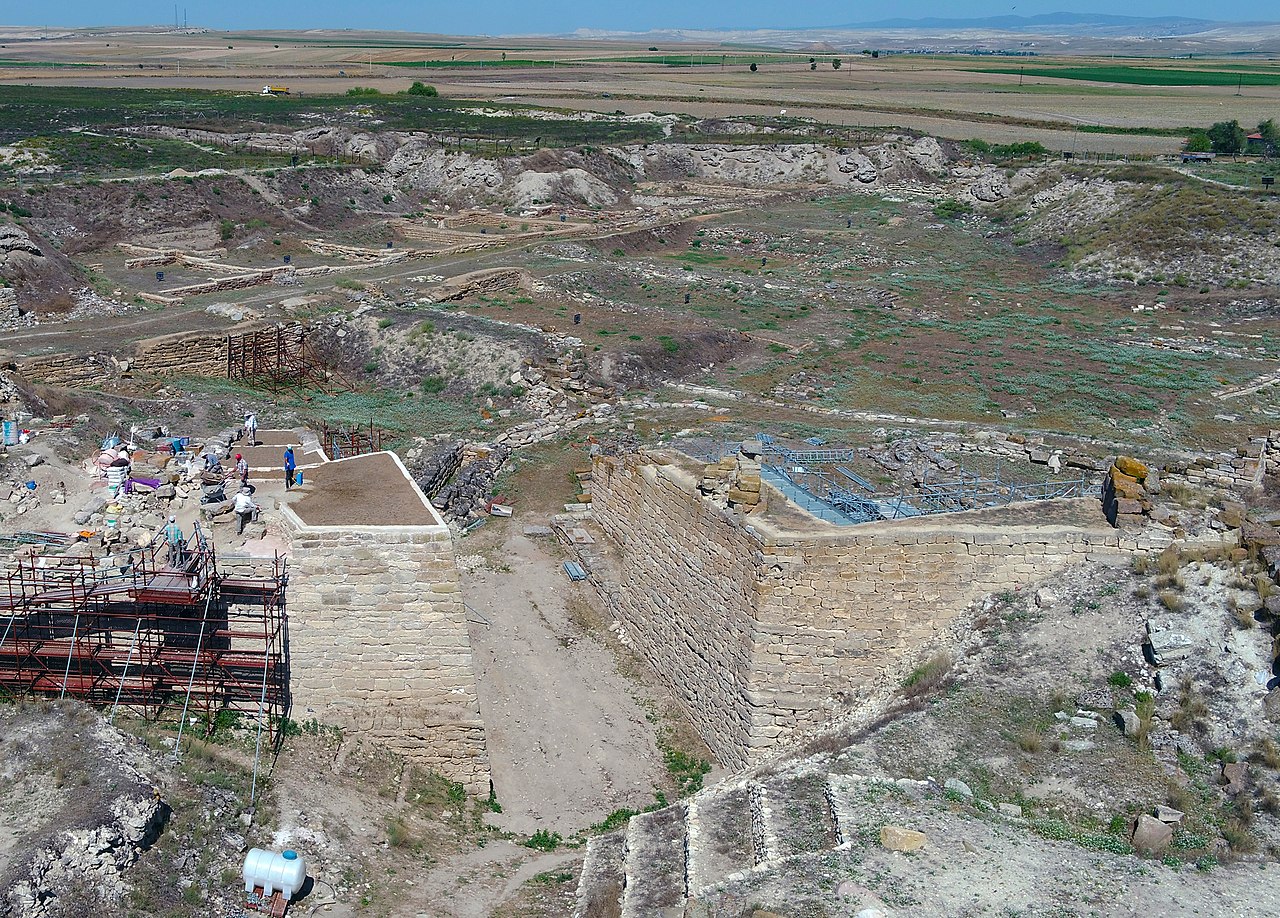
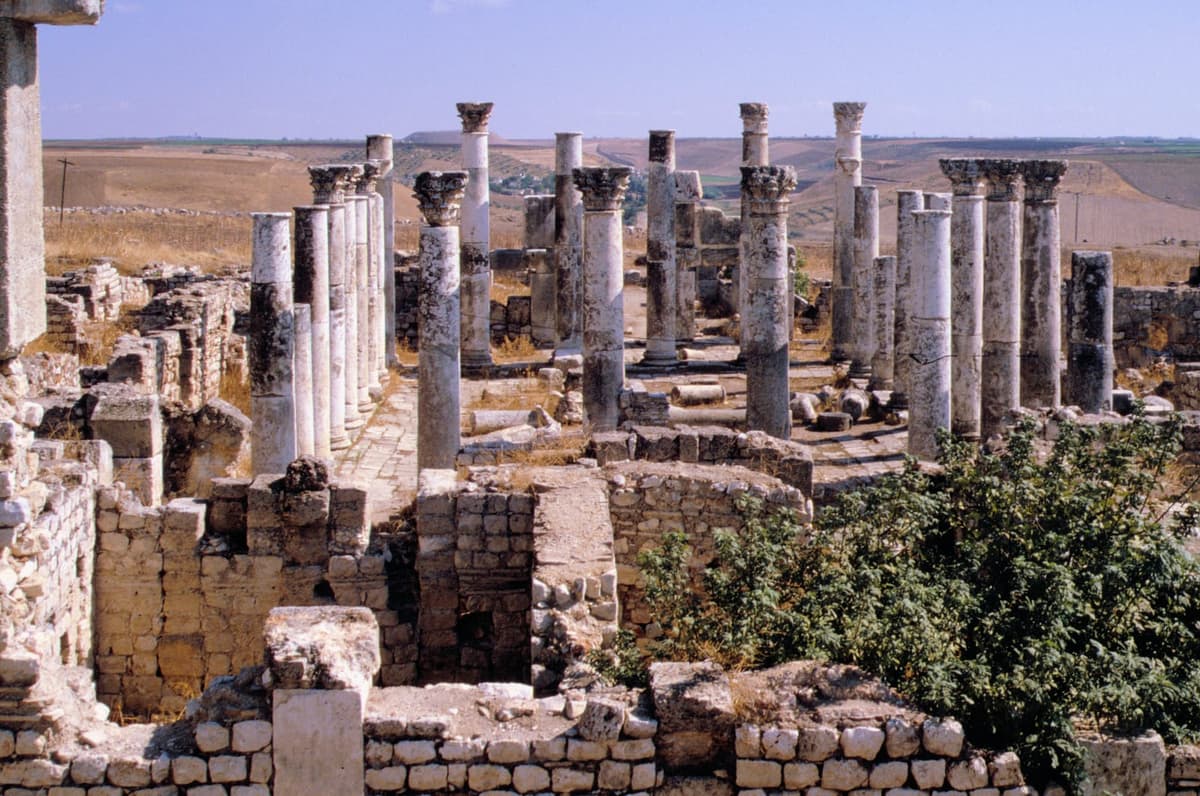
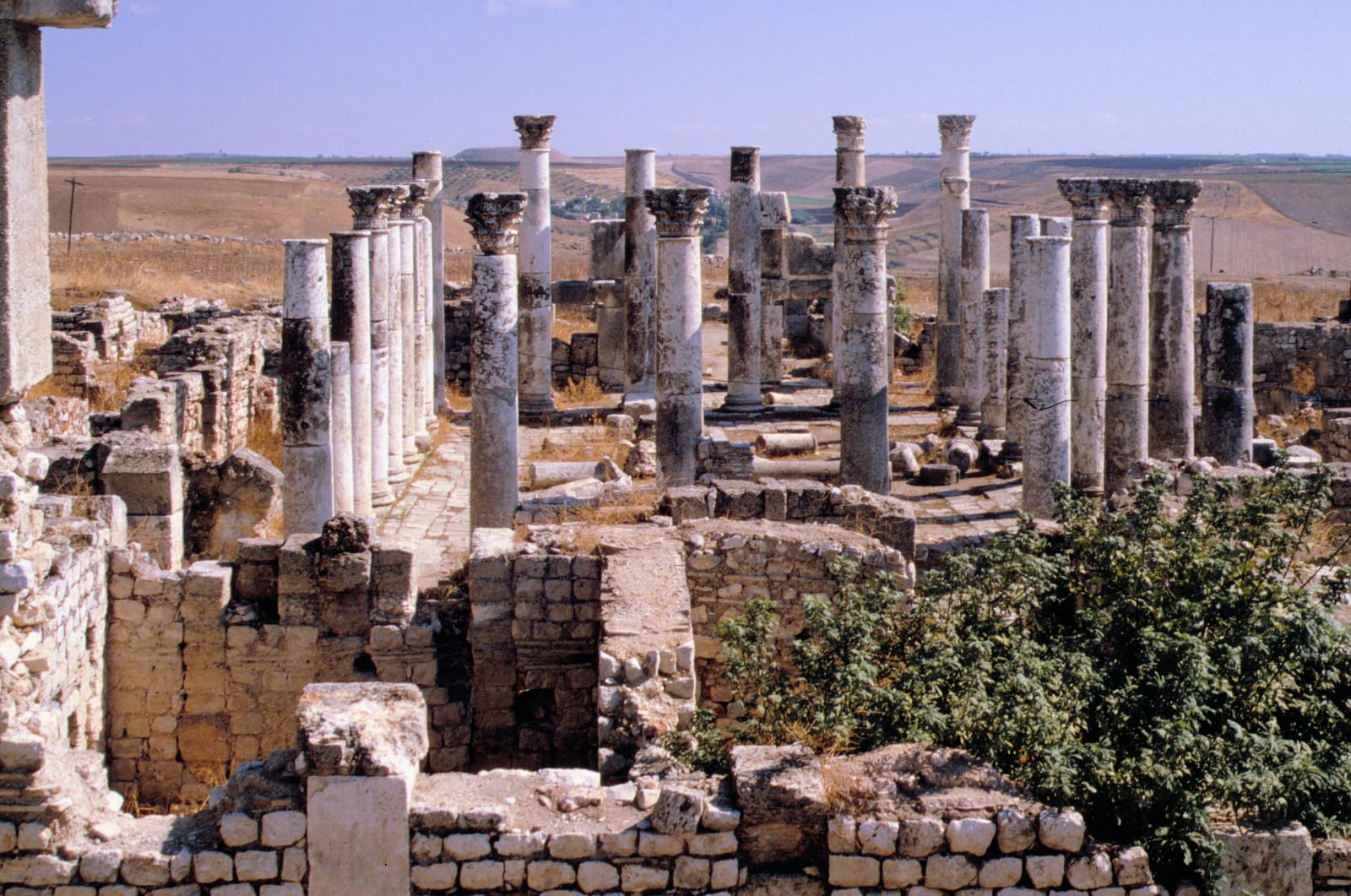
The ancient city sprawls across a broad plateau above modern Dinar. Visible remains include a massive theatre, sections of colonnaded streets, and a nymphaeum, though much of the city lies beneath agricultural fields. The site of Celaenae, slightly to the south, preserves traces of the earlier settlement.

TCDD DE 24 372 Dinar - Karakuyu | Kabelleger / David Gubler (CC BY-SA 4.0)
The city's urban plan, as revealed through geophysical surveys and excavations, featured a regular Hellenistic grid, monumental public buildings, and extensive residential quarters. Its architecture blended Greek and Anatolian styles, with local marble and limestone used in construction. The discovery of a large horreum (warehouse) complex near the agora underscores its primary economic function as a central emporium for goods like grain, wool, and timber from the Phrygian hinterland.
Daily life in Apameia was cosmopolitan, supported by its diverse population of Phrygians, Greeks, Jews, and later Romans. Inscriptions and small finds attest to a vibrant civic and religious life, with cults dedicated to local Anatolian deities alongside Greek and Roman gods. The city's prosperity continued into the early Byzantine period, but it declined significantly after the 7th century CE, likely due to a combination of Persian and Arab incursions, earthquakes, and the shifting of major trade routes, eventually reducing it to a small settlement.