Overview
Aphrodisias, located near the village of Geyre in Aydın Province, was one of the most important cities in the Roman province of Asia. Named for Aphrodite, the Greek goddess of love, the city was renowned throughout the Roman world for its school of marble sculpture.
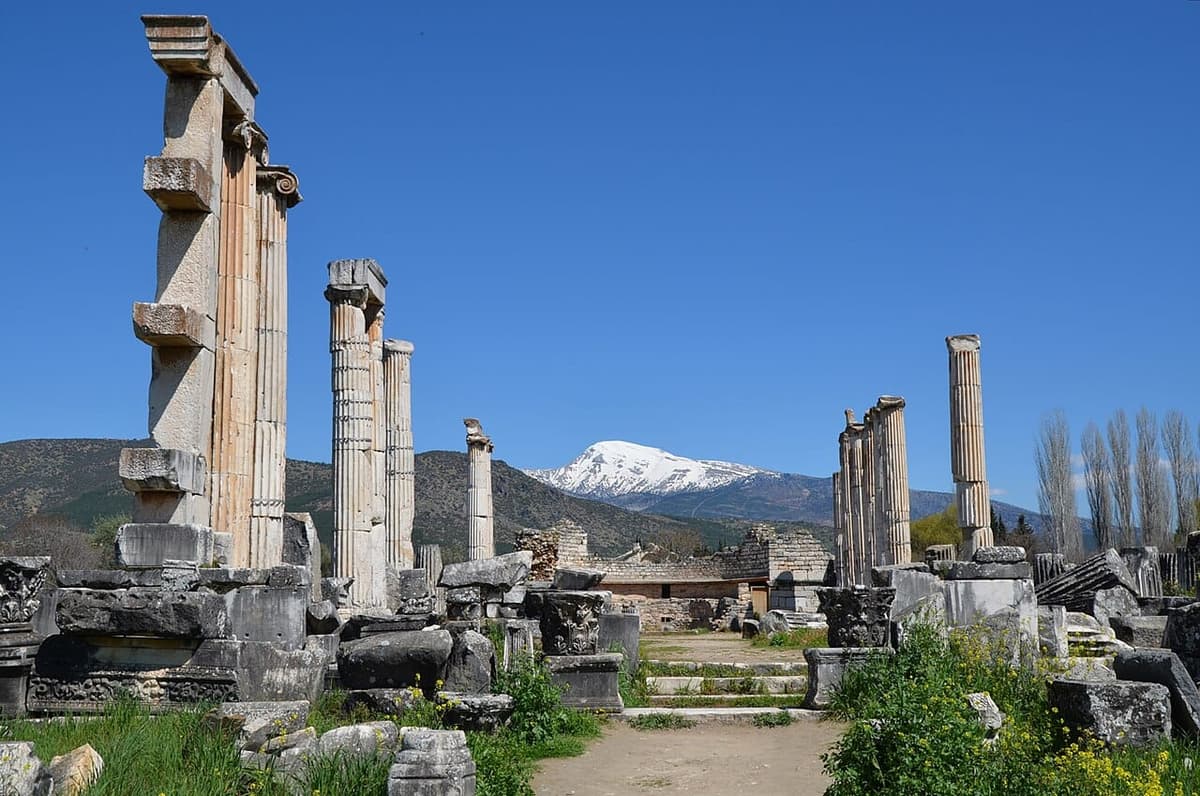
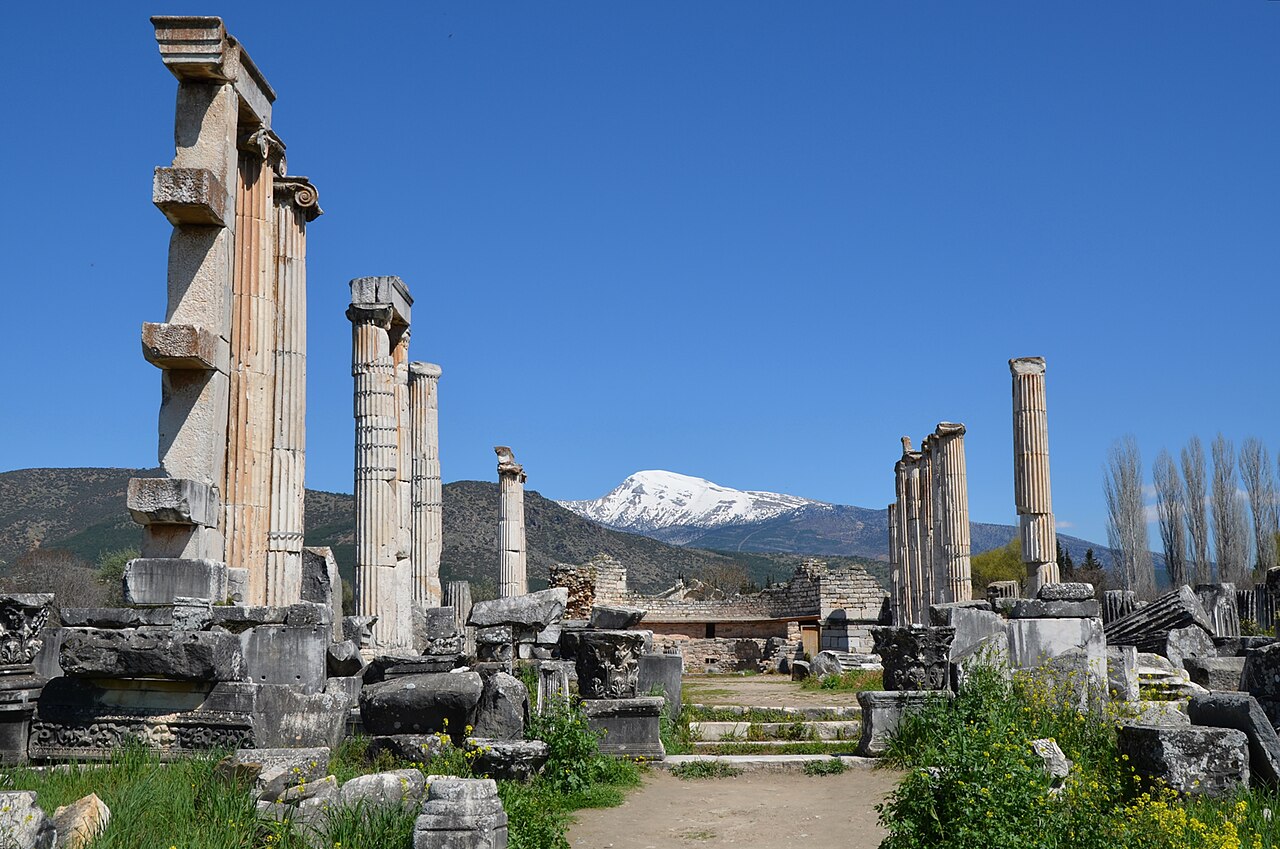
The site includes a remarkably well-preserved stadium (one of the best-surviving ancient stadiums), a temple of Aphrodite later converted into a Christian basilica, an elaborate Sebasteion (a building complex dedicated to Augustus and the Julio-Claudian dynasty), a large agora, and a bouleuterion.
"Aphrodisias, adorned with natural and human excellence, holds pride of place among the cities of Asia."
— Quintus Mucius Scaevola, Roman Governor, 94 BCE
The sculptors of Aphrodisias were famous across the Roman Empire. Numerous signed works have been found as far away as Rome itself. The local marble quarries provided high-quality stone, and the city's workshops produced portrait sculpture, mythological reliefs, and architectural decoration of exceptional quality.
Excavations led by Kenan Erim from 1961 until his death in 1990 transformed understanding of the site. Work continues under R.R.R. Smith of Oxford University.

Aphrodisias-res | The original uploader was Tapatio at English Wikipedia. (Public domain)
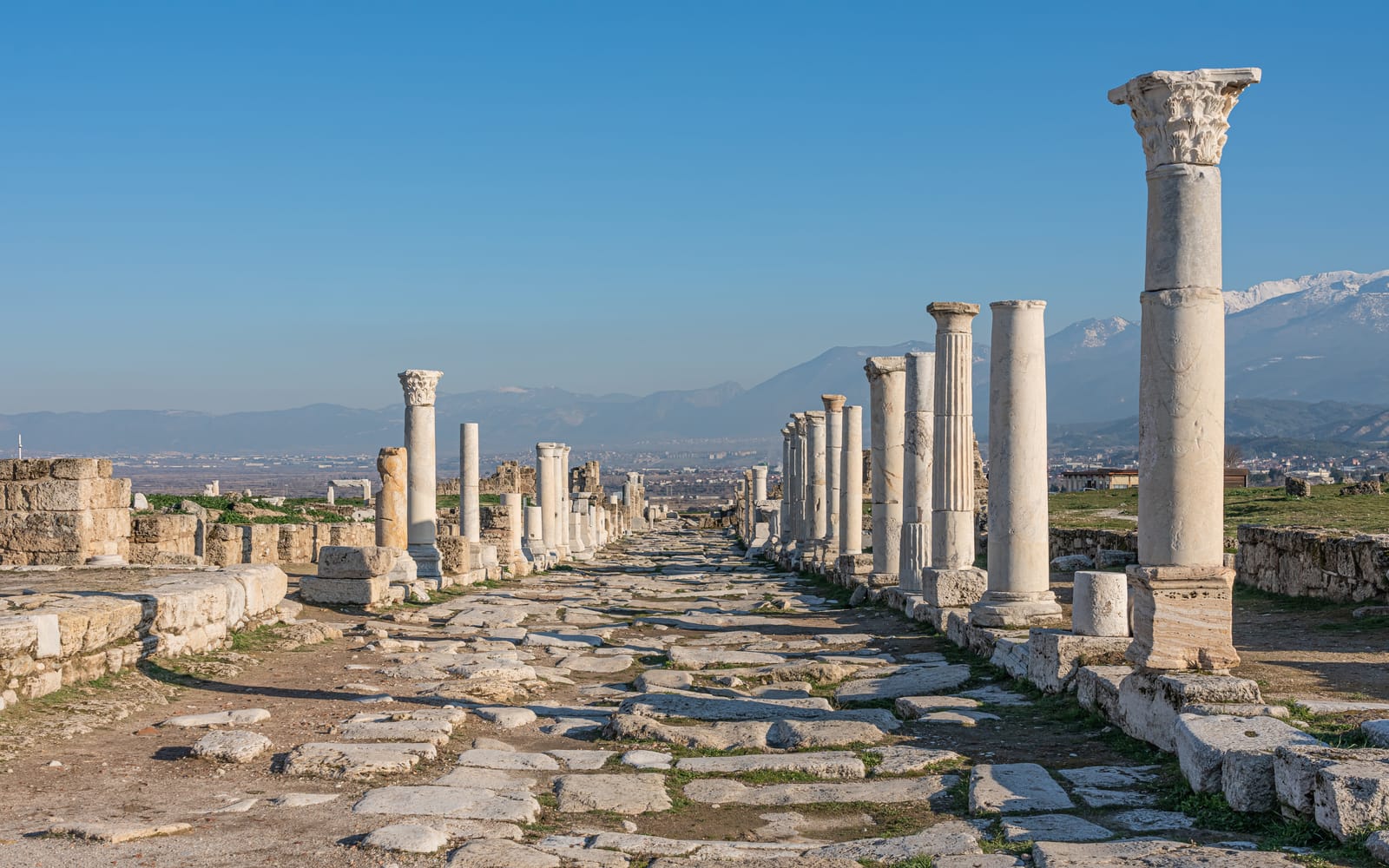
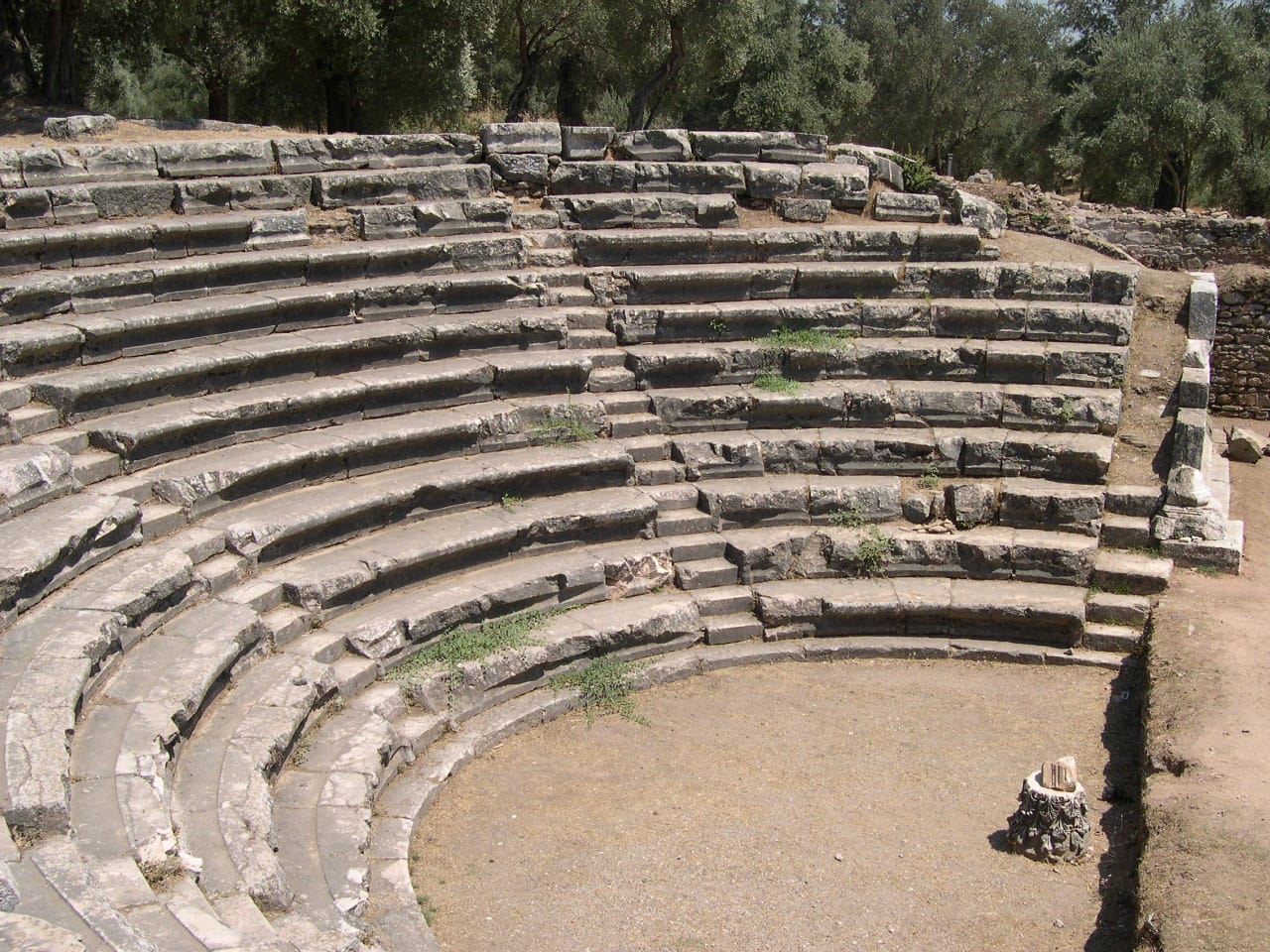
The city's urban plan featured a grand colonnaded street (Tetrastoon) leading to the Temple of Aphrodite, flanked by shops and public buildings. The well-preserved theater, built into a hillside in the 1st century BCE, hosted performances and civic assemblies. A complex of public baths, including the Baths of Hadrian, highlights the importance of social ritual in daily life. Aphrodisias maintained extensive trade connections, exporting its distinctive white and blue-grey marble sculptures across the empire, with signed works found as far as Hadrian's Villa at Tivoli. The city's decline began with a devastating earthquake in the early 7th century CE, which damaged critical infrastructure. It never fully recovered its former grandeur, gradually shrinking to a fortified settlement around the former temple-basilica before being abandoned in the later Byzantine period.