Overview
Hierapolis was founded as a thermal spa around 190 BCE by Eumenes II of Pergamon. The city flourished under Roman rule, becoming a major center for healing, textile production (especially wool dyeing), and early Christianity. The Apostle Philip is believed to have been martyred here.
The site sits atop the spectacular travertine terraces of Pamukkale ("Cotton Castle" in Turkish), formed by calcium-rich thermal waters cascading down the hillside over millennia. The city's theatre, seating 12,000, is one of the best-preserved in Anatolia.
"The hot springs of Hierapolis burst from the earth as if boiled in a furnace, yet men bathe in them without harm."
— Strabo, Geography XIII.4.14, c. 20 BCE
The necropolis of Hierapolis is the largest ancient cemetery in Anatolia, with over 1,200 tombs spanning Hellenistic, Roman, and early Christian periods. The Plutonium, a cave emitting deadly carbon dioxide gases, was believed to be an entrance to the underworld and was used by priests to demonstrate divine power.
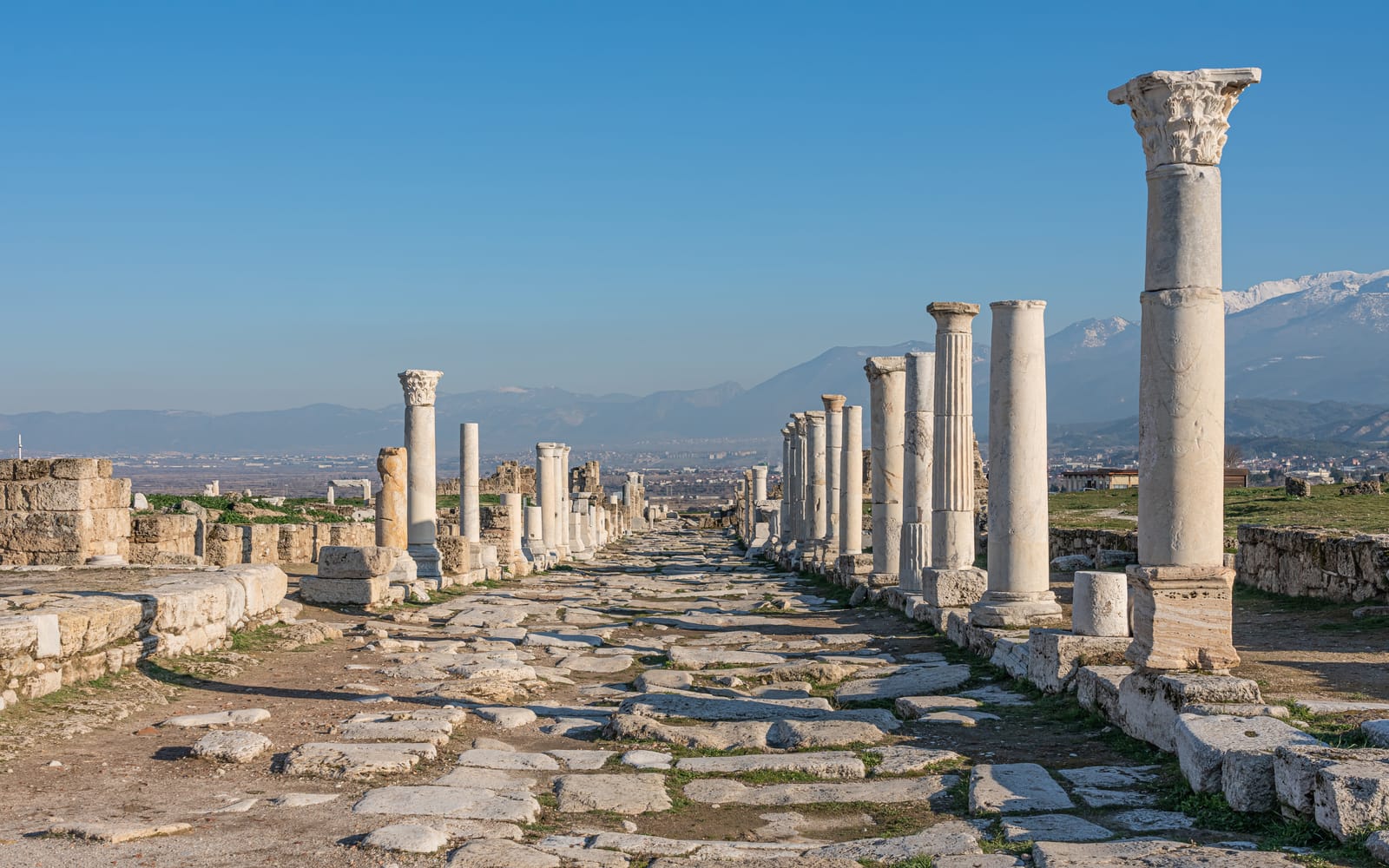
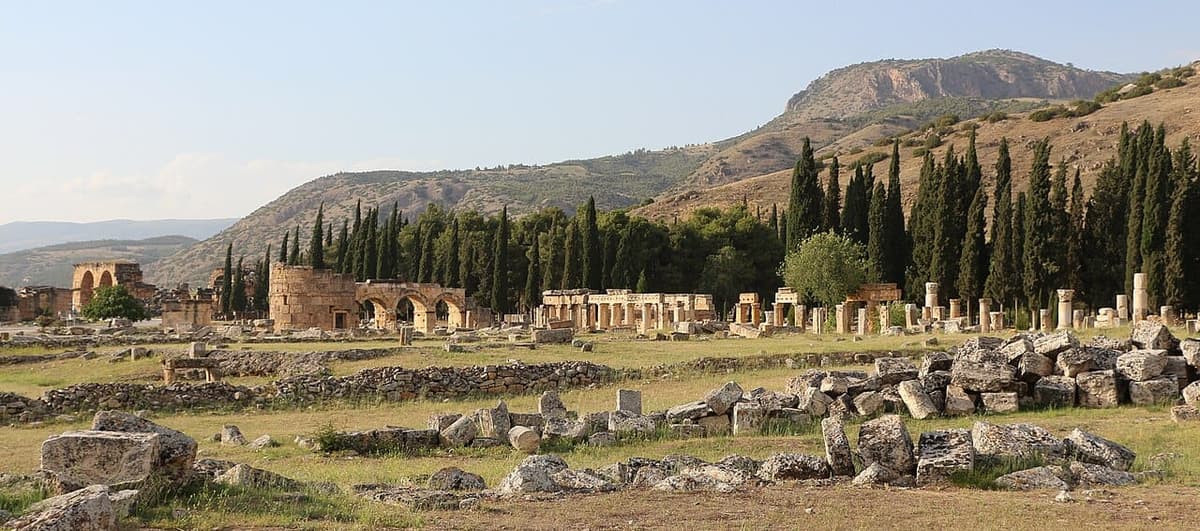
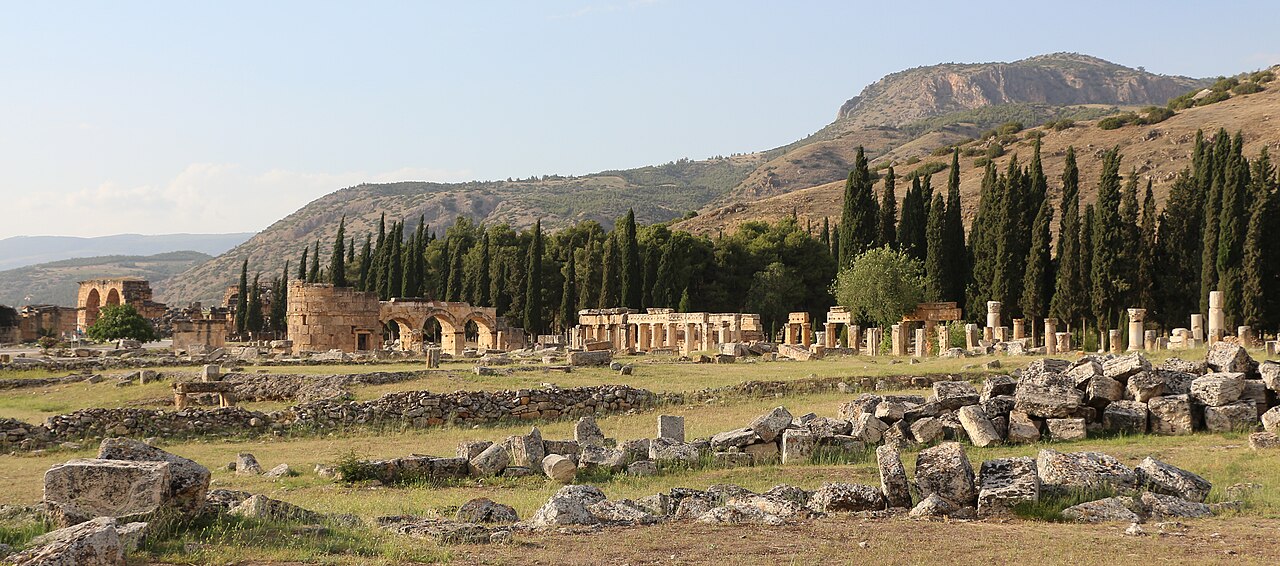
The city's urban plan is a classic example of Roman orthogonal design, centered on the long, colonnaded Frontinus Street. Major public buildings, including baths, a gymnasium, and temples, lined this thoroughfare, showcasing the city's wealth. The extensive water management system, featuring stone aqueducts and clay pipes, distributed thermal water to public baths, private homes, and industrial dyeing workshops. Hierapolis was a cosmopolitan hub, connected to trade routes across Anatolia. Its decline began with a major earthquake in the 7th century CE and was gradual, with a reduced population persisting into the Byzantine and Seljuk periods until the 14th century. The final abandonment is linked to further seismic activity and the shifting of trade routes.