Overview
Nicomedia — modern İzmit — was founded around 264 BCE by King Nicomedes I of Bithynia on the site of an earlier Greek colony called Astacus at the head of the Gulf of İzmit (ancient Gulf of Astacus), one of the most strategically positioned harbors in the eastern Mediterranean. The city rapidly became the capital of the Bithynian kingdom and one of the wealthiest cities in Asia Minor.
Nicomedia's greatest era came under the Roman emperor Diocletian (r. 284-305 CE), who chose it as his imperial residence and effective capital of the eastern Roman Empire. For over two decades, Nicomedia functioned as the administrative heart of the most powerful state on earth. Diocletian built a massive palace complex, a circus, an armory, a mint, and monumental public buildings that rivaled Rome itself. The historian Lactantius, who witnessed these works, described how Diocletian transformed the city into a metropolis of imperial grandeur.
"Nicomedia is the metropolis of Bithynia, a city founded by Nicomedes."
— Strabo, Geographica (c. 20 CE)
The city is also indelibly linked to two pivotal moments in the history of Christianity. In 303 CE, the Great Persecution of Christians was launched from Nicomedia, when Diocletian ordered the destruction of the city's prominent church within sight of the imperial palace. A decade later, in 313 CE, Emperor Licinius issued the Edict of Milan from Nicomedia (the edict having been agreed upon with Constantine in Milan), officially establishing religious toleration throughout the empire and ending the persecution of Christians.
Nicomedia was also the place where Hannibal Barca, the legendary Carthaginian general who had terrorized Rome for decades, ended his life around 183 BCE. Sheltering at the court of King Prusias I of Bithynia and learning that his host intended to surrender him to the Romans, Hannibal took poison rather than be captured, reportedly declaring that he would free Rome from its anxiety about an old man. His tomb, though its exact location is debated, was traditionally placed on the outskirts of the city.

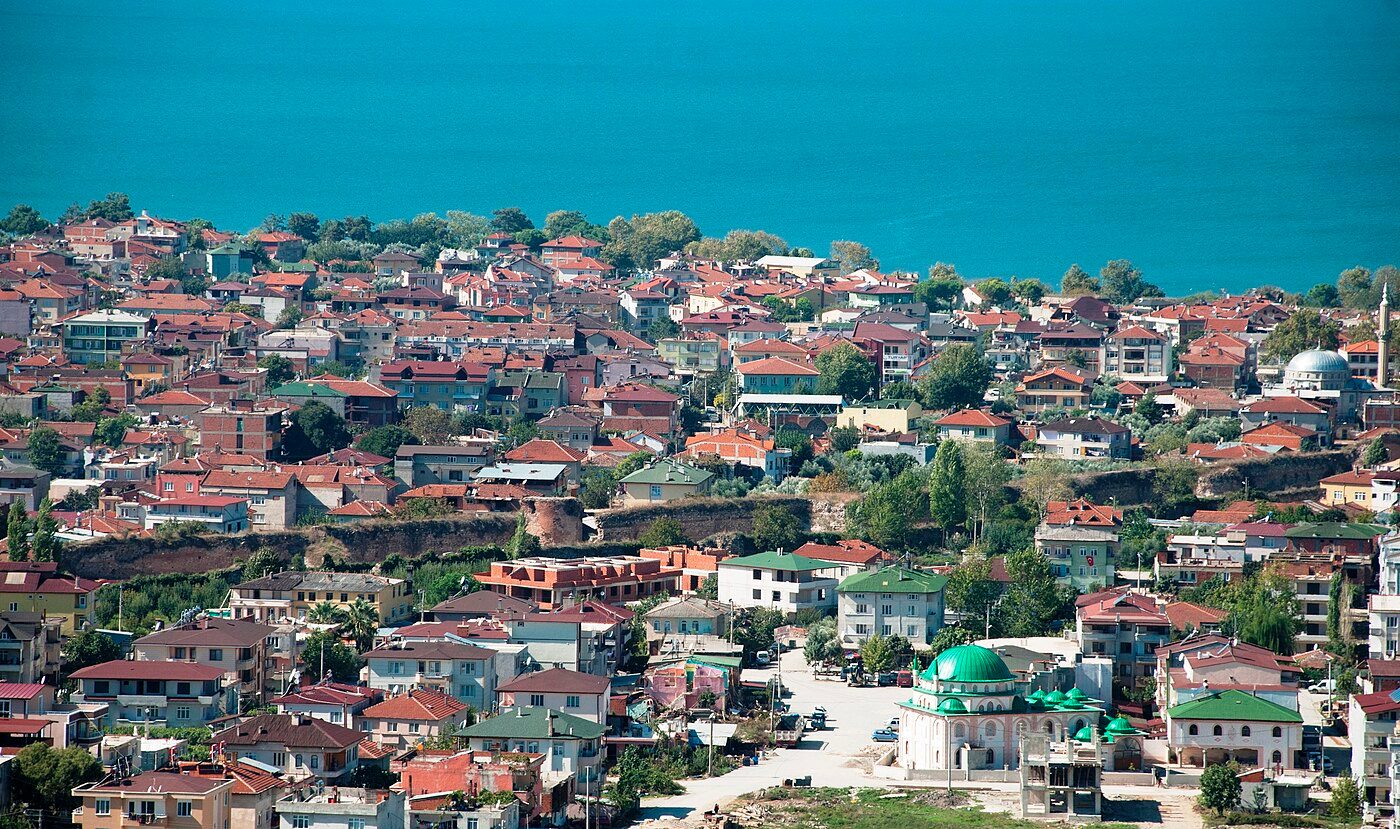
İzmit Körfezi genel | Ucandairebaskani (CC BY-SA 4.0)
A catastrophic earthquake in 358 CE and subsequent disasters diminished the city's status, though it remained an important Byzantine center until the Ottoman conquest.