Overview
Edirne — ancient Hadrianopolis (Adrianople) — stands at the confluence of the Tunca, Meriç (Maritsa), and Arda rivers in European Turkey, at the strategic crossroads where the Balkans meet Anatolia. Founded or refounded by the Roman emperor Hadrian around 125 CE on the site of an earlier Thracian settlement called Uskudama, the city's position controlling the main overland route between Europe and Asia has made it a fulcrum of military and political history for nearly two millennia.
The Battle of Adrianople in 378 CE was one of the most consequential military engagements in ancient history. The Gothic cavalry destroyed the Roman army of Emperor Valens, who was killed on the field. This catastrophic defeat is often cited as a turning point marking the beginning of the end of the Western Roman Empire and the ascendancy of cavalry over infantry that would characterize medieval warfare.
"Adrianople is a great and populous city, well watered and surrounded by gardens and vineyards."
— Ibn Battuta, 1334 CE
The city was captured by Sultan Murad I in 1361 (some sources say 1369) and served as the Ottoman capital until the fall of Constantinople in 1453, making it the second Ottoman capital after Bursa and the launching point for Ottoman expansion into southeastern Europe. During this period, Edirne was embellished with mosques, bazaars, bridges, and palace complexes that made it one of the grandest cities of the 15th century.
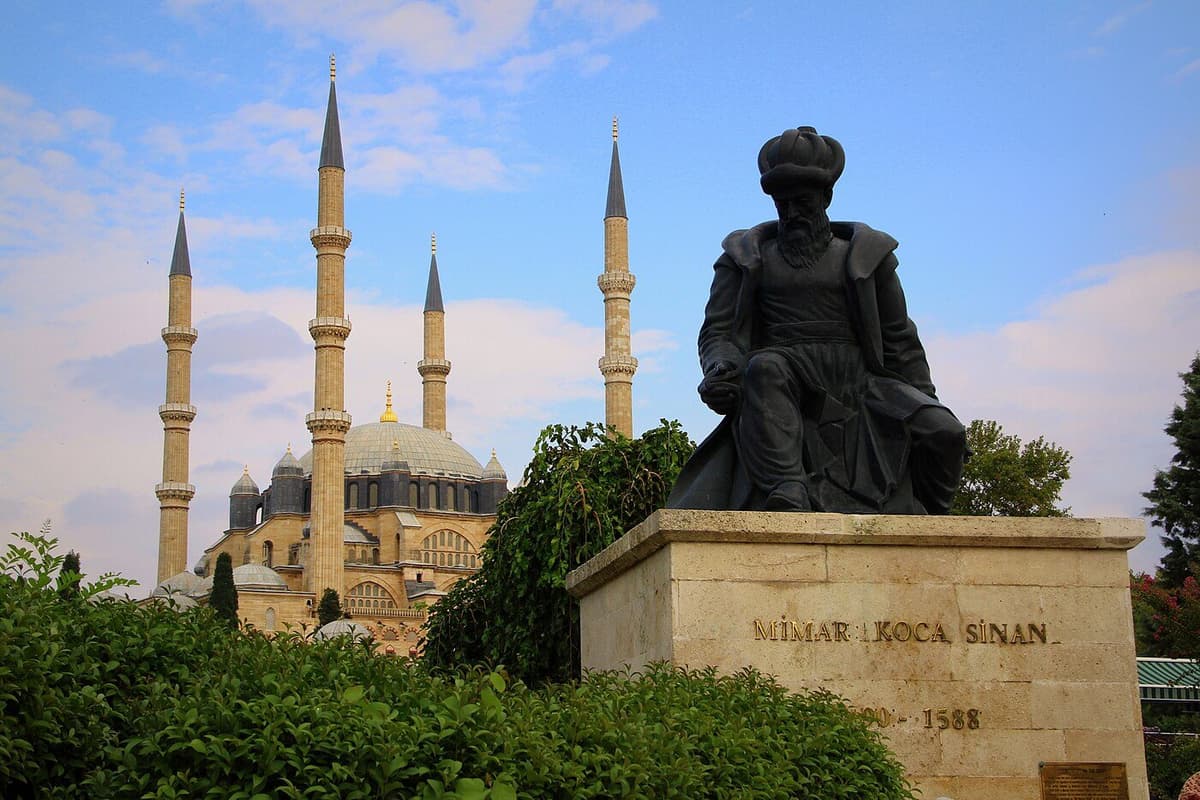
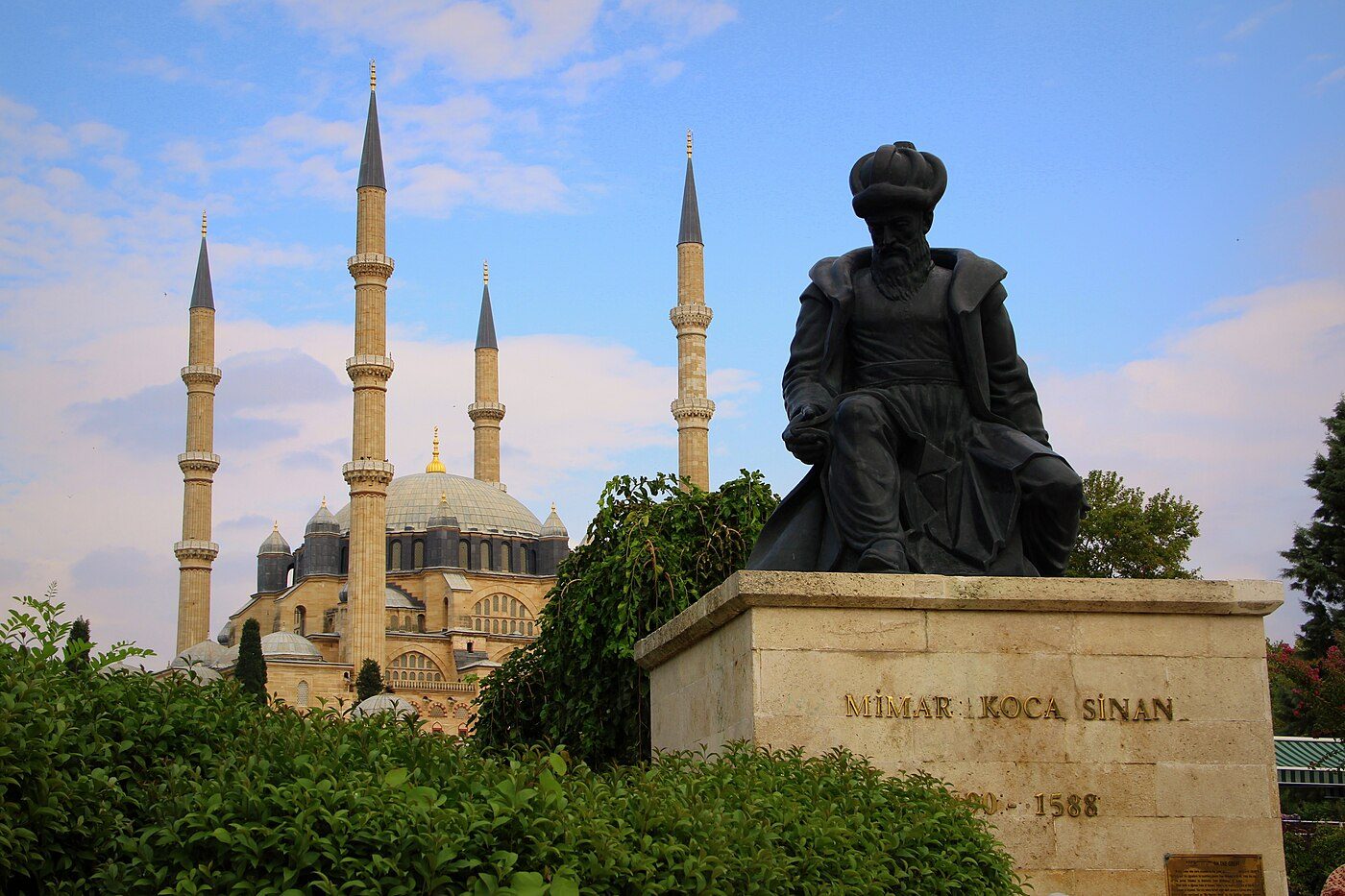
The Selimiye Mosque (1568-1575), commissioned by Sultan Selim II and designed by the imperial architect Mimar Sinan, is universally recognized as the supreme masterpiece of Ottoman architecture and one of the greatest buildings in the history of world architecture. Sinan himself considered it his masterwork (ustalık eseri), the culmination of his career after building the Şehzade Mosque (his apprentice work) and the Süleymaniye Mosque (his journeyman work) in Istanbul. The mosque's dome, at 31.3 meters in diameter, slightly exceeds that of the Hagia Sophia, and the interior achieves an unprecedented sense of unified, light-filled space supported by eight massive pillars. The four slender minarets, each over 70 meters tall with three balconies, create one of the most recognizable silhouettes in Islamic architecture. The Selimiye is inscribed as a UNESCO World Heritage Site.