Overview
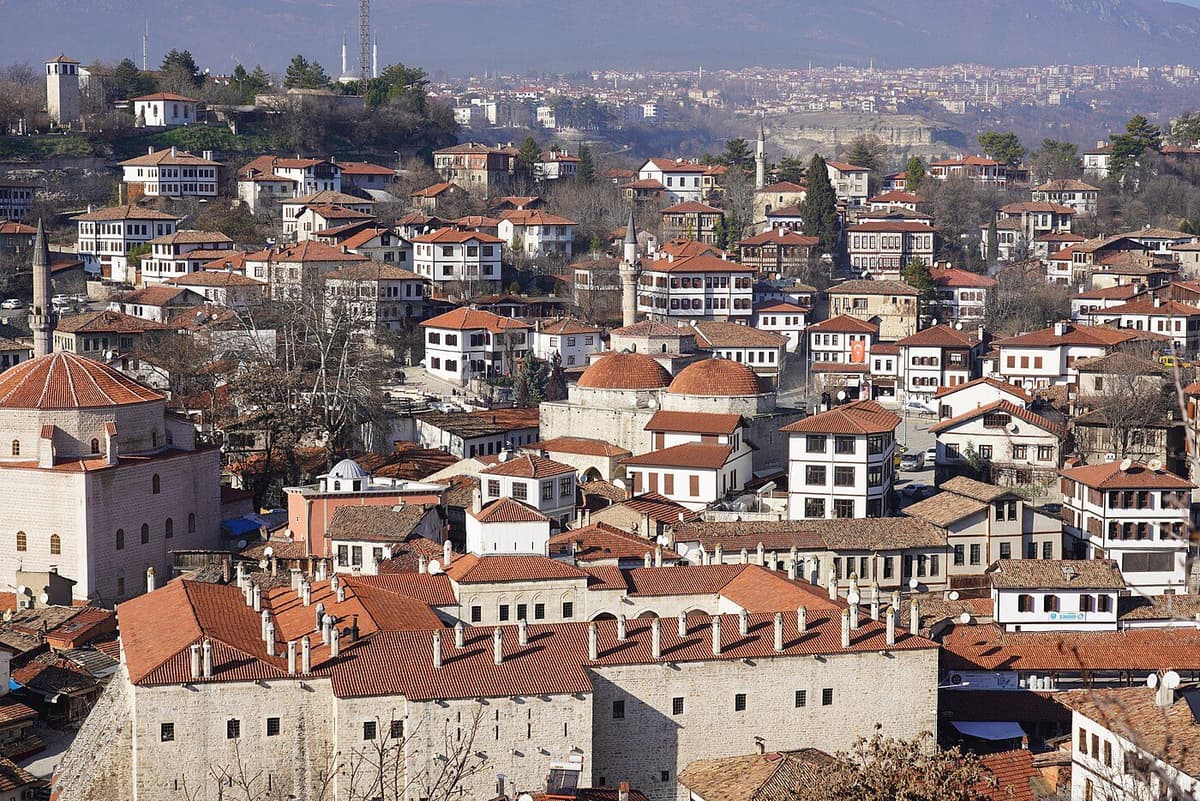
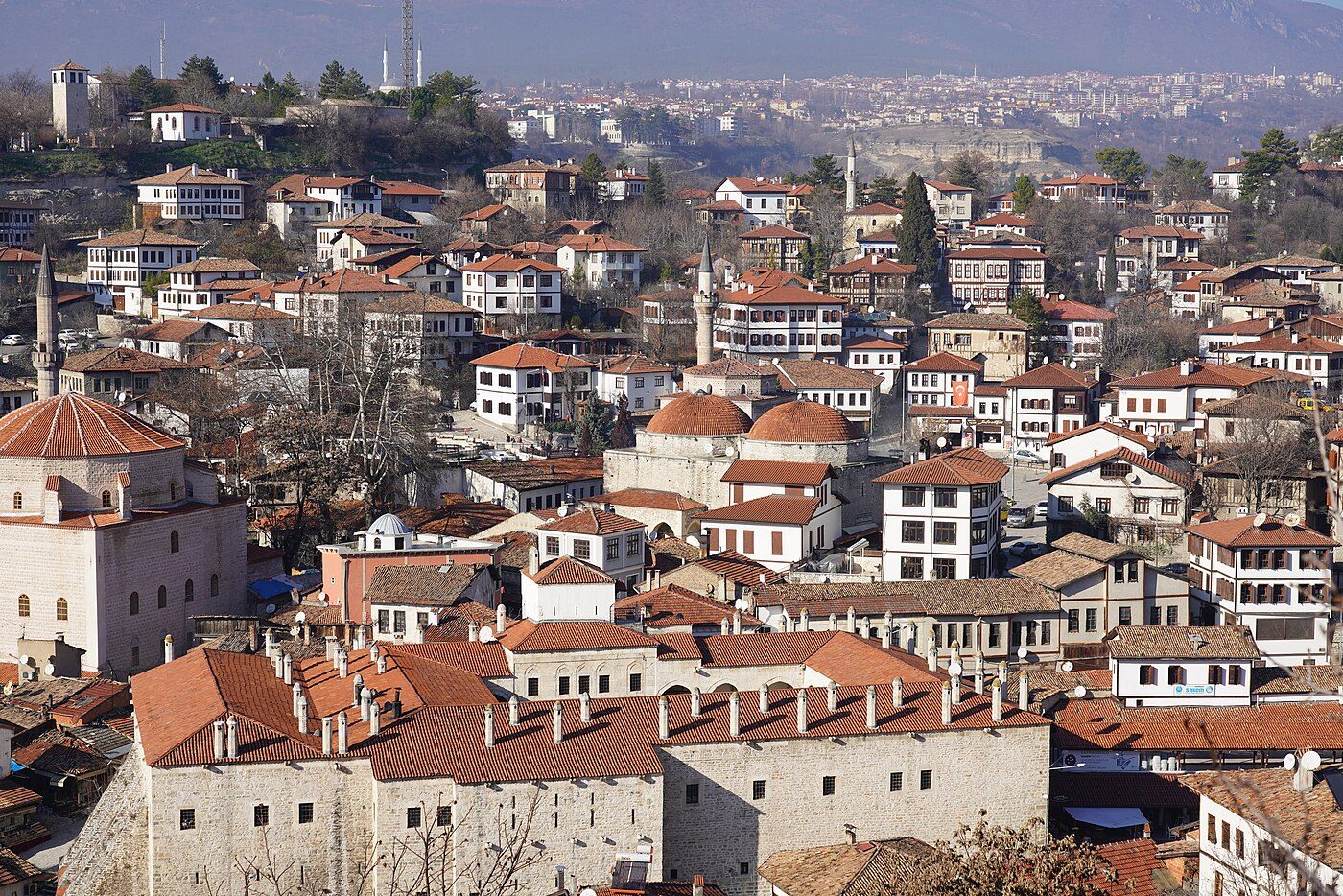
Safranbolu, tucked into a narrow valley in the forested mountains of Karabük province along the Black Sea hinterland, is the most completely preserved Ottoman-era town in Turkey. Inscribed as a UNESCO World Heritage Site in 1994, the town preserves over 1,000 timber-framed houses, along with mosques, baths, fountains, shops, and caravanserais that together constitute an unparalleled ensemble of traditional Ottoman urban architecture spanning from the 13th to the 20th century.
The town's name derives from its historic role as a center of saffron (safran) cultivation — the precious spice was grown on the surrounding hillsides for centuries and traded through the town's bazaars. The saffron trade, together with leather-working, copper-smithing, and caravan commerce along the route connecting the Black Sea port of Sinop with the Anatolian interior, created the wealth that funded the town's remarkable architectural patrimony.
"The town of Safranbolu is a prosperous place, with many fine houses and a thriving market."
— Evliya Çelebi, c. 1671
Safranbolu's domestic architecture follows a distinctive Ottoman typology: multi-story timber-framed houses with plastered infill walls, projecting upper floors (cumbalar) supported by carved brackets, and interiors organized around a central sofa (hall) with rooms arranged symmetrically around it. The houses feature separate selamlık (men's quarters) and haremlık (women's quarters), each with its own entrance. Ceiling decorations of painted wood, carved cupboards, and niches for bedding storage demonstrate the refined craftsmanship of Ottoman vernacular architecture.
The Cinci Han caravanserai (1645), the Old Mosque (Eski Cami, 1322), the İzzet Mehmed Paşa Mosque (1796), and the Cinci Hamamı bath complex (1645) anchor the commercial core. The town developed in three distinct quarters: the market area (Çarşı), the summer quarter (Bağlar) on the hillsides, and the surrounding orchards. This spatial organization reflects the Ottoman urban pattern of seasonal migration between compact winter dwellings in the valley and airy summer houses amid gardens on higher ground.

Közde Türk Kahvesi, Safranbolu 2014-3 | Hamdigumus (CC0)
The town's survival is remarkable — while most Ottoman-era towns in Turkey were transformed by modernization in the 19th and 20th centuries, Safranbolu was bypassed by the railway and the new Republican-era road networks, preserving its traditional fabric almost intact. Today it serves as a living museum of Ottoman domestic life and urban planning.