Overview
Assos occupies a steep volcanic promontory overlooking the Aegean Sea, with the Greek island of Lesbos visible across the strait. Founded by Aeolian colonists from Methymna on Lesbos around 900 BCE, the city rose to prominence in the 4th century BCE when the philosopher Aristotle lived here from 347 to 344 BCE, establishing a school and conducting some of his foundational studies of biology and zoology using specimens from the surrounding coastline.
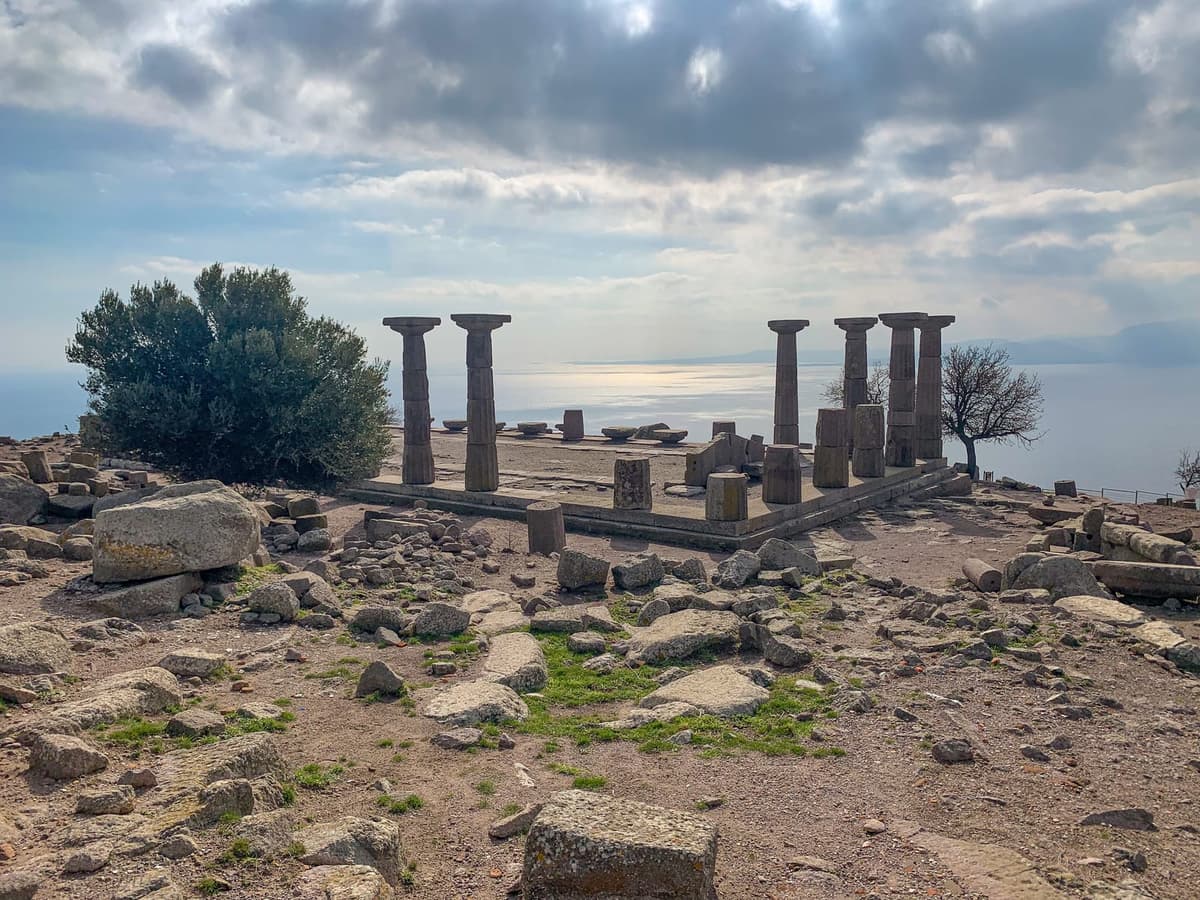
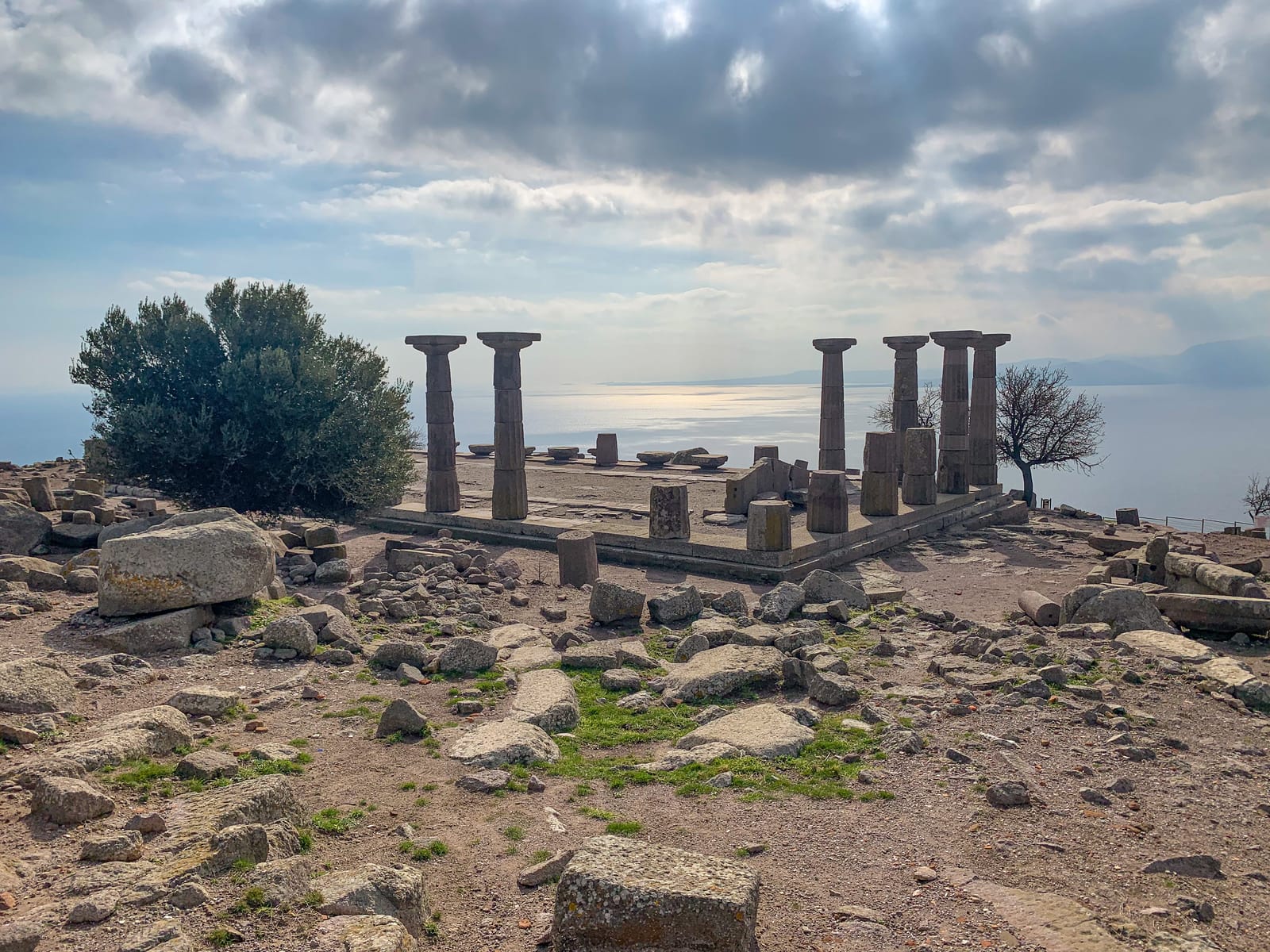
The Temple of Athena, perched on the acropolis at 238 meters above sea level, is the only archaic Doric temple in Asia Minor. Built around 530 BCE, its surviving columns frame panoramic views of the Aegean — one of the most photographed archaeological vistas in Turkey.
"Assos is a city of the Troad, on the Adramyttene Gulf, opposite to the island of Lesbos."
— Strabo, c. 7 BCE - 23 CE
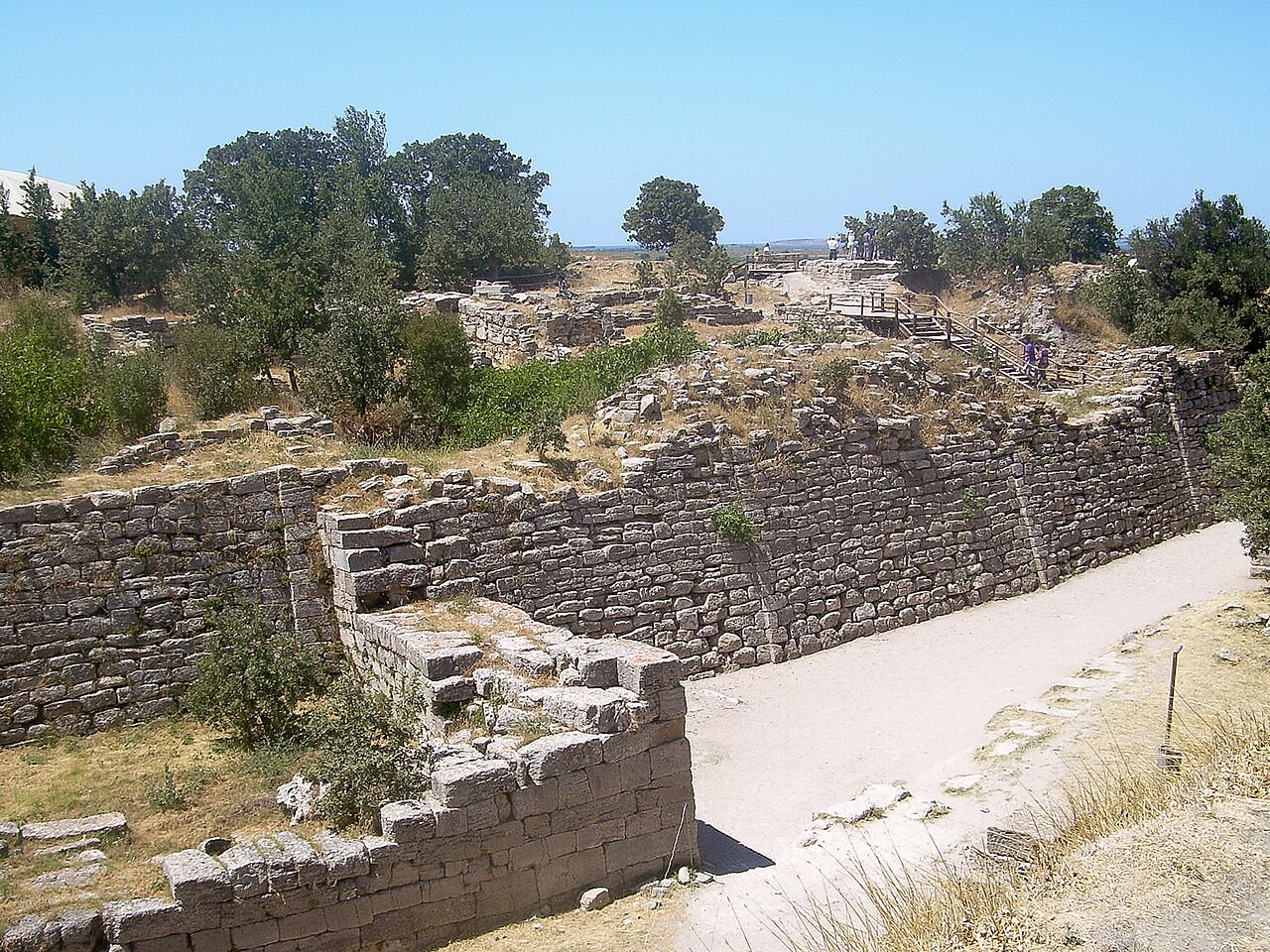
The city retains a remarkably complete urban plan, including a terraced agora (one of the best-preserved in the Greek world), a Hellenistic theatre, gymnasium, bouleuterion, and extensive necropolis with elaborately carved sarcophagi. The fortification walls, stretching over three kilometers, are among the most complete ancient city walls in Anatolia.
The ancient harbor below the acropolis — now the village of Behramkale — remains an active fishing port, preserving a continuity of maritime use spanning nearly three millennia.

Assos (1995) 19 (7902773580) | Carl Campbell from Santiago de Querétaro, México (CC BY 2.0)
The city's urban fabric reveals a sophisticated infrastructure. A well-preserved 3rd-century BCE gymnasium complex, complete with palaestra and baths, attests to the importance of education and physical training. The extensive necropolis sprawling down the southern slopes features monumental sarcophagi, some with intricate reliefs depicting scenes of daily life and mythology, offering profound insights into funerary art and social status. Assos was a significant port, its economy fueled by local resources like andesite stone, quarried and exported for millstones, and agricultural products from its fertile hinterland. The city's decline began in the Byzantine era, its strategic acropolis later fortified with medieval walls, before it was largely abandoned by the 17th century CE.