Atlas AnatoliaAtlas Anatolia
Derinkuyu archaeological site

Derinkuyu

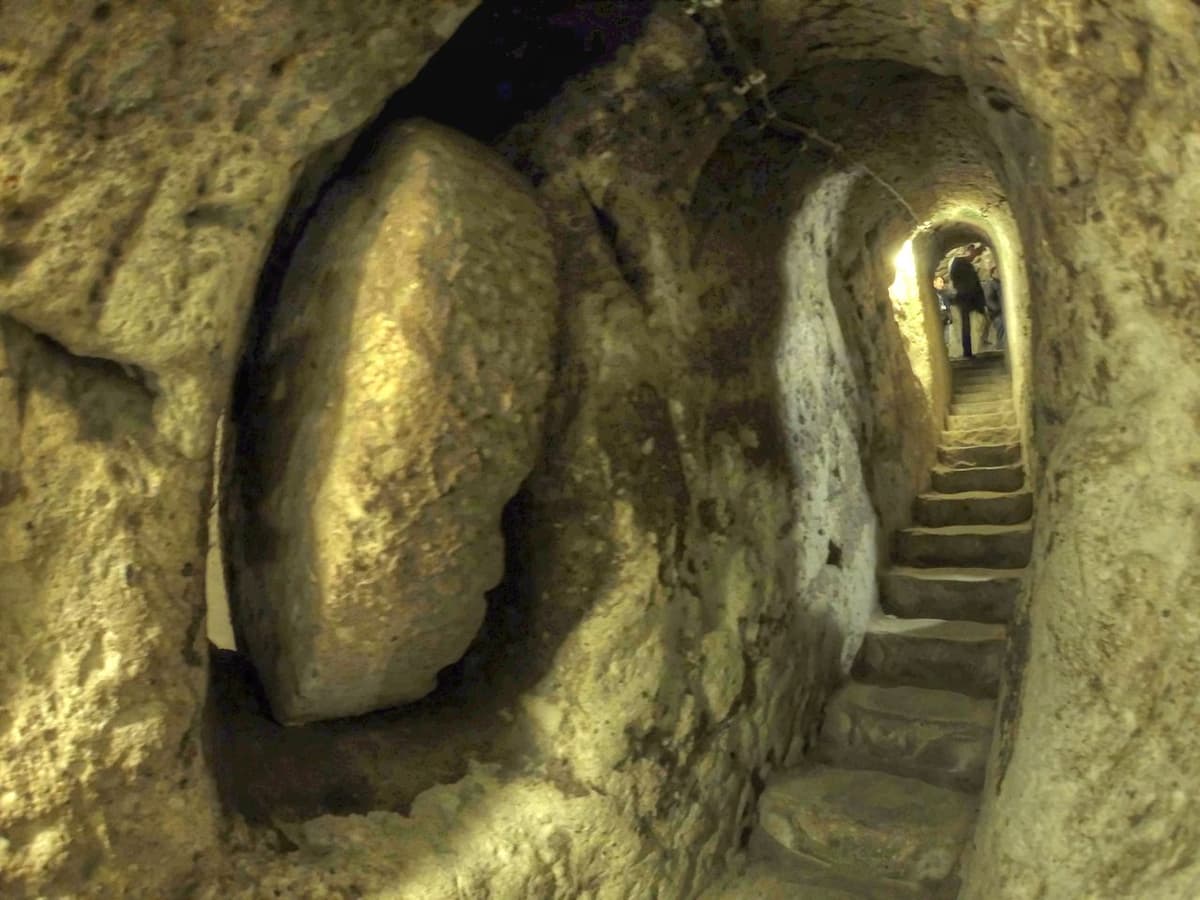
800 BCE – 1923 CEPhoto: Wikimedia Commons (CC BY-SA)
50

Interest

W 26KG 80
Iron AgeClassicalByzantineMedievalPhrygianByzantineOttomanNevşehir

Date Range

800 BCE – 1923 CE

Province

Nevşehir

Depth

85 meters (approx. 279 feet) below surface

Levels

18 distinct underground levels

Capacity

Could shelter approximately 20,000 people along with livestock and food stores

Location

Cappadocia region, Nevşehir Province, Turkey

Derinkuyu is a monumental feat of pre-modern engineering and communal resilience, offering unparalleled insights into subterranean urbanism and social organization.”

overview

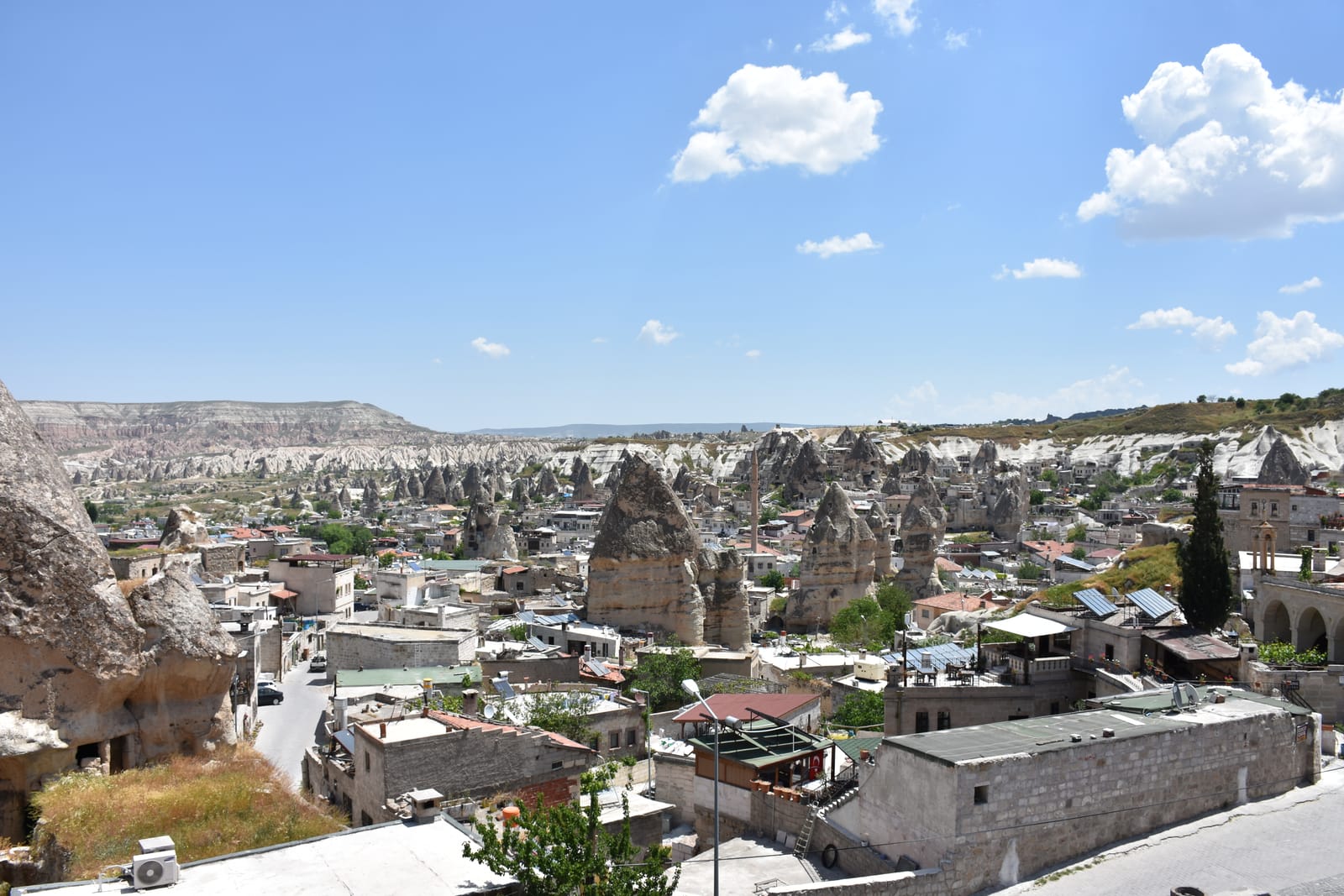
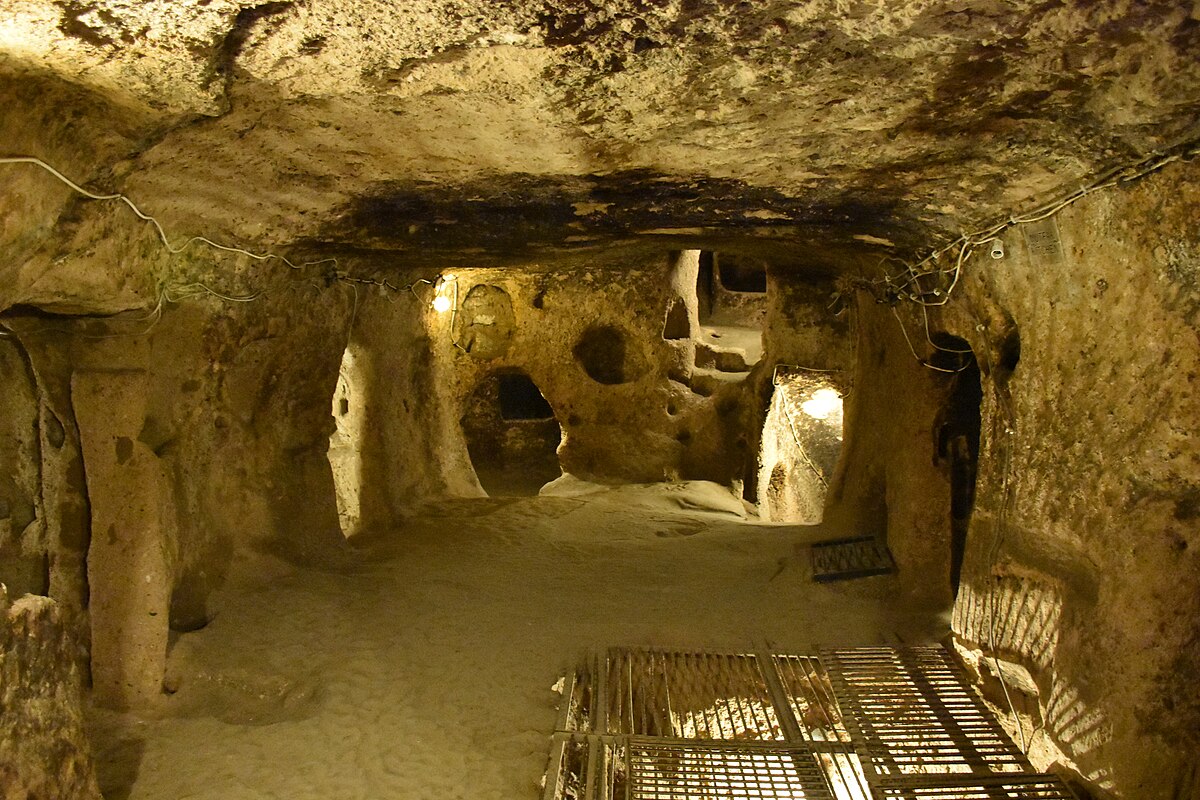
Derinkuyu is a vast subterranean complex carved directly into the soft volcanic tuff of the Cappadocia region, representing one of the most astonishing feats of ancient underground engineering. Extending approximately 85 meters deep, its 18 excavated levels form a labyrinthine city designed for long-term habitation and protection. The environment is characterized by narrow, sloping corridors that connect a multitude of rooms, including living quarters, storage chambers, wine and oil presses, stables, and communal kitchens. A sophisticated ventilation system, utilizing over 50 distinct shafts, provided fresh air to even the deepest levels, while massive, circular stone doors could seal off entire sections from the inside for security. The scale is such that it could have sheltered up to 20,000 people along with their livestock and vital food supplies. The historical significance of Derinkuyu lies in its role as a massive, collective refuge, primarily for the region's early Christian communities, though its origins may be older. While the exact date of its initial excavation remains debated, with some theories suggesting a Phrygian origin in the 8th–7th centuries BCE, its major expansion and use peaked during the Byzantine era, particularly from the 7th to the 10th centuries CE. During this period, it served as a defensive haven against frequent Arab raids, allowing entire communities to disappear underground for weeks or months at a time. Its existence is a direct testament to the persistent insecurity and adaptive resilience of the Anatolian populace in the face of invasion. Key functional structures within the city highlight its self-sufficient design. Beyond the residential quarters, critical spaces include extensive barrel-vaulted storage rooms for grains and other staples, large cisterns for water supply, and designated stables on the upper levels. A distinctive cruciform-plan church on the seventh level, complete with a central nave and two apses, served the spiritual needs of the inhabitants. The complex was also connected via at least one several-kilometer-long tunnel to another underground city, Kaymaklı, suggesting a network of such refuges across Cappadocia. This interconnectivity points to a coordinated regional defense strategy. Culturally, Derinkuyu is an integral part of the unique rock-cut architectural tradition of Cappadocia, a landscape also famed for its above-ground "fairy chimney" formations and rock-cut monasteries. Its construction reflects a society organized around communal effort and deep-seated religious identity, where the need for security shaped daily life and urban planning in a profound way. The underground city was not merely a hiding place but a fully realized urban center, preserving social and religious structures even in times of extreme duress. It remained in use by local populations, including Greeks, until the population exchanges of the early 20th century, leaving it as a powerful physical narrative of layered Anatolian history.

why_it_matters

Derinkuyu is a monumental feat of pre-modern engineering and communal resilience, offering unparalleled insights into subterranean urbanism and social organization. Its sheer scale and complexity—carved entirely from volcanic tuff—challenge assumptions about the technological capabilities of its Byzantine-era builders and provide a tangible archaeological record of a society adapted to survive prolonged conflict and regional instability. For history, it serves as a powerful testament to the defensive strategies and collective life of Anatolian communities, particularly during periods of religious persecution and Arab-Byzantine wars. As a cultural heritage site, Derinkuyu embodies a profound human story of adaptation and survival. It connects modern communities to a deep, layered past and stands as a unique symbol of human ingenuity in the face of existential threats, making its preservation crucial for both education and identity.

evidence

Distinguishing what is well-established from what remains debated.

confirmed

2
  • The city contains sophisticated architectural features including ventilation shafts reaching to the surface, wells, wine and oil presses, stables, cellars, storage rooms, and chapels, confirming long-term habitation capabilities.
  • Massive, circular stone doors that could be rolled shut from the inside to block corridors, providing clear evidence of defensive design against external threats.

inferred

1
  • Primary construction is inferred to have begun in the Byzantine era (8th-12th centuries CE) as a refuge from Arab invasions, based on architectural style and historical context, though earlier Phrygian activity (c. 8th-7th centuries BCE) is possible.

debated

1
  • The exact total extent and full chronological sequence of construction and use are debated, with some scholars proposing earlier origins and others suggesting more continuous, episodic use and expansion over centuries.

excavation

1963

Initial Discovery and Clearance

Led by Turkish Ministry of Culture and Directorate of Museums

A local resident discovered a hidden room behind a wall in his home, leading to the initial exploration and clearance of passages by archaeologists. This revealed the first sections of the vast underground complex.

1969

Official Opening and Further Exploration

Led by Turkish archaeologists and local authorities

Following initial work, the site was officially opened to the public. Archaeological teams conducted more systematic surveys and mapping, uncovering additional levels and key features like ventilation shafts, wells, and communal spaces.

2020

Geophysical Surveys and New Section Discovery

Led by Nevşehir Municipality and geophysical research teams

Advanced geophysical surveys (including electrical resistivity tomography and seismic tomography) were conducted in the surrounding area, leading to the discovery of a new, previously unknown section of tunnels and chambers, suggesting the complex may be even larger than initially mapped.

location

Related Sites

sources

  • Wikipedia — DerinkuyuLink

Research Papers

Stay in the loop

Get notified when we add new sites or major features. We send at most 1–2 emails per year. We never sell your email.

Atlas AnatoliaAtlas Anatolia

An interactive atlas of ancient Anatolian sites. Explore civilizations, monuments, and stories across millennia.

info@atlasanatolia.com

© 2026 Atlas Anatolia. Content is provided for educational purposes.

Map data © OpenStreetMap contributors